What is developmental editing?
Developmental editing (also called structural or substantive editing) is the first phase in the editing process, addressing the big-picture elements in your manuscript. By strengthening your characterization, structure, plot, voice, and more, a developmental edit gets to the heart of whether your book works in today’s market — and how to make it better.
You can expect your developmental editor to see where your manuscript is going, then help you get it there. They won’t zoom in on grammar and spelling; instead, they’ll tell you when your ending isn’t earning its emotional payoff, when your protagonist is being driven by the plot rather than driving it themselves, and when your dialogue sounds monotonous. They’ll spot the supporting characters who deserve more page time, then flag the chapters that belong fifty pages earlier. In short: they’ll give you the roadmap for your best draft yet.
If you're a nonfiction author, a developmental editor is your best advocate for getting your expertise on the page. They’ll point out when a chapter buries its key insight, catch when repetition dulls your argument, and surface every thread worth pulling on. They’ll sharpen your central argument until it can carry the entire manuscript. In short: they'll help you write a book that reaches the audience your ideas deserve.
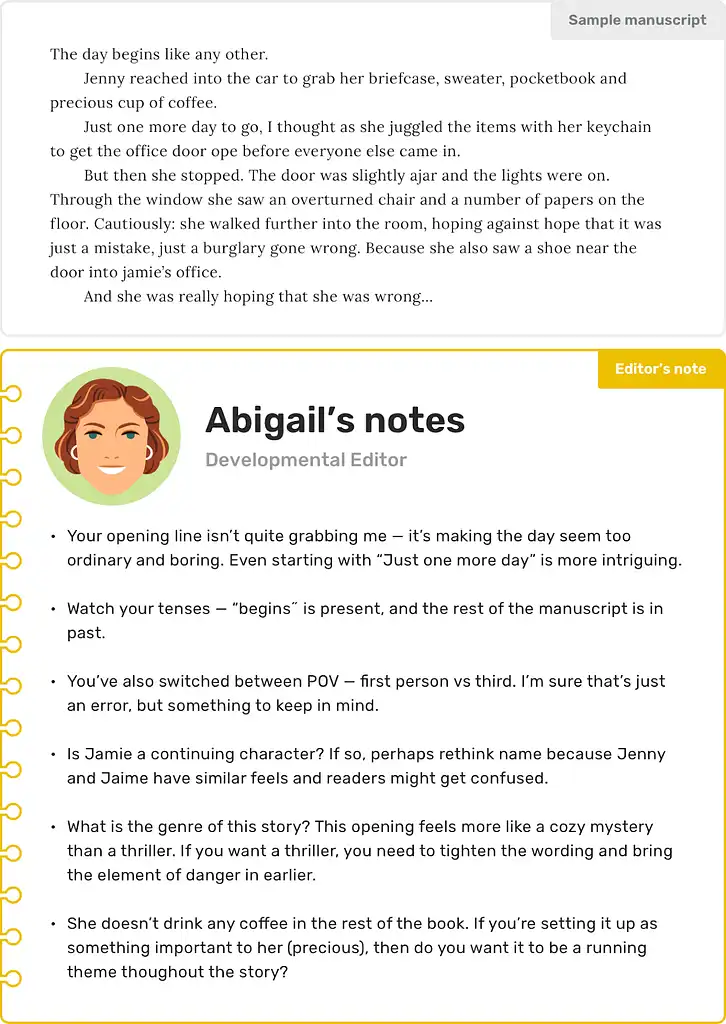
To accomplish all of this, your developmental editor will read your manuscript closely, leaving notes in the margin. Then they’ll write a detailed editorial letter that assesses your book’s strengths and weaknesses, with actionable suggestions for your next draft. Many editors will also pose questions to help you think through key decisions yourself, so you go into your next draft with clarity and confidence.
What’s the difference between developmental editing and an editorial assessment?
Authors often ask us whether they should start with a developmental edit or an editorial assessment. Like a developmental edit, an editorial assessment offers a big-picture perspective, but by way of a shorter, more affordable format: the editorial letter. Think of it as a professional book report. It'll also cover what's working and what needs attention, but without thorough margin notes that provide micro-level feedback.
An editorial assessment is a good alternative if you'd like expert eyes on your manuscript without the cost of a full developmental edit. It can also suit authors who want high-level feedback on an early draft.
Find out more
What makes a good developmental editor?
Anybody can call themselves a developmental editor — which is why authors have to be so careful about who they purchase developmental editing services from. A good developmental editor always has:
- A deep understanding of the craft of storytelling and/or building an argument
- Comprehensive knowledge of the publishing industry and current market expectations
- Excellent written and verbal communication skills
- Good interpersonal skills, including empathy and tact
- Self-discipline and the ability to work on long, complex projects independently
Note that we have not included any particular study programs in this list. At Reedsy, we value proven expertise and experience over formal qualifications — although a relevant degree is often a good sign of quality.
Assemble your team
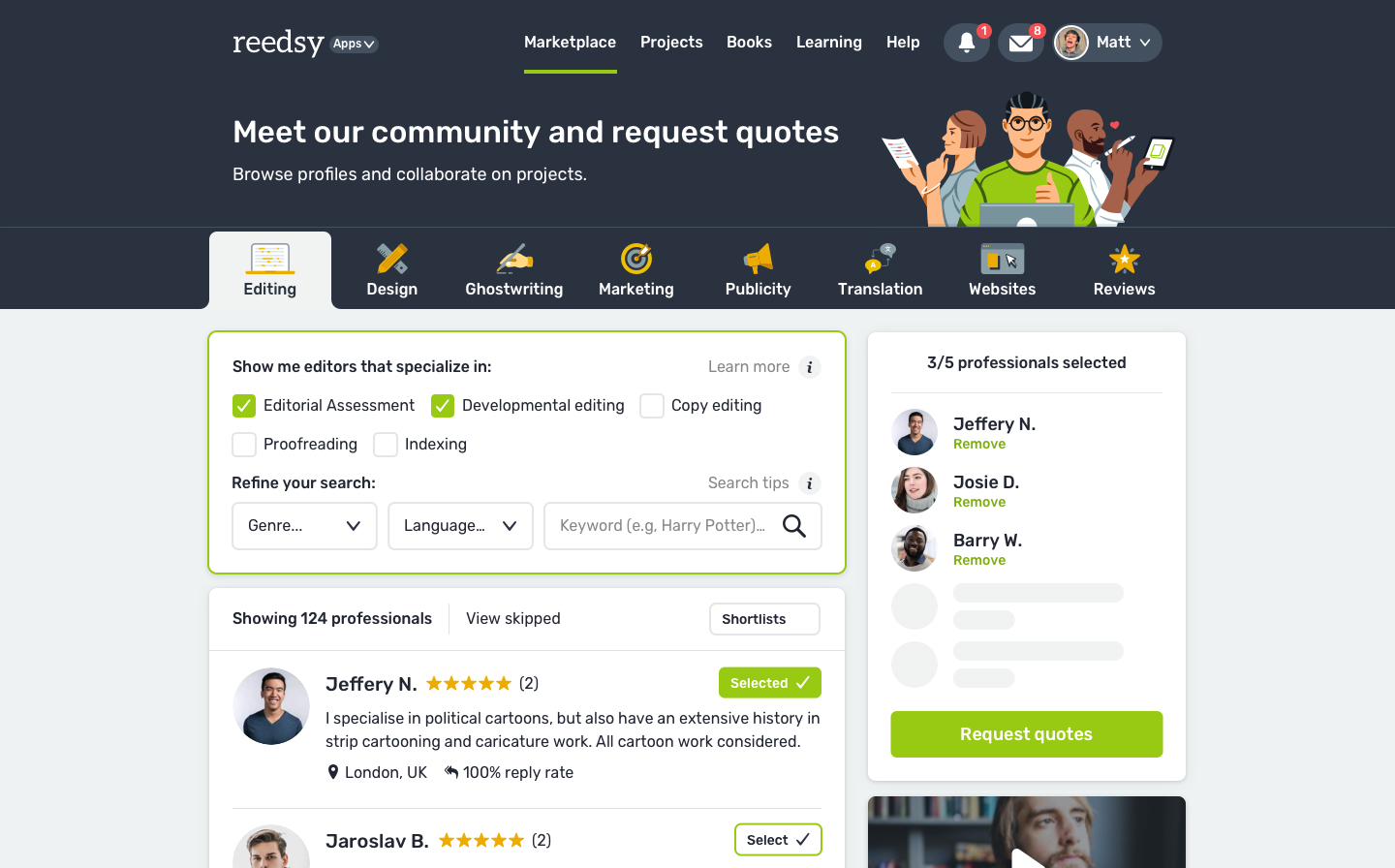
Request quotes from up to 5 professionals in your genre with a free Reedsy account.
Here’s what working with the right developmental editor looks like in practice. Fiza Saeed McLynn, whose Reedsy editor landed her a six-figure deal, said her developmental editor “went far beyond just editing my book — she also imparted wisdom about key writing skills and the publishing industry. Her enthusiasm and belief in my novel’s potential was infectious and spurred me to continue with the process. For the first time, I didn't feel like I was doing this alone.”
Hear from more authors who have worked with developmental editors on Reedsy below:
- Fiza Saeed McLynn: How a Reedsy Editor Helped Me Land a Six-Figure Deal
- Elizabeth Grieco: Working on Structure: How Changing the Beginning Improved My Middle Grade Novel
- JM Goldie: Rewriting My Middle Grade Fantasy Series for a YA Audience
- David Williams: How My Code-Breaking Military Service Inspired a Time-Bending Thriller
Find out more
How much does developmental editing cost?
Developmental editors for hire on Reedsy typically charge 2.6¢–5.3¢ per word, with an average rate of 3.05¢ per word. For an average 60,000-word book, that’s $1,704.
However, developmental editing rates vary significantly by genre. You can use our cost of self-publishing calculator to get an estimate tailored to your book.
Keep in mind that other factors will also influence the final rate. On Reedsy, editors are free to set their own rates, and someone who has worked on several bestsellers across a decades-long career will likely charge more than a newer developmental editor. Likewise, you may also see quotes change depending on the required turnaround time, the complexity of the topic, how much editing the manuscript needs, and how enthusiastic the editor is about the project.
Find out more
How to find the right developmental editor
When you hire a developmental editor on Reedsy, you can rest assured about quality: we vet all of our freelancers manually and only accept the top 3% of applicants.
That said, not every developmental editor is a good fit for every author. We recommend following these tips to find an editor who’s right for you on our marketplace:
- Search for developmental editors who specialize in your genre. On Reedsy, you can filter editors by both genre and service. Browse their portfolios to see if they have experience working on books similar to yours. A developmental editor with ten bestselling memoirs to their name might not be the best person to tackle your paranormal romance novel.
- Choose an editor who has previously worked with first-time authors, if applicable. A developmental edit is a necessary but sometimes overwhelming experience, so it helps to have a professional know how to walk you through the process. The developmental editors on Reedsy bring the best of both worlds: they often have experience working with Big 5 publishers and debut authors alike.
- Determine what style of critique you respond best to. Some writers need editors who are positive and encouraging. Others prefer a more direct style of feedback. Each editor works a little differently, and it’s important that you find one who approaches text and communication in the same way you do.
- Double-check the editor’s availability. A thorough developmental edit takes time to complete, so it’s worth making sure that the editor’s timeline aligns with your deadlines. You may also want to ask how they handle unexpected delays on their end — a professional editor should always be upfront about their workload and communicate proactively if anything changes.
- Ask for a sample edit. Many editors on Reedsy offer a sample edit. Use it to get a sense of the editor’s editing style, and whether it works for you.
Hire a professional

John B.

I specialize in children's books because kids will be your best critics and biggest fans -- next to a good editor.
Request a quote
Becca M.
I'm a novelist of many trad published novels & teacher of 30 years' experience, now a book coach ready to whip your manuscript into shape.
Request a quote
Helen L.
Literary Agent and Developmental Editor. I represent incredible authors at Ki Agency. My editorial focus is on Fantasy, Sci Fi and Romance.
Request a quoteFind out more
Tips for working with a developmental editor
Now’s the exciting part: when you can begin working with your developmental editor.
To get the most out of your developmental edit, keep these tips in mind:
- Before the collaboration, revise your draft thoroughly. Proofread it and fix what you can yourself, so you’re showing your developmental editor the most polished version possible. This way, their feedback can focus on what actually matters — not surface-level errors that you could have caught yourself.
- Brief your developmental editor on your creative vision. Before your editor starts their developmental edit, you both need to agree on the direction that your book will take. The editor might later return with suggestions for where your manuscript could go — but if they don’t understand your initial vision, that’s a recipe for disaster!
- Trust your editor’s advice — but don’t be afraid to start a discussion. Sometimes, an editor’s feedback may be hard to hear. But remember that you’re both working towards the same goal, and your editor will always have a good reason for their suggestions. If you disagree with a proposed edit, don’t hesitate to question it. Together, you can find a solution.
Find out more