
Last updated on Aug 13, 2026
96 Book Marketing Ideas That Actually Work in 2026

Ricardo Fayet
Reedsy co-founder and Chief Marketing Officer, Ricardo Fayet has worked with hundreds of authors on their launches and marketing campaigns. He is the author of two bestselling guides on marketing for authors, and a regular presenter at the largest writers' conferences.
View profile →Writing a book is an incredible achievement. But to get your work the attention it deserves, you need a solid book marketing plan — and that’s where this guide comes in.
Here, we provide over 90 book marketing ideas — from the fundamentals to more advanced strategies — from which you can pick and choose between as you see fit. In fact, you’ll see the most success if you identify two or three primary channels and invest your time (and money) into them deliberately.
Hire a book marketing wizard
Kate L.
12+ yrs experience in indie publishing, launching, and marketing books. Specialized in sci-fi, fantasy, gamelit/litrpg, spec fic, LGBTQ+
Request a quote
Eleanor P.
An award-winning book marketer and coach with 11+ years experience. Detailed sales-focused strategies, audits, social media, ads and more.
Request a quote
Shaun L.
Strategic, custom book marketing for serious indie authors. Launches, ads, platforms, metadata—high-touch and genre-smart.
Request a quoteFor those just dipping a toe into the marketing waters, we’ll begin with the essentials. Those who are more advanced, feel free to skip ahead!
Book marketing basics
While each book marketing plan will look slightly different, there are a few things that need to be in place before any other tactic can work.
If you take nothing else away from this article, let it be the following rules of thumb:
- Start marketing at least 10-12 weeks before your book is published.
- Invest in a mailing list, as it’s still the most reliable long-term strategy for indie authors.
- Optimize your Amazon keywords and categories to get great ROI for your time.
- Remember that fiction and nonfiction require different marketing approaches.
- Treat your book marketing as an ongoing process, not a one-time effort.
Let’s look at some of those fundamentals in more detail. Or if you want a free marketing guide you can download and read at your leisure, check out How to Market a Book: Overperform in a Crowded Market, written by our very own Ricardo Fayet.
1. Start with your book’s metadata
For your book to be discoverable at all, its metadata must be clear and correct. This includes the title, subtitle, author name, description, and keywords when you publish through your retailer of choice.
Think of metadata like the Dewey Decimal System; if your book is not shelved in the right section, it will be impossible for readers to find. We’ll talk more about how to optimize your keywords and categories later, but for starters, just make sure you have them and that they’re consistent across retailers.
2. Create an author website
Every author needs a website they can tailor to their needs. Indeed, this is one of the only marketing avenues fully within your control (unlike retailer listings and social media accounts, which are subject to the whims of algorithms).
Website builders like WordPress, Squarespace, and Wix make setup straightforward and affordable. You can also hire a web designer for a more customized experience. At minimum, though, your site needs a homepage with your book(s), a bio, an email sign-up form, and store links. Speaking of which…
Q: What tools do you recommend for authors to capture and nurture leads on their websites?
Suggested answer

Let's start with the basics of a signup form. Most web builders have forms built in, but make sure it's connected to some email marketing tool. Squarespace and Wix have their own, or you may choose to add a third-party like Mailchimp.
I recommend setting up an automation so that when someone signs up for your list, they receive a welcome email. This could also include any related news or next steps. You may also want to create a "drip campaign" that sends additional emails every few days or weeks, but a warning only send emails that add value and are of interest. Don't email just for the sake of emailing.
Another way to nurture a list is by adding a value-add that is gated. For example, a PDF or link to preview your book, a guide for writers, etc. Something that encourages them to share their email in exchange for something that makes them feel like an insider.
And of course, make sure there is a way to get in touch with you either by listing your email and/or phone, or a contact form. Also make sure your social media is prominent.
Last tip, even if you aren't ready to start sending emails, the time to start building your list is ASAP. Some visitors may only visit your site once so make sure your CTA (call to action) is clear without being confrontational.
Good luck!
Sharon is available to hire on Reedsy

It's imperative to have, at the very least, a simple email subscribe form. You don't need an elaborate email marketing plan, just start collection. E-mail is still the most effective at reaching your total audience because it's direct connection, unlike social media which is unreliable and erratic when it comes to getting your message to the right people.
Chad is available to hire on Reedsy

These days it's important to think outside the box, here are some things I've seen work first hand:
- Integrate free memberships to your site that unlocks content such as behind the scenes, extras & blog posts. This can help create a sense of community.
- Create additional call-to-actions that are super simple, such as a countdown to your release and a 'notify me when available' action. This can also work for price discounts and competitions/giveaways.
- The 'SaaS whitepaper' method: Give some meaningful content upfront as a document, you don't need a fancy system, just a normal sign-up to trigger an email with a download link.
Tom is available to hire on Reedsy
3. Set up clean store links
Once your book is published, you need clean, shareable links for each retailer. For Amazon, remove everything from the URL except "/dp/[alphanumeric code]", like so:
https://www.amazon.com/dp/B08TZJQ1FB
If you’re publishing on other stores and platforms, it’s easy to generate links for those apps as well. Include all these store links on your website to lower readers’ barrier to purchase.
4. Choose 1-2 social platforms and show up consistently
Being active on social media is just as important as having a website, if not more so. Luckily, if you don’t already have social accounts, they’re easy to set up.
Start with a popular platform like Instagram, TikTok, X/Twitter, or Substack (where you can now create short posts in addition to longform ones). Depending on your interest and capacity, you might also expand to other more niche platforms, like YouTube and Reddit.
But for the most part, mindful marketing tends to be more sustainable, so pick just one or two platforms where your readers spend their time, and show up there consistently. Don’t spread yourself too thin; social media done poorly can backfire more than not doing it at all.
We have some more social media content tips later in this article, so stick around for those.
5. Interact with readers
Marketing is not a one-way street; it's a conversation. In order to attract readers, you need to interact with them. Reply to comments, answer questions, and offer your most loyal fans exclusive access to your content.
Remember, you don’t need to have a huge audience. This 2024 business research report shows that micro-influencers (those with 5,000-50,000 followers) tend to be more effective at social media marketing than much bigger accounts. To that end, remember that quality over quantity should always be your guiding principle for reader interaction.
6. Connect with other authors in your genre
Don’t forget about your fellow author either. One of your most valuable marketing relationships is with authors who write for the same readers you do. Newsletter swaps, cross-promotions, joint giveaways, and blurb exchanges are all great ways to mutually boost each other.
7. Make book reviews a priority from day one
Never underestimate the importance of book reviews. Start pursuing them at least 8 weeks before your launch. Reach out to ARC readers, book bloggers, and genre-specific reviewer communities early. Ask them to post their reviews on and around your release day.
Reviews are crucial because they serve as social proof for undecided buyers and as indicators to Amazon and other retailers to show your book more widely. On Amazon, for instance, you need at least 10 reviews to be included in “also bought” sections. If you want to level up further, you need 50+ reviews to be considered for BookBub Featured Deals in most genres. So don’t sleep on getting reviews; while it may be a challenge, your efforts will pay off come launch day.
Q: What aspects of book marketing should authors focus on learning and handling themselves to save money while promoting their work?
Suggested answer
Social media activity can be a key part of most marketing plans, but many authors struggle to find time for it, or worry that they aren't handling it correctly. It can be really tempting to outsource this. However, if you are working with a book marketer who has experience in the publishing industry, creating both content and social media strategies for author accounts, then for authors early in their career the cost of this service could outweigh the benefits of long-term content creation. Instead, I'd suggest learning a little more about social media strategies for authors, perhaps from those very marketers who you were considering to run the accounts for you.
Although social media can take up a lot of time, it doesn't have to: even spending 30 minutes one day a week to pre-plan your content can give you plenty of posts, and there are free scheduling tools available so that you don't need to come back to the platforms later in the week to post.
Once you've had a go at using social media in your marketing by yourself for a little while, I'd suggest having another check in with a professional to get an audit of your channels, where they can then recommend ways for you to improve in future, to keep you on the right track and keep increasing your sales.
Ailsa is available to hire on Reedsy
Marketing a children’s book doesn’t have to require a huge budget. Being selective with where you are focusing your efforts, time, and budget will help maximize your return on investment. This can be getting testimonials from an author's own network, mazimizing your discoverability on Amazon through precise categories and keywords, and targeting special interest group for endorsements or bulk buys. For instance, if a picture book is about aviation, contacting aviation museums, organizations, and stores would be a great start. For kids books, reaching educators and librarians is important for word of mouth and for in-person event opportunities. Positive feedback from a teacher or librarians gives a book credibility and validation and lets families know this book is vetted, so to speak, and worth purchasing.
Tara is available to hire on Reedsy

All of it. If you execute a proper runway to launch program you don't need to spend any money on marketing. The key is to start early. Include people in the creation of the book. Everyone in an author's circles of friends/family/followers should know the book is coming. Once a book has been published, the promotional activities come across as selling. Before a book comes out, all of your promotion is "sharing", and your audience will be far more receptive to that.
Chris is available to hire on Reedsy
8. Use a lead magnet to kickstart your email list
A lead magnet is something you offer readers in exchange for their email address. You might send the first chapter of your book, a prequel novella, or some other exclusive bonus content to readers who sign up to your newsletter. Or for nonfiction: templates, checklists, or a condensed version of a key chapter work well.
The goal is to capture interested readers who aren’t ready to buy yet, but might be in the near future. By having them sign up to your newsletter, you can “nurture” them to eventually become paying customers.
9. Run strategic price promotions
Running price promotions (temporarily discounting your book, or offering it for free) is a highly effective way to climb Amazon's bestseller rankings. The goal here is obviously not to make money, but instead to gain reviews and greater visibility.
If you’re looking for more insights on this topic, we have a whole section dedicated to it here.
10. Treat book marketing as an ongoing process
Finally, remember your book marketing window doesn’t close after launch week. Going forward, you must continue to monitor and analyze your marketing efforts to see what needs adjusting.
The silver lining here is that you don’t need to run yourself ragged around launch day. Instead, sustain a constant, low level of thoughtful activity. That might look like updating your keywords, running occasional price promotions, publishing new content on your socials, or regularly sending out a newsletter.
Now let’s get into the real nitty-gritty, starting with the core of any successful marketing campaign: a marketable product.
Solidifying your book’s fundamentals

The thing about marketing is that it can only amplify what’s already there. A poorly edited book with a bad cover can’t be saved by a high ad spend. With that in mind, here’s how to get your ducks in a row.
11. Invest in professional editing
Marketing simply cannot overcome pages of typos, poor pacing, or major structural problems. So if you haven't had your book professionally edited, consider this your reminder to do so. You can browse professional editors here to find someone who specializes in your genre.
12. Design a genre-appropriate cover
A strong book cover isn’t just a nice-to-have; it’s your main marketing asset. Remember, your cover appears on every retailer page, in every ad, and in many of your social media posts.
In fact, according to our analysis, a professional book cover redesign can increase sales by up to 50%. You have to make sure it’s attractive, genre-indicative, and works at thumbnail size. To understand the visual conventions of your genre, look at the bestsellers in your category. You can include some of these in your design brief when you hire a cover designer.
Q: How do genre-specific tropes influence book cover design, and how important are they for appealing to the target audience?
Suggested answer

Very. You want the audience to perceive the book's genre at a passing glance. A part of the design should deliver what the audience expects. But that doesn't mean you can't have fun with the design, either. Start with the tropes, and then put your own spin on them. Best case, you help to modify what audiences expect.
Michael is available to hire on Reedsy

Genre tropes are crucial in book cover design because they instantly communicate the book's category to potential readers, helping it stand out in a competitive market. By aligning with familiar visual cues while adding a unique twist, a well-designed cover can both meet audience expectations and spark curiosity.
Robert is available to hire on Reedsy

Genre-specific tropes can be useful, but I don't believe they should dictate every cover design decision. A cover certainly needs to appeal to its target audience, but there are many ways to communicate a genre beyond simply following established conventions.
Take romantasy as an example. The genre can be represented through a single rose, an elegant character portrait, a serene fantasy landscape, or a couple embracing in a dramatic scene. Each approach communicates something different while still reaching the same readership. Beyond the subject matter, factors such as colour, composition, typography, and whether the artwork is a photo composite or a painted illustration all influence how a book is perceived.
For me, genre tropes are tools rather than rules. They can provide useful visual shorthand, helping readers quickly understand the type of story they're looking at. However, if every cover follows the same formula, it becomes much harder for a book to stand out in a crowded marketplace.
The most successful covers balance familiarity with originality. They give readers enough information to understand the genre while offering something distinctive that sparks curiosity. In many cases, I think it's worth stepping outside the predefined box and exploring how far those expectations can be pushed. A cover should communicate the story and attract the right audience, but it should also have its own identity rather than simply repeating what has been done before.
Reece-alexander is available to hire on Reedsy
13. Write a compelling book description
Your book description is the second thing a reader sees after your cover, and it has one job — make them want to keep reading. In that vein: lead with your hook, clearly establish the stakes, and end on an open question or irresistible premise. For nonfiction, make a clear promise of transformation ("By the end of this book, you will know how to…").
See our full guide to writing a book description for more details.
14. Polish your opening pages
Many retailers also allow customers to read a short excerpt before committing to a book. Amazon’s “Look Inside” feature, for instance, defaults to showing the first pages of a book to every potential buyer.
So while your whole book should be thoroughly edited — as noted above — it can be worth spending a little extra effort on your first chapters. If the opening is slow, confusing, or otherwise less-than-riveting, it will cost you sales. Consider getting a beta reader or two to read just your first few pages and tell you whether they’re sufficiently engaging to readers.
15. Write a strong author bio
Like your cover and description, your author bio also appears in countless places where you promote and sell your book, so don’t skimp on this either. For nonfiction especially, your bio is a core credibility signal. Lead with your most relevant credentials, previously published work, and any significant achievements in your field.
Fiction readers are less likely to look closely at your author bio, but you should still have a strong one prepared. Make it consistent with the tone of your books — a cozy mystery author might opt for warm and witty, while a thriller author might be more darkly funny in their bio.
Q: What are the key elements authors must get right when setting up their book pages on Amazon or other retail platforms?
Suggested answer

Book Cover
I'm aesthetically blind, but I still have a couple of valid criteria - readability and fitting a genre. On Amazon, your book cover is your business card. People need to get what it is about with just a single glance. Don't try to be smart, try to be clear.
In non-fiction, it usually means a huge title that can be read in a thumbnail size. In fiction, it is a big image that screams the right genre (think dragons for fantasy, starships for SF).
Book Title (and subtitle)
In case of fiction, the title may be catchy and cryptic, but it needs to be short. Often, it is just an article and a single word.
In case of non-fiction, you'd better spell out in capital letters what your book is about.
For all books, subtitles are a great place to stuff in some keywords ("a medieval historical novel").
Book Description
Your book description is your sales page on Amazon.
It is not a synopsis, God forbid!
For fiction, think Hollywood movie trailers - something that reveals hints of the movie, but its main objective is to get the attention.
For nonfiction, spell out the features and benefits, but in a way that pique curiosity (“The undervalued habit that everyone can practice and tune into their self-talk (would you believe it can create new brain cells?!)”.
Emphasize your credentials in book's subject matter.
Format your description properly. Have a clear headline - the first short line (think: blog posts titles) that is separated from the rest of the blurb's text. And don't scare a reader with "the big wall of text." This is Internet! Nobody reads huge paragraphs anymore.
Keywords
On Amazon, you have seven fields with 50 characters.
Use five of those to brim. Why? Because the interface doesn't reflect the mechanics of Amazon keyword system. Those "seven fields" are actually a one huge tag cloud. Any word from one field can be connected to any word from another field.
Use one field to give the clear 'elevator pitch' for a book ("military space marines book”).
Use the word 'book' in this field. It will connect with all the other words in your keyword tag cloud.
Use the last field trying to indicate the category your book fits best.
Categories
12 years ago, it was a good idea to hit some niche category, so you could easily claim the bestseller status. Not anymore. Relevancy is the key. If your book is fiction, don't put it in obscure non-fiction categories (and vice versa).
The more specific you can get, the better for your positioning and algorithm's understanding of your book, e.g. Romance ->Historical Romance ->Scottish.
Bonus: Pricing
Don't price your 100-page novella eBook at $9.99.
If you have a fiction series, price the volume #1 lower. It is your lead magnet, if readers like it, they will buy next volumes at higher prices.
Michal is available to hire on Reedsy

Your book cover is the first thing readers notice, and it has to grab their attention right away. But here’s the thing: your cover gets them to click, but it’s your description that actually convinces them to buy.
A great book description needs to spark curiosity, set clear expectations, and connect with readers emotionally. If it doesn’t make them feel like they need to read your book, they’ll move on to something else.
Other details, like editorial reviews, awards, or even strong reader reviews, can help seal the deal, but the description is where it all happens. Think of your cover as the invitation—it gets readers to the party. Your description? That’s the host that keeps them there and makes sure they have a great time.
Jd is available to hire on Reedsy
I find that the most overlooked component of an Amazon book page is consistently the author bio. Of course the cover design and descriptive text are essential, but so too is the About The Author section. Particularly for non-fiction where the prospective reader is seeking confirmation of why you are credible to write on your subject matter. Readers are looking for subject matter experts, and your thought leadership status is what will sell your book. Beyond that, in the age of AI, you need to show that you are a real person. Over an author's career, it is the author that is the brand, not any one book. Show us that your credentials are legitimate, and that you are a worthy authority on whatever you are writing about.
Chris is available to hire on Reedsy
16. Refresh your product pages regularly
Finally, remember to update your product info from time to time. If sales have slowed, update your description with new review quotes, adjust your keywords and categories to reflect current trends, or test out a new retailer. A cover redesign could also be worth considering if your original cover no longer matches genre conventions.
A stale product page can kill your sales over time, so don’t get complacent.
Finding your target audience

Many of your marketing activities will depend on your target audience — the specific group of readers most likely to buy and enjoy your book. There are a few ways to go about identifying your target audience, which we’ll cover below.
17. Research comparable books and their readers
Firstly, you can search Amazon for your comp titles — books that are similar to yours — and study the top results. See which categories they rank for (under “Product Details”), their blurbs, what reviewers say, and the "customers also bought" carousel at the bottom of the page.
All this will give you a sense of a) the realistic size of your target market and b) the language that authors and readers use around this type of book.
18. Build a reader persona
Once you’ve analyzed your competition and the readers they’re attracting, try to create a brief description of your ideal reader. Note down age range, reading habits, other authors they love, how they discover new books, and what they're hoping to feel when they finish books like yours.
The purpose is to have a concrete person — or proto-persona — in mind every time you make a marketing decision, so you’re not marketing to an abstract mass.
Q: How do book marketers identify an author’s audience and market positioning?
Suggested answer
A marketer helps an author find the market positioning for their book through a combination of industry knowledge and research.
There are two types of comparables I look for when doing a market positioning report. The first is popular titles in the traditionally published world that has an audience profile, genre, and style similar to my client's. The second is successful self-published authors with a decent readership.
The first is useful for figuring out how to communicate with the audience. The second is very useful for seeing what strategies are working. Often there are many unknown factors (such as the author's personal network or success in other series) but there's much you can learn by researching the strategies of a true comparable title in the indie publishing space.
Once the good competitors are identified, I look at their sales ranking, web presence, and do a little snooping to see how and where they advertise. This is also useful for pricing strategies. I can also identify additional competitors by looking at who those indies compare themselves to.
Robin is available to hire on Reedsy
I'm dealing with marketing, but I'm not a marketer. I'm an advertiser.
Market positioning? I don't even know what that means. It connotes with building a brand.
Amazon ads may be used for this, but it is a costly endeavor. Basically, you target the books you want your book to be connoted with and pay absurd bids for your ads to be displayed on this book's page.
The more popular is such a book, the bigger budget you need for it to work. And even the biggest budget is not a guarantee of success. The ad has to convert at a decent rate, otherwise Amazon will make you pay even more, or simply disregard your bidding because they will deem your book irrelevant.
Author’s audience
Hmm, author's audience... For me it is "People who, eventually, may read the book."
The intimate knowledge of the book is a key to success here. Nowadays, AI helps with it. I upload a manuscript to NotebookLM and ask it: What the book is about and what are similar popular books on the market?
Well, if an author themselves provides answers to this questions, it's even better.
Understanding the book, I explore a few angles on Amazon:
Category bestsellers - a list of bestselling books in a few relevant categories
"Others Who Bought" from similar books - the ones pointed out by AI or an author
Keywords - phrases used by readers to find books, e.g. 'space marine SF books' or ' romanfantasy about dwarves'
Exactly how?
For extraction of bestselling titles and 'Others Who Bought' section I use Also Boughts Downloader plugin for Chrome by Kindletrends.
I also reverse-engineer a few similar books using Publisher Rocket's reverse-ASIN functionality. It provides both other similar books and list of keywords for which those books are ranking well.
I also play with Publisher Rocket's 'Keyword Search' functionality to harvest some iterations of the most fitting search phrases. You can do the same playing with the Amazon's search bar manually, but Rocket saves me tons of time for the same output.
Michal is available to hire on Reedsy
19. Discover where your readers spend time online
Once you have your initial proto-persona, start looking for them in the wild, aka online. Where do they spend their time?
Consult Goodreads shelves for your genre, Reddit communities (r/fantasy, r/romancebooks, r/suggestmeabook, etc.), BookTok hashtags, and Facebook groups for readers of comparable authors. See what they say about the books they love. This research will tell you more about how to market your book than almost any technical tool.
20. Identify what sets your book apart
Effective marketing strikes a balance of proximity and differentiation. You must show readers how you’ll be able to meet their expectations and offer them something new.
For fiction, this means leaning into certain tropes while also emphasizing your book’s unique elements. A tagline like "a slow-burn enemies-to-lovers romance… set in the competitive culinary world" will be more memorable than “a rom-com for the ages.”
For nonfiction, consider your angle combined with your own personal authority. What have you done or experienced that no one else has? Let the answer steer your marketing efforts.
Building your email list
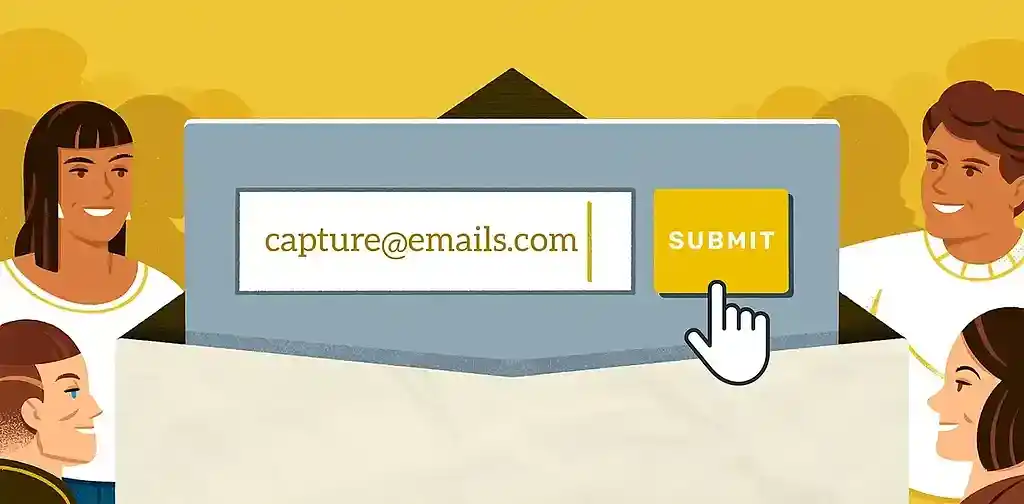
As we’ve touched on, an email list is (still) one of the most reliable marketing channels you have at your disposal. You can run it the traditional way, through a service like MailChimp, or in a more “modern” way, through a platform like Substack or Medium.
Regardless, the guiding principle remains the same: these warm leads are much more likely to purchase your book than total strangers. So make sure you keep them “warm.”
21. Choose the right email platform
MailChimp and MailerLite are still two of the most widely used platforms for authors in 2026. Both offer free tiers for lists under 1,000 subscribers, and provide data on open rates, click rates, and unsubscribes, which can help inform your newsletter strategy.
Substack or Medium are also worth considering if you want to have a public-facing newsletter alongside a private list. Some authors have even built paid subscriber bases of thousands of readers — the free newsletters draw them in, and once they know they like the author, they’re more willing to pay $5-10 per month for exclusive content.
FREE COURSE
How to Build Your Author Mailing List
Learn how to connect with your audience and sell more books with email.
22. Don’t treat it as a generic sales channel
To retain subscribers, you can’t just be constantly advertising your book — your newsletter must provide value in its own right. Readers subscribe for unique content, stories, recommendations, behind-the-scenes access, etc. Build goodwill with these types of value-first emails before asking for a review, a purchase, or a share.
A good rule of thumb is to send three or four value emails for every transactional one, and/or to keep any transactional requests to a brief section at the end of your newsletter.
23. Add email sign-up opportunities everywhere
Your email sign-up should appear in your website header, footer, the back matter of every book you publish, your social media bio, and in the presentation slides for any speaking engagement or webinar you do. Consider creating a QR code that users can scan to sign up directly.
Also, remember that clear messaging works better than general; instead of "Sign up for updates," try "Sign up to get a free prequel novella." No need to be coy — tell them exactly what they’re getting, then deliver on it.
24. Use exit pop-ups on your website
An exit pop-up — triggered when a visitor moves their cursor toward the browser tab — helps capture visitors who would otherwise leave your website without subscribing. Again, the offer in the pop-up should be specific (a free chapter, a short story, a checklist), not generic. Test the headlines you use over time and switch out any low-performing ones.
25. Design lead magnets for your genre
We’ve already spoken about why you need lead magnets, but here’s a reminder to make them genre-specific. For instance:
- Romance/fantasy/thrillers: A free prequel novella or the first book in a series (since these genres have particularly voracious readers).
- Literary fiction: An exclusive short story or an annotated chapter with author notes.
- Nonfiction (self-help, business): A template, checklist, or "starter kit" related to your book's topic.
- Nonfiction (memoir/narrative): A bonus chapter or extended epilogue.
All that said, “bigger” magnets do often get better ROI, regardless of genre. If you can afford to give away an entire book as your reader magnet, you should consider it.
Q: What strategies can authors use to expand a self-published romance novel into a successful book series?
Suggested answer

Series are a great tool for self-published authors, because it's easier to get a reader to buy the next book in a series than it is to get them to buy a standalone. Then, you can be more efficient with your marketing time and dollars by only advertising the FIRST book in a series and letting the rest sell themselves!
Remember, in romance, series don't have to all follow one character. That's more common in Fantasy or police procedurals. In romance, it's most common to take a fun side character from the first novel and tell their story in Book 2. Starting with a tight-knit group of friends (like members of a band, or a football team, or a book club) can give you a perfect series theme!
Pro Tip! If you know which character you'd like to follow in Book 2, give them a little bit more "screen time" or a subplot of their own in Book 1, so the reader gets to know and love them, and wants to read their story next!
Michelle is available to hire on Reedsy

By changing the main character in each book. If all of the main characters are linked together somehow, that can make a series much easier to pull off. For instance, they may be sisters, attend the same school, live in the same town, be part of the same club or sports team, etc. This unifying detail will help to keep the series unified since all of the main characters will then all be part of the same established "world."
Melody is available to hire on Reedsy
If you've written a stand-alone Romance novel and are now thinking about expanding into series territory (always a good idea for self-publishing romance authors), think about place, character, and theme, and see what inspires your imagination.
Maybe you love the way your small-town Christmas romance came out, and readers loved it also. Whether you build out into a series of small-town holiday romances or Christmas romances, you've got the basis for a series there.
More traditionally, you can think about character links. Maybe your first romance centered on a marketing exec--does that now-in-love exec have friends or family who need a little romance in their lives? There's your natural link to expand into a series!
Place/setting is also an option. Think about that ad exec from my last example. Maybe she's got coworkers around her ad agency who happen to be single, and you can use that ad agency as the connecting setting for a series...
Of course, if you know in advance that you want to write a series, it's always a good idea to think about this advance--and make sure to introduce the next book's characters in some key scenes so that they won't be a stranger to readers when the next book comes along--but sometimes stand-alones just strike a chord with readers, and if that happens, there's nothing stopping you from expanding into new territory at that point!
Jennifer is available to hire on Reedsy
26. Run subscriber giveaways
Giveaways are another great way to attract readers. If you write horror, for example, give away a classic horror anthology. If you write cozy mysteries, give away a tea-and-book bundle. The prize doesn’t need to be your own book — the goal is simply to attract readers who would be interested in your work, so you can convert them sometime in the future.
27. Build your list with Meta ads
Meta ads (on Facebook and Instagram) don’t just boost your sales (which we’ll talk about later); they can also attract new newsletter subscribers.
While these mailing list ads may not convert as “directly” as book ads, they often have a lower cost per acquisition — because people are more likely to sign up to a free newsletter than they are to buy a book. For those just starting out, it can be a great way to gain subscribers quickly.
28. Email your list 2-4 times per month
Once you have some subscribers gathered around your virtual campfire, keep them “warm” with regularly scheduled content. We’d suggest sending around 2-4 emails per month. More frequent contact can lead to fatigue and annoyance; less frequent contact means subscribers can easily forget who you are.
The only exception is around your book launch, when you can justify ramping up to daily emails (though still just for a few days!). Other than that, stick with the 2-4 emails/month guideline.
Hire a professional
Eleanor P.
An award-winning book marketer and coach with 11+ years experience. Detailed sales-focused strategies, audits, social media, ads and more.
Request a quote
Kate L.
12+ yrs experience in indie publishing, launching, and marketing books. Specialized in sci-fi, fantasy, gamelit/litrpg, spec fic, LGBTQ+
Request a quote
Shaun L.
Strategic, custom book marketing for serious indie authors. Launches, ads, platforms, metadata—high-touch and genre-smart.
Request a quoteSocial media marketing
As touched on above, choosing the right platform matters more than showing up everywhere. Here’s a quick overview of where social media marketing efforts are more likely to pay off by genre and/or goal:
- Goodreads remains a crucial discovery platform. All authors should, at minimum, claim their profile and books on Goodreads.
- TikTok is most influential for romance, romantasy, fantasy, thriller, and YA.
- Instagram performs well for similar genres to TikTok, especially for authors with strong visual brands.
- YouTube is great for authors who create educational or advice-oriented content.
- Substack may be most useful for nonfiction authors who can post essays and articles.
- LinkedIn is essential for business, finance, leadership, and other professional nonfiction authors.
You can learn more about social media for writers in this post — but we’ll also cover the key essentials below.
29. Maintain your Goodreads author profile
Claim your author profile through the Goodreads Author Program. Then keep your bio and book list current — and try to engage actively by marking books as “read” and leaving ratings.
Readers who follow you on Goodreads receive notifications when you publish. This is a free, high-intent audience worth building consistently. It can also be linked from all your other socials.
Q: What marketing platforms are most effective for self-publishing authors to build their audience and increase sales?
Suggested answer
The most effective marketing platforms are the ones that work for you, your book, your genre. However, there are some universal principles.
Email List
Hands down, the most effective marketing platform is your own email list. This is actually how you build your audience, not someone else's.
It works especially well for fiction authors who are writing series. Having email addresses of your readers you can steer traffic to the sales channels of your choice, cross-promote, engineer bigger and bigger launches, etc.
It works for non-fiction too, and significantly exceeds any other type of marketing in effectiveness.
Your Book
You don't just hope to build an audience and increase sales. You put sections in your book in a way that encourages readers to follow you and/or buy more books from you.
I built quite a chunk of my email list from my readers on Amazon. In each book, I offered them something related to its specific topic in exchange for the email address. At the end of each book, I encouraged them to join my email list and list all other books I wrote, so they could buy them with a couple of clicks.
Other Authors' Email Lists
You should cultivate relationships with self-publishers in your genre. Whenever you discount a book, or launch a new book, they may share it with their audience and boost your sales.
This marketing platform is second only to your own list. Personal recommendations can go a long way.
Amazon Ads
Nowadays, majority of book sales happen on Amazon. And Amazon transformed it into a pay-to-play game. Yes, absolutely you can drive traffic from socials, your email list, podcast appearances and whatnot, and generate sales that way.
But you will lose to competitors who do the same AND can afford to pay for ads. Simply, Amazon will love them (*cough* their money) more.
I consider the above obligatory and universally most effective marketing platforms. There are many others: promo sites, Book Bub, Goodreads, social media, podcast tours, blog tours...
They may or may not make a difference to your book, depending on many factors (main ones: your genre and reviews).
PS. Community
Your email list is a great tool to contact your readers, but doesn't allow them to interact with each other. If you want to build a massive audience some kind of online community (preferably owned by you, so not a FB group, but rather a community on Substack, Skool or Circle) can be a perfect tool for you.
Michal is available to hire on Reedsy
Goodreads. It's debatably the #2 most powerful site for books after Amazon, and could well be #1 in Europe (where Amazon doesn't have the hold on the market that it does in North America). It's important to note that Amazon owns Goodreads - hence the "buy on Amazon" button on the left side of every book page. Amazon WANTS you to have a robust profile on Goodreads. Once you build up 10-20 reviews, engage in a Giveaway, and reach audiences you otherwise would never have interacted with. The mistake many authors make is to do a Giveaway on launch - you are better to wait until your book has reviews so that it has the social proof new readers are looking for.
Chris is available to hire on Reedsy
30. Create your own content
Naturally, you also want to attract followers by creating your own content. As an author, you might showcase your writing process, tease plot points, react to reader theories, share the music or mood board that inspired your book, or simply talk about why you wrote it.
You don’t need professional equipment for this. In fact, much of social media marketing appeals because of its “homemade” quality. Feel free to keep your posts casual — but stay authentic, as readers can sense phoniness a mile away.
31. Run social contests and interactive promotions
Fan art contests, character naming polls, caption competitions, and book-themed trivia can generate more likes and comments. These work especially well on Instagram and TikTok, where the algorithms are especially engagement-led.
32. Host live Q&As and AMAs
Live sessions on platforms like Instagram, TikTok, YouTube, and Twitch also allow readers to interact with you directly. Even the occasional “Ask Me Anything” can be a good investment. Not only do these kinds of live events connect you with readers, but they also result in content that you can repurpose into newsletters or blog posts for those who didn’t catch the live session.
33. Repurpose short and long-form video
Any short-form video you create for one platform can be re-uploaded to others with minimal extra effort. However, remember that each platform has its own logic. Opt for native uploads rather than “re-posts”, using each platform’s internal system.
Also, obviously pay attention to what does well. The same video might perform 10x better on one platform than another, and you could then hone your strategy based on that.
34. Post a “vibes”-based trailer for your book
A 10-30 second video capturing your book's emotional premise — atmosphere, tone, and feeling rather than plot summary — can do great on Instagram Reels and TikTok. This can work especially well for genre fiction with a strong visual identity: fantasy, thriller, romance, horror.
35. Do a cover reveal
Lastly, in a similar vein, you can turn your cover reveal into a main event. A few months before your release, start hinting at what your cover will look like; post a close-up, a blurred version, or even “comp covers” that look similar to yours in order to tease your audience.
Then whenever you set up pre-orders, reveal the cover in full — and continue to show it on social media, in your newsletter, etc., as it will continue to be a huge marketing asset.
Collaborating with fellow authors
Rather than gatekeeping, partnering up with authors in your genre can help you both grow your audiences. Here are some ways you can do just that:
36. Find suitable cross-promotion partners
To find good partners, start with authors whose books appear in the “Also Bought” carousel on your Amazon page. Reach out via email or DM them on socials with a friendly message. Try to personalize each message a little bit, so it feels like you’re interested in building a relationship and not just ticking them off your list.
37. Offer a newsletter swap
Once you’ve established contact, pitch a newsletter swap. This is where you mention another author in your newsletter, and they do the same for you — or take it even further by writing each others’ newsletters in full. Try to time the swap when you both have a launch or price promotion running, to give readers concrete action to take.
Lastly, make sure your lists are comparable in size and engagement. Otherwise, you could end up doing a much bigger favor for your fellow author than they’re doing for you.
Q: What topics should authors cover in their newsletters to keep readers engaged and build a strong following?
Suggested answer
Authors can write about a lot more than just their book! Ideas to write about are:
- Top 10 favorite books - Write a blog post about your ten favorite books and then share it with your newsletter audience.
- Behind The Scenes - This is a broad category. You can write a newsletter about how you got the idea for the book, or about how certain characters came to be, their motives or any backstory that may not have been mentioned.
- Appearances and events - This should go without saying, but letting your audience know about any scheduled appearances in person or online is great to share with your mailing list.
- Ask them something! - Make your audience feel important and seen by asking for their input on something. Make sure it's something that you really want to know because the public can sometimes surprise you!
- In Depth Bio - You can write a more in-depth bio and share it with your audience. This pulls back the curtain and allows your fans to learn more about you, further strengthening their interest and trust in you / your author brand.
- A Short Story - Write a quick story and share it with your subscribers. Giving away free content is critical to gaining and keeping customers/fans these days.
This is just scratching the surface. I hope this has sparked some ideas of what authors can write newsletters about.
Chad is available to hire on Reedsy
38. Trade social media shoutouts and takeovers
A social media shoutout is another simple yet effective way to collaborate. On Instagram, a day-long Stories “takeover” can be a playful way to introduce yourselves to each others’ followers. Or if you’re both on a text-based platform like X, Bluesky, or Threads, see how long it takes for your followers to realize another author is posting instead of you. Make a game of it!
39. Share guest posts
If you both have well-trafficked blogs, you can also offer to swap guest posts. Just make sure you have something more useful to offer their readers than a thinly veiled advertisement. A thriller author writing a guest post on the type of forensic research they’ve done will create far more goodwill (and clickthrough) than a surface-level promotional post.
40. Co-host webinars and live events
A joint webinar or live Q&A with another author in your genre is another opportunity to create crossover appeal. These work especially well when framed around craft or genre, rather than a specific book. “Two cozy mystery authors discuss how they build their fictional towns” is much more compelling than “Two authors discuss their latest releases.”
41. Put together bundles, anthologies, and box sets
Bundling books with other authors in your genre for a limited-time box set or anthology is another great discovery tactic. Romance, cozy mystery, and fantasy communities have well-established anthology infrastructure that makes this easier to organize than it sounds.
Participating in reader and writer spaces

Not all growth needs to be self-generated. Some of the best visibility comes from showing up where readers and writers already gather. These spaces offer something algorithms can’t: real-world credibility, organic discovery, and the chance to form lasting industry relationships.
42. Engage with reading communities
Use your social media accounts to participate in existing communities. Your readers will gather in genre-specific spaces: think Facebook groups ("Cozy Mystery Readers," "Epic Fantasy Fans"), Reddit communities (r/fantasy, r/romancebooks, r/horrorlit), and Discord servers.
Participate genuinely — as a fellow reader, not as a marketing author. Book marketing is about building relationships, not just a transactional, one-way broadcast. Answer questions, join discussions, and recommend other books. Once you’re trusted in these communities, talking about your own book will feel organic rather than contrived.
43. Speak at writing conferences and events
Speaking at industry events — writing conferences, industry panels, genre conventions — can also help build your credibility, particularly for nonfiction authors. Look for events relevant to your genre or topic. Having a speaker credit on your resume is also a strong authority signal that will benefit your online presence and overall reputation.
44. Attend book festivals
Similarly, book festivals — from local literary events to major ones like Brooklyn Book Festival — offer concentrated reader and industry access. Come prepared with a good logline, bookmarks or postcards to give away, and plenty of genuine enthusiasm. Treat every conversation as a potential partnership rather than a transaction; you never know where a relationship might lead, and you’ll have more long-term success if you’re not just constantly pushing book sales.
45. Lead a workshop or webinar
Workshops and webinars are another tried-and-true marketing tactic. The content can be whatever you like: a webinar on how to come up with great story ideas, a workshop critiquing other people’s writing, or anything else your followers would like to see.
Indeed, with book marketing, remember it all comes back to that target audience. When in doubt, think about what they really want — not merely what would be most convenient for you.
Getting reviews and creating buzz
Even the greatest book can’t sell from nothing. This is why gaining reviews and early buzz around your book is so important. The goal isn’t just volume, but visibility: getting your book in front of the right readers, at the right time, with sufficient hype to spark word-of-mouth.
46. Collect blurbs and testimonials early
First off, get your endorsement in place. Reach out 3-4 months before publication — to fellow authors, bloggers, and experts whose readers overlap with yours — and be specific about what you want. In many cases, asking for something small can lead to a great payoff. A two-sentence blurb from a bestselling author in your genre might significantly boost your conversion rate!
47. Pitch ARCs to creators and review sites
Next, you’ll want to line up a handful of established reviewers and other creators to read ARCs of your work, so their reviews will be ready for your launch. Note that most people will need at least 8-12 weeks’ lead time to read your book, so don’t wait on this step.
You can look for creators on social media. Aim for “micro” influencers of 5,000-50,000 followers, as they will likely be more receptive (and their followers more targeted!) than those with much larger followings. You can also check out this directory of book review blogs to pitch.
Finally, remember to personalize your outreach; you’ll get better results from 10 customized emails than 100 clearly generic, mass-delivered emails.
48. Distribute your ARCs through bespoke platforms
On top of the reviewers you’ve already found, you can get even more early readers simply by listing and distributing your ARCs on platforms like NetGalley and BookSirens. Anyone can request an advance copy of your book through these platforms, so you’re not relying solely on the leads you’ve generated yourself.
FREE RESOURCE
The Guide to Getting Book Reviews
Learn to pitch your book to potential reviewers with our handy checklist.
49. Build your launch team
The last piece of the reviewer/creator/reader puzzle is building your hands-on launch team. This team should consist of 20-30 engaged readers whom you recruit from your email list and social media accounts.
In theory, members of this launch team shouldn’t just read your book and post their reviews. They should also be creating their own social media posts about it, re-posting your promotional content, and essentially plugging your book every (organic) chance they get.
Once again, for optimal results, start reaching out to people 10-12 weeks before your launch. You’ll probably want to cast a wide net with a newsletter first, then go from there.
50. Try a blog tour
Don’t limit your blogging activities to author cross-promotion! You can go on a full-blown blog tour simply by doing a little more research to find additional websites. Reach out to them with guest post pitches, ARCs of your book, and anything else that might interest them.
51. Seek out podcast slots
If you’re a good speaker, you can also offer yourself up as a podcast guest. Just make sure the podcasts you reach out to are relevant to your audience. For example, if you’ve written a book about home improvement, don’t pitch yourself to a “Bodice Rippers” romance podcast; find a lifestyle or DIY hacks podcast instead.
52. Submit to Reedsy Discovery
You can also submit your book to a review service like Reedsy Discovery. This gets you a professional, high-quality editorial review that you can use in your marketing materials and that readers will trust. Particularly if you are struggling to squeeze thoughtful, detailed reviews out of your individual early reviewers, going through a professional service like this could be the key.
53. Amplify through other book promotion sites
Once your book has 20+ reviews, submit it to established sites like BookBub Featured Deals, Freebooksy, or Bargain Booksy for sustained post-launch promotion.
You can also run promotions through smaller, but still valuable, sites. They’ll email their subscriber lists about discounted and free books in specific genres, putting it in front of readers who are open to take a chance on a new author in exchange for a great deal. Browse our full directory of book promotion services for options sorted by genre and price point.
54. Throw a book launch party
A book launch party — physical or virtual — gives your whole network a reason to celebrate and share your book on a specific date. Physical parties work best for authors with a local following or a book tied to a specific community. Virtual parties (via Zoom, Crowdcast, or Instagram Live), on the other hand, are more accessible to your entire readership.
Either format should include a short reading, a Q&A, and a clear call to action to buy your book. You might even consider having each attendee purchase your book as their “ticket” to the event — but then again, if your goal is exposure over sales, err on the side of free entry.
Q: Should authors sell exclusively on Amazon?
Suggested answer
In the children's book world, an author selling their book only on Amazon is not ideal for several reasons. Most advance trade review outlets will only review books that have a broad distribution, or at least are sold also in bookstores or non-traditional book outlets. Also, selling only on Amazon largely cuts out the school and library distribution, which typically use wholesalers. Amazon, in my opinion, is an important part of book sales, naturally, due to its huge marketshare of children's book sales, but best done in conjunction with other sales and marketing opportunities.
Tara is available to hire on Reedsy
For most authors—especially if you’re just starting out—selling exclusively on Amazon is a smart move. Managing multiple platforms can be overwhelming, and Amazon’s KDP Select program gives you some great tools to build momentum. Page reads from Kindle Unlimited and features like countdown deals make it easier to get your book in front of readers without spreading yourself too thin.
That doesn’t mean you’re stuck with Amazon forever. Once you’ve got some traction—like more reviews, a growing fanbase, or even a backlist—you can start exploring other platforms or even direct sales. But starting with Amazon keeps things simple and helps you focus on what matters most: reaching readers and building your audience.
If you’re new to publishing, Amazon isn’t just a platform—it’s the best foundation to launch your career.
Jd is available to hire on Reedsy
It depends on your ultimate career/business goals. A book that is only published on Amazon looks like a self-published book. For non-fiction, if your goal is the elevation of your thought leadership status, you benefit from your book being "everywhere". Including links to numerous retailers on your website is not a traffic flow exercise, where we are trying to spread out your sales - it is a branding exercise. We want to show the prospective reader, or podcast host, or convention booker that your presence is as far and wide as possible. Widespread distribution increases perceived legitimacy.
Chris is available to hire on Reedsy
55. Contact local bookstores
Local bookstores are a fantastic avenue for promoting your book; they’re often happy to support indie authors, and it’s usually pretty easy to book them. Have your pitch prepared, then get in touch about hosting a reading or giving a talk — or team up with other local authors and make it a joint event.
56. Sell your book to libraries
Libraries aren’t always looking to acquire titles, but those that are may be interested in yours if you pitch it exactly right. Make sure your book is available through a wholesaler, then contact local libraries and make your case. The good news here is that there’s often a domino effect: once you’ve gotten your book into one library, other libraries are more likely to want it too.
57. Host a book signing
Relatedly, you could also do a signing at your local bookstore, library, or even as part of a larger literary event or conference. Bring 20-30% more copies than you expect to sell — better to have too many than too few! — and think of a few different inscriptions to make the signing feel more personalized. Don’t forget to capture the event as social media content.
58. Pitch your book to book clubs
Book clubs are another underutilized marketing channel. Contact these clubs directly via their Goodreads groups or Facebook pages with a personalized pitch, and offer to join a virtual session if your book is selected.
For fiction, prepare some thought-provoking reader questions in advance (e.g., “What did you think of this character?”). For nonfiction, offer a downloadable discussion guide or some other resource that makes your title more appealing.
59. Try local radio and TV
Like podcasters, local TV and radio stations are always on the lookout for guests and fresh material. Send them your pitch and see if they might like to interview you on the air. If you can connect your book to someone else they’ve recently interviewed or to something topical in your area, all the better.
60. Donate your book other places
You can also donate your book to book drives, used bookstores, housing shelters, and so on. This is a great thing to do if you’ve printed your book in bulk and have more copies than you can realistically sell. A thrifty bookworm could turn out to be your new biggest fan!
Amazon keywords and categories
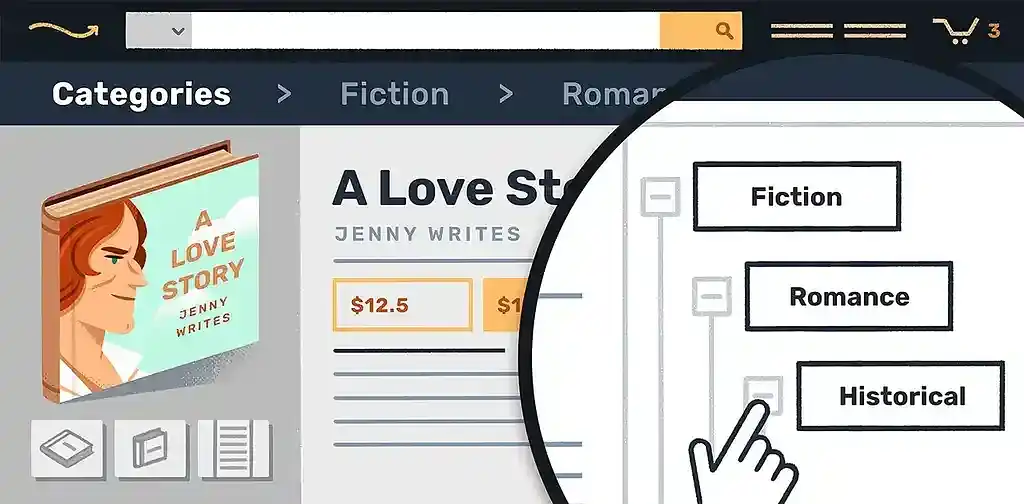
Amazon allows 7 keyword phrases per book (up to 50 characters each), as well as two browsing categories that relate to genre, subgenre, or topic (or up to 10 categories manually via KDP Support!). It costs you nothing to optimize these keywords and categories, and it offers great ROI, since Amazon is such a big platform for discovery and sales. Let’s dive in.
61. Optimize your Amazon listing and author page
Before you can hone your keywords and categories, you want to solidify everything else on Amazon. We talked about basic metadata — information like your book’s title and description — at the very start of this post. Now is a good opportunity to refine that description if needed, and also to update your Amazon author bio, photo, and linked social accounts.
62. Select niche categories strategically
Your first goal with Amazon categories is to rank as a bestseller in a niche subcategory before competing for broader ones. For example, a #1 badge in Victorian Historical Romance will boost your book’s visibility enormously. This is more valuable than swimming around in no-man’s-land of much larger categories like Romance or even Historical Romance.
Check out our deep dive on managing Amazon categories for more insights.
Q: What are the crucial steps to successfully publishing a book on Amazon, from manuscript preparation to marketing?
Suggested answer
Publishing a book on Amazon comes down to two key components: a high-quality book and reaching the right readers. Think of it as creating a polished final product and ensuring the right audience sees it.
Your book cover is your first impression—it should clearly convey the genre and instantly appeal to your target readers. Next, your description should emotionally connect with potential buyers, drawing them into the story and making them want to hit "Buy." Adding credibility factors like Amazon reviews, editorial reviews, or awards can help reinforce their decision.
Pricing is another important step. It needs to align with what readers expect in your genre while leaving room to adjust as your book gains traction. Finally, traffic: you’ll need a plan to bring readers to your book’s page through advertising, promotions, or organic efforts like email lists.
Each of these elements works together to create the best possible experience for your readers and give your book its greatest chance at success. I work with my clients to ensure all these pieces are aligned and optimized, giving their books the boost they need to stand out on Amazon.
Jd is available to hire on Reedsy
63. Research competitors’ keywords
While you can’t see a given competitor’s exact Amazon keywords, you can infer them from their title, subtitle, and description. Some simple research will tell you which keyword phrases appear consistently in the top 10 books in your category. Based on this, you can formulate similar phrases for your own book — while still keeping your unique selling point in mind.
64. Build keyword phrases, not single words
You should also know that Amazon indexes every individual word within a keyword phrase. This means that if you use a highly specific, long keyword phrase, you’ll show up in more search results than if you use single, broad keywords.
"Ivy League secret society dark academia" indexes for "dark academia," "secret society," "Ivy League," and multiple combinations — giving you five or more search terms from a single keyword slot. Remember to use the full character allowance for your Amazon keywords.
65. Target “tick box” subcategories
Some Amazon categories include sidebar filters — called tick boxes — that readers use to refine searches. Romance categories, for example, let readers filter by hero type ("Alpha Males," "Cowboys") and theme ("Amnesia," "Second Chance," "Forbidden Love").
The only way to appear in these filtered searches is to include the matching keyword phrase. If your genre has tick boxes, they represent some of the most targeted organic traffic available, so it’s worth incorporating those phrases into your own keywords.
66. Review keywords every 4-8 weeks
Keep an eye on your keywords, as their success rate will shift as the market does. If any keywords stop performing well, rotate them out! When a new comp title goes viral or a genre trend emerges (a TV adaptation, a BookTok moment, etc.), update your keywords quickly. But remember to check back again soon — the window of relevance is usually brief.
Running price promotions
Price promotions — discounting your book or even making it available for free — help it sell more quickly. This, in turn, will catalyze Amazon’s algorithms to promote it more. A spike in downloads can move a book up category bestseller lists, trigger “also bought” placements, and create organic momentum that outlasts the price promotion itself.
The revenue from the promotion is beside the point; it’s all about boosting visibility and gaining those crucial reviews. Here’s how to run price promotions on Amazon (with some tips that apply to other platforms too).
67. Explore your KDP Select options
If your ebook is enrolled in KDP Select (making it Amazon-exclusive), you have two promotional tools per 90-day enrollment period:
- 1 Kindle Free Promotion (up to 5 consecutive days of free downloads); or
- 1 Kindle Countdown Deal (a timed discount of up to 7 days).
You can use one or the other per period, but not both. Choose based on your goals — free promotions can get you more downloads and exposure overall, whereas countdown deals help preserve some revenue while still boosting your book’s rank.
68. Stagger external promotions over 5-7 days
Remember the price promotion sites from tip #53? You can use them to publicize your price promotion and gain even more downloads. But don’t pack all your external promotions into a single day — this can create a spike-then-drop pattern (which Amazon's algorithm penalizes).
Instead, spread external promotions across the 7-day window. Book different promotion sites for different days, run ads throughout, and use your email list on day two or three rather than day one, when organic traffic is highest.
Q: What are the most common mistakes authors make when pricing their self-published books, and how can they avoid them?
Suggested answer
A big mistake I see authors make is not thinking through how their pricing affects readers. If you price your book too high, you risk scaring people off. If it’s priced too low, readers might assume it’s not worth their time. Finding the right balance—what I like to call the “sweet spot”—is so important.
The best place to start is by looking at other books in your genre. What are they priced at? This gives you a good idea of what readers are willing to pay. Temporary promotions, like dropping your price to $0.99, can help boost visibility, but I don’t recommend staying there. It’s easy to get caught in a “race to the bottom,” where constant discounts make your book feel less valuable.
As your book gains credibility—through reviews, awards, or just word of mouth—you can raise your price to reflect that value. Pricing isn’t just about numbers; it’s about showing readers that your book is worth their time and money.
Jd is available to hire on Reedsy
The most common mistake authors make when pricing their self-publishing books is not pricing it so that they are covering all of their outlaid costs. Some authors only look at comparative titles in the marketplace and how they are priced. Indeed, this is an important step in figuring out what to price a book, but if you are not making a return on investment to at least to recoup your spend, not to mention a profit, then your list price is failing you.
Tara is available to hire on Reedsy
My answer, as usual, is based solely on Amazon, where 80-100% of sales happen for most authors.
1. Missing KDP's thresholds for Kindle
Amazon pays you 70% of the retail Kindle price - if the price is in the range $2.99 - $9.99.
If the price is lower than $2.99 or $10 and higher - you will receive only 35% in royalties.
Kindle book which is more expensive than $10 and below $29 has no economic justification from the self-publishing point of view.
2. The same price for the paperback and Kindle
Those are two distinct products. Kindle should be cheaper than paperback. There are no production or distribution costs involved for an eBook.
Plus, Amazon customers are trained to expect cheap and discounted stuff, especially for such a flagship category like Kindle books.
3. Pricing too low
This happens more with hard copies. In 2025, Amazon introduced new royalty structure: 50% royalties for books cheaper than $9.99, and 60% for $9.99+ books.
The trick is in fine print, as usual. Those percentages are counted after deducting the printing (and distribution) fee. So, when the same book costs $8 or $12, your royalties will be dramatically different. Let's say the printing cost is $3: in the $8 scenario you will get half of the five dollars; in the $12 scenario, you will receive 60% of nine dollars ($2.5 vs. $6).
Avoid the less-than-$9.99 price range, unless you have particularly good reason to price your book so low.
With Kindle there is a dramatic difference between $2.99 book and $2.49 book because of the thresholds mentioned in point #1 (about $2 vs. 87 cents).
Personally, I find only one price point below $2.99 worth trying: 99 cents. It is good for entry point of a series or for promotional purposes.
4. Pricing too high
It applies especially to Kindle format. First, because the royalties’ thresholds penalize higher prices. Second, because Kindle readers are cheap.
First-time authors think: "It's just $5, a price of the coffee, surely people will be willing to buy my book." They forget that they don't sell coffee, but eBooks. Amazon customers have millions of other titles free or priced incredibly low to choose from.
In case of paperbacks, it is more about the subject matter and length of the book. If you try to sell your 70-page novella for $20, good luck. Non-fiction books solving specific problems are more "justified" to cost more.
In the fiction genres the competition is fiercer. Readers have plenty of alternatives, so if you overdo your price, they may skip your book and pick your competitor’s book.
5. Pricing out of market
If you aren't a household name, you'd better accommodate to market's expectations. Don't price your debut novel, or poetry book, or children book $50 - it is just too expensive.
Don't price your business manual $0.99 - people will think it's so cheap because it's trash.
Michal is available to hire on Reedsy
69. Use permafree for series starters
Making the first book in a series permanently free is one of the most powerful marketing tactics available (as we touched on above with regard to lead magnets).
Here’s the workaround for KDP Select’s promotional time limit: set your book to free on competing retailers (Kobo, Apple Books, etc.), then request Amazon price-match via KDP Support. You won’t get access to KDP Select’s other benefits anymore — the main one being enrollment in Kindle Unlimited — but a permafree series is the gift that keeps on giving. It can generate continuous downloads, review accumulation, and read-through revenue on subsequent books — often paying for itself many times over.
70. Use your backlist to promote your frontlist
The back matter of every book you publish should link directly to your next title. When launching a new book, run a price promotion on your previous one to drive new readers into your catalog; they’ll then encounter your new book at the end of the old one. This “backlist into frontlist” strategy works great among high-volume indie authors, and requires no additional ad spend.
Speaking of which, our next section is all about…
Advertising your book
Paid advertising is one of the “later” stages of book marketing — for two reasons. The first is that you need to get your fundamentals in place before you pay for ads. An unedited book with a weak cover, poor description, and zero reviews is unlikely to do well no matter how many ads you run.
And secondly, on the flip side, some authors do so well with organic marketing that they don’t really need paid ads. That said, once your product page is strong and you have a good chunk of reviews, advertising can help increase your reach in new areas.
71. Set up Amazon ads
Amazon ads are obviously great for authors, because they promote your book on a platform where people are already buying books. They also operate on a cost-per-click model, so you pay only when someone clicks.
Amazon Ads can be run as Sponsored Product Ads (allowing you to appear in search results and on product pages) and Product Display Ads (allowing you to appear on competitors’ book pages and related product listings). Start with manual keyword campaigns for your genre’s top search terms and similar author names, then scale what works. Keep in mind that most Amazon Ad campaigns take 4-6 weeks to see significant results, so don’t give up too early!
72. Organize Meta ads (Facebook and Instagram)
Meta ads work differently from Amazon Ads; you're interrupting someone who isn’t currently looking for a book. This means your image or video, headline, or hook must do extra work to convince readers. On the plus side, the minimum spend is only $5/day.
Meta ads are especially useful for two purposes: driving email list sign-ups (via a lead magnet for cold audiences) and driving direct sales (by retargeting people who've visited your website or engaged with your content). So wherever you are in the marketing process, consider Meta ads to bolster your mailing list and/or sales.

FREE COURSE
Facebook Ads for Authors
In 10 days, learn to boost book sales with targeted Facebook ads.
73. Set up Google ads
Google ads let you target readers more precisely than Meta ads — for example, you can target people searching for things like “books like Fourth Wing” or “best thriller novels 2026.”
Here, you can start with Search campaigns targeting keywords like “books like [popular title],” your genre, and competitor authors. Use tight ad groups and send traffic to a clean landing page (your book page or a dedicated sales page). Keep budgets modest at first, track conversions carefully, and double down on keywords that actually lead to sales.
74. A/B test your ads systematically
Most ad platforms allow multiple ad variants simultaneously. Try testing different images (for example, your cover vs. artwork of your characters), headline hooks, and brief descriptions to see what performs best. Then change one variable at a time, for at least 7 days per test.
Keep a record of what you’ve tested and what worked. Even a small percentage improvement in click-through rate compounds significantly over time.
75. Try BookBub ads
BookBub’s advertising platform lets you target readers by genre, authors, and device type. BookBub readers are highly likely to purchase books. All this means targeted campaigns can be very effective — many authors run successful campaigns at $5-10 per day.
However, competition for readers’ attention is fierce, so BookBub ads may require more creative testing than other platforms to find a winning combination. The best approach: target readers of 3-5 comparable authors with a simple image featuring your cover and a punchy one-line hook. Then iterate from there (again, with some A/B testing).
76. Apply for a BookBub Featured Deal
In addition to running ads, you can also apply for BookBub Featured Deals. This is a dedicated email recommendation for a curated list of genre readers who have opted in to receive it. Current prices range from $183 to $2,240+ depending on genre and price point — and that’s only if you’re selected in the first place.
BookBub Featured Deals are quite competitive, but acceptance rates improve once you have 50+ reviews, a strong average rating, and a polished product page. Apply regularly, even if you get rejected at first.
77. Hire a book marketing professional
If a certain sphere of book marketing is beyond your skill set — or if you simply don’t have time to execute it well — hiring a professional marketer is often the most efficient path. Delegating ads can be particularly effective, as they require a lot of effort and finesse to constantly test.
Here’s what to look for in a professional book marketer:
- Genre experience. If you’ve written a romance, you don’t want a nonfiction marketer. Look for someone with expertise in your subgenre to get the best results.
- Measurable outcomes. Ask what success looks like for the services they offer, and what data they’ll share with you throughout.
- Communication style. Make sure you can communicate clearly and compatibly before you commit to working together.
Hire a professional
Lesley S.
Facebook Ads specialist who works with multiple authors across genres offering training and done-for-you ads services to get them results.
Request a quote
Sara U.
Digital marketer with a tech and analytics background to help you get those sales going! Mentored by Reedsy's CMO. Expert on Amazon Ads.
Request a quote
Kate L.
12+ yrs experience in indie publishing, launching, and marketing books. Specialized in sci-fi, fantasy, gamelit/litrpg, spec fic, LGBTQ+
Request a quoteUsing AI for book marketing

AI tools can meaningfully reduce the time it takes to put together your book marketing. Besides, more and more readers are discovering books using AI — so it’s an important space to be present in if you want to maximize your discoverability.
78. Brainstorm ad copy and descriptions
AI writing tools are particularly useful for generating multiple versions of your book description, ad headline, or social media hook. Prompt the model with your genre, tone, and core premise, then edit the output toward your voice.
79. Draft and editing email sequences
AI can also draft welcome sequences, launch sequences, and re-engagement campaigns from a brief — then you edit for voice and specificity. The human edit is essential; unedited AI copy sounds generic and undermines the personal relationship that makes author newsletters work.
Q: What are your thoughts on AI advancements in the publishing industry?
Suggested answer
AI is here to stay, and the authors who learn to work with it will come out ahead. I know some people are worried it might replace creativity, but I see it as a tool—one that can make your work easier and more efficient. Whether it’s using AI to help edit a draft, brainstorm plot ideas, or analyze data for marketing, it’s all about working smarter, not harder.
Think of AI like a co-pilot. It won’t fly the plane for you, but it can help you stay on course and even discover shortcuts you didn’t know existed. The key is to embrace these tools and figure out how they fit into your process. Change is inevitable, and the authors who adapt will not only survive—they’ll thrive.
Jd is available to hire on Reedsy

I am happy to work with authors who have used generative AI as a tool towards getting their book closer to publication. I would like to know if this was used before I receive a sample and I trust the author has heavily edited the output to review the content and add their own distinct voice.
Alex is available to hire on Reedsy
80. Research keywords and comparable titles
Try generating lists of comparable authors, trope combinations, and Amazon keyword phrases for your genre. Treat these as starting points for research, not final answers — validate them against actual Amazon search data and bestseller lists before using. (We all know how AI likes to “hallucinate” data points, after all.)
81. Create social media content outlines
Concepts for short-form social content — Instagram angles, TikTok hooks, post ideas — can also come from AI. Note our emphasis on concepts, not execution. Authors consistently report that AI is good for overcoming blank-page resistance, but that the best social content still requires human personality and specificity.
82. Boost your visibility in AI search engines
AI search is becoming a major way that readers discover books. To show up in reader recommendations from tools like ChatGPT and Gemini, focus on being referenced, not just ranked. Publish content that answers specific reader questions (“books like X,” “best cozy mysteries set in…”), and aim to be mentioned on high-authority sites, forums, and lists.
Consistency matters. The more your book appears across the web — reviews, interviews, listicles — the more likely AI models are to surface it as a recommendation.
Psst. Subscribe to Ricardo Fayet's newsletter for free to learn more about AI search visibility.
83. Consider AI a sparring partner, not an authority
Remember, AI cannot replace human-made creative decisions about positioning, your personal voice in newsletters, real relationships with readers and bloggers, and the strategic judgment about which channels deserve your time. AI accelerates execution; it doesn't replace strategy.
Planning your book launch timeline
Your book launch occurs when you actually publish your book — and encompasses all the concentrated marketing activities you do around that time.
As we’ve touched on, your goal is to arrive at release day with reviews already posted, a warmed-up audience, and promotional momentum building. That said, below is a final walkthrough of pre-launch things to consider that we haven’t already covered above.
84. Set up preorders
KDP allows preorders up to 12 months in advance — but for most authors, 12 weeks is more than enough time. Preorder sales do count toward your launch-day ranking, so don’t skimp on setting them up. And just set them at your standard price; you can run promotions later.
85. Join Amazon's affiliate program
If you're not already enrolled, 4 weeks ahead of launch is the prime time to join Amazon’s affiliate program. This ensures every Amazon link you share during launch earns commission.
Q: What do authors commonly misunderstand about Amazon KDP?
Suggested answer
A common misconception is that simply uploading a book to Amazon will lead to sales. Many authors believe readers will naturally discover their work, but the truth is, success on Amazon requires strategy. One of the biggest challenges is crafting a compelling book description. It’s not just a summary—it’s your pitch, designed to emotionally connect with potential readers and entice them to buy.
This can feel overwhelming, especially when condensing a 100,000-word story into just 160 words. Yet, studies show that your book description is one of the most critical factors in a reader's decision to purchase. Think of it as your best salesperson—if it’s not grabbing attention and building intrigue, your book may be overlooked. With the right approach, this small but mighty element can make all the difference.
Jd is available to hire on Reedsy
86. Warm up your email list
About 4-6 weeks ahead of launch, it’s time to start preparing your mailing list. Send a “Book is coming!” email with your cover, a brief excerpt, and your preorder link. Follow up with a second email sharing a specific scene, character detail, or behind-the-scenes element. The goal is to compel people to buy as early as possible.
87. Remind your ARC readers to post their reviews
A few weeks ahead of launch, you can also start reminding your ARC readers to publish their reviews. Of course, you don’t want everything posted on the same day — instead, you want a steady stream of reviews coming in. So consider reminding them in batches, or even suggesting a specific day for them to post.
88. Draft a press release
If you’re working with a publicist to get mainstream media coverage — or seeking that kind of coverage independently — draft a quick press release about your book. This should include everything newsworthy about your release, and answer any important questions journalists might ask (though make it clear you’re available for interviews, too!).
89. Test your paid ads
If you’re running Amazon or Meta ads for your launch, aim to have your campaigns built, reviewed, and ready to activate 4 weeks before launch day. Don’t even try building them on launch morning; you’ll only stress yourself out.
Do have a set of “launch day ads” ready to go live, however — and once launch day arrives, cancel or replace any pre-launch ads that imply your book is not yet released.
90. Press send on launch day
Keep your email on launch day short and sweet: the book is live, here are the store links, here's what you’ll love about it. By now, you should already have laid the groundwork, so no need to go overboard. If readers are interested, they’ll go ahead and buy.
91. Post on your socials
Posting on your socials on launch day is a given, but it’s even better if you can go live on Instagram or TikTok. The algorithms favor live content, and you can even send out notifications to your followers that you’re live! This creates a sense of excitement and celebration even if you’re doing everything virtually.
You can retrace your steps to tips 29-35 above for specific social media ideas.
Q: What's an example of a successful campaign you executed for an author?
Suggested answer
Here is the example of Mike Acker, who has several books on the subject of public speaking.
BEFORE
Mike was making about $950 a month in net royalties. He had been spending about $1,100 a month on Amazon ads.
Things he did right:
-picking decent targets (relevant to his topic)
-using decent bids (not too low, not too high)
Things he messed up:
-no search terms harvesting from Amazon campaigns
-using mixed matching (mostly broad matching), there was no clear strategy behind his targeting
-too much self-targeting (quite a chunk of his sales from ads came from his book titles and his name; it makes Amazon ads look better than they are).
AFTER
We started cooperation in April 2024. I fixed his ads mess:
-of course, I started from improving Mike's book pages - better descriptions and adding Editorial Reviews
-we created a recurring monthly report delivering information which reader searches converted into sales
-we stopped broad-matching campaigns altogether and replaced them with phrase-matching
-we started exact-matching campaigns for keywords with a good track record
-we targeted other books in the public speaking genre
Oh, we also made a bunch of mistakes - tried markets which didn't work, invested too much in testing Mike's other titles (his best book makes him over 80% of royalties), and overbid for some great keywords trying to rank for them.
Yet, the systematic data-driven approach resulted in increasing his net royalties by about $200 a month (this is after my fees and click cost).
The best part? Nowadays Mike spends no time on Amazon ads. His whole time commitment comes down to reading my monthly report and paying the invoice ;)
Success
Success is a relative term. For full disclosure: Mike sells 20% fewer copies now than before our cooperation.
Yet, he is making 20% more in net profit. This is a very measurable success metric.
However, the biggest win for Mike, who is an entrepreneur, is freeing up the time he had been spending on managing his ads.
A few universal takeaways:
Success is a subjective phenomenon.
If you are making more per hour than your hired force, hire a force!
The only reason not to outsource in such a case is enjoying your work.
Michal is available to hire on Reedsy
92. Analyze your data
To get even more value out of your launch, you’ll want to analyze its performance in the 2-4 weeks following publication. Which channels drove the most sales? Which ads performed best? What did your open and click rates look like? This information shapes your next launch, and will inform how you continue to market your book (and all future books).
93. Update other books’ descriptions and back matter
With all your fresh reviews, you’ll have plenty of material to use in your Amazon book descriptions and other books’ back matter. In addition to any praise you’ve received, you can add a compelling mention of this new project — or, better yet, link to it from the back of your other books (we did mention this above, but it bears repeating).
94. Order business cards
If you’re planning to do much in-person networking at conferences, festivals, and other events, professionally designed business cards can be an incredible asset. Consider having the same designer who did your cover also create a branded image for your business cards. Don’t forget to include your website, socials, and any other contact information you want publicly available.
95. Create merch for fans
This one’s also pretty next-level, but if you’re starting to build a solid fanbase, why not create merch for them to purch(ase)? Stickers or buttons with little illustrations are a great place to start — or level up to T-shirts and tote bags for your most devoted readers.
You can even combine this idea with #31 and run a contest for your fans to design merch for your book — though you may have to share sales profits with the winner. But hey, it’s great for engagement and PR.
Book marketing checklist
We know all this is a lot to absorb, but never fear — you can download our nifty book marketing checklist to ensure you nail everything important! Thanks for reading and happy marketing.
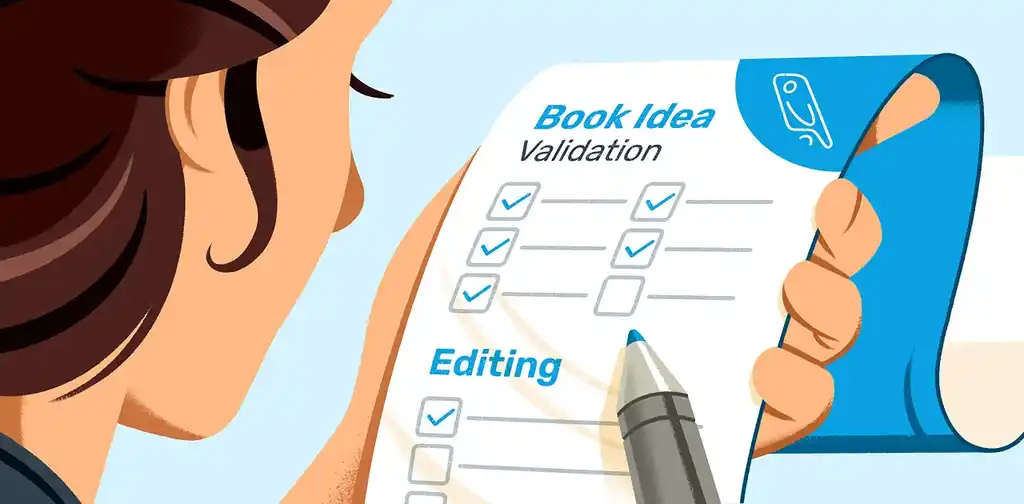
FREE RESOURCE
Reedsy’s Book Marketing Checklist
Tick all the boxes, from ads to networking to social media and beyond.
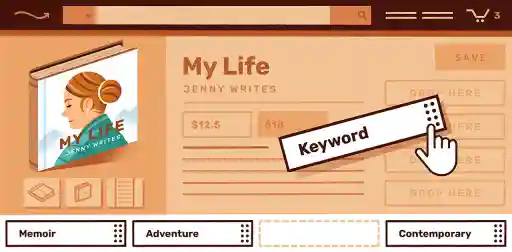


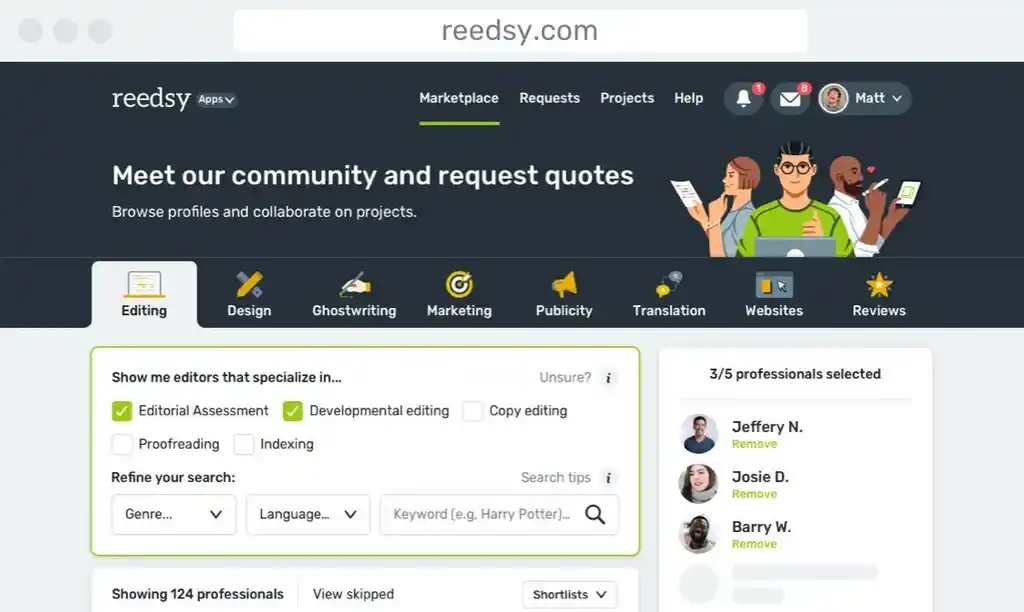
5 responses
L S says:
29/11/2018 – 21:18
Thank you! Extremly helpful!
max says:
13/06/2019 – 18:44
thank you a lot in a small package, #25 needs some grammar check.
Mary Jane Jane Overall says:
02/08/2019 – 16:14
I have said it once but I will say it a probable a MILLION MORE TIMES! YOU ARE AWESOME!!! Thank you so so much for all the incredible information. I have recommended you to a few businesses. I will continue to take your courses. Just can't begin to express my gratitude. Marketing is new to me. How lucky am I to have your guidance.
↪️ Yvonne replied:
08/08/2019 – 02:00
Thanks for the kind words, Mary Jane! Best of luck with the marketing!
Derrick Washington says:
08/12/2019 – 22:00
I appreciate the advice. I am an author and entrepreneur of the book world. I am almost finished illustrating my second children’s book. I really took my time creating it. As for the marketing and promotion side of the game, I needed to learn a lot more in order to be successful at selling my own books. Over the many months, I have researched and compiled many notes. As a result, I feel comfortable moving forward with my book brand. On top of that, I am going to redo all the illustrations and book cover for my first children’s book available on Amazon, and re-publish it. I am confident 2020 will be a wonderful year for me. Once again, thanks for sharing.