
Last updated on Aug 13, 2026
How to Market a Book: 7 Steps From a Professional Marketer

Ricardo Fayet
Reedsy co-founder and Chief Marketing Officer, Ricardo Fayet has worked with hundreds of authors on their launches and marketing campaigns. He is the author of two bestselling guides on marketing for authors, and a regular presenter at the largest writers' conferences.
View profile →Book marketing is the process of getting your book in front of the readers most likely to love it — and it’s best done in stages over time. When I advise authors on marketing their books, they often want to skip straight to the “fun stuff”: running high-impact ads, getting book reviews, or trying to go viral on TikTok.
But after working with hundreds of authors, managing over a million dollars in advertising spend, and literally writing the book on the subject, I can tell you that ads and virality only work once the foundations are in place. Marketing starts with a strong product, navigable product pages, and (if possible) an organic audience you’ve built yourself.
This post covers the seven steps I consider to be the backbone of any successful campaign. Here they are at a glance:
|
Step 🧭 |
Goal 🎯 |
When 📅 |
|
1. Write a book readers can’t stop recommending |
Meet your target readers’ wants and needs |
12+ months before launch |
|
2. Build your mailing list |
Gain a direct line to your readers |
6 to 12 months before launch |
|
3. Optimize your retailer pages |
Convert browsers into buyers |
1 to 3 months before launch |
|
4. Secure authentic reviews |
Build social proof for launch day |
1 to 6 months before launch |
|
5. Run a price promotion |
Maximize early sales |
Launch week |
|
6. Invest in proven advertising channels |
Scale what’s working |
After launch day; ongoing |
|
7. Publish your next book |
Compound your readership and income |
Post-launch |
1. Write a book readers can’t stop recommending
No marketing tactic can match the snowball effect of readers actually recommending your book. Word of mouth is how breakout bestsellers are born, and it’s the one thing even the world’s best book marketer can’t manufacture.
What you need for this is product-market fit: a book that precisely satisfies what a specific group of readers is looking for. Books without it have no real chance of selling — which is the reason most books never sell more than a handful of copies a month.
So, how do you achieve product-market fit?
Study your genre’s market
Spend time on Amazon, Goodreads, or at your local bookstore studying bestsellers in your genre. Consider elements like:
-
Are they series or standalones?
-
Written in first person or third?
-
What tropes, cover styles, and price points keep recurring?
You’re not looking to copy anyone here. Instead, you’re learning the conventions your target audience would expect, so you can either meet them or knowingly subvert them.
Refine your writing (and get an editor)
Be realistic about where you are. Writing is like playing an instrument: it takes time, practice, and feedback to master, and your first book is rarely your masterpiece.
Put money into editing before you spend a dime on ads. A professional editor who specializes in your genre will correct your manuscript and educate you: sharper dialogue, pacing, and characterization will improve every book you write after this one.
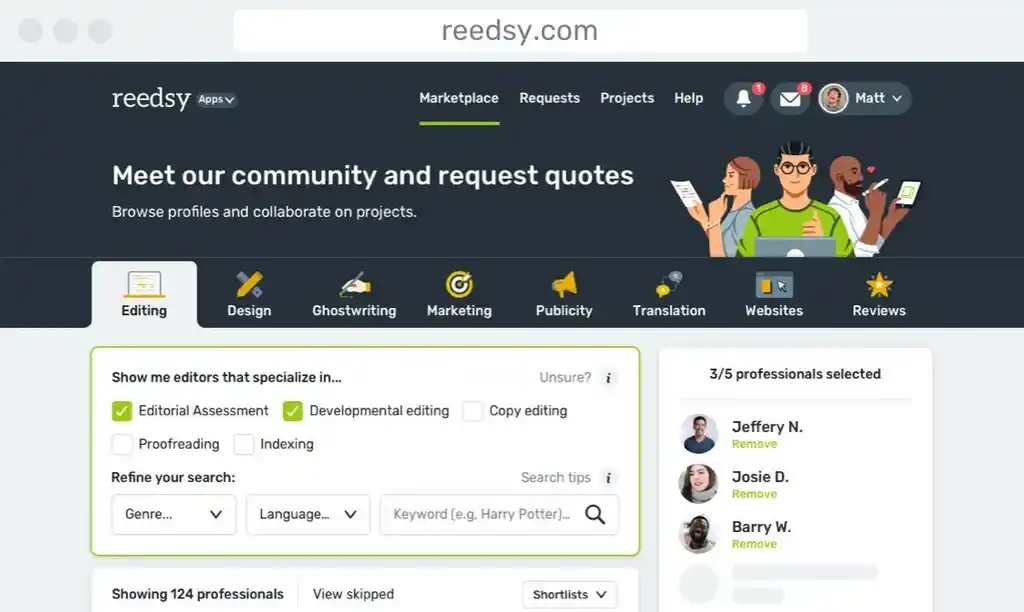
Hire a professional

Sean L.
Proofreader/editor for 14+ years, reader for 40+, and as a lifelong fan, horror is my go-to genre.
Request a quote
Lisa S.
Book indexer with over 20 years' experience at major publishing houses including Routledge and Cisco Press
Request a quote
Crystal B.
I'm an editor with over ten years of experience in copyediting and proofreading, specializing in children's, middle-grade, and YA fiction.
Request a quote2. Build your mailing list before you launch
Your launch window is the single most important sales period in your book's life cycle, so you need people primed to read — and recommend — it immediately.
This is why marketing should start six to twelve months before launch: that’s when your mailing list, ARC relationships, and community presence need to start growing. The most expensive marketing mistake you can make is starting the week your book comes out.
Social media platforms can help, but they control your reach, and their algorithms change constantly. A mailing list is the one audience asset you own outright. Even a few hundred engaged subscribers can generate the launch-day sales and reviews that wake up Amazon's recommendation algorithms.
This applies even if you’re traditionally published: unless you're a lead title, your publisher's publicity push is brief and shared across a much less targeted list. Your mailing list and your direct reader relationships are yours regardless of publishing path, and they can carry a book after the launch-month window closes.
Pick an email marketing provider
There are dozens of options, but I tend to recommend MailerLite, Kit (formerly ConvertKit), and Author.Email. They’re straightforward, intuitive, and used by most of the authors I know.
Kit offers the strongest free plan, supporting up to 10,000 subscribers, although advanced automations require a paid subscription. Meanwhile, MailerLite is an affordable, user-friendly generalist, but its free tier is capped at 250 subscribers. Finally, Author.Email has no permanent free tier, but it is built specifically for authors and costs considerably less than many larger platforms.
Give away a reader magnet
Now, you may be wondering: “How do I get readers to sign up to my mailing list before I even have a book out?” The answer is simple: you need to offer them something (this is what we call a “reader magnet”).
For fiction, that something might be a free novella, a sample chapter, etc. For nonfiction, you could create a free short course, a checklist, a cheat sheet, or a webinar. Don’t be afraid to think outside the box in terms of what will entice readers in your genre.
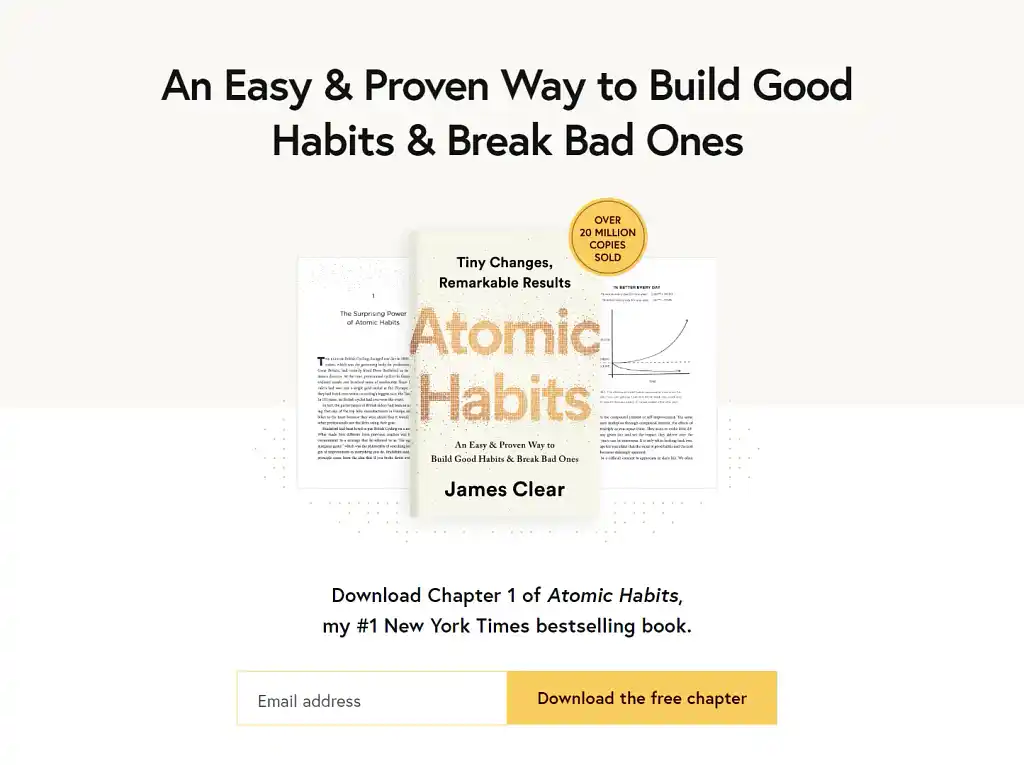
Bestselling author James Clear gives away a free chapter of his book on his site.
Then get your magnet in front of those readers by:
-
Placing targeted ads on Meta (Facebook and Instagram);
-
Promoting it organically on TikTok or Instagram; and
-
Running group promotions on platforms like BookFunnel or BookSweeps.
And once readers join your list, don't neglect them. Send regular newsletters with behind-the-scenes insights, thoughts on your writing process, sneak peeks of your work — anything to keep them excited for release day.
Q: What topics should authors cover in their newsletters to keep readers engaged and build a strong following?
Suggested answer

Authors can write about a lot more than just their book! Ideas to write about are:
- Top 10 favorite books - Write a blog post about your ten favorite books and then share it with your newsletter audience.
- Behind The Scenes - This is a broad category. You can write a newsletter about how you got the idea for the book, or about how certain characters came to be, their motives or any backstory that may not have been mentioned.
- Appearances and events - This should go without saying, but letting your audience know about any scheduled appearances in person or online is great to share with your mailing list.
- Ask them something! - Make your audience feel important and seen by asking for their input on something. Make sure it's something that you really want to know because the public can sometimes surprise you!
- In Depth Bio - You can write a more in-depth bio and share it with your audience. This pulls back the curtain and allows your fans to learn more about you, further strengthening their interest and trust in you / your author brand.
- A Short Story - Write a quick story and share it with your subscribers. Giving away free content is critical to gaining and keeping customers/fans these days.
This is just scratching the surface. I hope this has sparked some ideas of what authors can write newsletters about.
Chad is available to hire on Reedsy
3. Optimize your retailer pages
Imagine your ideal reader browsing a bookstore, picking things up based on the cover art or jacket copy. Readers on Amazon, Apple Books, Google Play, and Kobo go on that same journey — it just happens on your product page instead. This is why you need to nail every element of the page. In this order of importance:
Your cover design
Your cover has one job: to catch the eyes of the right readers and earn their clicks. The cover must look professional and fit your genre’s visual conventions (e.g., fonts, colors, styles).
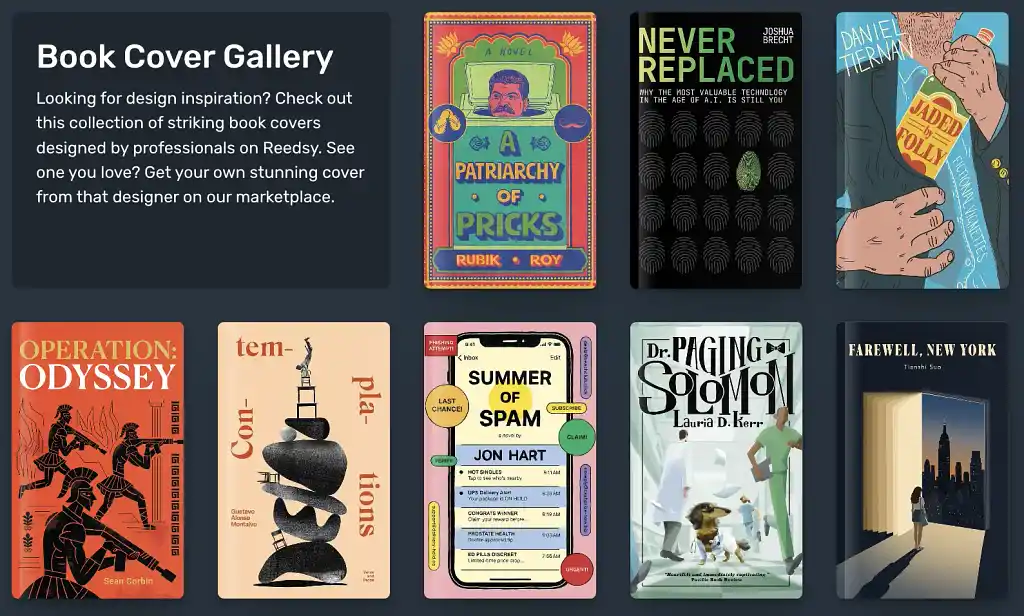
Featured covers from Reedsy’s Book Cover Gallery
Underestimating the cover is the single most common marketing mistake I see — we even ran this experiment showing how much difference a professional cover makes. We found that in six out of seven genres, the professionally redesigned cover earned more ad clicks than the original (up to 164% more, in the case of a fantasy novel!).
The book description
Your book description (or blurb) is your second most important customer conversion tool. For fiction: open with your main character, establish the conflict and stakes, and raise a question the reader has to answer. For nonfiction: be specific about what readers will get and why you’re the right person to deliver it.
Don’t forget, clarity and specificity beat overly detailed summaries and vague clichés every time. Read more here on how to write a perfect book description.
Categories and keywords
Categories and keywords don't sway readers directly, but they tell retailers what your book is and to whom it should be recommended. Look at your direct competitors’ categories and use them as inspiration. Remember, picking the wrong categories (or keywords) can have dramatic effects on your book’s visibility, so make sure to read our guides on choosing categories and choosing keywords.
Consistency
Keep covers, descriptions, and author info consistent across every retailer (e.g., Amazon, Barnes & Noble), community platform (e.g., Goodreads), and your author website. In 2026, this also helps AI assistants correctly identify and recommend your book.
Something to note — even if your book is already published, it’s not too late for any of this. Start right here at this step: overhaul your cover, blurb, and keywords, then build your review base (Step 4) and run a price promotion to relaunch (Step 5).
Q: What are the key elements authors must get right when setting up their book pages on Amazon or other retail platforms?
Suggested answer

Book Cover
I'm aesthetically blind, but I still have a couple of valid criteria - readability and fitting a genre. On Amazon, your book cover is your business card. People need to get what it is about with just a single glance. Don't try to be smart, try to be clear.
In non-fiction, it usually means a huge title that can be read in a thumbnail size. In fiction, it is a big image that screams the right genre (think dragons for fantasy, starships for SF).
Book Title (and subtitle)
In case of fiction, the title may be catchy and cryptic, but it needs to be short. Often, it is just an article and a single word.
In case of non-fiction, you'd better spell out in capital letters what your book is about.
For all books, subtitles are a great place to stuff in some keywords ("a medieval historical novel").
Book Description
Your book description is your sales page on Amazon.
It is not a synopsis, God forbid!
For fiction, think Hollywood movie trailers - something that reveals hints of the movie, but its main objective is to get the attention.
For nonfiction, spell out the features and benefits, but in a way that pique curiosity (“The undervalued habit that everyone can practice and tune into their self-talk (would you believe it can create new brain cells?!)”.
Emphasize your credentials in book's subject matter.
Format your description properly. Have a clear headline - the first short line (think: blog posts titles) that is separated from the rest of the blurb's text. And don't scare a reader with "the big wall of text." This is Internet! Nobody reads huge paragraphs anymore.
Keywords
On Amazon, you have seven fields with 50 characters.
Use five of those to brim. Why? Because the interface doesn't reflect the mechanics of Amazon keyword system. Those "seven fields" are actually a one huge tag cloud. Any word from one field can be connected to any word from another field.
Use one field to give the clear 'elevator pitch' for a book ("military space marines book”).
Use the word 'book' in this field. It will connect with all the other words in your keyword tag cloud.
Use the last field trying to indicate the category your book fits best.
Categories
12 years ago, it was a good idea to hit some niche category, so you could easily claim the bestseller status. Not anymore. Relevancy is the key. If your book is fiction, don't put it in obscure non-fiction categories (and vice versa).
The more specific you can get, the better for your positioning and algorithm's understanding of your book, e.g. Romance ->Historical Romance ->Scottish.
Bonus: Pricing
Don't price your 100-page novella eBook at $9.99.
If you have a fiction series, price the volume #1 lower. It is your lead magnet, if readers like it, they will buy next volumes at higher prices.
Michal is available to hire on Reedsy

Your book cover is the first thing readers notice, and it has to grab their attention right away. But here’s the thing: your cover gets them to click, but it’s your description that actually convinces them to buy.
A great book description needs to spark curiosity, set clear expectations, and connect with readers emotionally. If it doesn’t make them feel like they need to read your book, they’ll move on to something else.
Other details, like editorial reviews, awards, or even strong reader reviews, can help seal the deal, but the description is where it all happens. Think of your cover as the invitation—it gets readers to the party. Your description? That’s the host that keeps them there and makes sure they have a great time.
Jd is available to hire on Reedsy

I find that the most overlooked component of an Amazon book page is consistently the author bio. Of course the cover design and descriptive text are essential, but so too is the About The Author section. Particularly for non-fiction where the prospective reader is seeking confirmation of why you are credible to write on your subject matter. Readers are looking for subject matter experts, and your thought leadership status is what will sell your book. Beyond that, in the age of AI, you need to show that you are a real person. Over an author's career, it is the author that is the brand, not any one book. Show us that your credentials are legitimate, and that you are a worthy authority on whatever you are writing about.
Chris is available to hire on Reedsy
4. Secure authentic reviews
Reviews are a chicken-and-egg problem. You can't get reviews until your book is out, but you can't effectively promote a book with no reviews. The solution is sending Advance Reader Copies (ARCs) out to enthusiastic fans and known reviewers of your genre.
Traditional publishers, for example, send physical advance copies to booksellers and reviewers months before launch. As an indie author, you can replicate this digitally: send ARCs (via BookFunnel) to a hand-picked team of advance readers.
Build your ARC team
Now, you might be wondering: “Where can I even find advance readers?” Good question! Let’s break it down:
-
Start with your personal network. Friends, family, and connections who regularly read in your genre.
-
Leverage online communities. Think Facebook groups, Goodreads, Reddit, etc. Try to interact with these communities regularly for a few weeks first before posting about your book and asking for ARC readers.
-
Connect with authors in your genre. A review from a well-known author in your niche is by far the best kind you can get — and the one that takes the most effort, since it requires a genuine connection first. Writers conferences (even pre-launch) are a good place to start building that network.
Or use a review platform
No time or energy for the above? Use an online reviewer platform instead:
-
Reedsy Discovery: Our own review site with a team of vetted, professional reviewers whose expertise spans a wide range of genres. You’ll find quality editorial reviews comparable to the likes of Kirkus Reviews and Publishers Weekly.
-
NetGalley: The ARC platform used by most traditional publishers. It can be cost-prohibitive to submit your book on your own, so look around for “NetGalley co-ops” instead. These are services that share one NetGalley membership across many indie authors, letting you list your book for a fraction of the full price.
-
Book review blogs: Prefer the DIY route? We’ve got a free directory of active book review blogs, filterable by genre, that you can use to pitch reviewers directly.
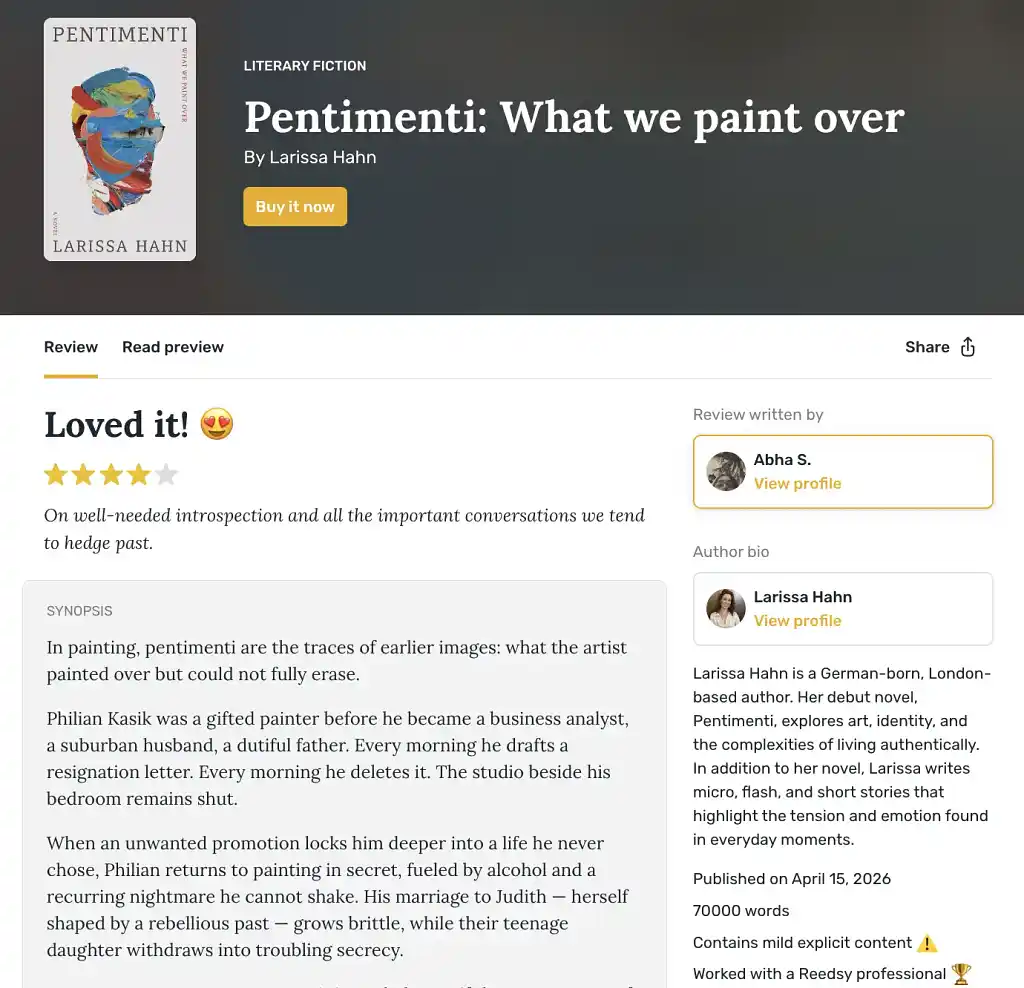
Whichever route you take, make sure to send ARCs at least a month before launch (ideally 3 to 6 months in advance), send review reminders at launch, and include direct review links to sites such as Amazon and Goodreads. Keep in mind that reviewers are helping you, not working for you — so be friendly and professional, and you’ll build relationships that last well beyond this launch.
5. Kickstart sales with a price promotion
With your early reviews secured, your next goal is velocity: getting your book into as many of the right hands as possible, and fast. The best tool for that is a limited-time discount, also known as a “price promotion”.
This is exactly what it sounds like: drop your price (or make your book available for free) for up to two weeks. Price promotions tend to work best right after launch, but you can use them at any point in your book’s lifetime.
If you’re exclusive to Amazon through KDP Select, you can amplify the effect with:
-
A Kindle Countdown Deal: a discount (like $0.99) for up to seven days, available only on the US and UK stores; or
-
A Free Promotion: making your book free for up to five days.
You can only run one of the two per 90-day enrollment period, but both receive extra organic visibility on the store. Don’t worry about losing revenue — the visibility you'll gain (and the long-tail effect on your sales) will be worth it.
Price promotions are also an opportunity to reactivate your existing network. If you run one at launch, let your ARC team know. Reviews left after purchasing at a paid discount price (like $0.99 during a Kindle Countdown Deal) will usually appear as "verified" on Amazon and carry more weight.
🚨 Something to note: Amazon only accepts reviews from accounts that have spent at least $50 on the marketplace in the past 12 months (via credit or debit card; gift card balances don't count). Make sure your reviewers are aware of this before they try posting.
Not part of KDP Select? Then you have a different lever available.
Go “permafree” for maximum reach
If you value downloads and visibility over revenue, make your book permanently free. Amazon won’t let you price below $0.99, but there’s a workaround: publish wide, set your book to free on other retailers (Kobo, Apple Books, Google Play, or via Draft2Digital), and Amazon will usually price-match it to $0.00. However, do note that matching is at Amazon’s discretion, and the process has become less predictable lately.
Permafree works best for the first book in a series: readers download it at no risk, and a portion go on to buy every sequel at full price. The catch is that it requires going wide, so it’s off the table under KDP Select.
6. Invest in proven advertising channels
Everything we’ve done so far has been to set up your book for success. Once you have impeccable retailer pages, initial reviews, and a scheduled price promotion, it’s time to get the word out about your book as far and wide as possible.
Below, I’ve set out the advertising channels that I think work well for authors, how much spend and effort they require, and how they’re best used:
|
Channel 📣 |
Typical cost 💰 |
Effort level 💪 |
Best for ❓ |
My verdict ⚖️ |
|
Price promotion sites |
$20 to $200 per promotion |
Low |
Discounted/free ebooks |
Best ROI for most first-timers. Stack a few (Freebooksy, Fussy Librarian, ENT, etc.) around a single discount window for maximum impact. |
|
Amazon Ads |
$5 to $10/day to test |
Medium |
Almost all genres |
My favorite channel. Precise targeting, but expect a learning curve and a testing budget of a few hundred dollars. |
|
Meta Ads |
$10+/day to test |
Medium to high |
Building lists; broad-appeal fiction genres |
Powerful once you crack the creative (visuals + hooky copy), but also easy to burn money before you do. |
|
BookBub Ads |
$5 to $10 per test campaign; $50+ total across variants |
Medium |
Wide/non-Amazon retailers, audiobooks |
Harder to make work than a few years ago (due to saturation), but cheap to test. Still worth trying. |
|
TikTok (BookTok) |
Free |
High |
Romance, fantasy, YA (visual genres) |
One of the last places organic reach can sell books, but only if you use the platform authentically. |
|
Podcasts and influencers |
Free to $$$ |
High |
Nonfiction; niche authority |
Slow to land, but one strong endorsement can change a book's trajectory. Influencer collabs are more affordable if it’s with a micro-influencer. |
A few pro tips before you dive in:
-
Price promotion sites are essentially newsletters that promote deals to reader audiences they’ve built over years. BookBub's Featured Deals are the most famous (and competitive), but there are dozens of alternatives — we keep an up-to-date tiered list of book promotion sites here.
-
Don’t confuse BookBub’s Featured Deals with BookBub Ads — the latter is their self-serve ad platform, which anyone can test without being selected.
-
For the two big ad platforms, I’ve gone deep elsewhere: I’ve written an entire book on Amazon Ads, and we offer a free course on Meta ads here.
-
Only invest in social channels you already enjoy using. Forcing yourself to post consistently on a platform you don’t like never works. This goes for TikTok, Instagram, and everything else.

FREE COURSE
Amazon Ads for Authors
Learn to reach readers while they browse the world’s biggest bookstore.
Finally, keep in mind that this is Step 6 for a reason. Don’t spend a cent on Amazon, Meta, or BookBub ads until you have nailed every element of your product page — especially your cover and book description.
7. Publish your next book
“Just write the next book” used to be the main marketing advice given in indie publishing. On its own, it's not enough — you can’t build a career by spamming out books indiscriminately — but deliberately growing a quality catalog remains one of the most reliable ways to compound your income and platform.
Almost every successful indie author I know has built their career on a series. In romance, mystery, fantasy, and thrillers, series dominate the bestseller lists. Even nonfiction has embraced the model, with series like Ryan Holiday’s Stoic Virtues series or Dr. Michael Mosley’s “fast results” health books.
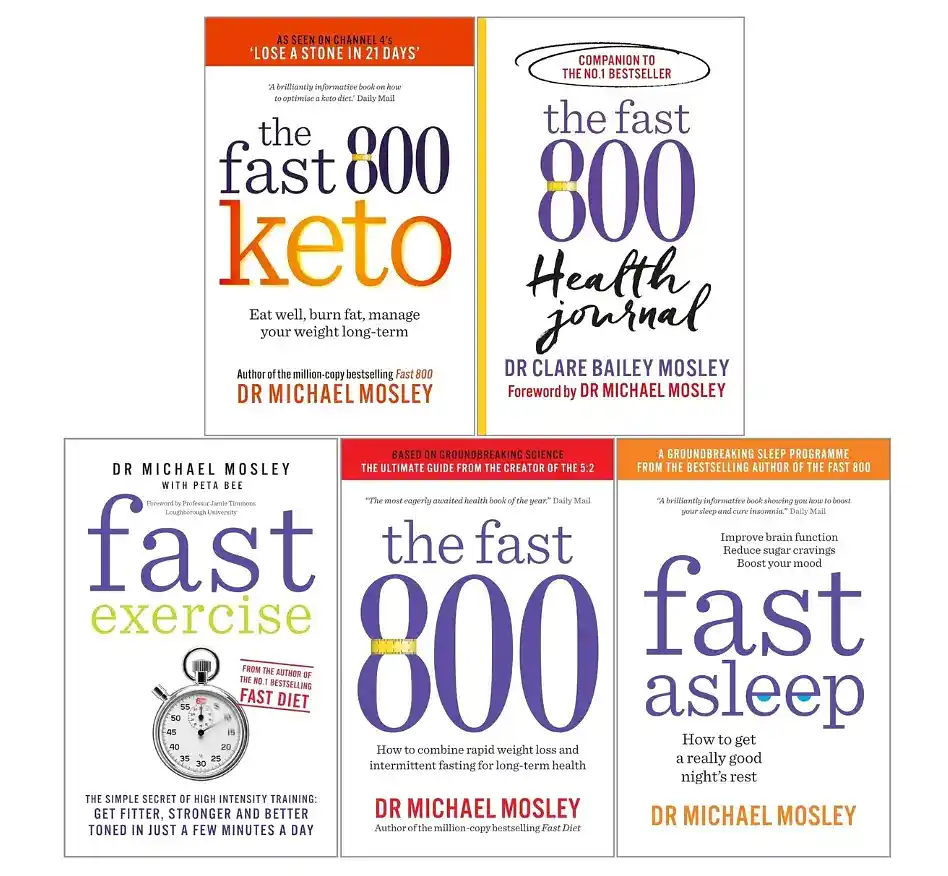
The magic of publishing a series lies in turning one reader into a multi-sale customer. You may be familiar with the marketing axiom that “it’s more expensive to acquire a new customer than to retain an existing one.” Series allow you to both retain and monetize your existing readers. In other words, it’s easier to sell 10 books to 10,000 enthusiastic readers than to sell one book to 100,000 readers.
A few final tips on series:
Watch your read-through
Read-through is the percentage of readers who continue from one book in your series to the next. High read-through means every dollar you spend on advertising book one earns you sales across the whole series. It’s the metric that makes ads on a series profitable when ads on a standalone aren’t.
Rotate your promotions
Multiple titles also multiply your promo options. You can’t discount the same book every month without diminishing returns — but with a series, book one goes on sale this month, book two next month, and every promotion increases visibility across the entire catalog.
When you’re torn between marketing the current book and writing the next one, default to writing. Some call this the 90/10 rule: spend roughly 90% of your working time writing and 10% marketing. It’s a useful notion in the long run (your catalog is your greatest marketing asset, after all) — though it obviously inverts around launch, when marketing dominates for a few weeks.
FREE COURSE
Book Marketing 101
Learn seven tried-and-true strategies for boosting book sales.
As you’ll have probably gathered by now, there’s no shortcut or magic trick to marketing a book. Researching the market, writing a great book, building your list, optimizing your product page, and giving readers every reason to enthusiastically spread the word — these are the core components of any book marketing strategy.
If you want to learn more about any of the steps I outlined in this post, you can download my free book, How to Market a Book: Overperform in a Crowded Market, from our Reedsy Store here.




1 response
Shay says:
11/05/2020 – 16:16
As a systems oriented, process-oriented person this break down was the most helpful content I've read on the internet in the last 30-days. You now have a new follower for your blog.