
Last updated on Oct 15, 2025
The Redemption Arc: Definition, Examples, and Writing Tips

Dario Villirilli
Dario Villirilli is a senior content marketer, editor, and SEO strategist with many years of experience in publishing. He is Managing Editor of the Reedsy Blog and has also written for IngramSpark, ProWritingAid, Written Word Media, and PublishDrive.
View profile →A redemption arc is a type of character arc in which a character who has been selfish, amoral, or downright villainous makes amends for their mistakes and wrongdoings — usually with a heroic act of sacrifice.
Redemption arcs can be tricky to execute, but when done well, they are incredibly powerful and satisfying. There’s nothing an audience likes more than seeing a character grow and change for the better.
In this post, we’re going to look closely at this arc and share some examples, as well as some writing tips for you to help your character rise from the ashes of their bad deeds.
FREE RESOURCE
Reedsy’s Character Profile Template
A story is only as strong as its characters. Fill this out to develop yours.
What is a redemption arc?
As we’ve said, a redemption arc is when a previously morally gray (or even downright evil) character turns over a new leaf. But what, exactly, does this redemption look like?
Something to keep in mind is that one good deed does not make a redemption arc. The character you’re trying to redeem needs to develop some maturity, not just act positively once after a lifetime of villainy. Readers want to see someone grappling with their past and ultimately coming to terms with it through reflection and intentional behavior as opposed to a quick and sudden change — in other words, it has to feel realistic.
Q: Does a protagonist have to change over the course of their story?
Suggested answer

Great question! And as with so many answers when it comes to writing fiction, the answer is 'yes and no'. Let me elaborate...
Sometimes, a change in a character and how it happens is the entire point of a story. Look at 'A Christmas Carol' by Charles Dickens, for example: Scrooge must look into his past and understand how his life has brought him to this point. For him, if he doesn't change, he will die a lonely and unmourned death. For us, if he doesn't change, then all we really have is a book about a man shouting at Christmas.
And then sometimes there is a Katniss Everdeen. Her qualities of bravery and knowing what's right are there from the start - she wouldn't substitute for her sister otherwise. Those characteristics remain strong throughout. The change in the Hunger Games books are often about the changes Katniss brings to the world around her; her main job in the narrative is as an agent of change, as someone who is unafraid to stand up for what's right. We often see this in superheroes.
I'm also thinking about Harry Potter, who doesn't so much change as have knowledge revealed to him that changes the way he sees himself. Yes, he gains skills and knowledge as the books progress, but he is (literally) marked to be who he is from the beginning. The change here is in his understanding of who and what he is, and what happened to him and his parents - something that the reader discovers along with him.
So I'd say that there always has to be change - otherwise, why would we read a book at all?
And change will definitely occur around the protagonist.
But that doesn't necessarily mean that the character begins as 'a', goes through 'b' and becomes 'c'. This is what makes fiction so interesting, to read and to write.
Stephanie is available to hire on Reedsy

As they say, "change is the only evidence of life." So as a rough, general rule, it's a good idea to have character development.
As well as being an editor, I'm a screenwriter, and protagonist change is often stressed as essential in films to keep an audience interested.
But it depends on the type of story and character. If a character is interesting enough, and the point of the story includes that they don't change, then don't force them to.
There are no infallible rules about storytelling.
John is available to hire on Reedsy

No. But in most cases, it's probably a good idea.
This criticism ("protagonist needs development/arc/change") is often shorthand for "this story doesn't have much craft to it" or "there's no arc to this thing." If the protagonist has no arc, good chance the story doesn't, either—but this isn't a hard-and-fast judgment.
The better question to ask is whether your protagonist should change. If not, you should have a firm idea why not, and so should your reader by the end. What would the character's not changing say, mean, or do? Is it a tale where everyone knows the protagonist needs to change, but he doesn't? Does he suffer the consequences? Get away with it? And so on.
Unless you can articulate why your character shouldn't change, then your editor is probably right: change would help the story along. But before you get rewriting, decide how this change will advance the story, what effects it will have.
In other words: Don't just change a character arc because an editor said you should. Change it because the story will be stronger for it.
Joey is available to hire on Reedsy
As a character recognizes the flaws in their past actions, their arc typically culminates in a pivotal redemptive moment where they selflessly sacrifice their desires — or sometimes even their life — for the greater good or for others. Importantly, this gesture must be significant enough to convincingly atone for all their past misdeeds.
Audiences are drawn to these kinds of stories because we, as humans, inevitably make mistakes. Seeing characters move past their misdeeds, make amends, and be forgiven by others gives us hope that we too can be offered that same grace.
To get an idea of what that looks like, and to understand the power a redemptive arc can have for a character, let’s look at three popular examples. They also map naturally onto the monomyth's death-and-rebirth beats, so if you're plotting one yourself, you can see all twelve stages of transformation in action in our interactive Hero's Journey template.
🧐
Which plot structure is right for your book?
Take our 1-minute quiz to find out.
3 examples of redemption arcs
Redemptive character arcs can vary significantly in their nature. While some stories may involve a character sacrificing their life for others, others might simply show a character becoming kind and generous after being rude and mean. This leads us to our first example…
Ebenezer Scrooge in A Christmas Carol
Ebenezer Scrooge’s story is a classic example of a redemption arc. From the moment we meet him on a bleak Christmas Eve, we know he’s not a good guy. He’s callous with his overworked, underpaid employee and with the poor who come asking for donations.

While his solitary, penny-pinching ways make his life — and the lives of those around him — miserable, he doesn’t seem like he’s going to change. That is, until the appearance of some ghosts, and a little bit of time travel, challenge Scrooge to reexamine his ways.
The ghost of his old business partner, Marley, and the Ghosts of Christmas Past, Present, and Future force Scrooge to reexamine his life. They remind him of the better man he used to be, what he’s missing out on now, and the way his life will end if he continues on his current path. Deeply affected by what he’s seen, Scrooge vows to change his ways.
Once he returns to waking life, he immediately donates a huge sum of money to the previously-rejected charity, raises his employee’s pay, and goes to his nephew’s Christmas party. Scrooge even becomes a father figure to Bob Cratchit’s sickly son, further cementing his new commitment to doing good.

FREE COURSE
How to Develop Characters
In 10 days, learn to develop complex characters readers will love.
Zuko in Avatar: The Last Airbender
After being exiled from the Fire Nation by his cruel and demanding father, Prince Zuko has only one goal: capture the Avatar in order to regain his honor. The audience is first introduced to him as he does everything in his power to apprehend the main character, Aang. In other words, he starts the series as a fairly typical antagonist: hard, spiteful, and constantly doing whatever he can to stop the good that Aang is trying to do.
Q: Does every story need a clear-cut antagonist?
Suggested answer

Every story needs an antagonist, but I think that every writer's definition of an antagonist will differ a bit. For one character, they are fighting a literal dragon. For another, it's the "dragon" of addiction, a storm while climbing a mountain, or their relationship with their mother. I know that sounds cheesy, but the story has to have stakes for the reader to care. Usually, stakes come with a fight to victory, a pathway of challenges -- a hero's journey. And it's hard to be a hero without an antagonist.
But clear-cut? No, I don't think so.
Grace is available to hire on Reedsy

Yes or there is nothing for the protagonist to push against or overcome. The story will just drift along on a happy cloud, which is nice for real life but not very interesting to read. However, an antagonist can be any number of things. It can be an aspect of the protagonist's personality. It can be a memory. It can the difficulty of reaching a goal. It can be society. It can be a pandemic. It can be the weather. It can be a whale.
Sophia is available to hire on Reedsy

It depends on your story. A clear-cut antagonist is one specific, highly effective way to personify opposition. A traditional villain can be a powerful tool for delivering a focused, action-oriented, and emotionally resonant narrative. But … not every story is like that. So, no, not every story needs this, exactly. Yet every compelling story needs an antagonistic force that creates conflict or represents an obstacle, getting in the way of the protagonist's goals.
You can have antagonism in various forms, such as inner demons, addictions or trauma. Nature, the environment, or illness. A corrupt system, prejudice, even machines, time! What about destiny?
They all pose nuanced conflicts without a central 'bad guy,' they're sometimes ambiguous, and they explore moral complexities. They all hold a different kind of mirror to your concept. Your antagonist challenges your protagonist, forcing them to grow, reveal true character and values. Whatever form they take, they ought to be the perfect day to your night, or vice versa. Clear-cut becomes a question of who or what is best suited to the challenge.
Agatha is available to hire on Reedsy
But as we quickly learn, there’s far more to Zuko than meets the eye. He struggles with the expectations placed upon him by his father, a man who permanently scarred him (both physically and emotionally) for daring to speak up, and then sent him on a fool’s errand to get him out of the way. Zuko isn’t always sure he’s doing the right thing and constantly struggles to balance his father’s expectations with what he wants for himself — which is to be seen and respected for his achievements, without necessarily doing wicked things.
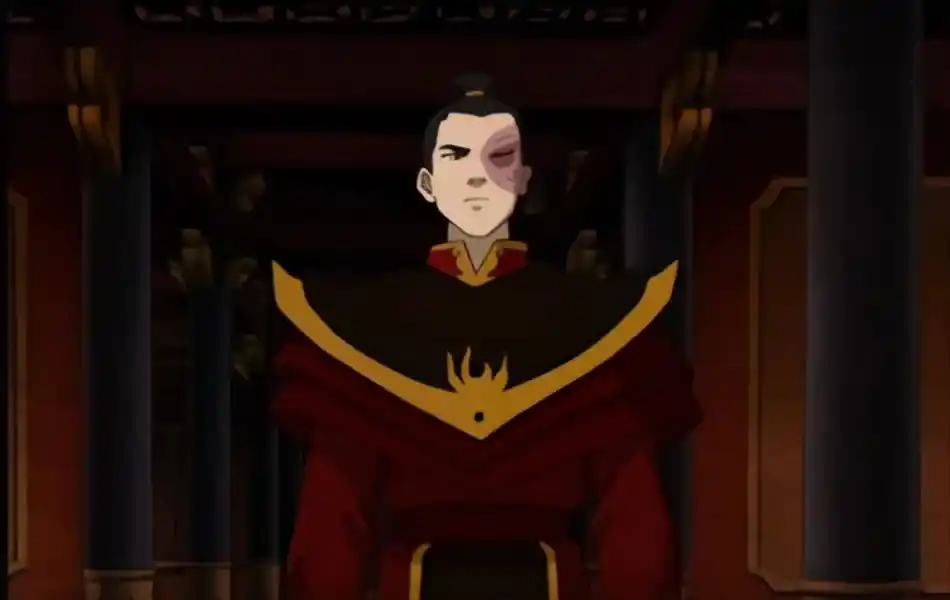
Eventually, he is allowed to return to the Fire Nation with his honor restored, with the Avatar supposedly dead because of him. But his doubts never go away and he remains uncertain of his decision to “kill” Aang and return home.
When he learns of his father’s plan to burn the Earth Kingdom to the ground, and of his own connection to the Avatar before Aang, Zuko decides he’s had enough. He confronts his father about his abusive treatment and imperialistic plans and declares his intentions to teach Aang firebending so the Avatar can stop him once and for all. Zuko sacrifices the one thing he’s always wanted, his father’s approval, in the name of the greater good — and, in the end, proves himself to be an honorable man.
Boromir in The Lord of the Rings
On the surface, Boromir doesn’t seem like the kind of character who would need a redemption arc. A noble son of the kingdom of Gondor, he joins the Fellowship in their quest to destroy the One Ring with only the best intentions.
However, even he isn’t immune to the Ring’s corruptive powers, and as they continue on their journey, he becomes more and more aggressive in trying to convince Frodo to hand over the Ring to him so he can use it to defeat Sauron once and for all.

This comes to a head when Boromir attacks Frodo in the hopes of gaining the Ring. He doesn’t succeed, but this does break Frodo’s trust in the Fellowship and ultimately causes him to run away to complete the quest on his own. Boromir is consumed by guilt and, though unable to admit to his part in Frodo’s flight, he helps the rest of the hobbits search for them and fights to protect them from orcs — though he ultimately fails. However, he then manages to alert the rest of the company to the hobbits capture and admits how he failed Frodo with his dying breath.
Boromir recognizes where he went wrong, and though he can’t make it up to Frodo, he proves himself a decent man in the end by defending his friends and giving the remaining members of the Fellowship a chance to save themselves.
Q: What strategies make a redemption arc feel earned, credible, and emotionally powerful?
Suggested answer

I'd say the main thing here is to stay true to the character. The redemption has to feel authentic based on how the character's been presented thus far in the book/story. Keep in mind the character's past actions and reactions as a whole. Because in the end, if the redemption feels like it's been shoehorned in or has come out of left field, the reader will feel that. However they redeem themselves, it has to feel like something that specific character would do—not just any character who's gone through the things they've gone through, but that character in particular. As for impact, the more three-dimensional the character is, the stronger the impact will be when their redemption comes about, so making sure they have a well-rounded, more-than-surface-level personality is absolutely key.
Brett is available to hire on Reedsy

Just as in real life, sometimes people have to hit rock bottom before they change and accept that they are an addict or an alcoholic, etc. So if possible, you want to show this character having some sort of reason to see that they need to change. Perhaps their negative actions have impacted someone dear to them, and they feel regret or remorse, which then motivates them and serves as a catalyst for change.
There should always be reasons why characters act the way they do, whether positively or negatively, and a sort of "awakening" might be a good idea if they must change their stripes for this change to feel organic and not forced.
Melody is available to hire on Reedsy

Here's the mistake I see most often: treating redemption and forgiveness as the same thing. They're not. Redemption is your character's work. Forgiveness belongs to the people they hurt—and sometimes it never comes. That's okay.
And your character needs to have done something that actually matters. Not a misunderstanding—a real choice that caused real harm. If readers don't feel the weight of the sin, they won't care about the comeback.
If want to study some masters of the redemption arc who exemplify these two points, I'd suggest these gold standards:
Jean Valjean in Les Misérables by Victor Hugo: A hardened convict is shown mercy by a bishop, and that single act of kindness cracks his armor. But Valjean doesn't transform overnight—he spends decades struggling to live as a good man while hunted by Inspector Javert. The redemption costs him everything: his identity, his safety, his freedom. Hugo makes the case that redemption begins with one moment of grace but takes a lifetime to earn.
Ebenezer Scrooge in A Christmas Carol by Charles Dickens: The textbook catalyst-driven arc. The ghosts don't fix Scrooge—they force him to see what he's become. His transformation feels earned because Dickens shows us exactly what Scrooge lost (love, connection, joy) and what awaits him if he doesn't change (a lonely, unmourned death). The atonement matches the harm: he becomes as generous as he was once miserable.
Raskolnikov in Crime and Punishment by Fyodor Dostoevsky: A masterclass in the messy middle. Raskolnikov commits murder believing he's above morality, and the entire novel is his slow psychological unraveling.
Rob is available to hire on Reedsy
4 tips to write a redemption arc
As with most writing advice, there’s no one correct way to craft a redemption arc. Every character is different and so is their journey. But there are some key elements you should include to successfully convince your reader of a character’s change of heart.
- Show them at their worst
- Hint at why they are the way they are
- Give them a moment of realization
- Let them atone through sacrifice
1. Show them at their worst
First impressions make or break a character. If you want the reader to root for them, you typically paint them in a good light from the start, perhaps by having them be generous to strangers or kind to children.
But when your character is in need of redemption, they likely won’t start off in such a good place. In fact, you want to show how terribly they’re doing, the evil deeds they’re committing, the way they’re being callous or pushing others too hard.
For example, when we first meet Prince Zuko, he’s clearly positioned as the antagonist. He’s hunting Aang and attacks a defenseless village in an attempt to capture him, leaving a wake of destruction behind him as he goes.
Showing your character at at their worst provides a stark contrast and sets the foundation for their redemptive journey, making the reader ask 一 will they ever change? And if so, how?
Q: What techniques can authors use to create a redemption arc that feels emotionally authentic and believable to readers?
Suggested answer

Redemption arcs are layered. There’s the external of redeeming one’s self to others. And the internal of redeeming yourself in your own eyes. Both are emotion packed. I think the characcter’s understanding of why redemption is needed, how to get there, why it matters, and what it means for the future should be examined and reexamined by themselves and those around them to whom redemption matters. That builds emotional stakes and tension. And it will make the redemption success or failure matter more not just to characters but to readers.
Also, don’t go cliche. Redemption arcs are great storylines but they are also common storylines. So make sure that your beats take unique twists and turns that surprise us. Character actions, especially the person who needs redemption, are core to this. They should be clear what they want and how they intend to achieve it in some way and fail multiple times along the way, forcing them to learn lessons and change course. All of those failures can be surprising and frustrating as long as we care what happens, especially if we care about the characters. The trick is to make sure even if using old trope points that you give them new energy and reframe them in new and interesting ways.
In the end, what is believable is that the character is imperfect but becomes a better person on the path to redemption. It’s believable that some other characters have given up on the hero and doubt redemption can occur, while others remain optimistic. It’s believable that the character has to leave behind selfish, self-serving tendencies to become redeemed. And it is believable that when it happens, no one takes greater satisfaction in it than the character themselves because they learned so much about life and caring and giving, etc. on the journey to get there.
I love a good redemption story. That’s how I’d approach it. I hope this helps.
Best,
Bryan
Bryan thomas is available to hire on Reedsy
I'd say the main thing here is to stay true to the character. The redemption has to feel authentic based on how the character's been presented thus far in the book/story. Keep in mind the character's past actions and reactions as a whole. Because in the end, if the redemption feels like it's been shoehorned in or has come out of left field, the reader will feel that. However they redeem themselves, it has to feel like something that specific character would do—not just any character who's gone through the things they've gone through, but that character in particular. As for impact, the more three-dimensional the character is, the stronger the impact will be when their redemption comes about, so making sure they have a well-rounded, more-than-surface-level personality is absolutely key.
Brett is available to hire on Reedsy
Who doesn't love a great redemption arc? My all-time favorite: Darth Vader (Anakin Skywalker) returning to the light to save his son in the Star Wars series.
With Darth Vader's story in mind, I think great redemption arcs come down to a handful of things done well:
Give your character a real flaw—but make sure readers understand it. They need to have done something genuinely wrong, yet we need enough backstory to get why, so readers stay hooked instead of checking out. Anakin didn't turn evil for fun. He was terrified of losing the people he loved, and Palpatine exploited that fear. We get why he fell, and that keeps us invested.
Something has to crack your character open. A loss, an act of unexpected kindness, a moment they can't unsee, something forces them to look in the mirror. The change can't just happen. For Vader, it was Luke's unwavering belief that good still existed beneath the mask. That refusal to give up became the catalyst Vader couldn't ignore.
Let it be messy. This is where writers stumble most. One good deed doesn't erase years of damage. Show your character trying, failing, backsliding, and dragging themselves forward again Vader tells Luke, "It is too late for me, son." He wants to change but doubts he can. That internal tug-of-war is what makes it feel real. Show your character backsliding before they break through.
Make them pay for it. Redemption without sacrifice feels hollow. They need to give up something that actually matters: status, safety, maybe even a person they love. Vader sacrifices his life to destroy the Emperor and save Luke.
Don't confuse redemption with forgiveness. Your character can genuinely change without the people they hurt owing them anything. Mixing those up is one of the fastest ways to lose a reader's trust. Vader is redeemed in Luke's eyes, but not the galaxy's.
Rob is available to hire on Reedsy
2. Hint at why they are the way they are
Nobody exists in a vacuum, and past circumstances influence who a character is now. Perhaps the death of a loved one pushed them down a dark path, or the rejection of a parental figure altered the way they look at the world. Whatever it is, show the reader the motivation behind a character’s actions.
This is important no matter what kind of character you’re writing — whether villain, hero, anti-hero, or soon-to-be-redeemed villain — but it’s especially important when dealing with a character to whom you want the reader to give a second chance.
When we can understand a character’s motivations, we’ll be more likely to see their redeeming qualities and want them to do better. It doesn’t excuse what they do, but it offers an explanation, which allows a reader to sympathize, or even empathize, with them.

In A Christmas Carol, the Ghost of Christmas Past allows readers to see that Scrooge wasn’t always the stingy businessman he is today, shifting our perspective of him. Once upon a time, Scrooge was a kind young man, surrounded by friends and family who loved him and wanted to spend the holidays with him. He was even set to be married before his devotion to work and money above all else soured his relationship with his fiance, who broke off their engagement.
Whether you fully reveal their tragic backstory, or just allude to it, is up to you and whatever feels more impactful for the story you’re telling. Don’t leave your character a blank slate, though, or their later redemption may feel unearned.
3. Give them a moment of realization
As your character moves along their journey, they’ll learn new things about themself, achieve new perspectives, and perhaps have their morals and ideals challenged. These many small moments and thoughts will chip away at a character’s set ways until eventually, it crescendos into a defining moment. This is when they finally see the error of their ways and choose to set out on a different path — if not towards outright good, then at least to something better.

For Prince Zuko, this moment comes when he’s allowed to attend a strategy meeting with his father and the Fire Nation generals. He learns that his father is planning to raze the Earth Kingdom to the ground while using his youngest and least experienced soldiers as a distraction and cannon fodder. Zuko realizes that he can’t let this stand and refuses to be party to any more of his father’s cruelty. Not long after, he commits himself to stopping his father at any cost.
4. Let them atone through sacrifice
Demonstrating the character’s commitment to their new way of being is an essential aspect of the redemption arc. Actions speak louder than words, after all. To prove to both the audience and their companions how serious they are about changing, and to make up for their previous mistakes, a sacrifice will show their commitment.
Many classic redemption stories will have a character heroically lay down their life for a new cause. While this is the ultimate form of sacrifice, and can be an impactful way to conclude a character arc, it’s also become something of a cliché. As an alternative, consider what else your character might sacrifice. Perhaps it’s their wealth, a prestigious position, or even a relationship that they give up in the name of the greater good.

Although Boromir does ultimately lay down his life as part of his redemption arc, it shows his commitment to the Fellowship’s goals. Saving the hobbits, and destroying the Ring, are more important to him than his life and in the end, he proves himself to be a truly noble man.
Whatever the sacrifice is, it should be big and important enough to your character that it would’ve been unthinkable for them to cast it aside when we first met them. With that, their redemption will be solidified and they will emerge a new person.
A redemption arc is a great way to write complex and compelling characters. While there is no set formula for how to write one, we hope these tips give you a starting point for the difficult yet worthwhile journey you want to take your characters on.