Posted on Aug 27, 2026
How to Write Romantasy in 7 Steps

Nick Bailey
Nick is a writer and editor at Reedsy, covering self-publishing, book marketing, and fiction craft for indie authors and aspiring writers. He has bylines on Litreactor, NowNovel, Fictionary, and more.
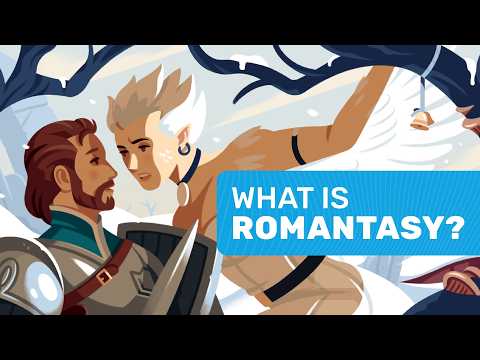
View profile →Romantasy is a blend of fantasy and romance, combining a fantastical setting or plot with a heart-racing love story. At its best, romantasy seamlessly blends both genres together, each one strengthening the other to create a compelling narrative.
In this guide, we’ll break down how to write romantasy in seven steps, from deciding which side of the genre drives your story to bringing both arcs together in a satisfying ending. Along the way, romantasy author Hannah Bogue shares insights and examples from her own Queendom Series.
1. Choose your primary genre
The first decision you have to make when writing romantasy is: are you writing a romantic fantasy, or a fantasy romance?
These terms may sound similar, and indeed, the average romantasy reader may not be able to articulate the difference. Each label takes its story structure from a different parent genre, so let’s define them separately first.
- Romance revolves around the central love story. Everything else exists to bring the couple together or pull them apart.
- Fantasy revolves around the external plot. Everything else exists to push the protagonist toward their goal or stand in their way.
It follows, then, that a fantasy romance revolves around a central relationship. There may be an evil king to defeat, but his undoing is secondary to the tale of two star-crossed lovers coming together. A romantic fantasy, meanwhile, revolves around the evil king’s downfall. The protagonist's relationship may still be a key element, but the kingdom's fate, not the couple's, is what the story must resolve.
Let's turn to two of the biggest romantasy releases of the past few years to see this distinction in action. From Blood and Ash by Jennifer L. Armentrout sits firmly at the romance end of the spectrum: while the setting is unmistakably fantastical, the story would collapse without the romance between Poppy and Hawke. Rebecca Yarros’ Fourth Wing lies at the opposite end, following protagonist Violet's fight to survive dragon-rider training. One could technically remove the central romance from the story, and the narrative would still function (albeit without nearly as much intrigue).
Whichever narrative structure you decide to use, you'll need to develop both a fantasy world and the couple at its center. Each one will inform the other, so we’ll cover both here.
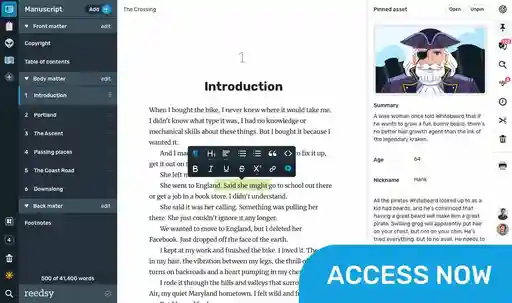
Planning your own romantasy? The Romantasy Starter Kit in Reedsy Studio can help you map your fantasy plot, romantic arc, and every moment where the two intertwine.
Q: What are some of the biggest misconceptions first-time authors have about writing fantasy?
Suggested answer

Fantasy, and in particular romantasy, is SO HOT right now. Everyone is writing it, but many new authors fall into the trap of exposition. Just because you're writing in a unique setting doesn't mean you have to explain this world to readers. At least, not all at once, and certainly not all in the first few chapters.
Fantasy especially can span multiple books and because you're already telling a unique story about unique characters, it's overwhelming and exhausting for readers to also swallow a unique world.
The best solution is show, don't tell. Let it happen organically, and at natural moments in the story. For example, a wizard walking into a cauldron shop may merit a few sentences as to why he's buying a new cauldron, but probably doesn't need the extra two pages of exposition regarding the cauldron's connection to his late mother, who was also a half-fae princess and died at the hands of his tyrannical father, but only after having a torrid affair with a werewolf whose daughter now owns the very same cauldron shop.
Alexandra is available to hire on Reedsy

You still need strong characters that propel the story forward. The fantastical elements don't replace a strong personal journey or transformation of your protagonist.
The fantastical elements you include should also have purpose and be used with intention. If there's a magic system, it has to make sense in the world. Magic can affect economics, culture, politics, and it should be reflected on the page.
With kidlit, take a look at fantasy published within the last few years. Western-based fantasies with gnomes, trolls, etc. are generally not unique enough to attract an agent or publisher's attention. Readers want to read about completely different worlds with unique magical/fantastical elements.
The best way to get a handle on today's fantasy and what agents and publishers might be interested in is to read titles published in the past couple years.
Kim is available to hire on Reedsy

For me, the main misconception is that the story world is the story. No. The characters are the story, no matter the genre. Fantasy authors can get too wrapped up in the world they have created - and why wouldn't they? It's an exciting thing to create - to the detriment of their story. So it's really important to, at some point, turn away a little from your story world and turn to your characters. Do they have motives? Goals? Fears? Desires? Secrets? Regrets? Flaws?
All the things that make us human (even if your character isn't human!) need to be on the page. It's very easy to lose sight of character and plot when writing fantasy, but no matter how outlandish, or unique, or captivating, your story world is, it's the characters who inhabit your world that truly count. It's the characters readers recall more than anything else. So my advice to fantasy writers is character first, always.
Louise is available to hire on Reedsy
2. Build a world that gets in the way of your love story
Immersion is the most important element of worldbuilding in traditional fantasy. Readers have long imagined themselves roaming the rolling hills of the Shire, or sailing the scattered islands of Earthsea. And while immersion is an undoubtedly crucial component of romantasy as well, the genre has a second, equally essential goal: putting pressure on the love story.
This is something romantasy is especially well suited to, and it’s an excellent way to generate conflict and intrigue. The leads in Hannah Bogue’s Queendom series are fated mates (more on that later!), who are drawn together by a supernatural force. But when they meet, Valare is already married to a rival king, who has tasked her with gaining the trust of her fated mate, Xylan, for political reasons. The very circumstances that forbid their romance are what throw them together.
Before you draft, ask what in your world forces your couple together, and what keeps them apart. The best romantasies do both in the same breath! The higher the stakes, the more your readers will want to see your couple succeed. Speaking of which…
3. Create a couple readers will root for
In online circles, “shipping” means rooting for two characters to end up together, and it’s the beating heart of any romantasy. The mistake many first-time writers make is assuming ships are launched by the big, sweeping declarations. Grand gestures are all well and good, but readers will only find them satisfying if the rest of the story is filled with quieter moments of connection. Show that your leads are interested in one another with small but frequent acts of affection.
Hannah Bogue uses this approach in the Queendom series. After Valare gains telepathic powers, Xylan begins talking to her every night, slowly rebuilding the trust between them. It’s this period of intimate, consistent conversation that strengthens their bond and endears the pair to the reader.
For a ship to truly set sail, both love interests need to be, well, interesting in their own right. Nobody wants to ship a well-developed character with a cardboard cutout! Fortunately, the principles for creating a strong romantic lead are largely the same as for any other character. They should have aspirations, flaws, and personality quirks that will endear them both to their prospective love interest and to the reader.
If you’re unsure how to make sparks fly on-page, you can always fall back on a tried-and-tested dynamic from the romance canon.
4. Commit to one central trope
Your world is built and your couple is cast. Now for the question at the heart of every love story: what's standing between attraction and happily-ever-after?
Romance tropes are, at their core, different answers to that question. You can (and likely will) include smaller scene-level tropes as well, but your story should have one main answer to what's keeping these two apart. Here are three of the most popular tropes among romantasy fans.
⚔️ Enemies to lovers
In an enemies to lovers story, the obstacle is simple: the supposed sweethearts can't stand each other. This trope doesn’t demand they be mortal foes, destined to duel for the fate of the world — your couple may just rub each other the wrong way in the opening. The important part is that their animosity melts into attraction over time.
Examples: Fourth Wing, The Midnight Girls
🔗 Fated mates
This is where two characters are, through some otherworldly means, destined to be together. The pair may be betrothed by an ancient prophecy or bound by a magical bond, but one party wants absolutely nothing to do with it. After all, who wants to be told who to love? Regardless, the once-resistant lead eventually chooses the relationship for themselves, turning something predetermined into their own decision.
Examples: The Queendom, A Court of Thorns and Roses
👑 Forbidden love
Where the first two tropes focus on a reluctant couple coming together, forbidden love is about a devoted couple being torn apart. Perhaps their connection is outlawed by their families, their faith, or the high court. Whatever the specifics, their romance can only survive in secret, and its discovery would come at a terrible price.
Examples: The Jasmine Throne, The Priory of the Orange Tree
Q: How can writers use stereotypes and tropes to their benefit when creating a character?
Suggested answer

Well, stereotypes and tropes exist because they are the comfort food of readers, and should be the comfort food of writers too. Not to the extent that you write cliche stories by overusing the same old thing. But by the fact that their presence in certain story types is expected and even desired by fans of that story type, so to try and write without them can leave readers unsatisfied and the story feeling incomplete.
There are great books out there on this, John Truby in particular has a great one out. Knowing the stereotypes of a heroes journey, for example, gives you lots of options for side characters and supporting characters to help a hero on certain types of quests. The tropes are the expected encounters and obstacles that hero will encounter along the way.
If you start by mapping these out and identifying which are required (tropes most of all) and which work best for your story but are optional (stereotype characters) then you can take them and twist them in unique and interesting ways, even flip them around in timeline or approach in ways that make it clear they are there (and meet reader expectations and preferences) while still avoiding cliche expectation and creating interesting and unique characters, world, and stories that captivate readers.
Bryan thomas is available to hire on Reedsy

There is a common misconception within writing circles that "trope" = bad or cliche. While yes, certain tropes and character traits can become overused and cliche, tropes are more like reader expectations when they pick up a book from a certain genre. For instance:
- In romance, tropes are things like friends to lovers, enemies-to-lovers, he falls first, grumpy neighbor
- In YA fantasy, tropes can be things like the Chosen One, Love Triangles, or Hidden Magic
- In middle grade, tropes can be the power of friendship, magical animals, magical academies
While not all books in these genres include all of these things, and while these things can certainly be cliche if you don't put your unique take on it, they are what readers enjoy about a genre. After all, isn't that why you read a certain genre, because there are tropes and elements within that you enjoy?
The way to use these stereotypes and tropes to your benefit is to use them as a framework, understanding how they operate and why readers enjoy them. Then, sprinkle your unique author magic on them. How you describe characters, the dynamic between two characters, how certain elements show up or are utilized, all these can be unique to you and your book. You're not looking to reinvent the wheel, but rather give it a new coat of paint, your coat of paint, so that you write the story you want while delivering a satisfying reader experience.
Sean is available to hire on Reedsy

Trope = yes
Stereotype = no
A stereotype is an oversimplified view of a type of person, based on one aspect of their identity, like race or gender or hair color or where they're from. It's important to know stereotypes so you can avoid them in your writing, both so you won't be generic and so
Tropes, on the other hand, are like adding sugar to cake, rather than salt: You want to know what your audience came for, so you can give it to them!
Tropes are things with universal appeal that audiences come back for time and time again. (Not to be confused with a cliche, which is just something that has been overused until it's cringey. For instance, the villain in a YA novel being a mean blonde cheerleader is both a cliche and a stereotype. But a trope might be that the main character is an underdog who manages to win the heart of the most high-status boy in school!) Examples: enemies to lovers, amateur detective, chosen one, only one bed...
Intelligent use of proven tropes, combined in a new and unique way, are the fastest way to genre writing success!
Michelle is available to hire on Reedsy
Of course, you don’t have to write with a trope consciously in mind. Hannah Bogue only identifies the tropes in her stories once they’re complete. Most she plays straight, though she also enjoys finding opportunities to subvert expectations. However you handle your tropes, though, one challenge remains: your love story still has to share a book with a fantasy epic.
5. Plot the romance and fantasy arcs together
When writing a romantasy, you may be tempted to bounce between the romance and fantasy storylines as and when it’s appropriate. While there will inevitably be moments when one takes precedence, the two arcs should still develop in parallel, with a major turning point in one doubling as a turning point in the other. Note that “parallel” doesn't mean “equal.” The parent genre you chose earlier still determines which arc drives the story — parallel plotting simply ensures that the secondary arc keeps moving too.
Hannah Bogue recommends looking for scenes that can advance both arcs at once. In an academy setting, for example, one love interest might slip the other the answer to a question in magic class. The gesture builds their relationship, while the answer itself teaches the reader something about the magic system, which may become important later in the plot.
Not every scene needs to serve both arcs, but when possible, look for opportunities to make a single interaction do double duty. Before either arc can pay off though, you need to build tension.
6. Turn up the tension (and the heat)
In romantasy, creating tension encompasses both the ever-escalating fantasy plot and the slow-burn romance. Parallel plotting takes care of your major story beats, but attraction develops in the smaller moments between them.
Fortunately, your fantasy world gives you plenty of ways to heighten that attraction. An expression like “I’d die for you” may evoke an eye roll in an office romance, but life-and-death stakes are par for the course in romantasy. Characters can make noble sacrifices for the sake of their sweethearts, giving readers something to swoon over.
World-ending stakes also give more intimate moments the space to breathe — a stolen kiss means so much more when it may be the last. How far those moments go, though, is entirely up to you. There’s an audience out there for every level of spice, from the closed-door courtships of Divine Rivals to the sizzling trysts of A Court of Silver Flames. Whatever level of intimacy you choose, it should deepen the connection between your leads and your reader’s investment in their relationship.
Q: How explicit (or "spicy") can and should the romantic or sexual content be in a self-published romance novel?
Suggested answer
As much or as little as you're comfortable with! There are all levels of heat in self-published romance novels, from sweet to spicy.
Just make sure you hint to your reader which you are--through your cover and the way you describe your book--so you draw in the audience that's looking for your exact heat level!
Michelle is available to hire on Reedsy

What a loaded question.
First and foremost, spice needs to match the overall tone of both the book and the characterization. More frequently than what I'd like to see, are books that float along in one tone -- usually contemporary snark and humor -- and we hit the bedroom, and now we are all hardcore and pushing boundaries. A change like that comes out of the blue and feels jarring without the proper set-up in characterization.
As long as the tone matches, then the level of spice reverts to author comfort. Generally there are three heat levels: sweet, spicy, erotic. Sometimes "sensual" falls between sweet and spicy. But you can further break it down into three types of bedroom scenarios: closed door, fully consummated, or erotic and fetish.
One trend I see regularly in romance novels that I think needs to be discussed: writing to market cliches.
Authors have a perception of the market they are writing in, and most have read what they are writing. The trouble zone is when authors are forcing a book to expectations that don't fit the story line or characters. I see this in cliche lines in the bedroom. (I'm so trying to be g-rated here!) In fact, those lines now pop out to me jarringly. Things characters say (or do!) that don't match the personality they have been given, that are total reader-bait, because another / other books in the genre have effectively used them. Those lines... don't have the power, oomph, or impact behind them if they don't match the characters. Period.
Let's see if I can exemplify a little more while staying PG-13.
Your hero isn't any more sexy or compelling because he tells the heroine what to do at a critical moment in the bedroom. What has made that line work in other novels and makes readers swoon, is the overall characterization for the hero and between the couple. If that overall characterization isn't present, the line stands out as out of place and as the author intruding on the scene.
So I can't emphasize enough that what you "should" do follows the way the entire story line is developed. If you want to write erotic content, then that needs to be established via characterization and narrative long before the sexy times come into play. You create your readership. Your readers come to your stories because they like what you write. And you should always write what makes you comfortable, regardless of what heat level is involved.
Claire is available to hire on Reedsy

In my mind, a romance novel "should" be exactly as explicit/spicy as you are comfortable with as the author! If you don't feel comfortable writing more, erm...let's say, graphic scenes, then don't put that pressure on yourself (and look up "closed door" romances instead!).
However: The level of spice in a romance should feel consistent throughout the book as a whole. What do I mean by that? Well, if the main character and their love interest have a more reserved, or tempered, level of flirtatiousness and heat between them, and then when they tumble into the bedroom it's suddenly a super graphic and hardcore scene? That will throw a reader off, because their expectations have been subverted. Conversely, if you really crank the heat between the main character and their love interest to build a simmering sexual tension that is off the charts, and then when they move to the bedroom the scene description is quite modest and vague? That will also throw a reader off -- they may feel like they're missing the "payoff" of that slow build.
And that's not to say that one bedroom scene is "better" than the other -- not at all! What I'm trying to make clear here is that it's important for you as the author to let the reader know what level of heat they can expect from you. You can do that through synopsis wording, cover design, and writing/language choices early in the book that can provide hints as to the spice level for readers. Keep the expectations (and writing) consistent throughout the book as a whole in terms of how spicy you are, and you'll help readers understand what they can expect from your book -- and therefore more easily remain immersed in your story and characters!
Lesley-anne is available to hire on Reedsy
7. Earn the happily-ever-after
A happily-ever-after is one of romantasy’s core genre promises, regardless of whether romance or fantasy is driving the plot. Your parent genre determines which arc leads the story, but it doesn’t remove the expectation that the central couple will end up together.
The fantasy side of the story makes a looser promise: the central conflict needs to be resolved, but exactly what victory looks like is up to you. Romantasy therefore asks you to satisfy both promises at once. If love wins but the kingdom crumbles, readers may be left with a severe case of emotional whiplash.
This simultaneous triumph is the final (and most important) beat of the parallel plotting we covered earlier. When the final act arrives, the two arcs should reach their peaks in unison — evil is defeated and love prevails, together. Better yet, let one cause the other: the couple reunites, and it's their bond that turns the tide of battle.
Now that you know how to write romantasy, you can begin planning a whirlwind epic of your own. Whether you're partial to forbidden love, fated mates, or enemies to lovers, the Romantasy Starter Kit in Reedsy Studio can help you shape your characters, romantic arc, and fantasy conflict before you begin drafting.