Last updated on Sep 28, 2026
How to Write a Prologue in 7 Steps (+ Know If You Need One)

Tom Bromley
Author, editor, tutor, and bestselling ghostwriter. Tom Bromley is the head of learning at Reedsy, where he has created their acclaimed course, 'How to Write a Novel.'
View profile →A prologue is a short “chapter” that comes before the main narrative of a book begins. It sets the scene for elements that may become important later in the book, provides context, foreshadows upcoming events, or hints at themes. Most importantly, it pulls readers in.
Many writers are intimidated at the prospect of writing a prologue and are not entirely sure if their book actually needs one. This article will help you determine if yours does and walk you through the steps to writing a prologue that helps set your story up for success.
Psst. for a full explanation of what a prologue is and how it differs from prefaces and forewords, see our guide to prologues.
1. Decide whether you need a prologue
Writers may be tempted to start their book with a prologue to prop up what they think is a flat or boring first chapter. But a prologue shouldn't just be a substitute for an interesting first chapter.
What separates a prologue from a normal chapter is that it usually takes on a different shape than the main body of the story. As an author, you'll have made decisions about how to tell your story: point of view (whose perspective do we follow?), chronology (does the narration jump around or follow a logical A-to-B pattern?), and setting (where and when does the action take place?), etc.
A prologue usually breaks one of those rules on purpose. It might follow a character we never see again, leap years ahead of or behind the main plot, or unfold somewhere your protagonist has never set foot.
This can allow you to:
-
Create tension in medias res
-
Give context to a character or story events
-
Offer a different point of view on the world or story events
-
Set up questions or themes you want readers to keep in mind throughout the story
Q: In what circumstances should an author consider adding a prologue to their book?
Suggested answer
A good prologue will provide intrigue and spark curiosity. It whets the reader's appetite and poses a question that the book will answer.
How does it do this? A good prologue is there to tease something that happens deeper in the novel that becomes clearer later on.
I don't think that prologues that tell something about the past are as effective. If there is something deep in the past that sheds light on the narrative, you want to save that to be revealed later on in the story. Giving it all away upfront defuses, rather than increases, narrative tension.
I would always caution against anything like a dream or some other kind of less-than-real moment as a prologue as it is very important that the reader is focussing on the right kinds of mystery (what is the secret of this story? what will be revealed?) and not on the wrong kinds of mystery (who is this? why am I hearing about this now? what's going on?).
You can find your prologue by picking a moment from deep inside the story that ticks some or all of these boxes: a moment of tension, a moment of misdirection, a gathering together of some of the themes of the novel, sensory details that will stick in the reader’s mind.
Play around with your own version of this to see how it affects the narrative.
Lux is available to hire on Reedsy

Agents often ask if the prologue is REALLY necessary. I’ve published books with and without, and I’ve found it to be a useful tool when it:
- Establishes genre. Sometimes, a story needs some setup before the genre really kicks in. For example—in Twilight, it’s more than halfway into the book that the promise of the premise (girl engaged by vampires by way of loving one) kicks in. So we get a passage that gives us a little taste of what’s to come.
- Will be a fun callback at a penultimate moment of the story, bringing things into focus in an exciting way
- Creates mystery and intrigue
- Sets a ticking clock. Sometimes, a prologue is a flash forward to a time in the near future, showing us danger to come and setting up suspense from the beginning. You’re telling the reader, “Everything may look nice in chapter 1, but in three days, we’ll be on the edge of a cliff.”
I’ve seen prologues get cut when their function is to add ambience or world building, character development, or when they are attempting but not succeeding at one of the above strategies. Often, a writer will have to explain why this prologue has to exist in this format and why this scene can’t be worked into the book otherwise.
Happy writing!
Wendy is available to hire on Reedsy

Well, Prologues are tricky, as you obviously know from asking the question. First, readers and gatekeepers are not fond of them, and second, they sometimes feel like sidelines with separate stories and characters that were nonessential. This is because the only reason to adda. prologue is if you have a piece of the story to tell that is essential for readers to know to understand the rest of the story, whether right away or deeper in. Maybe an earlier event sets up circumstances that are key to the story (like how Superman got to Earth and why he has powers, to use a classic example), or maybe it sets up events on the world that take generations to come to a head but which are core to events in your story. Either way, the prologue should be full of conflict and action with a core character we quickly care about. Even if that core character is a predecessor to later characters, he or she must be someone we feel and root for. Never ever should your prologue be a history lecture or summary about events that took place before the story. Any of those which are essential can be told about through dialogue and narrative voice and so on as needed, and as needed only. History lesson prologues never ever work. They are the main reason prologues have gotten such a bad name.
Hope this answers your question. Best of luck!
Bryan thomas is available to hire on Reedsy

I think prologues are most effective when used as a quick hook to lure the reader in—something action-packed and exciting. Other reasons might be to set up a larger fantasy/dystopian world where a brief primer might put the reader in the right frame of mind for the broad scope of the main text of the novel.
Brett is available to hire on Reedsy

Here's a rough guide on whether you should consider adding or removing a prologue from your book:
- Is it too long and can it be shortened while retaining the same information?
- Does this prologue contain elements that are vital to the story?
- Does removing the prologue change the story in any way, good or bad?
If the answer to that last point is no, then that's a good sign that the prologue can likely be cut or doesn't need to be there. When deciding on whether to include a prologue or not, ask yourself: Can the information in this prologue be shown any other way somewhere else in the book? Is this prologue a sort of pre-writing exercise for me as the author to help me get into the world and characters, and can be cut later? And, as I evaluate, if I remove this prologue, what about the book and story changes?
Prologues can be a great and powerful way to get the story started, but like everything else in a novel it has to have a purpose to serve the story.
Sean is available to hire on Reedsy
It's also worth knowing your genre. Prologues are common, even expected, in fantasy, thrillers, and mysteries, where a glimpse of a distant threat or a crime to come does a lot of work to create tension.
They're more rare in literary fiction and contemporary romance, where readers tend to expect you to start with your protagonist and build the story from there.
Test how a prologue changes your story
The simplest way to check whether your prologue is necessary is to imagine your book without it. How does the tone of the following chapters change? Does the story lose tension? Does the reader still get access to key information about the world, characters, or events in the story?
There’s no right or wrong answer, but remember that the role of a prologue is to give a spin to the rest of the story that you couldn’t otherwise give. If you think this is what your story needs, then proceed to step two!
If you can't pin down what you want to achieve with your prologue, you can discuss your concerns with your developmental editor. They’ll be able to weigh in on whether your book really needs one.
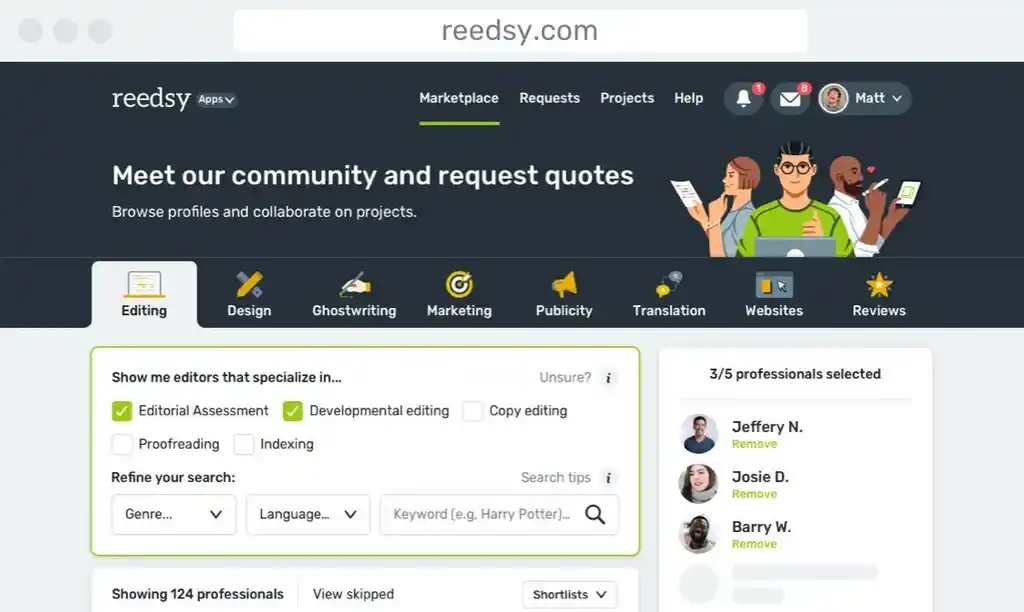
Hire an expert editor

Mallory B.
Professional editor of bestselling Amazon authors Seth Ring, Pedro Urvi, Rick Partlow, and more. Exhaustive experience with litRPG genre!
Request a quote
Sirah J.
Careful inspections, thorough explanations, and considerate guidance for inclusive picture books and middle grade novels.
Request a quote
Barry L.
I am a content editor, copy editor, and proofreader. I specialize in nonfiction books.
Request a quoteThe next step is to pick the right type of prologue.
2. Choose a type of prologue
Most effective prologues do more than just one job, but if you have a main goal in mind, it will help inform how you set your prologue up. You can divide prologues into roughly 6 different kinds, depending on your main objective.
1. Set the tone
Sometimes the most important job a prologue can do is tell readers what kind of story they're in. A fantasy that begins in a royal court, say, or a thriller that starts on an ordinary day but ends with a terrifying reveal. A prologue can establish the genre, the rules of your world, and the atmosphere readers should expect, all before chapter one gets going.
Example: A Game of Thrones by George R. R. Martin
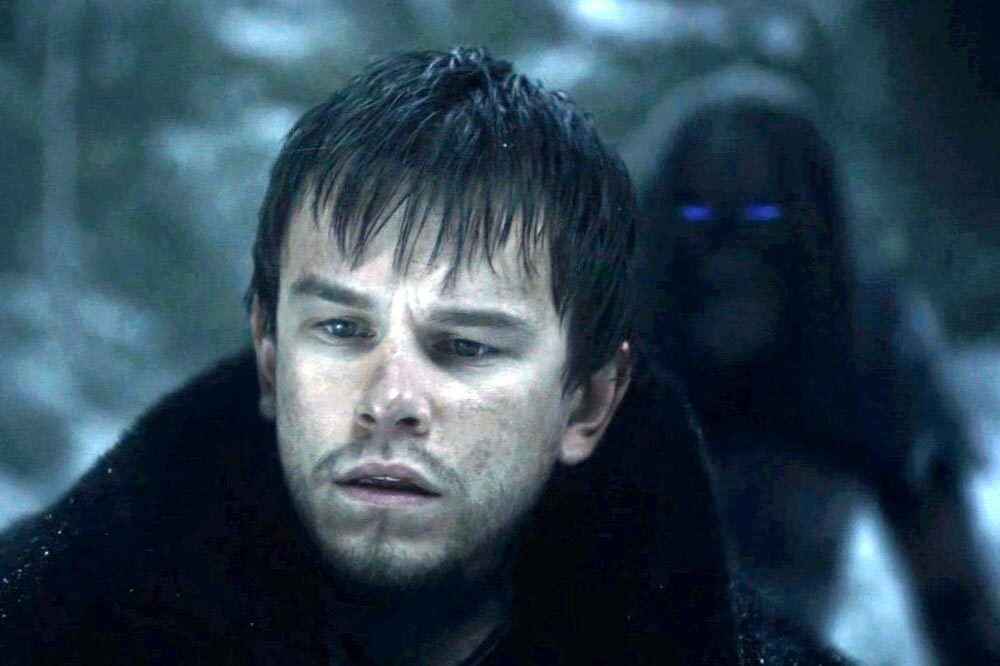
The prologue to A Game of Thrones follows a gang of Night’s Watch rangers. As they venture beyond the wall in the north, they encounter an unknown threat. The group leader is killed, only to rise again and slay his comrade, while the third man flees.
This prologue works on multiple levels. First, it establishes the tone of the novel and creates an expectation of violence, bloodshed, and something supernatural. This shows readers what they’re in for if they trust George R.R. Martin enough to get there.
Second, the choice of point of view, following characters who won’t feature again in any meaningful way, gives us a unique perspective on the story's world. It becomes immediately clear to readers that while everyone is occupied by the politics of King’s Landing, there’s a much more ominous threat lurking up north.
This is a classic example of suspenseful dramatic irony. Speaking of…
2. Dramatic irony
By taking a different tack than the main narrative, a prologue gives authors a tool to clue readers into a danger that the main characters won’t be aware of. This is dramatic irony, and it makes even innocent scenes tense as readers spend the story watching characters walk toward something they can't see.
Example: Romeo and Juliet by William Shakespeare
Before a single character speaks, the Chorus in Romeo and Juliet delivers a 14-line prologue telling the audience exactly how the play ends. A "pair of star-cross'd lovers" from two feuding families will "take their life," and only their deaths will end the feud.
It sounds like a spoiler but in practice, it's what makes the play so devastating. When Romeo and Juliet meet, fall in love, and scheme their way toward a future together, the audience can't share their hope, because we already know where the story leads.
You don't need to give away your ending to use this technique. It works just as well on a smaller scale: show readers a danger, a lie, or a plan that your protagonist knows nothing about, and let them carry that knowledge into chapter one.
Another way to create dramatic tension is to…
3. Flash forward
You can also use a prologue to show a moment in the future, near the climax of the story, to create tension.
Example: Where the Crawdads Sing by Delia Owens
Where the Crawdads Sing opens with a prologue set in 1969, as two local boys discover the body of the popular Chase Andrews in the marsh. For years, rumours of the “Marsh Girl” Kya Clark have haunted the small fishing village. Chapter one then jumps back to 1952 and we follow Kya through her childhood and into adulthood.
Without the prologue, the first half of the book would simply read as a moving coming-of-age story. Instead, with the flash forward in the prologue, it becomes an ominous tale, as the reader tries to figure out how this girl is connected to Chase’s death.
4. Flashback
In contrast, some stories hinge on something that happened in the past. Showing a moment that happened long before chapter one can help provide context for a character or what’s to come.
Example: Shadow and Bone by Leigh Bardugo
Shadow and Bone opens with two unnamed orphans on a duke's estate, as Grisha examiners arrive to test the children for magical ability. The children are tested and found to have none. It's a short, tense scene, told in the third person before the novel switches to Alina's first-person narration. It only fully makes sense once readers learn what the Grisha examiners missed.
5. Alternative POV
While the obvious choice may be to center your prologue on a main character, many prologues actually focus on a peripheral figure instead. This allows the book to introduce a new perspective that provides context or contrast to the main body of your story.
Perhaps your prologue's narrator is a foil for your protagonist, highlighting their more unusual qualities. Maybe your prologue is written from your antagonist's point of view, building conflict right from the outset. Or maybe this new character is not immediately recognizable to the reader: a mystery narrator whose identity is later revealed.
Example: Me Before You by Jojo Moyes
Me Before You is narrated almost entirely by Lou Clark, but its prologue centers on Will Traynor, two years before they meet. We follow him on an ordinary morning as he leaves his girlfriend's bed and heads out into the rain for work. On his way, he gets hit by a motorbike and by the time Lou meets Will, he is paralyzed and bitter. Readers have gotten a glimpse of the life Will has lost, which provides context to his character and the story they’re about to read.
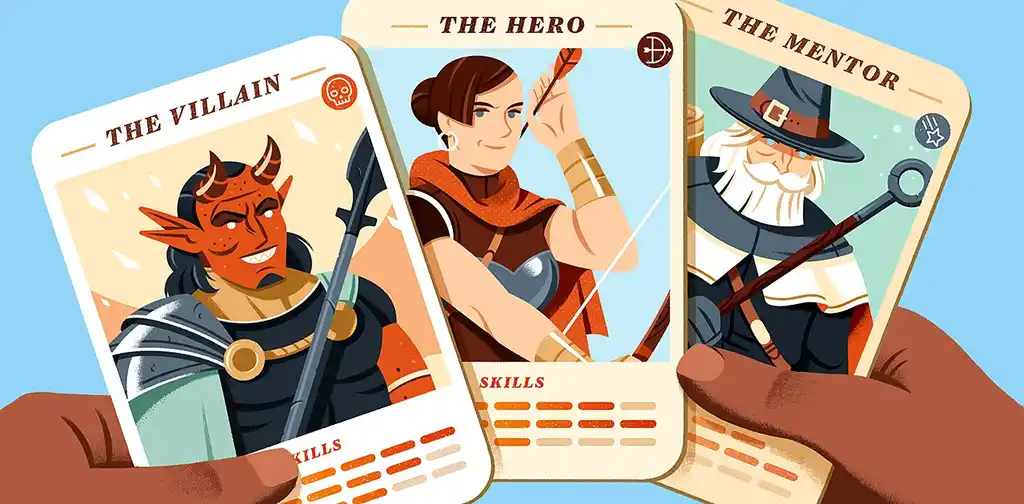
FREE RESOURCE
Reedsy’s Character Profile Template
A story is only as strong as its characters. Fill this out to develop yours.
6. Plant a theme or motif
Lastly, prologues are an opportunity to plant key themes or motifs. Focusing on themes in the prologue allows greater cohesion, tying what could seem like an unrelated preamble to the rest of the story.
Hinting at the story's underlying theme can also heighten curiosity and anticipation for what's to come. Readers naturally want to understand the greater meaning of what they've been shown, and they’ll continue turning pages assuming all will be revealed later in the book.
Not every theme has to appear in your prologue. It's sometimes best to focus on a single key image.
Example: The Name of the Wind by Patrick Rothfuss
The Name of the Wind opens with a prologue, "A Silence of Three Parts," that describes a quiet night at a roadside inn and breaks that silence into three layers, the last of which belongs to the red-haired innkeeper himself. Almost nothing happens. Yet readers come away knowing this is a story about a man who is hiding something, told in a lyrical, melancholy voice that the rest of the book sustains. This prologue also establishes a central motif of music and silence, which will be central throughout the rest of the story.
Next, let’s look at how to structure your prologue.
3. Keep it short
Once authors have decided that their book does indeed need a prologue, the next question they ask themselves is “How long should a prologue be?”
There's no fixed rule, but most prologues run from a few hundred words to a few pages. Typically, they’re shorter than an average chapter in your book. Under 1,000 words is perfectly fine, but for someone like George R.R. Martin who generally writes quite long chapters, it can be slightly longer.
The important thing to remember is that this is readers' first taste of your book. They haven't yet decided to commit to your characters or your world, so every paragraph that doesn't pull them forward is a risk that they’ll put the book back on the shelf.
Go for a prologue that's short and immersive, and as always, show, don't tell! To prevent yourself from overwriting, keep in mind that creating a story world is a constant effort that the prologue can be a part of, not a substitute for.

FREE COURSE
Show, Don't Tell
Master the golden rule of writing in 10 five-minute lessons.
One way to avoid that happening is to dive right into the action.
4. Focus on a single scene
Even if your prologue needs to relay some information about your book's world, it should focus on something happening. This will help you draw readers into the story, instead of making them wade through exposition.
A prologue that covers years of history, or skips between several scenes, almost always slides into summary-territory. A prologue that stays in one place, with one character, over a few minutes of story time, on the other hand, makes the reader wonder, “Why here? Why now?”
Example: The Da Vinci Code by Dan Brown
The Da Vinci Code could have opened with an info-dump on secret societies. Instead, its prologue follows museum curator Jacques Saunière as he's cornered in the Louvre's Grand Gallery by an albino monk, shot, and left with minutes to live. He uses those minutes to protect a secret. The conspiracy that the rest of the book unpacks is introduced entirely in that one scene.
5. Hint instead of explaining
Many new (and experienced) writers feel the need to tell readers everything about the world of their book within the prologue, but try to resist that urge. It usually leads to readers switching off. Instead, trust in your readers' ability to wait for information and piece things together as they continue reading.
The aim of the prologue is to pique your readers' interest, not send their eyes rolling to the back of their heads. Heavy-handed foreshadowing risks spoiling twists and turns to come and trying to create tension without any significant event taking place will just drag the pacing down.
Ideally, your clues should be relatively cryptic: suggestive enough to establish your tone and create intrigue, but never so clear that they make the rest of the story redundant.
Example: Jurassic Park by Michael Crichton
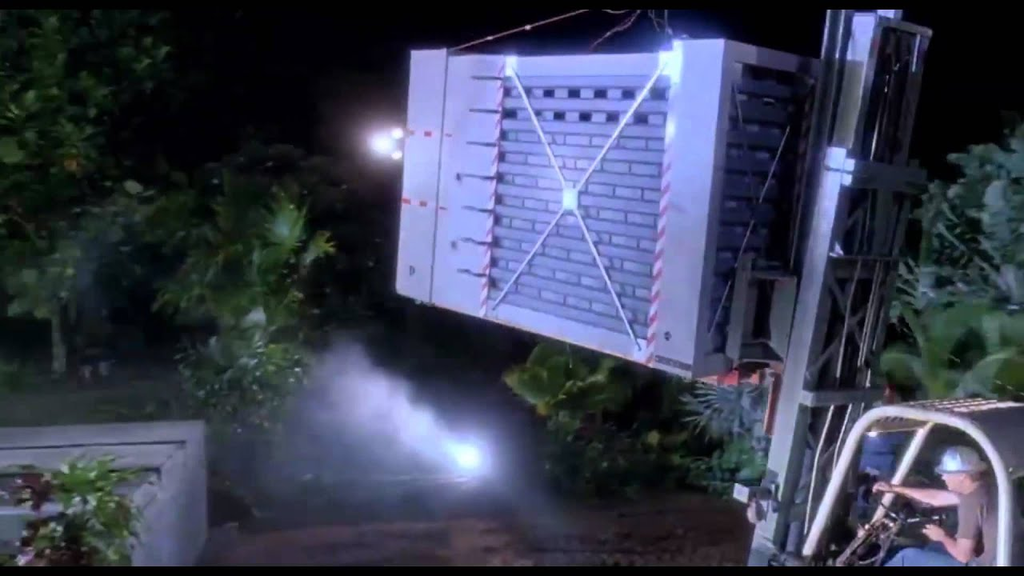
For a direct comparison of hinting and explaining, look at Jurassic Park. It's an unusual example, as the novel contains not one but two prologues (albeit one is labeled an "introduction").
The first, "The InGen Incident," is heavy on exposition, reading like a short historical account of genetic engineering. While it does hint at what's to come, an exploration of the ethical implications of bioengineering, it's a pretty dry read.
The second, more excitingly named "The Bite of the Raptor," is a far more compelling starting point. It tells the story of a doctor treating a critically wounded construction worker whose injuries aren't quite adding up.
The official story is that he's been hit by an earth mover, but his clean wounds and intact bones suggest something else has happened. Before he dies, he mumbles the words "lo sa raptor." As the doctor struggles to translate the dying man's words, the mystery of what is truly happening ramps up.
The first prologue is certainly relevant, but it's a little indulgent, giving us more information than we strictly need to begin the story. The second does a far better job of creating intrigue and kicking off the novel's action. Together, however, they establish the tone for the novel: a story about scientific endeavor gone wrong.
6. Link the prologue and first chapter together
The last lines of your prologue are what carry readers into chapter one, so they need to leave something unresolved: a question, an image, a threat, or a promise.
Since the move from prologue to chapter one often involves a jump in time, place, or point of view, use the opening lines of chapter one to orient readers quickly: who we're with, where we are, and when. Chapter one doesn't have to answer the question (it usually shouldn't), but readers need to sense a connection, even if it only becomes clear later. Readers don't need anything explained to feel the pieces click together.
Example: Eragon by Christopher Paolini
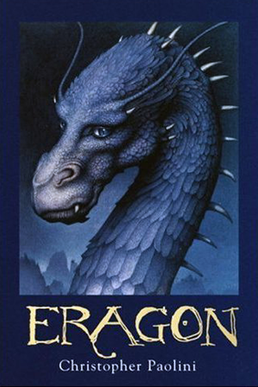 Eragon may have faced criticism for its occasionally complicated prose, but no one can criticize Paolini’s use of prologue. He introduces the reader to creatures they don't recognize, Urgals and a Shade, as they ambush a group of three elves transporting a mysterious pouch containing a sapphire. Two elves are killed, while the third, a woman, magicks away the gemstone before collapsing. Frustrated, the Shade rides away, leaving her there.
It's a brief prologue that does everything it needs to. It establishes a world of magic and non-human creatures without losing time explaining who everyone is or what they're doing there.
The reader knows this stone is no ordinary stone. It's powerful, important, and sought after by the bad guys of this world. Soon after, in chapter one, Eragon, the book's protagonist, discovers it. He won't know it, but the reader will immediately know he's in danger. And thus, tension is created.
Of course, you'll only know whether your prologue really lands once the rest of the book exists.
7. Revise it last
Your prologue is the first thing readers see, but it doesn't have to be the first thing you write. In fact, it’s often the last thing you write, once you know all the pieces of the puzzle.
You can draft it early if it helps you find your way into the story, but expect to rewrite your prologue once the story is completed. By then, you'll know exactly what it needs to set up, and what the rest of the book already covers.
If you're using a writing app like Reedsy Studio, you can easily circle back to the beginning and amend your prologue later.
Once the prologue draft is done, run the test from step one again: does the book lose anything without it? Better still, give the prologue on its own to a beta reader. Ask what questions they have, what they think the book will be about, and how it leaves them feeling. If their answers match what you intended, your prologue is doing its job.
Finally, think about the label. Some readers habitually skip anything titled "Prologue," so some authors give it a date or place as a heading instead, or skip the heading altogether.
Whatever you do, make sure your prologue-related decisions are intentional and contribute something to your project. After all, every scene in a book should add something that would be missing if it were removed, and the same principle applies to prologues. Happy writing!