Menu
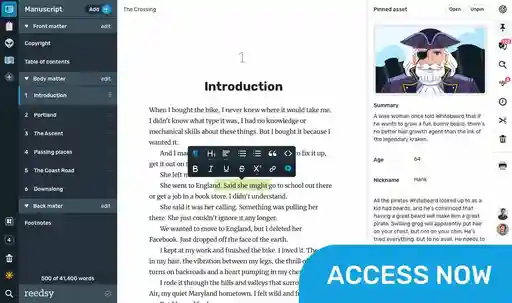
Write your book in Reedsy Studio. Try the beloved writing app for free today.
Craft your masterpiece in Reedsy Studio
Plan, write, edit, and format your book in our free app made for authors.
Write your book in Reedsy Studio. Try the beloved writing app for free today.
Craft your masterpiece in Reedsy Studio
Plan, write, edit, and format your book in our free app made for authors.
DIRECTORY
Showing 119 writing exercises curated by Reedsy.
When you meet new people, how do you react? Tell a story to illustrate this.
Choose a character and think of ways they'd react to things that happened during your (the writer's) day. Use your experiences, think how you reacted, and then how your character would have reacted. Possible events: cut off in traffic, caught in the rain, missed an important meeting, lost a valuable item.
Transplant your character into an entirely new location. It could be a new country, city, or continent. How do they react to the new surroundings?
Your character's story has been Disney-fied. At what point in the arc does your protagonist break out into song - and what is that song about?
Flex the writing muscles in your brain by writing a short story that ONLY uses dialogue. For an extra challenge, introduce and juggle more than 3 characters throughout the course of this story.
Select a scene that involves 2-3 characters. Write a paragraph from the point of one character. Now write the same interaction from another character's point of view. For example: your paragraph could involve the point of view of a convenience store clerk contrasted with a customer's point of view of the same incident.
Your protagonist has just made it into a New York Times headline. What does the headline say? Write down the reaction of your protagonist to hearing the news that day.
Write a review of a restaurant at which you recently ate. Describe the food as much as you can. Feel free to be eviscerating as well.
Your protagonist sits down at a desk and begins penning a letter to his or her younger self. What would they tell their past selves? What regrets do they voice? What lessons have they learned? How have they changed? Write this imagined note yourself, in your protagonist's voice.
Come up with three thought provoking questions. Such as:
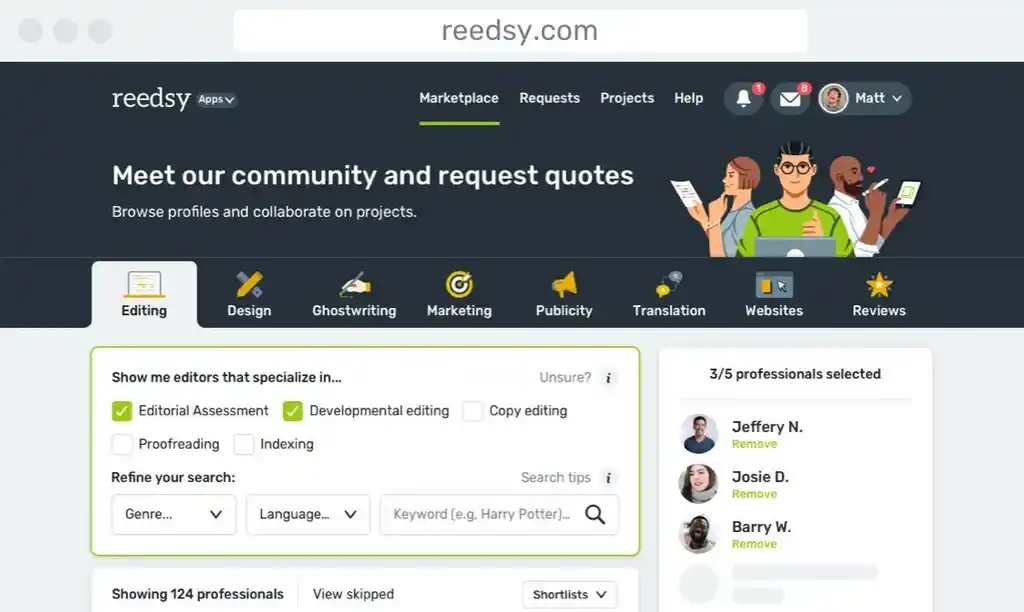
Find the perfect editor for your next book
Over 1 million authors trust the professionals on Reedsy. Come meet them.
We made a writing app for you
Yes, you! Write. Format. Export for ebook and print. All for free.
Enter your email or get started with a social account: