
I spent years working in cutting-edge technology and building AI systems, but I never expected that work to inspire my first novel.
Continuance began with a premise I couldn’t shake: if a digital version of you — one that looks and acts like you, and shares your memories and values — could remain with your family after you die, would you want that?
I’d been turning the idea over for nearly a decade. But it was only when I posed the question to a roomful of colleagues at a happy hour, and saw the group divide almost exactly in half, that I realized it could make a truly compelling story.
Of course, it was a long journey from that happy hour to actually publishing my book — and I could not have done it without my publishing professionals.
The idea behind Kaiku
I’ve worked in tech my entire life — both as an entrepreneur and now as a Senior Fellow at the Wharton AI & Analytics Initiative (WAIAI), where I help students apply AI to business and education innovation. When you’re immersed in a field like this, you gain the advantage of seeing a little further into the future.
The book’s central idea — a digital twin called Kaiku, the Finnish word for “echo” — is actually a plausible short-term reality. Before I used the concept in a novel, I had created detailed technology and business documents outlining how such systems might work.
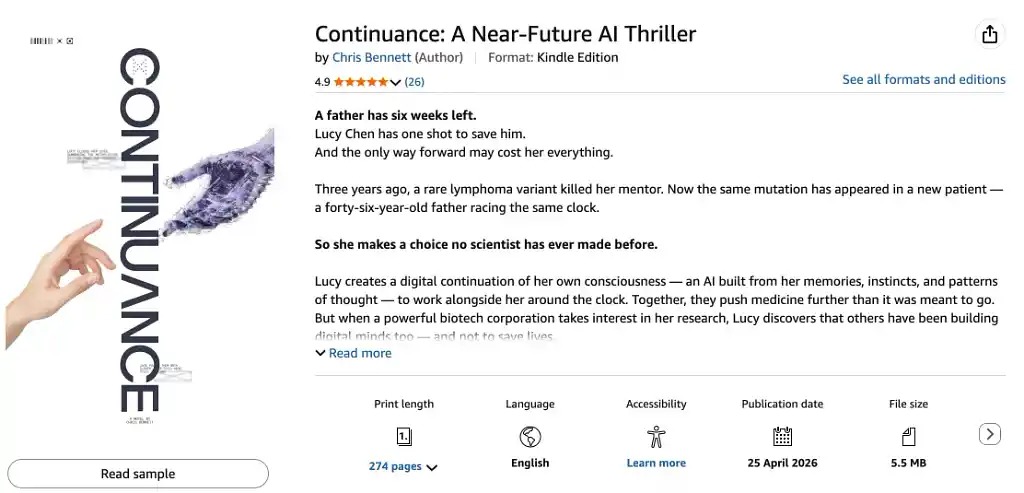
Continuance is set in 2030. Cancer researcher Lucy Chen has six weeks to save a dying patient, so she creates a digital continuation of her own mind: an AI built from her memories and instincts, designed to work alongside her around the clock. Together, they push the boundaries of medicine — until a biotech corporation takes an interest in her research for unsettling reasons, leaving Lucy to confront the consequences of her creation.
That premise was enough to get me through a full draft, but the manuscript still wasn’t ready for publication… until I met my editor.
Self-publishing like a pro
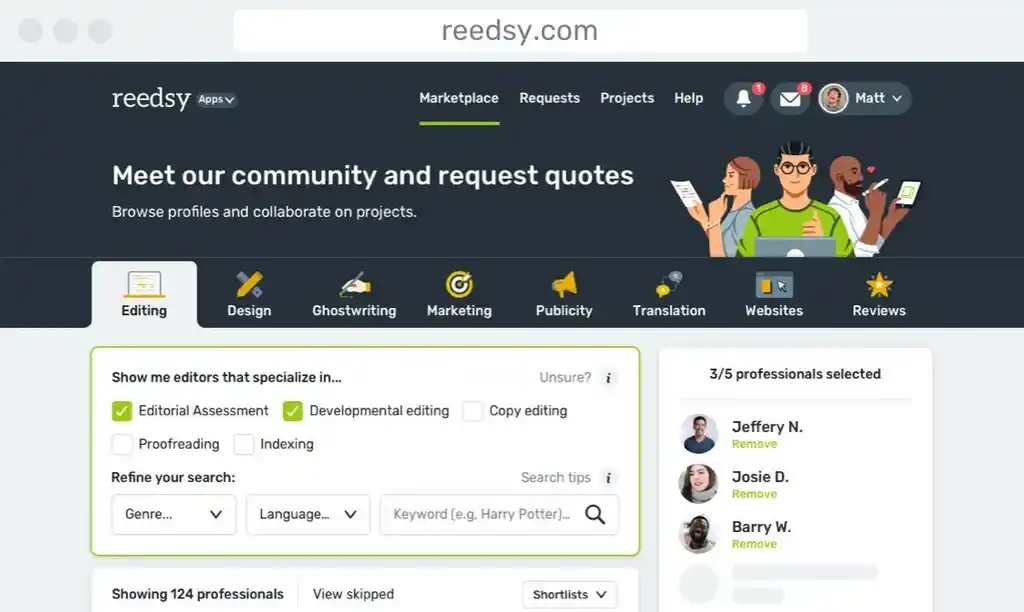
While I’m open to traditional publishing, I knew early on that I wanted to self-publish my first novel. I came across Reedsy while searching for how to do it
Having launched plenty of web products throughout my career, I could tell within a few clicks that Reedsy was actively maintained by people who genuinely cared about authors. From the blog and marketplace to Reedsy Studio — which I later used to format and export my book — every resource and UI was designed with great attention to detail.
But the best part of discovering Reedsy was finding the perfect editor.
An editor who understood the science
I try to be realistic about my strengths and weaknesses. Getting the story onto the page came easily to me, but making it flow smoothly — especially when writing character dialogue — was not my forte.
As I began looking for an editor, I searched the Reedsy Marketplace for someone highly reviewed, with extensive experience and an interest in science fiction and technology. As an acclaimed author of more than 40 books, P.J. Hoover clearly understood the kind of project I was undertaking and had the expertise to help me improve it. She won me over with one line from her profile: “I spent my summers reading SFF books and teaching myself to program in BASIC on my Commodore 64.”
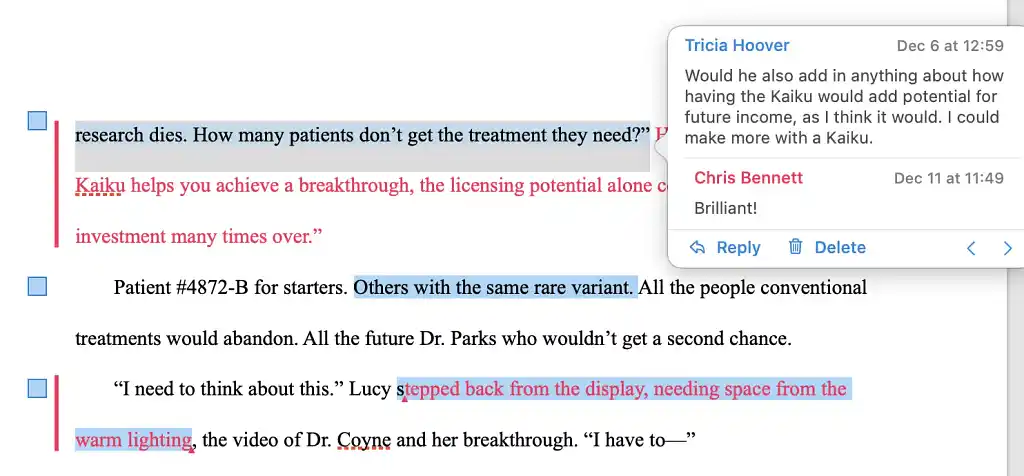
Working with her was one of the highlights of the whole process. I was amazed by how much she contributed to the book’s clarity, flow, and character development. Whenever I received a notification that her edits were ready, it was the ultimate dopamine hit.
I had the same experience with my cover designer.
A cover designer with a brilliant concept
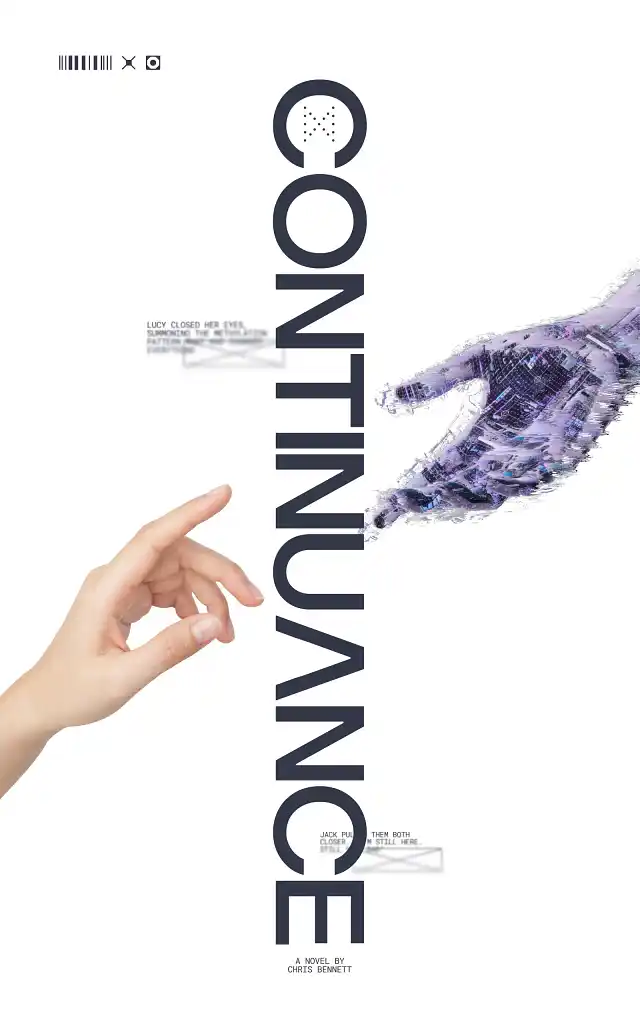
I knew the book deserved a beautiful cover, so I began looking for a talented artist. I was immediately struck by Richard Ljoenes’s portfolio, and decided to hire him. His initial concepts captured the book’s themes and lore in several distinctive ways:
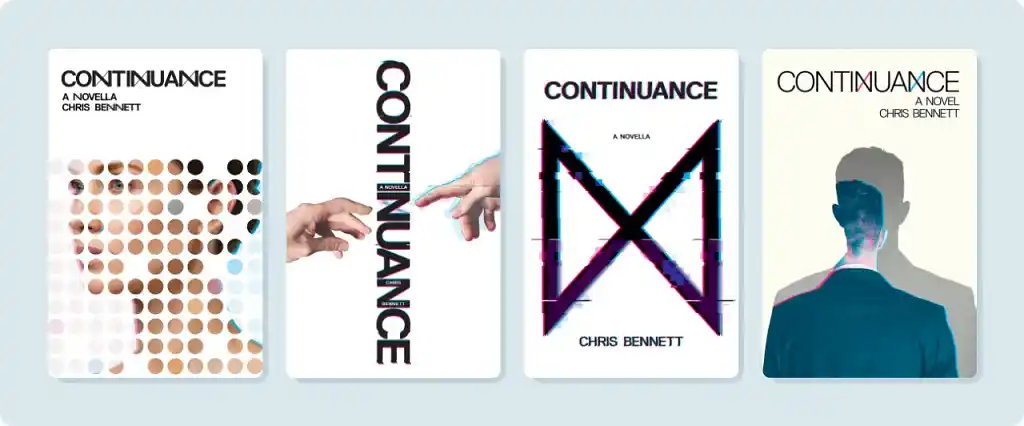
The concept I immediately fell for was the second 一 the human hand and a "Kaiku" hand reaching toward each other, the title split down the middle between them. It's the image that's carried the book from day one.
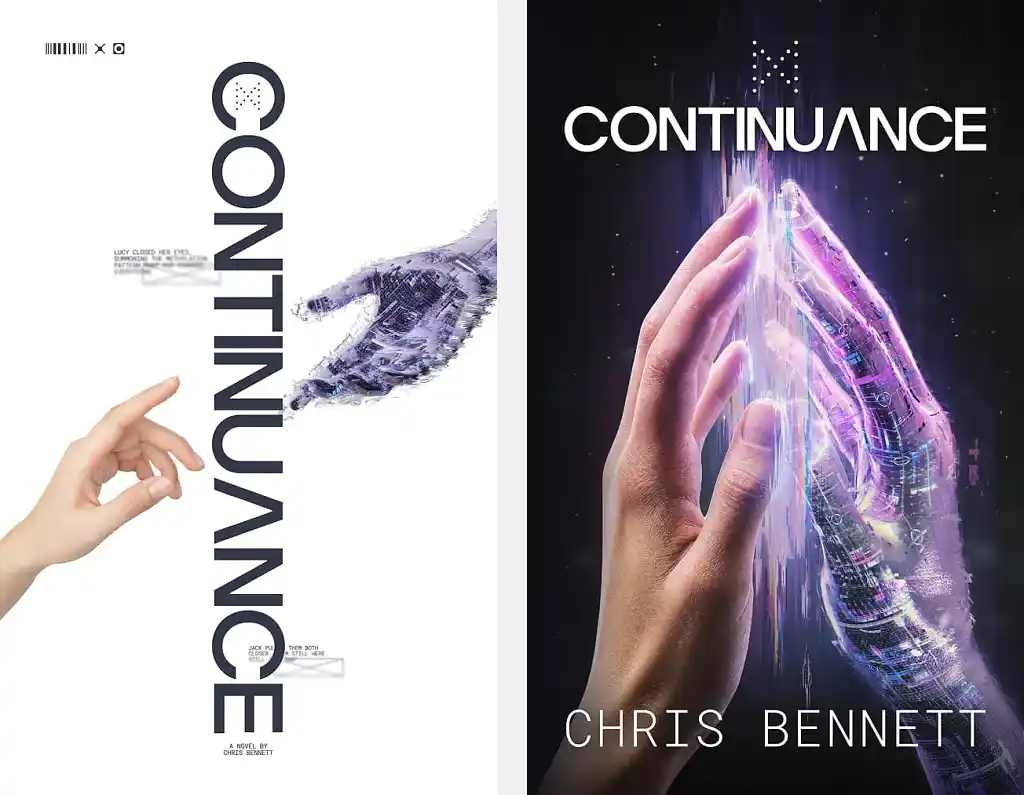
That said, loving a cover and having it work as a tiny Amazon thumbnail turned out to be two different things. A/B testing on Amazon Ads showed our white cover getting a noticeably worse click-through rate than darker versions we created. As it turns out, there are practically zero books in Amazon's Top 100 (in any category!) with white covers.
To be absolutely sure, we ran a public vote on a set of new concepts. The winning cover, despite its dark background, still retains the original hand-to-hand concept of the first iteration.
And a website that brings the book to life
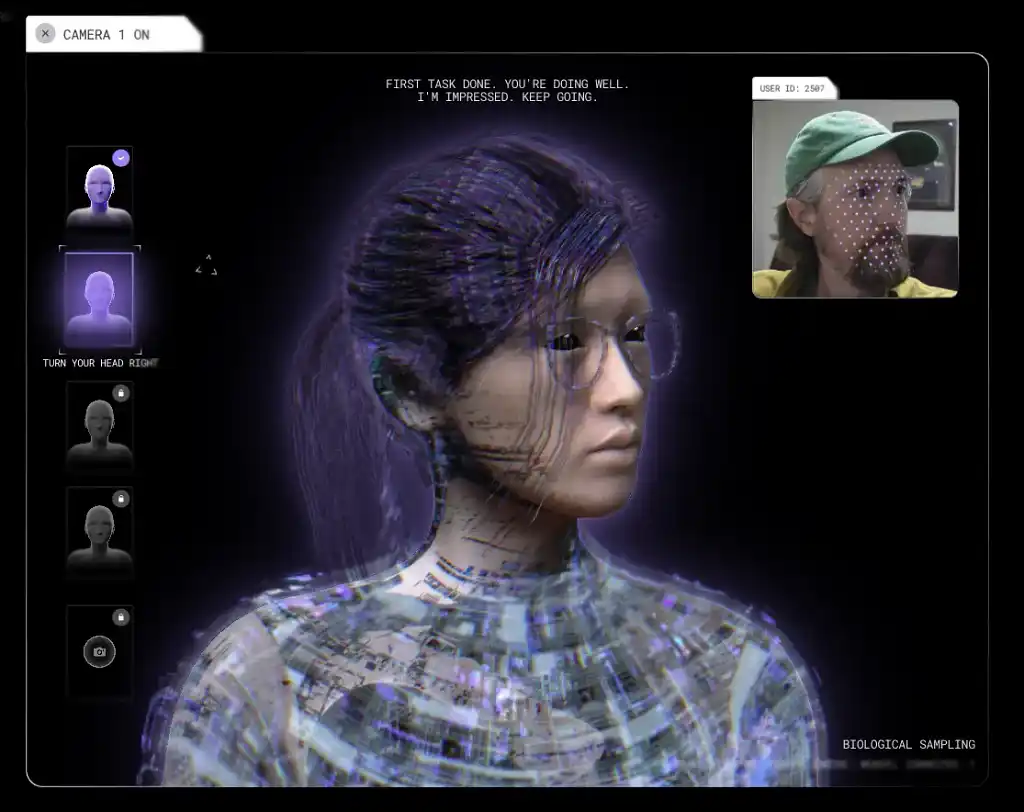
I also decided to build a dedicated website for the book. Working with a talented colleague, we created a space where readers can explore Kaiku and chat with characters from the book — including a hidden area unlocked with a password from inside the novel. I wanted something that let readers step into the world of the story, not just read about it, and that’s exactly what we created. Fun fact: all the music on the website was composed and performed by my brother, Robbie Bennett.
Getting the book in front of readers
The response so far has exceeded what I expected. Continuance is currently sitting at 4.9 stars on Amazon, and Reedsy Discovery reviewer Twylla Johnson called it a "Must Read" work of sci-fi. A reader even sent me a 3D-printed device inspired by the novel — it's the memory foundations recorder that is described in the book (and featured on the Continuance website).
But the marketing never stops. Currently, I’m drawing on my existing LinkedIn following and sharing an eye-catching book trailer that gives viewers a taste of the novel and draws them into its world. If I could go back, I’d also build a presence on other social media channels well before launch day.
Every Sunday, I also research up to five people who could genuinely connect with the book's premise: thriller and sci-fi reviewers, medical researchers, and digital ethicists. I learn a bit about them, and mail each one a physical copy with a personal note.
It might take a hundred of those before one opens the next door for me, but I'm confident it'll happen. I hope this book reaches not only those confronting their own mortality, but also the experts working to extend life beyond it.
What I’d tell another debut author
Collaborating with other talented people is essential when publishing a book. People do judge books by their covers, and they keep reading them because of the content 一 which means that both need to be unique and compelling.
It can be tempting to rely on generative AI for your cover or editing, but I’d encourage you to set aside a budget for human professionals. Their services are often more affordable than people expect; Reedsy has a helpful editor budgeting calculator to help you figure it out, and a post about the average cover design cost.
Because Continuance is about what makes us human, it only made sense to create the book with humans, too. I’m thrilled with how the final product turned out — and I hope it shows other authors what is possible when you have an amazing team on your side.
Continuance: A Near-Future AI Thriller is available on Amazon. Learn more about the book, and chat with its characters, at continuance.ai. Find Chris on Instagram and LinkedIn.