Blog • Understanding Publishing
Posted on Mar 31, 2026
Speculative Fiction 101: Types and Examples

Isabella Peralta
A writer and editor, Isabella coordinates "Prompts," Reedsy's weekly short story competition. Originally from the Philippines, she is a graduate of the University of Cambridge.
View profile →If you’ve ever been immersed in a book like The Lord of the Rings or Dune, you already understand the appeal of speculative fiction. This is an umbrella term for stories that explore scenarios beyond our current reality — with genres and subgenres like fantasy, sci-fi, and supernatural horror.
In this guide, we’ll look at various types of speculative fiction, explore their differences, and review clear examples of each. Here are the major ones we’ll cover:
| Type | Defining feature | Example |
| Science Fiction | Grounded in some version of science and technology | The Principle of Moments by Esmie Jikiemi-Pearson |
| Fantasy | Magic systems and entirely invented worlds | Blood Over Bright Haven by M. L. Wang |
| Magical Realism | Magic woven into the real world | Exit West by Mohsin Hamid |
| Supernatural Horror | Uses the uncanny/supernatural to explore dark themes | Bunny by Mona Awad |
Now, let’s dive into each type and see what makes speculative fiction so endlessly fascinating.
Science fiction
 Science fiction asks: “What if technology advanced in this direction?” While sci-fi scenarios may be speculative, they’re built on a foundation of real scientific principles — whether that’s physics, biology, chemistry, computer science, or engineering.
The genre spans an enormous range, from intimate character studies to galaxy-spanning political epics. To understand science fiction as a speculative category, let’s examine some of its most imaginative subgenres.
Space opera: grand adventures in the cosmos
Space opera answers the “What if?” question with grand scale and human drama:
-
What if humanity spread across the stars and forgot its origins?
-
What if ancient civilizations left behind powerful artifacts?
-
What if a planet’s fate hinged on one person’s choice?
The science fiction setting amplifies these questions, but the main focus remains on character, politics, and adventure. You’re probably familiar with popular space operas like Star Wars (who isn’t?), so let’s look at a more recent example of this subgenre…
Space opera example: The Principle of Moments
Esmie Jikiemi-Pearson’s epic saga features advanced technology and interstellar travel, but the heart of the story lies elsewhere. Here’s the blurb:
She's searching for the emperor who stole her sister.
He's searching for the prince who stole his heart.
The entire universe is at stake.
A century-spanning space fantasy novel that will take you on a whirlwind adventure, from a Regency Era love affair between a time-traveller and the prince waiting for him in the past, to a rescue mission in the 60th century, where a girl desperately races against time as she searches for the sister the emperor stole.
Readers aren’t meant to understand exactly how elements like time travel works in this book. Instead, they’re meant to care about the people using it and the galaxy-spanning conflicts that depend on it. The technology exists to enable the story, rather than to be its core.
Q: What are the most common worldbuilding mistakes that authors make?
Suggested answer


A common worldbuilding mistake is excessive focus on surface details—names, maps, appearance—without an understanding of the underlying reality of the world. When society rules, cultural rules, or magic rules don't work, the setting isn't so much living as it is pretty decoration.
Others also tend to dump information in clumpy blocks instead of weaving it into the fabric of character experience, which can stall the story. Some people forget that the world shapes beliefs, conflicts, and decisions, so the characters that emerge act as if they are in our world, not their own.
Excellent worldbuilding is not bulk, but harmony, every detail must add to the veracity of the story.
John is available to hire on Reedsy ⏺
Dystopian sci-fi: cautionary tales about society
Another major speculative fiction subgenre is dystopian sci-fi, which — unlike space opera — imagines worlds that can uncannily resemble our own.
In dystopian sci-fi, something has gone badly wrong with the environment, the government, humanity itself, or all of the above. It addresses uneasy questions such as:
- What if civilization collapsed overnight, and most people didn’t survive it?
- What if the systems holding society together turned out to be more fragile than we thought they were?
- What if the hardest thing to preserve after the end of the world isn’t food or shelter, but the will to keep on living?
Dystopian example: Station Eleven
Emily St. John Mandel’s bestselling novel opens on the night a flu pandemic starts wiping out 99% of humanity. Then, it jumps forward twenty years, showing us a world without electricity, air travel, or the internet (horror!):
One snowy night in Toronto famous actor Arthur Leander dies on stage whilst performing the role of a lifetime. That same evening a deadly virus touches down in North America. The world will never be the same again.
Twenty years later, Kirsten, an actress in the Travelling Symphony, performs Shakespeare in the settlements that have grown up since the collapse. But then her newly hopeful world is threatened...
If civilization was lost, what would you preserve? And how far would you go to protect it?
Interestingly enough, Mandel has been known to resist the “sci-fi label” for Station Eleven. But we’d argue that her novel is dystopian sci-fi. You’ve got a civilization-ending catastrophe, a fractured society trying to rebuild itself, and a world where the old rules no longer apply.
What makes the novel feel literary is its tone, since it’s very character-driven and more interested in themes such as grief and memory than in survival mechanics. Genres such as literary fiction and sci-fi are definitely not mutually exclusive, and Station Eleven is proof of that.
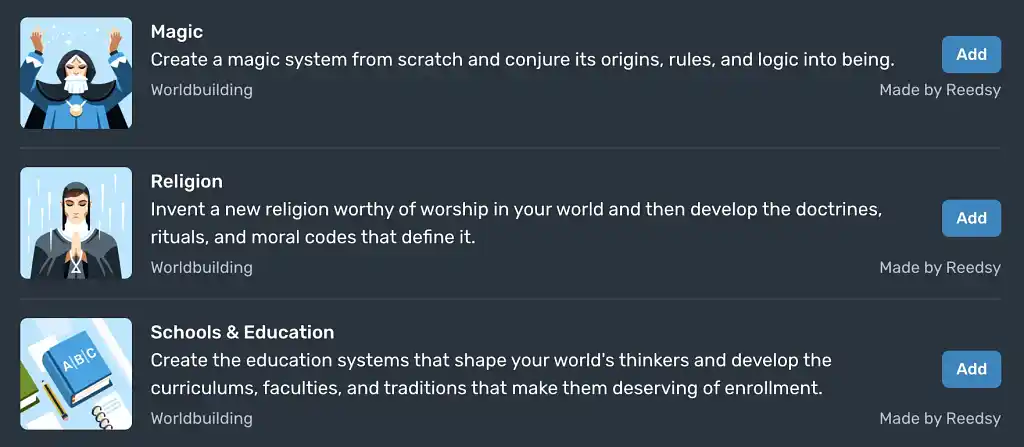
Want to build elaborate speculative worlds of your own, like the world of Station Eleven? Check out these 20 detailed worldbuilding templates in our free tool, Reedsy Studio, or click the preview below.
Other sci-fi subgenres
Science fiction also encompasses more specific tales about where our current trajectory might lead. These stories mirror contemporary anxieties about authoritarianism, climate change, technological overreach, and more. Here are a few (of the many sci-fi subgenres out there!) that are worth exploring:
- 🌃 Cyberpunk: imagines high-tech futures where corporations rule and technology divides as much as it empowers. Example: Local Heavens by K. M. Fajardo.
- 🌍 Climate fiction (cli-fi): explores environmental catastrophe and humanity’s response to ecological collapse. Example: The Ministry for the Future by Kim Stanley Robinson.
- 🧬 Biopunk: examines genetic engineering and biological modification. Example: The Windup Girl by Paolo Bacigalupi.
- ✊🏿 Afrofuturism: centers Black experiences in speculative futures, blending African diaspora culture with science fiction. Example: Kindred by Octavia E. Butler.
Each subgenre uses science fiction’s toolkit to explore different facets of the human experience — proving that when you ask “What if?” with scientific principles as your foundation, the possibilities really are endless.
Fantasy
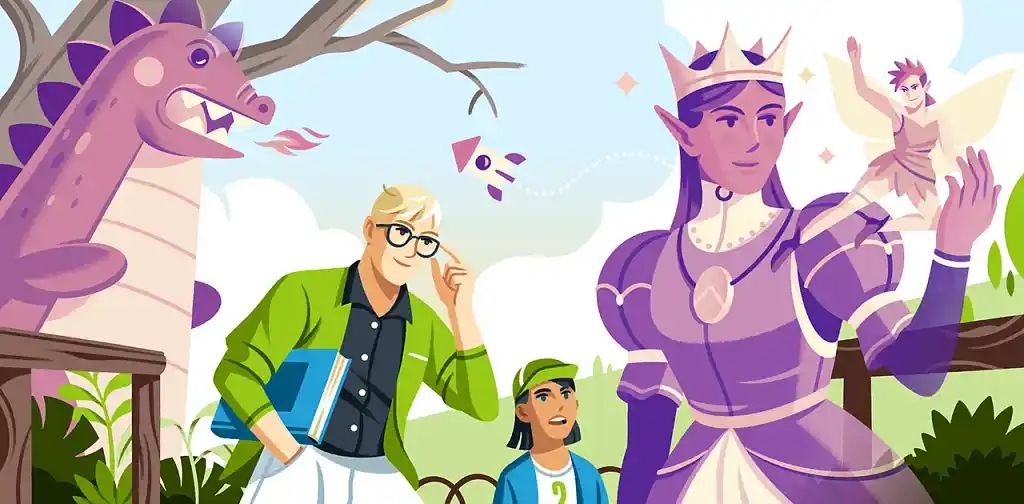 Fantasy asks “What if magic existed?” and runs with that premise in every direction imaginable. Unlike science fiction, which grounds speculation in scientific principles, fantasy builds its worlds on magic systems, mythical creatures, and supernatural rules that operate outside our reality.
Q: How does worldbuilding differ between science fiction and fantasy?
Suggested answer
Worldbuilding in science fiction starts with scientific plausibility. Technologies, future cultures, or altered realities must seem rationally based, although speculative. The rules are extrapolated out of science and consistency is extremely important to maintain credibility.
Worldbuilding in fantasy is founded on magic, myth, and invented cultures, relying less on realism and more on internal logic. Though fantasy draws from mythologies or entirely new mythologies, there must still be parameters for the functioning of magic and societal structure.
Both genres craft rich worlds, but science fiction asks, "What may be possible?" while fantasy asks, "What can be imagined? undefined?" The difference lies in where the wonder comes from: science in one, magic in the other.
John is available to hire on Reedsy ⏺
To understand fantasy’s range, let’s explore two popular approaches.
High fantasy: elaborate worlds and epic quests
High fantasy transports readers to entirely invented worlds with their own geography, cultures, languages, and histories. These stories often feature:
-
Extensive world-building: maps, genealogies, invented languages, and deep lore.
-
Complex magic systems: detailed rules governing how magic works.
-
Epic quests: journeys across vast landscapes with world-altering stakes.
-
Battles between good and evil: often involving chosen ones or prophesied heroes.
High fantasy example: Blood Over Bright Haven
This gripping novel is set in the magical city of Tiran, and is the perfect example of high fantasy. Here’s the premise:
For twenty years, Sciona has devoted every waking moment to the study of magic. When she finally achieves her ambition to become the first woman admitted to the High Magistry at the University of Magics and Industry, she finds herself undermined at every turn. Instead of a lab assistant, she’s paired with a janitor, putting her crucial research at risk.
But Thomil wasn’t always a janitor. Once a nomadic hunter from the wild plains outside the city, he now sees a chance to understand the forces that decimated his tribe and drove him from his homeland. Together they will uncover an ancient secret that could change the course of magic forever — if it doesn’t get them killed first.
So, what makes this high fantasy? M. L. Wang builds an entirely new world from scratch, complete with invented infrastructure.
From magical typewriters to the University of Magics and Industry, every detail reinforces that this world operates on rules very different from ours. Additionally, it’s got its own political, social, and magic systems: Tiran has rigid hierarchies, institutional power structures, and deep-seated prejudices which come to light the more Sciona learns about the magic that runs her beloved city.
Q: How can I ensure my magic system has consistent internal logic and limitations?
Suggested answer
The first thing to do is, simply, keep track of everything you write down in relation to your magic system. Especially if you're a 'pantser', you may not have thought a great deal about your magic system in advance (and that's fine), but set up a spot where you can note down everything you establish as you draft. This can be as informal as a notebook at your desk or as formal as an excel sheet, but keeping track of what your characters are doing and what the magic system is guided by/how your magic system works can save you a lot of time in advance, especially if you make sure to note down where rules are established so that you can refer back to them.
As you keep notes, don't limit yourself to the 'rules'--write down those rules, certainly, but also right down the effects of spells/magic, the ingredients/steps to making something happen or change within your magic system, how characters react or sense magic, how the world governs (or fails to govern) magic use, and anything else that comes up in relation to the magic system. Writing all of this down will help you keep in mind the history of what you've written as you're compiling this informal style sheet for your magic system, and you may even manage to head off contradictions before they get drafted into your novel.
Then, hire a developmental editor. Writers are close to their novels, and especially when a magic system is being established, there's a good chance you'll be too close to the worldbuilding and magic to see small slips in logic and any limitations which will prove to be issues. That's where a developmental editor comes in. Especially if you're moving into a series or writing a stand-alone, hiring a good developmental editor with experience in SFF can be incredibly helpful. And if you're writing a series, you may not need them to chime in on the second/third/fourth book in your series, but having had their input on the first book, prior to publication, will save you a world of headaches as you keep developing the system forward.
Jennifer is available to hire on Reedsy ⏺
To keep a magic system in place consistently, decide its rules, limits, and cost in advance and stick to them throughout the story. Consider the consequences of how magic affects society, culture, and character choices—magic must have its price. Avoid using magic as a plot convenience; challenges must be met through real effort or cleverness within the system.
Consistency also derives from being careful with exceptions: if it is going to break a rule, it must have a clear, credible motivation. Well-constructed systems feel real because characters behave within its limitations, and readers can expect how it influences conflict and resolution.
John is available to hire on Reedsy ⏺
Romantasy: where magic meets desire
As you could probably tell by its name, romantasy blends fantasy and romance, creating stories filled with some of the most fun tropes of all time (enemies to lovers, anyone?). In addition to these tropes, romantasy books also usually feature the following:
- A compelling love interest: someone who’s strong, brooding, and attractive (plus points for being very charismatic too!) who readers can swoon over.
- High-stakes worlds: romantic tension is heightened by the fact that the world the characters are in is also in peril — there’s always a war to fight, a prophecy to fulfill, or an ancient evil breathing down everyone's necks…
- A happy ending: because what true romance is complete without one?
Romantasy example: Daughter of the Moon Goddess
In the first book of Sue Lynn Tan's popular Chinese mythology-inspired duology, we follow Xingyin (daughter of Chang’e, the moon goddess). In the story, she’s torn between two love interests: Crown Prince Liwei, the Celestial Emperor's charming son, and the reserved but magnetic Captain Wenzhi. More details below:
Growing up on the moon, Xingyin is accustomed to solitude, unaware that she is being hidden from the feared Celestial Emperor who exiled her mother for stealing his elixir of immortality. But when Xingyin’s magic flares and her existence is discovered, she is forced to flee her home, leaving her mother behind.
Alone, powerless, and afraid, she makes her way to the Celestial Kingdom, a land of wonder and secrets...
What makes this romantasy? You’ve got an invented world steeped in myth and magic, sky-high stakes, and a slow-burn love triangle that will have readers firmly in one camp or the other. Plus, there’s the all-important question: with whom will our protagonist have her happily ever after?
Other fantasy subgenres
Fantasy contains multitudes beyond high fantasy settings and romantic plots:
- 🌑 Dark fantasy: a blend of fantasy with horror elements, often featuring morally gray characters and grim settings. Example: The Blade Itself by Joe Abercrombie.
- ☕ Cozy fantasy: low-stakes, feel-good stories set in magical worlds (think cottage witches and friendly dragons). Example: Legends & Lattes by Travis Baldree.
- ⚡️Mythological fantasy: tales that incorporate elements from myth, folklore, and legends. Example: Percy Jackson and the Lightning Thief by Rick Riordan.
There are 50 fantasy subgenres and counting, so whether you prefer sprawling epics with detailed maps, trope-filled love stories, or heartwarming accounts of magic hiding in a bookshop cafe, there’s bound to be a tale out there for you.
And if you're a writer who needs help bringing your story (of any fantasy subgenre!) to life, hire an editor who specializes in fantasy for the best results.
Hire an expert
Helen L.
Available to hire
Literary Agent and Developmental Editor. I represent incredible authors at Ki Agency. My editorial focus is on Fantasy, Sci Fi and Romance.

Chris U.
Available to hire
I am an expert in genre fiction, with years of experience evaluating short fiction. I want your wildest stories to find a published home.

Lauren H.
Available to hire
Peripatetic editor of genre and literary fiction since 2015, working with publishers and imprints under Macmillan, Penguin, and Tor.
Magical realism
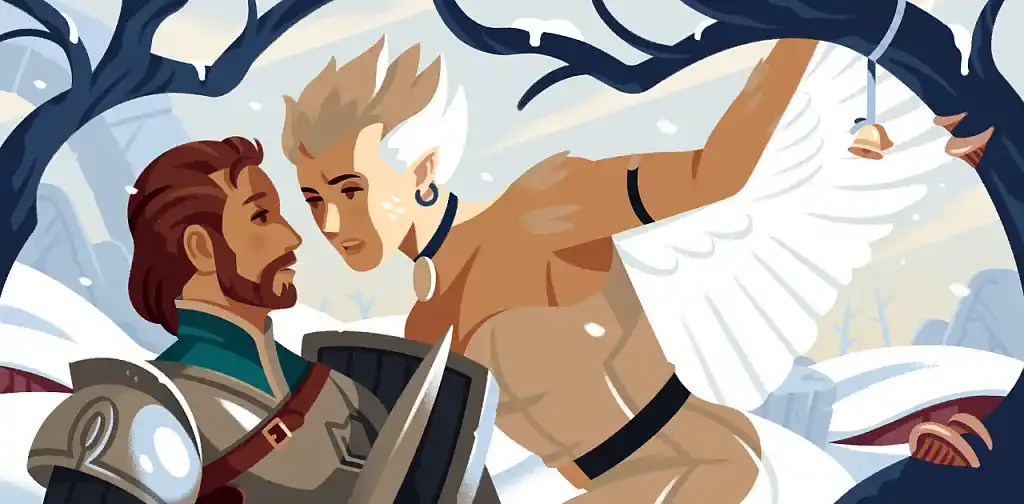 Magical realism is subtler than fantasy and, in many ways, more unsettling. It takes the world as we know it and weaves in the impossible — without explanation or fanfare — to poignantly comment on various social issues like political violence and displacement.
To concretely show how fantasy and magical realism differ: in fantasy, a person who gains the ability to fly might discover they are a witch, demigod, or some kind of otherworldly creature. Meanwhile, in magical realism, no one would bat an eye if someone suddenly sprouted wings. This would be treated as an everyday occurrence, like walking or breathing.
Magical realist stories usually share the following key characteristics:
- Magical elements are never explained, and no one considers them to be unusual;
- Real-world setting remains grounded and recognizable; and
- Magic functions as metaphor, carrying emotional or thematic weight that straightforward realism couldn’t.
Magical realism example: Exit West
Mohsin Hamid’s second Booker Prize-shortlisted novel is one of the most celebrated recent examples of magical realism:
In a country teetering on the brink of civil war, two young people meet — sensual, fiercely independent Nadia and gentle, restrained Saeed. They embark on a furtive love affair, and are soon cloistered in a premature intimacy by the unrest roiling their city.
When it explodes, turning familiar streets into a patchwork of checkpoints and bomb blasts, they begin to hear whispers about doors — doors that can whisk people far away, if perilously and for a price. As the violence escalates, Nadia and Saeed decide that they no longer have a choice. Leaving their homeland and their old lives behind, they find a door and step through…
The doors in Hamid’s novel are never explained. No one builds them, no one fully understands them, and the author doesn’t dwell on them. You won’t find any explanations about logistics or the doors’ inner workings here. They just exist, and we must accept them blindly — the same as we are with the (arguably more “unnatural”) elements of borders and displacement.
Political borders and magical doors are equally arbitrary, and through his moving prose, Hamid encourages us to reflect on that. His doors do the work that pure realism wouldn’t be able to do on its own — they cleverly remove the distance between one country and another to highlight how forced migration can feel like a sudden rupture: one moment you are home, and the next, you are not.
Q: Which fantasy tropes feel overused today, and which underused tropes deserve a comeback?
Suggested answer
Some fantasy tropes are thinning out these days—such as the fated-to-save-the-world chosen one, or the angsty hero who grudgingly fulfills a prophecy. They may still work, but only through increased sophistication.
Similarly, sheer numbers of medieval-European settings with little cultural diversity can make stories indistinguishable from each other. By contrast, underused tropes become rejuvenating when rehashed: found families not bound by destiny but by choice, ordinary people caught up in what they would see as unlikely events, or settings that take from overlooked mythologies and histories.
Even old ideas like quests or magic schools can be rejuvenated when authors take them up again from new angles. It's not the avoidance of tropes overall that matters, but knowing which have become predictable and which still hold depths awaiting exploration to surprise readers.
John is available to hire on Reedsy ⏺
This is a subjective question, but what's more important is to note that the industry is constantly changing, as are readers.
Right now, for instance--in my personal opinion--chosen one narratives often feel overused, as do rags to riches narratives. I'd personally love to see more stories about reluctant monsters, vampires or otherwise, or sibling teams, but that's my personal opinion at this moment in time, and that's what's key.
If you're writing to market, and rapid-releasing as a self-publishing author, it is possible that taking the temperature of readers' feelings on tropes will be incredibly worthwhile and net you great sales. However, if you're looking to go the traditional route, there's a real danger to this. If agents are calling for more vampire novels or romances revolving around pirates, chances are that by the time you write one, they'll already have gotten their fill and will be calling for something new, simply because writing a novel isn't generally a fast endeavor. So, for that very reason, trying to think about what tropes currently feel overused or underused can potentially lead you to write a book that won't ultimately sell.
My advice on tropes always goes back to the idea that writers are at their best when writing a story they care about or writing themes they feel passionate about. Think about how many of your favorite writer's use similar tropes or characters over and over again. They find their readers, and there's nothing wrong with them writing the stories they love to tell! The real trick is for you to find the tropes that speak to you, whether they seem underused or overused, and make them your own in stories you're passionate about writing. If you do that, you can't go wrong, and you will find your readers if you just keep looking and keep writing.
Jennifer is available to hire on Reedsy ⏺
Other magical realism subgenres
Magical realism has been embraced by writers across cultures and traditions to explore vastly different human experiences:
- ✊ Postcolonial magical realism: critiques colonialism and historical trauma. Example: Midnight's Children by Salman Rushdie.
- 🧠 Metaphysical magical realism: focuses on the psychological, emotional, or surreal experience of the individual, exploring personal loss, identity, and the blurring of dreams with reality. Example: Kafka on the Shore by Haruki Murakami.
- ✨ Fabulist magical realism: the magical elements are less about political commentary and more about atmosphere and beauty. Example: The Strange and Beautiful Sorrows of Ava Lavender by Leslye Walton.
These strands all share an instinct that some truths are better approached or exposed sideways — through the impossible rather than the literal.
Supernatural horror
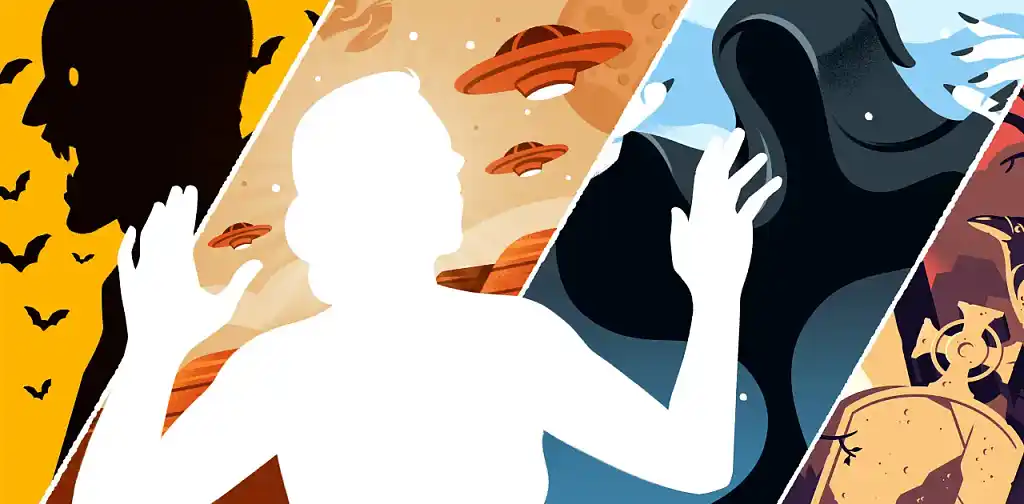 What if the things we fear most were real? That’s what supernatural horror attempts to explore — but we’d argue that the best kind of horror actually goes further than jump scares and monsters. Instead, it uses the paranormal to explore something true about the human condition. (Fear, after all, is one of the most honest emotions we have!)
Supernatural horror stories tend to share the following defining characteristics:
- The uncanny, i.e., familiar things made strange (or the opposite, where the strange is made familiar).
- An atmosphere of dread, in which something is wrong, and the reader senses it before the characters do.
- Psychological depth — the monster itself is usually not the scariest thing, but rather, it’s what the monster represents (such as loneliness, grief, or the desire to belong).
Horror example: Bunny
Mona Awad’s Bunny, which went viral on TikTok back in 2019, is a bizarre and darkly funny example of contemporary supernatural horror:
Samantha Heather Mackey couldn't be more of an outsider in her small, highly selective MFA program at New England's Warren University... She is utterly repelled by the rest of her fiction writing cohort — a clique of unbearably twee rich girls who call each other Bunny, and seem to move and speak as one.
But everything changes when Samantha receives an invitation to the Bunnies' fabled Smut Salon, and finds herself inexplicably drawn to their front door — ditching her only friend, Ava, in the process. As Samantha plunges deeper and deeper into the Bunnies' sinister yet saccharine world, beginning to take part in the ritualistic off-campus Workshop where they conjure their monstrous creations, the edges of reality begin to blur.
In this novel, the monsters are real, and they’re also a metaphor. (Spoiler alert!) The Bunnies’ rituals are grotesque on the surface, but what Awad is actually dissecting is the horror of social conformity: how desperately we want to belong, and how much of ourselves we’re willing to sacrifice to get there. Very relatable, even if you’re not a twenty-something creative writing student in New England.
More horror subgenres
Horror is a vast and varied genre, but here are a few more subgenres worth knowing:
- 🩸 Gothic horror: takes its cues from decay, obsession, and the weight of history. Example: Beloved by Toni Morrison.
- 🫀Body horror: the human body becomes the site of the horror itself. It can transform, deteriorate, or turn against its owner in shocking, very disturbing ways. Example: She’s Always Hungry by Eliza Clark.
- 👻 Psychological horror: turns the terror inward, until the reader (and the protagonist) can no longer trust what's real anymore. Example: Mexican Gothic by Silvia Moreno-Garcia.
Whatever form it takes, horror reminds us that fear (when handled with craft and intention) can be one of fiction’s most powerful tools.
Speculative fiction is, at its core, a genre of questions. Whether you’re drawn to galaxy-spanning epics, slow-burn magical realism, or stories that make your skin crawl, there’s a corner of speculative fiction waiting for you. All you need to do is ask “What if?” and see where the answer takes you.