Last updated on Oct 15, 2025
How to Write a Novella: 7 Tips From an Expert

Tom Bromley
Author, editor, tutor, and bestselling ghostwriter. Tom Bromley is the head of learning at Reedsy, where he has created their acclaimed course, 'How to Write a Novel.'
View profile →With a word count that situates the novella somewhere between a short story and a novel, its particular demands make it one of the most exciting yet challenging forms for writers to pen.
To help you understand how to write a novella, we've turned to Reedsy editor Sara Kelly — a specialist in all short and polished fiction — for eight of her finest writing tips.
1. Flood your reading list with novellas

It may sound painfully obvious, but mainlining a few novellas before you begin writing will help you internalize the distinctive rhythm of these shorter pieces. It’s also a great way to find out what readers expect from a novella, and to take stock of elements that make the form unique.
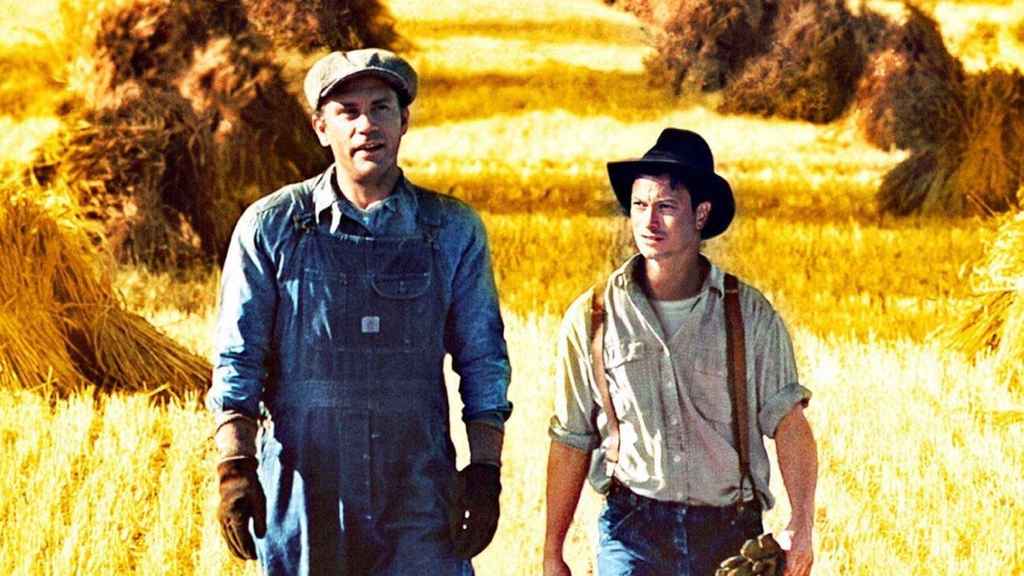
You’ve probably read a few novellas already — Animal Farm, Of Mice and Men, The Strange Case of Dr Jekyll and Mr Hyde — but you’ll need to revisit them. And this time, instead of consuming them purely for pleasure, read from the perspective of a writer.
Q: How important is it for first-time authors to adhere to standard word counts, and what flexibility do they have based on genre or target audience?
Suggested answer

It's incredibly important, not because authors shouldn't be able to bend or break the rules, but because these "standard word counts" are systemic. It isn't agents insisting on word counts for no reason; it filters from book buyers to internal publishing salespeople, then to editors and agents.
Having too few words can be worse than having too many. Think about the end goal: you want readers to buy your book. If they feel like they're getting less than they paid for then they won't buy the book. For example, if you wrote 30,000 words when most books in your genre are more like 60,000-70,000 words, then readers looking at your book compared to a competitor might be inclined to think the book that has more words has more heft and therefore is more worth their money.
When it comes to too-high word counts, then you run into a different issue and that's with publishing costs. it costs money to print pages, and if you've written 500,000 words, then that book is going to cost even more to produce (not only the paper in such an extreme case, but also in the binding of that book to make sure it holds up). If it costs more to create, then that can negatively impact publishers' profits. If a publisher is evaluating your work that's 500,000 words versus a similar work that's only 125,000 words, why wouldn't they choose the shorter book? It also takes up less physical space on a bookshelf, so bookstores might be able to keep more copies on the shelf.
Genre and target age range here are the great determining factors. Epic Fantasy, for example, which takes place in a world not our own, usually requires a higher word count for the simple fact that the world has to be built. Nonfiction business books, on the other hand, are usually around 60,000 words, as those readers don't need to be transported to another world, but instead need to have points clearly articulated.
Matt is available to hire on Reedsy
In a very loose way, it's important to adhere to genre standards in word count simply because they've developed over time in response to what works best in the market. There are always exceptions, but those are usually backed up by an established author or sweeping support from retailers, librarians, or the media backing the book.
BUT FIRST: write the book you want! This is your book, and you can always edit it down or beef it up. It's important to write for yourself first, because the best story will come out of that. And if you change it later, so be it. Don't let market expectations stop your drafting or creative process!
Grace is available to hire on Reedsy
If you're planning on querying agents and going the traditional route, then adhering to standard word count expectations is essential. Are there exceptions to the rules? Sure, but you never want to plan on being the exception to the rule when you're already going up against long odds.
Querying is incredibly competitive, and an agent seeing that your manuscript is already in the target word count range for your genre tells them that you're probably aware of market expectations and have given real thought to your project's development. On the other hand, if they see a word count that's 20k outside the realm of expectations, that tells them they're either going to have to work with you to get the word count down/up, or potentially have a more difficult time selling your project to publishers.
On the other hand, if you're planning on self-publishing, word count isn't all that important. You don't want to write something the length of a short story and call it a novel, but the important thing in the self-publishing world is to tell a good story. Whether your mystery novel is 30k words, 60k words, 90k words, or even 130k words, your readers won't care as long as the story is great, whereas an agent would likely say no immediately if they saw a query for a 30k or 130k mystery novel, without even getting past that first sentence of your query where they'd see the word count.
If you don't know whether or not you plan to publish traditionally, the best way to set yourself up for success is to research the target word count range for your genre/audience, and then adhere to that expectation as closely as possible. Do be aware that word count expectations can change over time, so you want to make sure that your source for target word count is fairly recent.
That said, if you don't want to put extra pressure on yourself to meet industry standards before you're even done drafting, then there's no reason to focus on anything other than writing the best story you can; then, once you're done, you can take a look at word count expectations, hire a developmental editor to get expert eyes on your novel, and decide from there what makes the most sense for a publication plan.
Jennifer is available to hire on Reedsy
Consider the novella’s pacing as you read
One hallmark feature that you might spot in your reading is the fast-moving pace. “While novels have the luxury of detailed exposition and complex timelines, most novellas stay on a single trajectory to keep the reader propelling towards the climax,” Sara says. If you want to get a sense of how novellas maintain pacing, here are a few things to consider while you read:
- Are there subplots? If so, how many? How much space is devoted to them? Do they involve the protagonist?
- Are there flashbacks and backstories? If so, are they mentioned briefly, or perhaps just alluded to in dialogue?
- How long are the sentences? Do they report action or are they highly descriptive?
As well as asking yourself these questions, you might want to take a look through our guide to pacing a story for some tips and tricks!
Want to find out which contemporary author you are? Take our one minute quiz below!
🖊️
Which contemporary author are you?
Find out which of today's greats is your writerly match. Takes one minute!
2. Nail down your central conflict
Conflict should be the driving force behind any narrative. It’s what makes a character’s journey interesting to readers. Without it, a story would just be a meaningless series of events (unless you’re writing avant-garde, abstract, literary fiction, in which case we’ll turn a blind eye).
Sarah emphasizes the added importance of nailing down your central conflict when writing a novella. “Unlike a novel, where you might get away with having a complicated, multi-layered plot, the novella’s shorter length requires you to keep the conflict streamlined.” Your central story thread should always be exerting its gravitational pull.
There are seven main types of conflict to choose from, but broadly speaking, they can all be lumped into two categories:
- External conflict: In The Turn of The Screw, a governess struggles to protect her two charges from evil spirits.
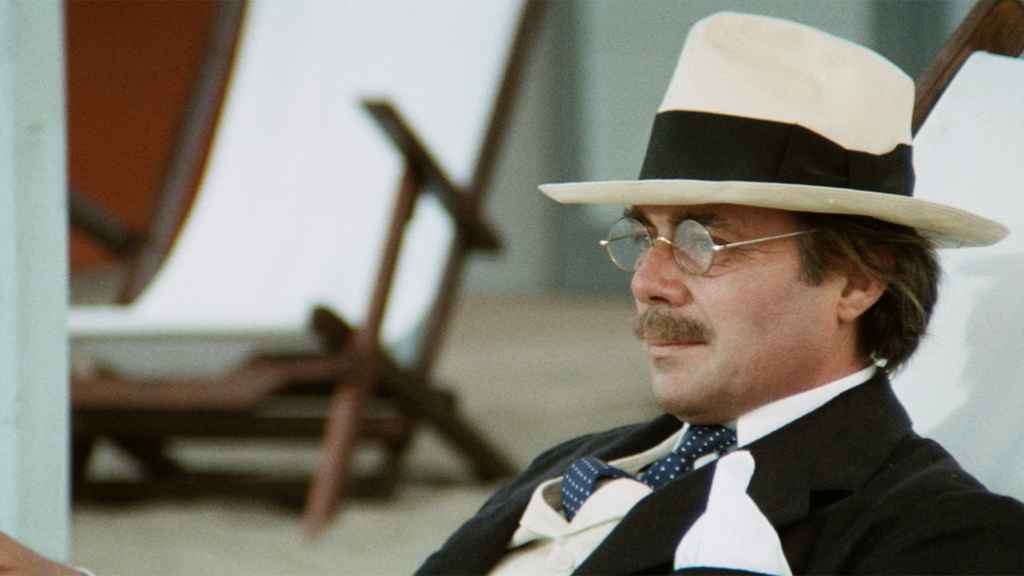
- Internal conflict: In Thomas Mann’s Death in Venice, a middle-aged writer battles his obsession with a teenage boy.
Either way, like any movie-trailer guy worth his salt, you should be able to summarize your central conflict in a single sentence!

3. Let your character drive the story

Novellas are often a perfect vehicle for character studies — stories that drill down into what makes a character tick. So make sure your protagonist is sculpted with subtlety and depth. You should know more about this character than you do about your best friend: the birthmark on their thigh, their awkward, croc-wearing cousin, the time they let one rip at yoga. Even if the details don’t make it into your story, using a template for character creation or exercises to help you develop your character will prevent you from molding a protagonist that’s just a shallow pool of cliches.
While every character should evolve from the inside out, it’s even more important to take this approach when you’re writing a novella. You should begin with these three core elements:
- The Goal: What does your character want?
- The Motivation: Why does your character have this goal?
- The Arc: Will your character undergo fundamental changes over the course of the story, or will they remain largely the same?
Then you can get into the nitty-gritty 🔍 Like that birthmark we mentioned earlier!
Try telling your story from one character’s perspective
While many novelists now take a page from George R.R. Martin’s book and write sprawling sagas with countless point of view characters, Sara believes that this is not a luxury novella writers can afford: “For the reader to get to know your protagonist intimately, you should remain in one character’s point of view throughout your novella.”
If this is your first go at writing a novella, why not try first-person perspective? Telling the story through the eyes of a single character will help you avoid an ever-unraveling narrative. And don’t worry, it’s not as limiting as it may seem! Just as you can tell when a person you’re speaking to is upset, your narrator can indicate other characters’ emotions with observations of behavior.

FREE COURSE
Understanding Point of View
Learn to master different POVs and choose the best for your story.
Or have a go at writing an unreliable narrator
First-person point of view also opens up the possibility of an unreliable narrator, one whose perspective, agenda, or bias makes the reader question the truth of their account. In The Yellow Wallpaper, the first-person narrator is a woman accused of insanity and forced to stay in a room with unsettling yellow walls. Descending into madness, she is the definition of unreliable. But because the story is told from her perspective, we (the readers) are more likely to trust her over the calm, rational words of her physician husband. Do we really think there’s a woman trapped behind the wallpaper? Definitely not. And yet, readers bypass their skepticism, listen, and relate.
Q: Is there a viable market for novellas written by debut authors, and what factors contribute to their success?
Suggested answer

Mainstream publishers, at least in the UK, are not keen on short fiction of any type. If an established money-making author wants to do a novella, it will be published, to keep the writer happy.
There may be a market for online self-publishing. Have a look at sites like Amazon where people put out their own stuff, look for novellas and see if you can find out how they're doing. It may even be possible to contact writers to ask this - I don't know.
Vicki is available to hire on Reedsy

Novellas are extremely hard to place with the traditional Big 5 publishers. Debuts, in general, are also becoming hard to place with such a competitive market. However, there is still a hungry market for them. Self-published authors frequently publish novellas and readers love them! Independent publishers often take chances on novellas and debuts, especially if you're writing in specific genres like horror and fantasy. If you're having trouble getting an agent to take on your novella, try self-publishing or researching independent publishing houses. The latter are more likely to take risks and develop your career, and you might not even need an agent to query them.
Ariell is available to hire on Reedsy

Generally, for big US publishers, no. Novellas are a marketing tool to attract readers to the author's other books under contract. That's why you'll often see novella collections with one big name author and several smaller ones--they're trying to expand the reach of those smaller authors. So it doesn't make a lot of sense for publishers to by a novella from a debut author with no other books under contract. However, novellas do exceptionally well in self publishing, e-publishers, and smaller independent publishers. Gear your queries/submissions towards those outlets.
Megan is available to hire on Reedsy
4. Keep your supporting cast small and central
With the limelight on your protagonist, all other characters in your novella should be supporting, not featured. “That’s not to say that your ancillary characters cannot be characterized vividly and made to feel like fully realized individuals,” Sara says. “But when it comes to true character development, arcs, and innermost thoughts and feelings, stick to your main character.”
It helps to keep your cast small. Define your protagonist, then decide on one or two central relationships that serve an essential function. Whenever you introduce a new character, make sure that they contribute either to the central plot or to your protagonist’s arc. If they don’t, you’ve got two options: cut them completely, or amalgamate them with another character.
2 Become 1: Merge your characters
At the opening of your story, you might have a distant relative visit your protagonist — maybe a great aunt. Excellent at finding fault, she’s practically deaf, and almost always the perpetrator of the silent-but-deadlies. She’s there for a bit of comic relief. You also invite a dull uncle along, to be the bearer of a wild family secret that kickstarts the story.
At the rewrite stage, if you’ve got a bloated word count or a disorderly cast, you might rework things so that the flatulent aunt reveals the secret that serves as the story’s catalyst. That streamlines your character count and gives the aunt (who otherwise comes out with some scathing one-liners) a reason for existing in the story.

5. Don’t write by the seat of your pants
“With fewer words at your disposal,” Sara says, “the novella is one form in which it helps to outline.” Before you start writing, you should be able to clearly chart the narrative shape of your story: the major plot points, the peaks and plateaus, and the ending. “You should also have an idea of roughly how long it’ll take you to reach each milestone.”
While novels can afford to have an episodic feel — where each chapter almost tells its own story — novellas require a tighter structure. Without natural stopping points every forty pages or so, narrative architecture becomes very important. The reader needs traditional story beats to carry them along, otherwise they can quickly begin to wonder, where is this going?
There are countless ways to sketch out a story, but one storytelling model that has its fingerprints in lots of novellas is ‘The Hero’s Journey’. It has multiple incarnations — including the famous structure that takes place over three acts and Dan Harmon's story model — but they all follow the same pattern:
- A protagonist leaves the comfort of their everyday life and ventures out in pursuit of something they want.
- Just as tension rises to a boiling point and they are about to succeed (land the job, prevent the apocalypse, triumphantly reclaim the family swimming cap factory) a conflict is thrown up and they realize there’s a price to pay.
- They must decide whether to pay the price or not and live with the consequences!
If this model sounds helpful to your story, use it to plot ahead before you start writing!
6. Commit to a time and place
Recalling her Aristotle, Sara suggests putting a limit on where and when your story takes place. “Your narrative should occur within one span of time, typically ranging from a few hours to a few months, and the action should be confined to one space.” James Joyce’s The Dead, set over the course of a single night at an annual dinner dance, is a shining example of how Aristotle’s unity of action, time, and place shapes a brilliant novella.
This is because, while a novel can afford to take the scenic route to the summit — to ramble through backstories, change perspective, and diverge down the path of a subplot — ideally, a novella should always be building to a climax.
Of course, lots of novellas will change location and jump around in time. However, if your story does the same, you might consider indicating this with scene breaks or white space rather than chapters. This is purely a matter of preference (Animal Farm and The War of the Worlds, for example, make use of chapters) but without the self-proclaimed end of a chapter announcing that it’s time to stop reading, it can be easier to keep the reader propelling towards the climax.
7. Ruthlessly revise and cut your story
You might have noticed a theme emerging: be as concise and compelling as possible. A lower word count is the novella’s defining feature. And this demand for economy pushes writers to focus on their central idea with unusual intensity, driving it forward with functional single-mindedness.
Every time you change location or introduce a new character, ask yourself, How does this scene further my central conflict? or What have I learnt that I didn’t know before? If a passage doesn’t add anything to the story, cut it. Found an overly wordy sentence? Revise it. Every word in your novella must earn its keep.
Once you’ve trimmed down any unruly subplots and tackled that swollen middle, you should be left with a lean and polished manuscript. Then it’s time to work with a professional editor. An expert will weigh up your plot progression, add precision and clarity, and show you where you can be more economical in your writing.
Hire a professional

Sean L.
Proofreader/editor for 14+ years, reader for 40+, and as a lifelong fan, horror is my go-to genre.
Request a quote
Vanessa A.
15+ years as an enthusiastic editor, helping authors polish prose, sharpen storytelling, and prepare manuscripts for successful publication.
Request a quote
Lisa S.
Book indexer with over 20 years' experience at major publishing houses including Routledge and Cisco Press
Request a quote💡Check out our guide to becoming a better writer for more writing tips!
And that's how to write a novella! There’s nothing left to do now but send it out into the big, wide world!
Bonus: Get your novella published!
Consider submitting it to literary magazines to see if they’d be interested. If it’s on the longer side they might want to publish a particular section or possibly even serialize it. But if you’re planning to go all out and publish a book, you’ll want to get in touch with a literary agent who can help connect you with publishers.
Of course, self-publishing is always an option, and going through the process with a shorter work of fiction can be a great way to learn the ropes if you plan on publishing a novel. In fact, some of the most famous authors in the western canon kick-started their careers with a novella. And hopefully, with the help of these tips, it won't be long before your name appears right alongside theirs!