Guides • Understanding Publishing
Last updated on Oct 09, 2026
How to Traditionally Publish a Nonfiction Book in 5 Steps

Savannah Cordova
Savannah is Editor-in-Chief of the Reedsy Blog. She has 8+ years of experience crafting content about how to write, edit, design, and publish your book as an independent author.
View profile →
Rebecca van Laer
Rebecca van Laer is a writer, editor, and the author of two books, including the novella How to Adjust to the Dark. Her work has been featured in literary magazines such as AGNI, Breadcrumbs, and TriQuarterly.
View profile →Publishing nonfiction — whether it’s a memoir, business book, self-help guide, or what have you — is a lifelong dream for many people. But just because you have a great idea, that doesn’t mean you know how to publish a nonfiction book.
There are two routes you can take for publication. With self-publishing, you’re responsible for managing all aspects of your book’s production and distribution, but you retain control of profit and creative decisions. With traditional publishing, you relinquish some rights and royalties to the publisher, but the publishing house will handle the production, distribution, and marketing of your book.
This post will walk you through the latter: a 5-step approach to selling your nonfiction book to a traditional publisher. Let's dive in!
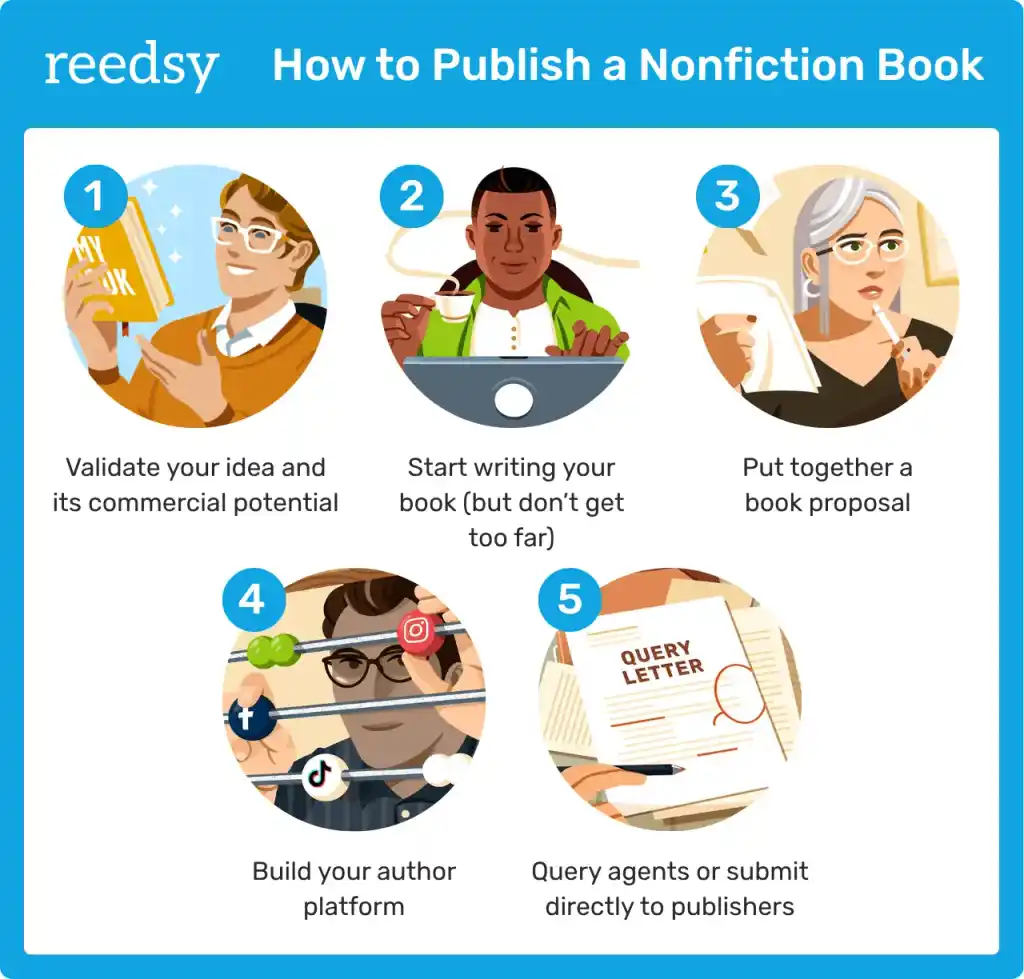
1. Validate your idea and its commercial potential
Fiction and nonfiction get pitched and acquired in very different ways. As we’ll discuss more in Step 2, publishers typically acquire a nonfiction book based on the pitch (the idea of the book) and sample pages, rather than the entire manuscript. So if your goal is to traditionally publish your book, you’ll first need a solid handle on what it’s about — and whom it’s for.
Before committing to writing on a particular topic, ask yourself…
What is special about you and your book?
Put yourself in the shoes of an industrious publisher who wants to shift some copies. What would compel them to buy your book? Here are a few ways to answer that question:
-
“There’s interest in the topic I’m writing about.” Are there already books in the same ballpark as yours that are selling well? (But not too many similar titles — it’s hard to succeed in an oversaturated market.)
-
“My book has a unique selling point.” On a related note, there should be something about your idea that separates it from the current successful titles on the market.
-
“I’m particularly qualified to write about this.” Unlike in fiction, you need to justify why you are the best person to write this book. A book about air disasters written by an accountant is not nearly as convincing as one written by a 30-year veteran of the FAA.
When considering nonfiction authors, the gatekeepers are always on the lookout for people who understand their category. They not only want you to know which books are doing well in your particular type of nonfiction, but they want you to tell them about the marketing potential.
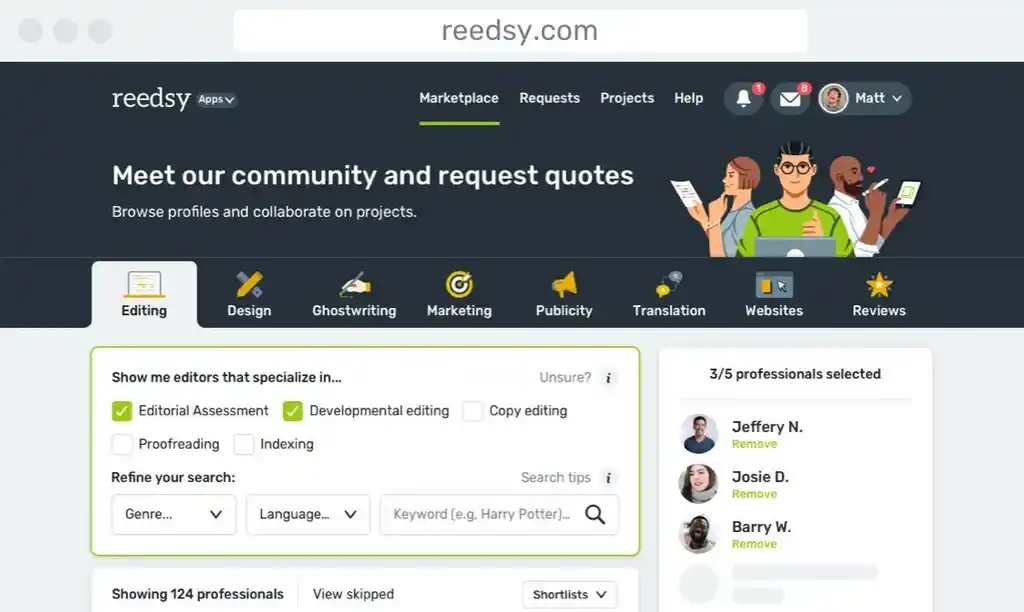
Hire a nonfiction book coach

Tom B.
Prize-winning former Big Five editor, internationally bestselling ghostwriter and author. Over twenty years' publishing experience.
Request a quote
Eric S.
Eric is a literary agent and Young Adult author who has worked on award-winning and New York Times bestselling books.
Request a quote
Lisa H.
Every sentence matters! My passion is helping your words shine, whether you're at the beginning of your project or you need a final polish.
Request a quoteBy the time you pitch your book to somebody, you want to know a) what you’re up against, and b) how you’ll realistically compete with them to sell books in your category.
To expand your research:
-
Head to Amazon and find out which similar books have been published recently.
-
Check their reviews and Amazon Best Sellers Rank in nonfiction subcategories. (This will be especially helpful for understanding exactly where your book sits in the nonfiction market.)
-
Go to big-box and independent bookstores and see how well your category “represents” on the shelves.
If you’re struggling to find similar books, it could mean you’ve struck gold with an original idea… but more likely, it means that there’s no market for it (at least not yet).
This doesn’t mean you should abandon your idea entirely, but do think about how you could revise your angle to be more commercially friendly. If you don’t want to do that either, prepare for a long wait with agents and publishers — or look into the self-publishing path instead.
2. Start writing your book (but don’t get too far)
The next step is to write a little bit of your book without committing to the concept too strongly. Why? Because publishers like to work closely with nonfiction authors on development — so, counterintuitive as it might seem, having a fully finalized nonfiction manuscript can be a disadvantage when pitching, as there’s less flexibility for the publisher’s suggestions.
📖 A notable exception to this is memoirs, which are often pitched to agents and publishers only once a manuscript has been completed. To learn more about that process, check out our guide to publishing a memoir.
As bestselling nonfiction author Noah Charney notes, “You can sell a 70,000-word book having written only 10,000 words of it.” Another key reason for this is because your nonfiction book will be acquired based on the proposal you submit, which typically only includes an outline and a sample chapter (or chapters) rather than the full manuscript.
So once you’ve established your book’s driving idea, go ahead and work on it; just don’t do too much. Have a look at this post on nonfiction outlining to help you organize your book’s structure, and think about the tools and sources you’ll need for your research.
When that preparation is done, you can start writing your book. Aim for Noah’s 10,000-word mark initially, or 3-5 chapters (depending on chapter length and the kind of nonfiction you’re writing). Then take a step back and consider the next stage of this process: the proposal.
Q: What are the best strategies for nonfiction authors to select comp titles when creating a book proposal?
Suggested answer

When selecting comparison (comp) titles for your nonfiction book proposal, think of them as the company your book keeps. They help agents and publishers visualize where your book fits in the market and why it deserves a spot on the shelf. Here are some key tips:
Keep It Recent: Focus on books published within the last five years. This shows you’re aware of current trends and helps publishers gauge the book’s potential in today’s market.
Go Traditional: Choose traditionally published titles. They serve as credible benchmarks for what publishers are looking for, especially in terms of quality and market viability.
Successful but Not Untouchable: Look for books that performed well but aren’t necessarily runaway bestsellers. Aiming too high can make your proposal seem unrealistic, while too niche or obscure might suggest there’s limited demand.
Think Like a Bookbuyer: Imagine where your book would sit on a buyer’s shelf. What titles would sit alongside it? This helps publishers see your book’s relevance in its genre or category.
Finally, explain why you chose each title. Highlight similarities in audience, tone, or subject matter while emphasizing what makes your book distinct. A thoughtful comp list demonstrates market awareness and strengthens your proposal.
Sally is available to hire on Reedsy

Dear Writers,
When you are choosing comp titles:
- Read, read, read in your genre.
- Read books that your hoped-for agents have represented. You'll find these listed on their websites.
- Frequent your local bookstores and peruse the shelves. Where is your book going to fit on the bookshelf? What titles are on that shelf? Read the blurbs - do those books have similar elements to yours? Read those books. (You might want to get them from the library ... because if you're a bibliophile like me, it can get expensive!)
- Choose books that were published in the last 2 years. If there's an older-but-perfect comp: 3 years on the outside.
- Read the comps you use, cover to cover. Make notes about how the book is like yours, and how it's not like yours. You'll need this information when you are writing your book proposal, and when you are talking to your agent (when they call you because they loved your query letter). You'll need 4 - 5 comps - two for your query letter, and four to five for your book proposal (for nonfiction). Be sure to include the two you used for your query in your book proposal.
- Check out each potential comp on booksellers' websites. How many people have left reviews? If the reviews are 4's and 5's (out of 5) and the review count is high (in the hundreds at a minimum, in the thousands, even better), that's a good comp. Agents are going to check those numbers, so choose books that have sold well and have lots of positive reviews from readers. But...
- Don't choose a bestseller, even if it's a perfect comp. Keep researching. Look up the book on Amazon and check out the "Customers ... Also Bought" listings under the book's blurb. The books listed there may lead you to other comps that will work for you.
- Check out comps on Amazon and click on the "See All Details" link. What are the book's Amazon ratings? If the ratings are good, choose the book as a comp. If the ratings are not great, record the book's publication information and ratings (you might need them later) and move on.
- On the Amazon ratings list for each book, you'll find a series of keywords categorizing each book. Use those keywords to search for more books in your genre and sub-genre.
Good luck researching your comps!
Michael I
Michael is available to hire on Reedsy

The best advice for comp titles is to include books that have published within the last 3 years and have good sales tracks without necessarily being bestsellers. It's a tough act to balance, especially when you also consider that your comp titles should be from a variety of publishers; you don't want to include four titles that were all published by Penguin Random House and none from any other publisher.
By being well read in the space and knowing what titles are out there, you can craft your comp titles to be a composition of various parts. Your book could take the tone from one title, with the scientific reference from a second title, and combine it with the overall subject matter of a third title, as a rough example.
As for finding comp titles themselves, you need to read, read, and read some more. Reading makes writers, and while you can use websites like Amazon or Goodreads to get a sense of how well a given book has sold or reached its audience, there's no substitute for reading and truly knowing what is contained within a comp title.
Matt is available to hire on Reedsy
3. Put together a book proposal
If you’ve seen Shark Tank, you know that investors will have certain questions before they partner with you. In this scenario, the publisher is the investor, and your book proposal must answer any questions they have about your book.
The proposal will need to touch on:
-
What your book is actually about, including a strong hook that distinguishes your idea from the crowd;
-
Your book’s target audience;
-
Your bona fides in the topic;
-
A potential marketing plan, and
-
Comparative titles (other successful books similar to yours — your previous research will come in handy here).
As mentioned in Step 2, your proposal should also include a detailed chapter outline and a few sample chapters. We won’t delve any further into the process here, mainly because we already have a whole post on how to write a book proposal from our resident nonfiction expert, Noah. But check out that post for specific tips around each crucial element of a book proposal — and once you’re ready to compile yours, you can use the template below.
4. Build your author platform
An established author platform can help you stand out to agents and publishers. Plus, while a deal with a publishing house comes with a marketing team to help promote your book, there are still many marketing activities that fall to authors.
In that vein, you shouldn’t wait for your book to be acquired to start building your platform. You don’t need to gain millions of followers on social media overnight or pay to have your face on a billboard — just start taking measured, reasonable steps to connect to readers. These might include:
-
Creating an author website;
-
Publishing a blog or Substack with content relevant to your book;
-
Setting up social media accounts on platforms your audience likes; and
-
Booking speaking engagements at events related to your topic.
For more in-depth guidance on boosting your book before you even submit your proposal, sign up for our free course on building an author platform.
Q: What website builders and hosting services do you recommend for authors looking to create a professional author website?
Suggested answer

This is not a one-size-fits-all answer. Many factors go into choosing the right platform for your website. However, to answer the question straight:
- For complete control, I use and recommended WordPress + Avada on WP Engine. Alternatives to this could be WordPress + Elementor or WordPress + Divi on another host that specialized in WordPress, aka Managed WordPress hosting. (Avoid GoDaddy for anything but domain names.)
- If you want more out-of-the-box but less control, you can go with a DIY builder like Squarespace or WIX. These are capable of handle most features authors needs.
- I advise against Weebly, as they have fallen behind.
Every web designer has an opinion on this, but the truth is, if we're talking about standard author websites, most website/web design platforms and hosts are capable of achieving what's necessary. It comes down to the designer and their mastery of the platform chosen. The bottom line is:
- Is it mobile friendly?
- Is it SEO friendly?
- Does it load fast?
Besides that, deciding factors can include:
- How much customization do you require?
- How much of "web design basics" do you want to learn to maintain the content? Because no matter what, any DIY or drag-and-drop builder is going to have a learning curve for anyone unfamiliar with web design.
- How much do you want to pay monthly/annually?
This is a brief introduction on choose a website platform and host. There's a lot that goes into choosing, but don't over think it. They can all get the job done, as long as you have the right person at the helm.
Chad is available to hire on Reedsy

This all depends on what backend you're most comfortable with. Youtube has some great video tutorials for Wordpress/Squarespace/Wix, which will offer an overview of what it's like to create or update a page. That's where I'd start, as you want something that's easy for you to update.
Self-hosted Wordpress will give you the most control. This is especially important if you have 5+ books. Some designers can offer automation—meaning they can set the site up so you only have to add a new book page and the book's cover/info automatically appear everywhere it needs to across the site. (Double check with your designer to make sure they offer this.) Which is great if you have a long series or multiple books.
However, Wordpress doesn't have a default visual editor. (Some plugins/themes offer visual editing with mixed results.) Most hosting options are solid—look for free SSL, and if there's a limit on emails addresses or domain names/sites. Space is nice, but most sites don't hit 2gb (unless there are multiple sites and a separate store). 5gb is usually more than enough. It's nice to have the option for multiple sites, in case you want to have a separate store later (or a separate site for a pen name).
For specific host recommendations, I've had good luck with Hostgator, SiteGround, MDDHosting, and Inmotion. While Bluehost is often recommended online, it's been very slow this year (2024) especially for the price. I've heard good things about Cloudways, Hostinger, and A2 Hosting. Wordpress.com is also viable with their business plan, though it won't give you as much control as a standard host.
For page builders (visual editors), I tend to recommend Squarespace over Wix, as I find Squarespace more intuitive since Wix's update (introducing Studio) this past spring (2024). Page builders offer no automation, which means adding a new book can be a laborious process depending on where you want the book's info to appear. For example, if you only want the cover on the book page and the home page, that's only two pages to update. If you have a series and want each book in the series to have a "read more" section with the other books in the series, then you have to update the cover manually on each of the series' book pages. Not a big deal for a small library, but rather a pain for a larger one.
At baseline though, start with YouTube. Skim tutorials on what it's like to create/update a page on the platform you're interested in. This will give you a better sense of how the platforms operate. Whatever is easiest for you to operate is (almost) always the best option.
Tessa is available to hire on Reedsy

If you're starting a website—whether you're a first time author, prolific writer, entrepreneur, or creator—the first big decision is: what platform should you use to build and host it?
The short answer? Use Wix. And no, I’m not being paid to say that. In my opinion it’s the best all-in-one option for most creatives—especially those who want a professional-looking site without needing a full-time developer or a background in code. I know this because I have made 350 author sites on Wix. And NONE of the clients have swapped out to another platform. They love Wix.
Let’s break it down.
- Why Wix?
Wix is a drag-and-drop website builder, meaning you design your site by moving things around the screen—text, images, buttons, forms—without touching a single line of code. It’s intuitive, flexible, and surprisingly powerful.
Need a newsletter signup? Built in. Want to sell something? E-commerce tools are ready. Looking to blog, book appointments, take payments, or embed video? Check, check, check, and check.
It’s also strong on SEO (Search Engine Optimization), which is crucial if you want people to actually find your site. Wix gives you full control over metadata, image alt text, and URL structure—important features that many budget builders skip or limit.
Wix also has a huge suite of Ai tools not just to create your site, but tools to help you grow your business.
- Hosting? Covered.
One of the best things about Wix is that hosting is included. You don’t have to worry about servers, SSL certificates, or whether your site will crash when you get a spike in traffic. It’s all taken care of behind the scenes.
Their hosting is fast, secure, and globally distributed. And because everything is in one place—your domain, design, hosting, analytics—you’re not juggling between different services trying to stitch it all together. (Currently wix is £259 for THREE years)
- What About WordPress?
Great question. WordPress is flexible and widely used. But it’s also more technical. You’ll need to find your own hosting, install updates, manage plugins, and troubleshoot issues as they arise. You'll need to buy something like "Divi" to actually build your site ON, as Wordpress is just a framework.
If you enjoy that level of control and don't mind some backend tinkering, WordPress is a solid option. But if you'd rather spend your time creating content or building your business, Wix is much more straightforward.
- What About Squarespace?
Squarespace is slick and polished, and works well for simple sites. But in my experience, it's more restrictive when it comes to customization, third-party tools, and SEO settings. Their editor also isn’t as smooth or flexible as Wix’s.
- Final Verdict
If you’re looking to launch a professional, polished, easy-to-manage website that doesn’t eat up your time Wix is my top recommendation. It’s beginner-friendly, robust, and grows with you and your business.
And if you want to make sure your site not only looks great but also works hard for your brand or business—that’s where I come in.
Stuart is available to hire on Reedsy
5. Query agents or submit directly to publishers
With your proposal (and pitch) in hand, you're ready to sell your book. As a rule, if you’re writing personal nonfiction (like a memoir), general nonfiction (think history books and biographies), and/or if you want to pitch to a major publisher, then you will probably need an agent.
How do I write a query letter for a nonfiction book?
Your book proposal will be the star of the show, so keep queries to nonfiction agents brief. In an email to an agent, you should introduce yourself; describe the book, its audience, and your qualifications; and ask if the agent would like to see your proposal. For more details, check out our query letter guide and template.
Before sending a query letter, remember to research an agent’s work to determine if their specialty genre(s) and the titles they’ve helped publish align with your book.
Luckily, we have just the resource to help you out: this directory of 500+ nonfiction literary agents who are currently accepting submissions! Start browsing today to find your dream agent and get your book published ASAP.
That said, for educational books and with small- and medium-sized presses, you might be able to get away without an agent. If you choose to submit your proposal directly, be sure to do your research before you approach a publisher. Ask:
-
Does this publisher have a history and interest in my topic?
-
Does my book complement what’s already on their backlist?
-
Do they accept unsolicited manuscripts?
Hopefully you'll soon get a response from an interested party and be signing that sweet contract.
Q: What unspoken rules do agents or publishers expect authors to follow when submitting a manuscript or proposal?
Suggested answer

Double-spaced, Times New Roman, one-inch margins, twelve point font.
Kate is available to hire on Reedsy
First impressions are everything, and in the publishing industry, agents and editors are usually up to their necks in queries. That means you have about five minutes (and that's being generous) to pique an agent or editor's interest and entice them to actually read past the first few lines. Documents riddled with typos, messy formatting, and zero cohesion are near-automatic rejections. So the biggest unspoken rule is to put your best, most professional foot forward when it comes to your manuscript or proposal's presentation: minimal typos, clean formatting (one-inch margins, clear headers, easy-to-read font), and a clickable table of contents at the very least. Basically offer a deliverable that screams, "I actually care about my work and am giving this publishing thing my best shot!"
Lyric is available to hire on Reedsy
It can take time to find an agent and match with the right publisher. But don’t be discouraged if you receive some “no”s in the beginning — that’s just a part of the process. With perseverance and the right idea, we know you can one day see your work in print!