Menu
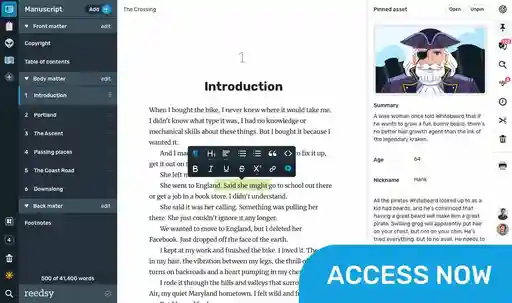
Write your book in Reedsy Studio. Try the beloved writing app for free today.
Craft your masterpiece in Reedsy Studio
Plan, write, edit, and format your book in our free app made for authors.
Write your book in Reedsy Studio. Try the beloved writing app for free today.
Craft your masterpiece in Reedsy Studio
Plan, write, edit, and format your book in our free app made for authors.
DIRECTORY
Showing 119 writing exercises curated by Reedsy.
"Patience is something you admire in the driver behind, but not in one ahead" _ Bill McGlashen. Your protagonist is one or the other. Pick one, and roll with it. Go!
When writing emotion, it's easy to become stuck on how to express what the point-of-view character is experiencing. An exercise to try is to pull from your own memory if you feel comfortable doing so. Sit back in your chair, take a few calming breaths, and think back to a time where you experienced this same emotion. Carefully draw up the memory, thinking about the situation, the location, the people involved. Remember the sights, sounds, smells, textures, tastes.Now, pay attention to your body. Are you relaxed, or tense? Are your muscles tight? Is it easy to breathe, or do you feel restricted? Is your posture curling up, an attempt to hide, or are you twitchy all over and want to leap out of the chair? Make as many notes as you can, and when you go to write, use what you collected to give life to the character's experience.
Nothing can create conflict for your characters like good old-fashioned fear. Take time now to define your protagonist's biggest fear. Is it something physical (e.g. tight spaces or flying in an airplane) or internal (e.g. fear of failure, commitment, or rejection)? Write a scene in which your protagonist must face this fear.
Who are the three most unlikely people your protagonist would have dinner with? Why? Write the scene.
Memorable characters are ones that mirror real people: their feelings, experiences, needs, and goals. Challenge yourself to get real with your character by first getting real with yourself. Grab a notebook and answer the following questions as they pertain to you:
Second-person point of view is an intimate way of looking at a character's thoughts. As an exercise, take a scene from the book you're writing. Choose a character, and then re-write the scene entirely from a second-person POV, noticing what details shift because of this perspective change.
Cheesy pick-up lines are the worst...but sometimes (when they work), they're the best conversation starters out there. Pick one of the pick-up lines from below and write down a conversation that you can imagine following afterward.
Sometimes writers think up a character and jump straight into writing, without fully fleshing out the concept at a foundational level. This then means they falter and end up writing a very confused draft. I call this 'The Story Swamp.'Avoid The Story Swamp by writing a 'logline' or 'pitch' of approximately 25-60 words. This logline should cover what B2W calls The 3 Cs:Character: Who is your protagonist? What does s/he need or want?Conflict: Who is the antagonist? Why does s/he want to stop or counter your protagonist? What other obstacles are in your protagonist's way?Clarity: Do we know what genre or type of story this is? Are you using familiar or clich_d language? Are your word choices too vague?
Further chip away at your character and establish how they present themselves to others by imagining how they would briefly describe themselves in the following situations:
Comic books don't have the luxury of prose, so what's said out loud needs to be both relevant and authentic. Take any conversation in your manuscript and try to transport it into the pages of a comic book. What is really important that MUST be said? What remains a visual?
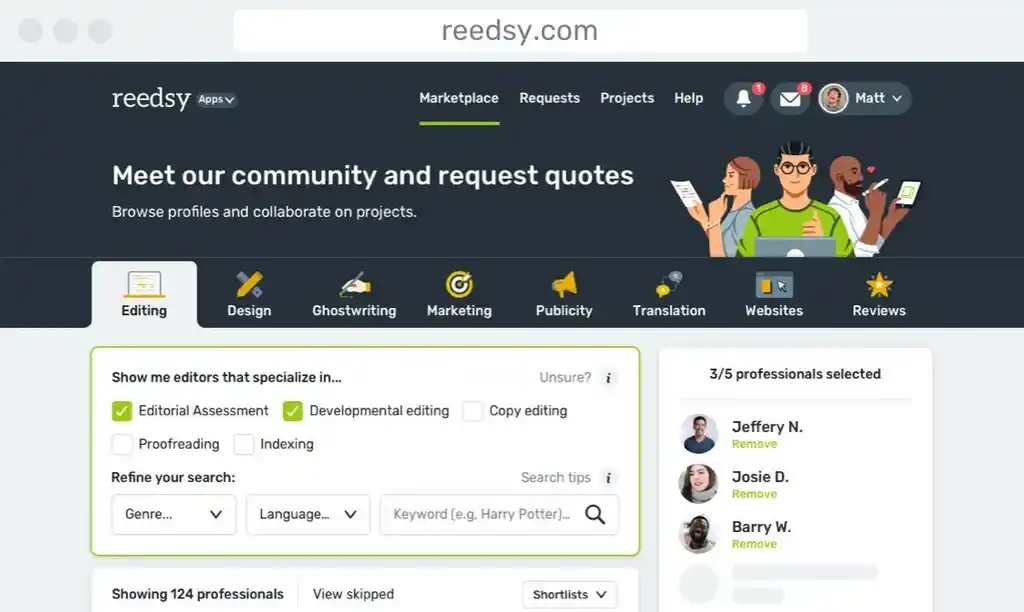
Find the perfect editor for your next book
Over 1 million authors trust the professionals on Reedsy. Come meet them.
We made a writing app for you
Yes, you! Write. Format. Export for ebook and print. All for free.
Enter your email or get started with a social account: