
I was making Saturday morning pancakes, half-listening to Nirvana’s cover of “The Man Who Sold the World”, when a question arose that wouldn’t leave me alone. Who would actually sell the world — and to whom would they sell it?
That question inspired a character, Greyson Grim, and eventually grew into an entire children’s book universe: The Chugwater Chronicles. But when I first sat down to write How to Sell the World, I wasn’t thinking about a series, or even really about being an author — I just wanted to create something fun for the kids I knew.
That is, until one conversation with my Reedsy editor changed everything.
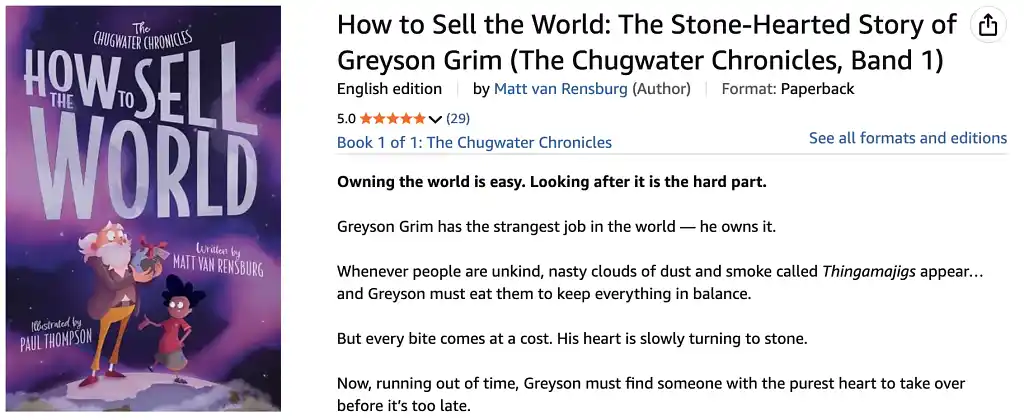
How to Sell the World on Amazon.
Twenty years with kids, and a bucket list
To back up a bit, I’ve spent the last twenty years working with children — first in special education, then in kindergarten, where I’ve been a director for nearly a decade. Constantly being around kids has given me a clear source of inspiration and shaped the kinds of stories I wanted to tell.
Still, writing a book was never my #1 dream. It sat on my unofficial bucket list, alongside things like getting my skydiving license and recording an album with my band. Of course, once I accomplished those goals (and I’m still amazed that I did), I realized I could write a book, too!
A grumpy old man with an unusual job
How to Sell the World introduces Greyson Grim, who has the strangest job in the world: he owns it. Whenever people are unkind, nasty clouds of dust and smoke called Thingamajigs appear, and Greyson has to eat them to keep everything in balance.
But every bite costs him something — his heart is slowly turning to stone. Running out of time, he sets out to find someone with the purest heart to take over. His best hope is an eight-year-old orphan named Tobi Taddlewink.
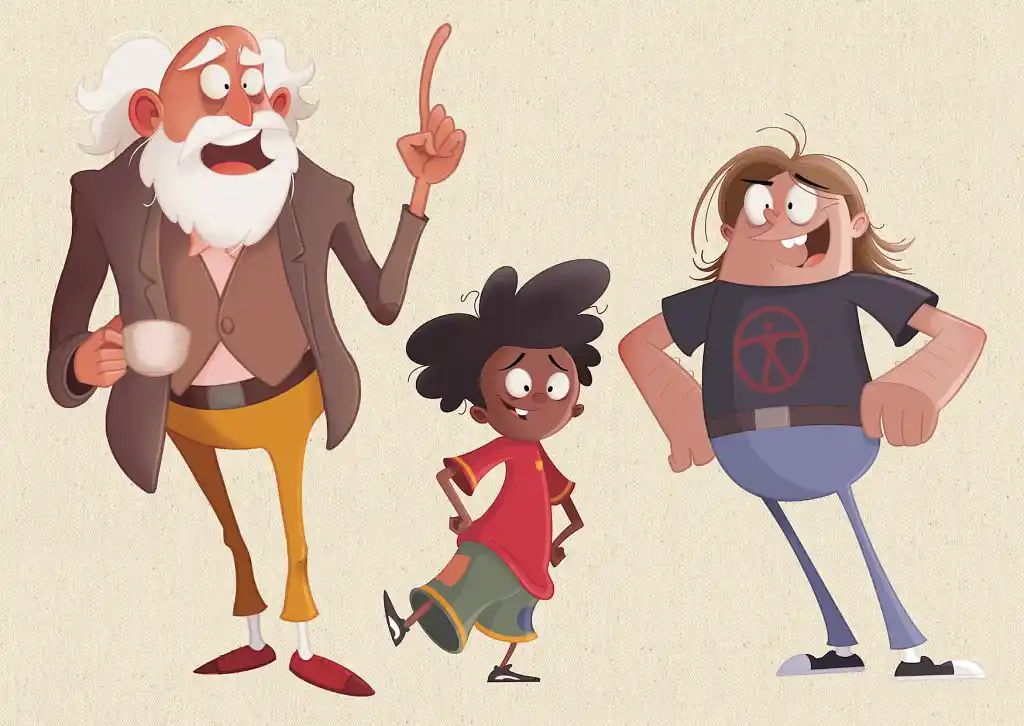
The cast of The Chugwater Chronicles.
Again, when I first set out to write the book, I had no plans to become a “real” author. I simply wanted to print a few copies as gifts for children I knew. But I still wanted to do it properly, so I started looking for an editor — and that’s how I found Reedsy.
The conversation that changed the book
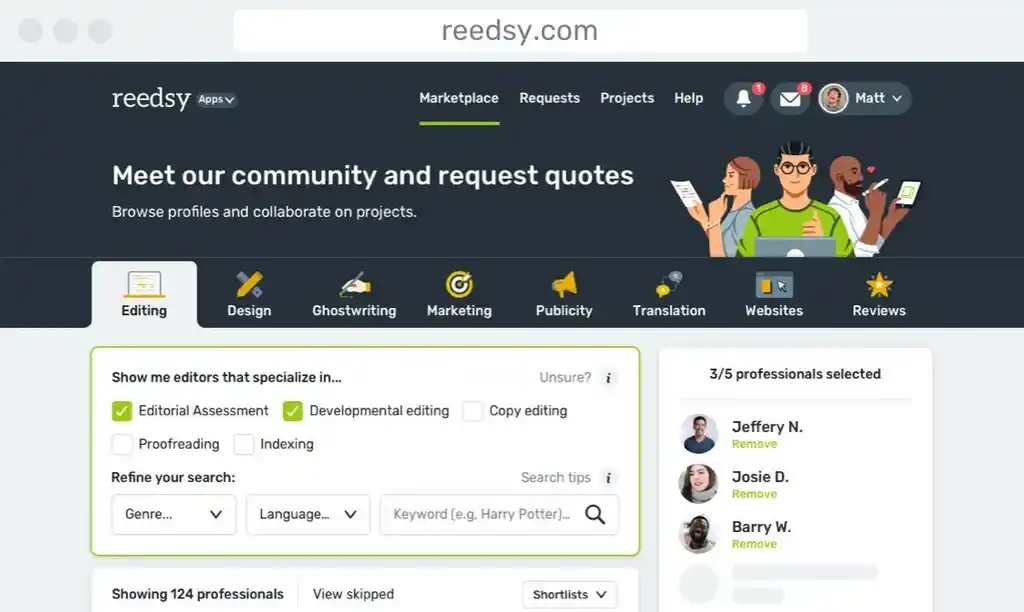
Reedsy’s marketplace felt trustworthy and straightforward to use, so I reached out to five editors. Ellie Wharton was one of the first to reply, and our creative journey kicked off.
After reading the manuscript, Ellie told me she thought I had a natural writing voice, and that the story had a clear beginning, middle, and end. The one thing she felt was missing was a bit more lore — but only if I ever planned on turning it into a series.
That conversation was pivotal to the project. Hearing an experienced editor say she could see the story transforming into something bigger gave me the confidence to explore it. One idea led to another, and the first three manuscripts in The Chugwater Chronicles began to take shape.
Assembling the dream team
Aside from Ellie, whom I hired for developmental editing, I was also looking to hire a children’s book illustrator.
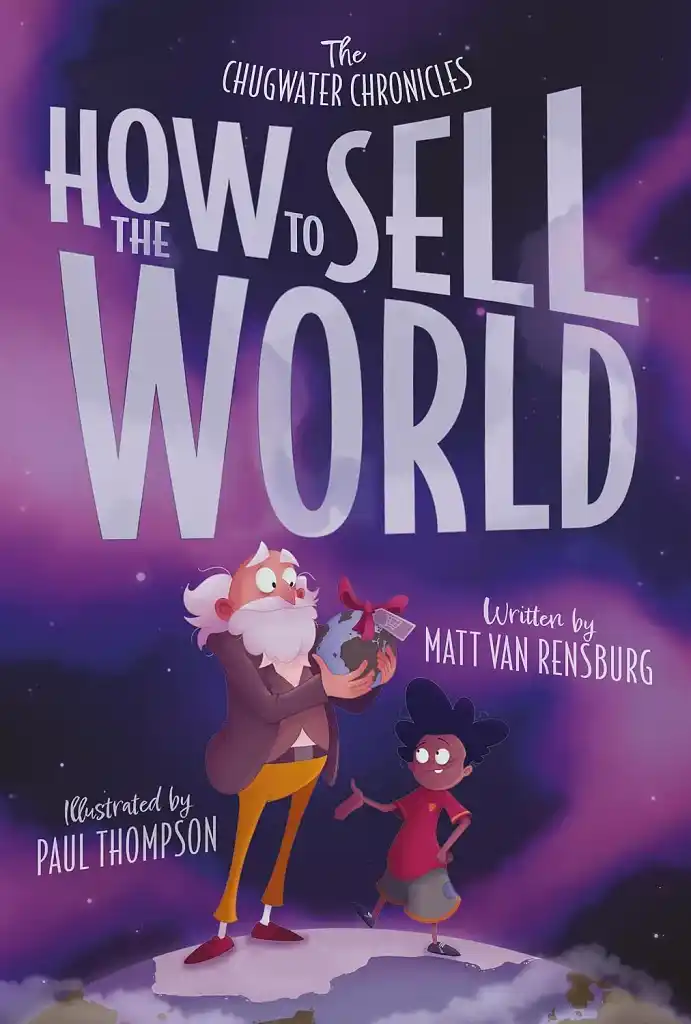
From the start, I wanted art that felt classic and familiar — something with the quality and character of a Disney or Pixar film. I looked at a few illustrators, but as soon as I saw Paul Thompson’s portfolio, I knew he was the perfect fit. His style reminded me of the Saturday-morning cartoons I grew up with, yet his work still felt fresh and dynamic. It’s been an honor working with him; he’s incredibly creative, and his illustrations seem to naturally fit my writing.
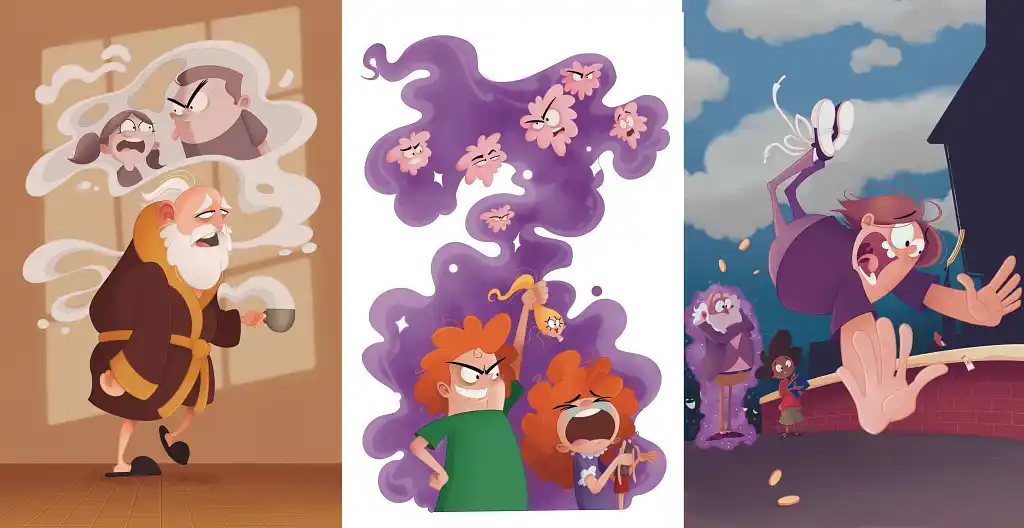
A glimpse into Chugwater — Greyson's cup of “rude to my sister” coffee, a cloud of Bad Thingamajigs, and the adventures that will change their lives.
After receiving the illustrations from Paul, I also hired Ellie Boultwood, an amazing book designer with ten years’ experience. She handled everything from the interior layout and print-ready files to bringing the covers to life through refined typography and design. She made the whole process feel easy, and she’s always there whenever I have questions.
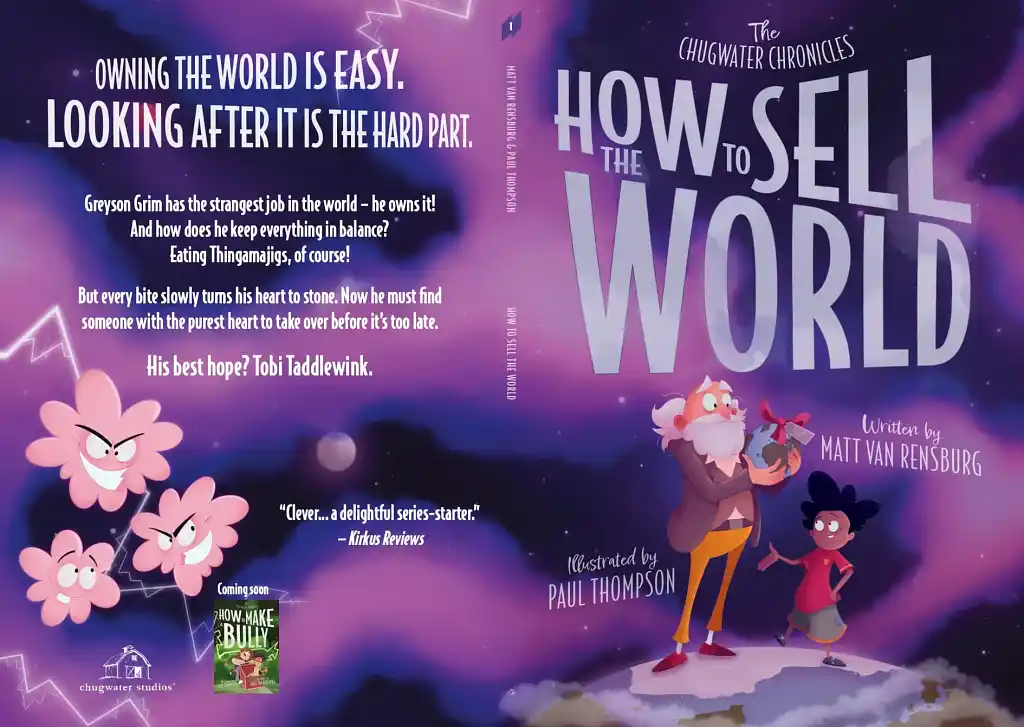
Seeing the full-jacket cover, I felt like this project had finally become a book.
Sharing the book with the world
Once the book was finished, I found myself asking: “Now what?” Working with a professional children’s book marketer, Tara Lewis, helped answer that question. From launch strategy and outreach to my author bio and media kit, she helped me with everything and saved me months of wasted time. I’m still convinced she doesn't sleep!
Since launching the book and collaborating with Tara, I feel like the opportunities have just snowballed — and every time a new opportunity has come along, I’ve gone for it instead of second-guessing myself.
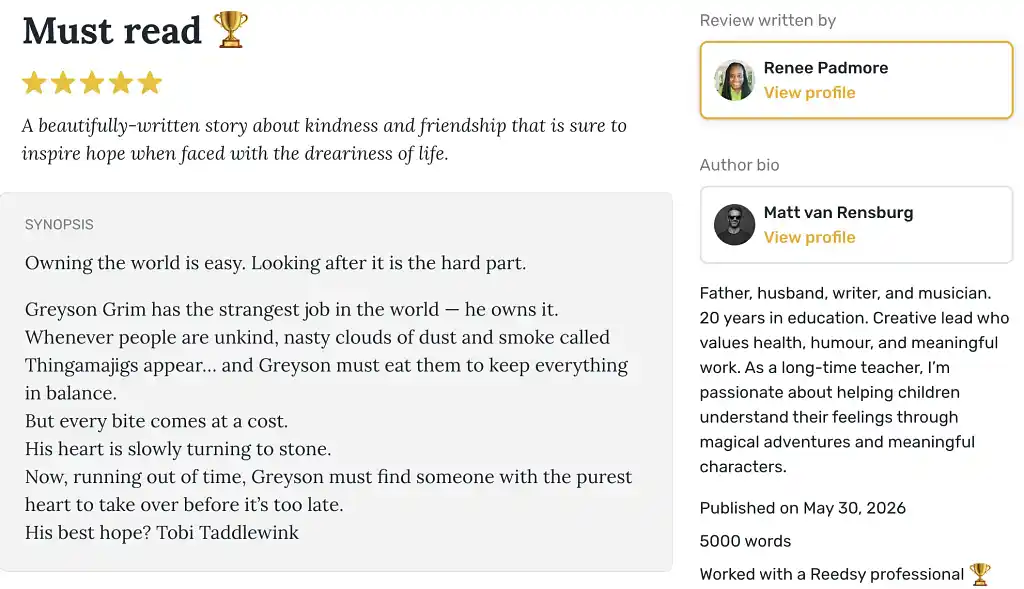
It started with the reviews. Kirkus called the book “a nonsensical but ultimately hopeful bit of whimsy” and praised Paul's “vivid cartoon illustrations.” Reviewing for Reedsy Discovery, Renee Padmore called it “a beautifully-written story about kindness and friendship that is sure to inspire hope.” Around the same time, I also got to talk about the book on the Reading With Your Kids podcast, a top podcast for kids and families.
Then came the translations. I live in Germany, so German felt like the natural next step; for this, I worked with brilliant English-to-German translator Eva Rojas. Spanish came next, for Spain, Latin America, and Spanish-speaking communities in the US. I hired a brand-new translator, Scheherezade Surià, to ensure the Spanish translation was perfecta.
Putting my face (and voice) on the story
Finally, I decided to create the audiobook version of How to Sell the World and narrate it myself. I’ve always enjoyed doing voices and improvisation, and I had a very clear sense of how I wanted the book to sound, right down to the pacing and each character’s individual voice.
I chose to release it for free on YouTube, partly because I care more about getting the story out there than about selling audiobooks — and partly because almost everyone has YouTube, even if they don’t have Audible. Having grown up in South Africa and lived in a few different countries, I wanted the story to be accessible to anyone who wanted to listen.
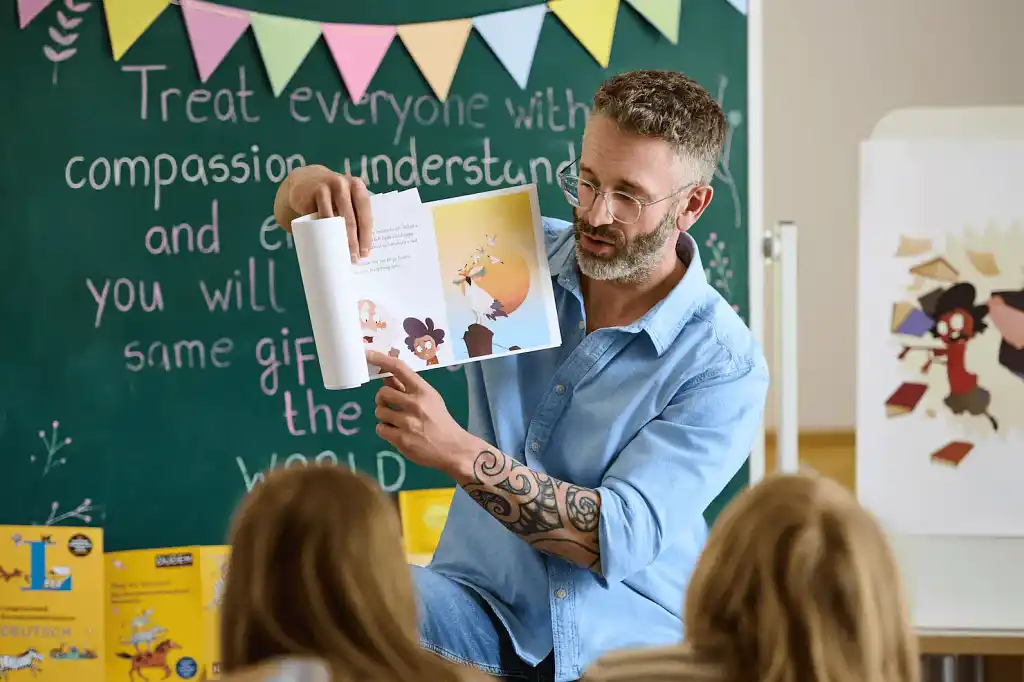
Then the school visits started, which has honestly been my favorite part of all of it: sharing the story directly with the kids for whom it was written.
I also want to acknowledge that none of this would have happened without my wife. She’s been my biggest supporter from day one — reading drafts, cheering on every odd new idea, holding things together while I chased them. I honestly don’t think any of this would exist without her.
What’s next for me — and for Chugwater
There’s still a lot more to come. The main Chugwater Chronicles series is planned as six books, and the world keeps growing around it: a prequel series, a spin-off, and even a kindergarten picture-book series.
We’re also expanding our “Be Your Own Hero” school workshops, with visits planned across Germany and hopefully South Africa in the next year. I’ve also always pictured these stories as something that could work as an animated series or film one day — and I wrote them with that cinematic feel in mind. So if that door opens, I’d love to walk through it.
Looking back, it’s incredible to see how everything grew from that one idea. I’m so grateful to have worked with people like Ellie, who saw the series’ full potential before I did.
So if you’re dreaming of publishing a children’s book, don’t wait to hire professionals to help. Working with so many fantastic people — my editor, illustrator, designer, marketer, and translators — showed me just how much there was to learn and apply. If you’re passionate about your story, invest in its success; for me, this has made all the difference.
Follow Matt and The Chugwater Chronicles at chugwaterstudios.com and on Instagram @chugwaterstudios.