Posted on September 13, 2025 15:01
How to Write a Novel in 8 Steps: A Bestselling Author’s Guide
This post is written by bestselling author, editor, ghostwriter, and creative writing instructor Tom Bromley.
I’ve spent over 25 years in publishing as an author, editor, and ghostwriter. I’ve acquired books for Little, Brown; written novels and memoirs for Big Five publishers; and even ghostwritten international bestsellers. Since my 2002 debut novel, Crazy Little Thing Called Love, I've also guided thousands of authors as a creative writing instructor — including through Reedsy’s flagship writing course, How to Write A Novel.
While every writer will have their own unique habits, there are certain essential steps to writing a great novel… and, in my opinion, a “best” order in which to pursue them. Based on my decades of writing, editing, and teaching, here’s how to write a novel in 8 steps.
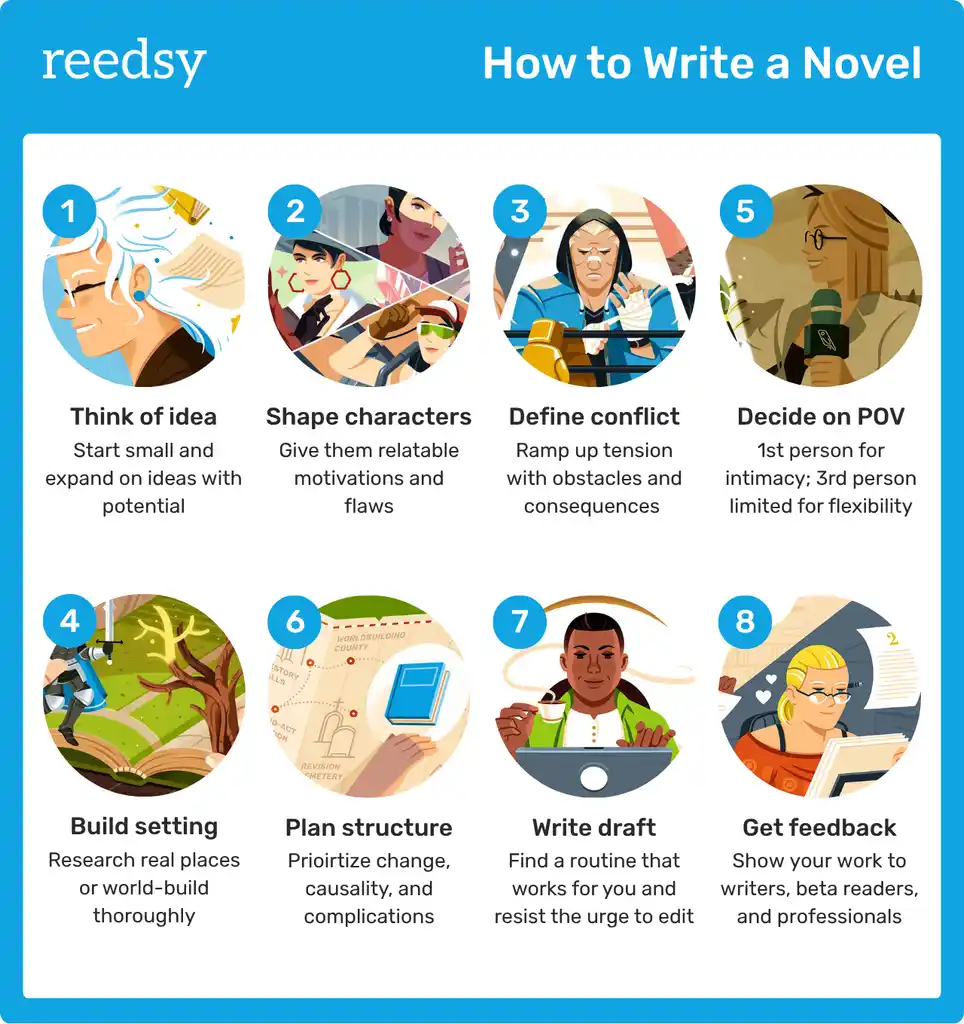
1. Choose a compelling novel idea
Every story starts with an idea. Inspiration comes in many forms and can appear when you least expect it, so always keep a notebook (or note-taking app) handy.
Most novel ideas start small and expand out. For my debut novel, the inspiration was music. I played in a number of bands at school and college and tried to make it big after university (spoiler alert: I didn’t). While everyone else in the group got up at midday, I used my mornings to write. Beginning with that classic premise of “write what you know,” I decided to create a romantic comedy based around being in a band.
3 idea-generating exercises to try
You don’t have to write about your own experiences. In the Reedsy Live below, I talk about other ways to generate ideas.

Here are three of my favorite exercises:
-
🌎 Observe the world around you. Make a conscious effort to notice little things at work, at the shops, in social situations, and even in patterns of behavior and interaction online. Any of these might blossom into a full-blown novel.
-
🍃 Immerse yourself in nature. When you’re tired of looking at “real life,” go on a nature walk. The shape of a tree, the movement of birds, or the day’s chaotic weather might spark something in a more organic, indirect way than pure societal observation.
-
🎨 Take in other works of art. Turn to existing books, films, music, and physical artwork for inspiration. While you don’t want to copy someone else’s idea, you’ll be amazed how far artistic interpretation and extrapolation can take you.
✍️ Your turn: Rather than searching for one “big idea,” start with smaller ones and see how you can build them out. If there’s potential for a novel, you’ll sense it.
2. Develop memorable characters
Characters are crucial because, when written well, readers become deeply invested in what happens to them. You can develop the most brilliant, twisty narrative in the world — but if the reader still doesn’t care where the protagonist ends up, you’re in trouble.
2 ways to make readers care
First of all, give your characters relatable motivations and goals based on near-universal desires — such as falling in love, fighting for survival, or finding acceptance in their community.
In my debut novel, the protagonist Will joins the band as its bass player during his gap year before university. Like the heroes of most coming-of-age stories, he’s motivated by a desire to impress his peers — specifically his crush, Lauren.
Secondly, give your characters flaws, vulnerabilities, and foibles so they have room to grow over the course of the story. This is what makes them human — and it’s the second half of the formula that makes readers respond to and genuinely care about them.
Will’s awkwardness and insecurities are based on my own experiences of being eighteen.
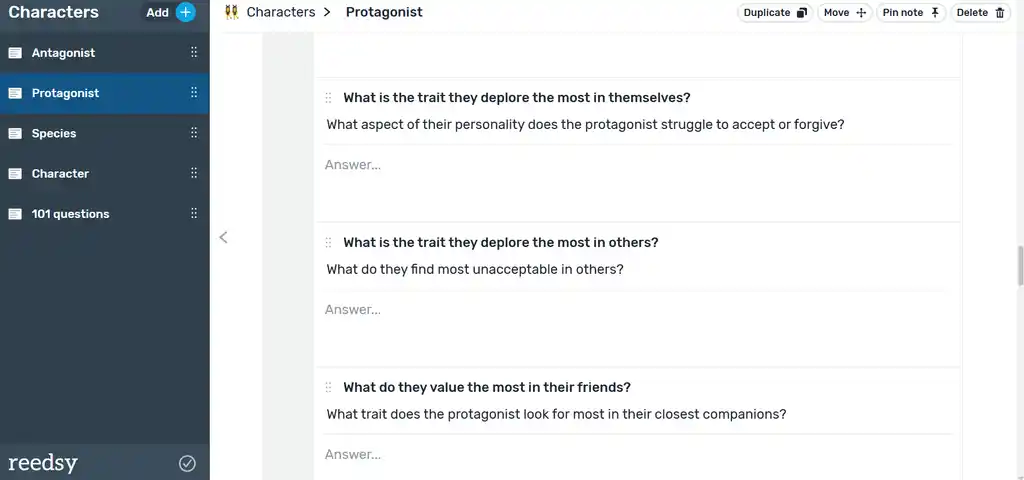
✍️ Your turn: All this boils down to three questions about your characters: What drives them? What are their flaws? And why should the reader care about what happens to them?
Start with your protagonist, of course — but don’t neglect the rest of your cast, as your novel’s inter-character dynamics can make or break readers’ emotional investment. I developed my cast of characters through a combination of people I knew, people I knew about, and my imagination.
3. Define your central conflict(s)
There wouldn’t be much of a story if your protagonist reached their goals straight away. That’s why every novel needs conflict to create dramatic tension. In tandem with character investment, this conflict compels the reader to continue, as they want to see how it is resolved.
Conflict comes in two main forms: external and internal. External conflict is between the protagonist and an antagonist of some sort — a rival lover, a fire-breathing dragon, or an oppressive system. Internal conflict is a struggle within that individual — the internal conflict of choosing between two different career paths, for example, or of overcoming addiction.
Combining internal and external conflict
The most powerful way to plot your story is to intertwine both types of conflict. If the protagonist’s internal, emotional conflict is also connected to the external force they’re fighting, it effectively doubles the reader’s investment in both.
This is what I did in Crazy Little Thing Called Love. The external conflict is between Will and the band’s lead singer, Rich. In Cyrano de Bergerac style, Will writes the band’s lyrics, which are based on his feelings for Lauren — the band’s photographer and Rich’s girlfriend. Rich then pretends he has written the lyrics, cementing Lauren’s feelings for him and setting up further obstacles to Will’s happiness.
This forces Will to face an internal conflict about what to do. If he reveals the truth to Lauren, he’ll be kicked out of the band just as they’re on the brink of success. But if he stays, he’ll have to watch Rich and Lauren together, and keep living a lie. What’s more important to him: career or love? Loyalty or authenticity? These are the questions that drive Will’s internal conflict, and you may find similar “value-based” questions drive your characters’ as well.
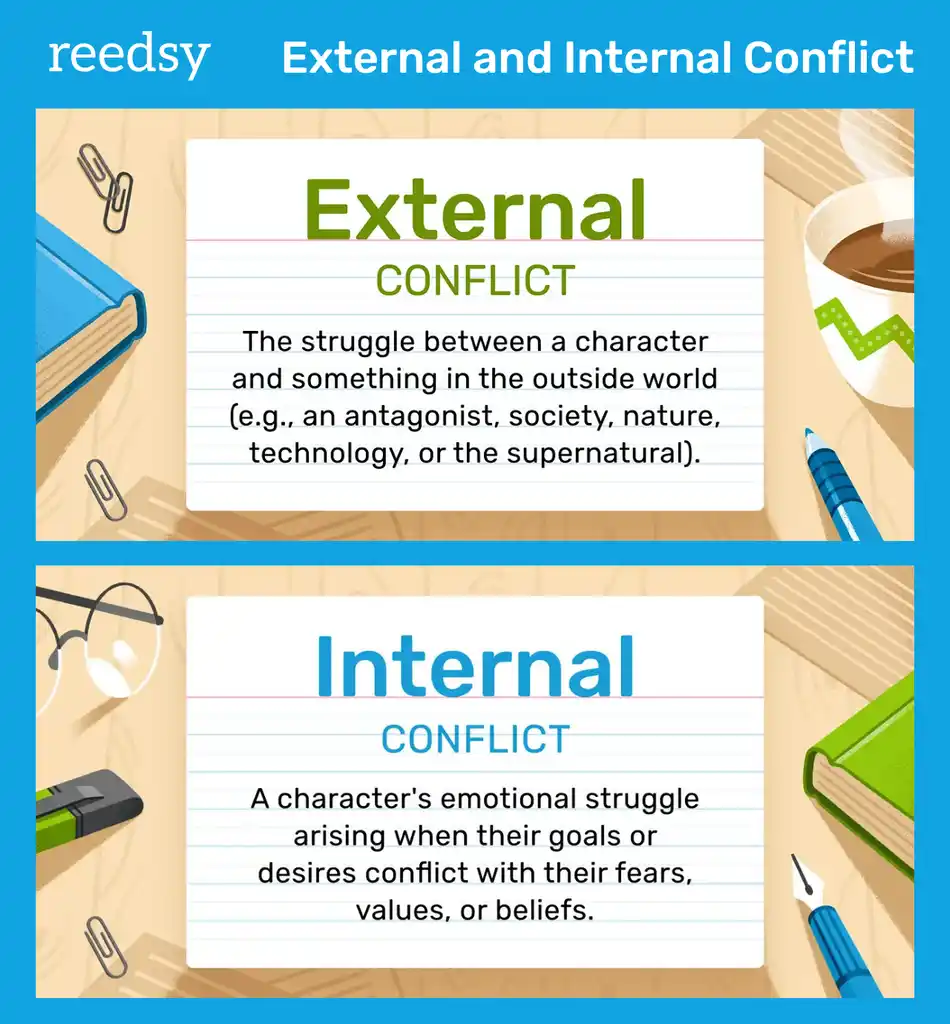
✍️ Your turn: Try to think of one external and one internal conflict for your protagonist — and relate them in some way.
The connection doesn’t have to be as direct as in my own novel, but there should be some sort of thematic throughline. For example, say your protagonist is competing with a colleague for a promotion (external conflict) while also trying to manage negative emotions after a traumatic personal event (internal conflict).
At first blush, these struggles might seem unrelated. But maybe the stress of professional competition is compounding your character’s mental health issues — and it’s only when they walk away from the promotion that they can finally regulate the rest of their emotions too.
4. Decide on the point of view
Another important decision to make before putting pen to paper (or fingers to keyboard) is which narrative point of view you’re going to use.
You probably already thought about POV while developing your characters. However, I’d encourage you to take a little extra time to consider which POV can best serve the characters and conflict you’ve now created.
Most fiction is told from one of two points of view: either first person (“I”) or third person limited (“he”/”she”/”they”). Third person limited is when the story is told from one character’s POV — or from only one POV at a time, if the story switches perspectives.
This is in contrast to third person omniscient, where the story drops into various people’s thoughts “at will,” as if it’s being told by a higher power. Third person omniscient is not very common in fiction these days, but it’s still worth mentioning in case it suits your story.
First person vs. third person
Both viewpoints have advantages and disadvantages. First person is usually better for intimacy and delving into a character’s internal monologue; the flip side is that this voice can feel a bit claustrophobic and restrictive. Third person limited offers you more options and more space to tell your story — but it may feel less intimate as a result.
There’s no right and wrong in terms of which is the “best” viewpoint. It depends on the specific story you’re writing, as well as which POV you’re most comfortable with.
For my debut novel, I felt that first person was the better fit for the story. With my next novel, I experimented with a different setup — I tried both first and third person, and also used letters and emails to bring in different voices. In the end, I used a combination to make the book work.
I dive deeper into narrative point of view in this excerpt from my How to Write a Novel course — starting at 4:18.
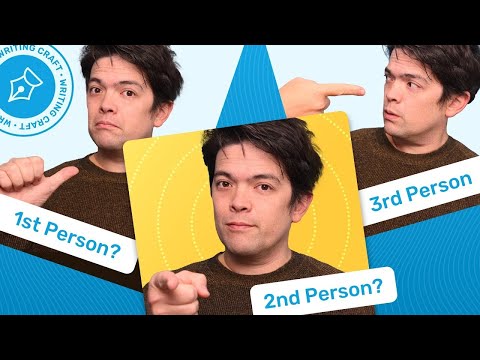
✍️ Your turn: Write a short section from both viewpoints to see which fits your novel best.
5. Build a world for your novel
At this stage, you’ve likely begun imagining (or have decided) where your story will take place. But there’s a lot more to crafting your novel’s setting than simply pointing to a spot on the map.
Indeed, settings play a vital role in bringing a story to life. When done well, they add mood and atmosphere, and can act almost like an additional character! Here’s how to build an effective setting for your novel.
Worldbuilding for speculative and “realistic” fiction
If you’re writing a novel in a genre like fantasy or science fiction, you may need to do some fairly elaborate worldbuilding before you start writing. Think about everything from the rules and mores of your society to the existence of magical powers, fantastic beasts, extraterrestrials, and futuristic technology.
These elements can significantly affect the direction and tone of your novel, so it’s important to have clear systems in your head before you write.
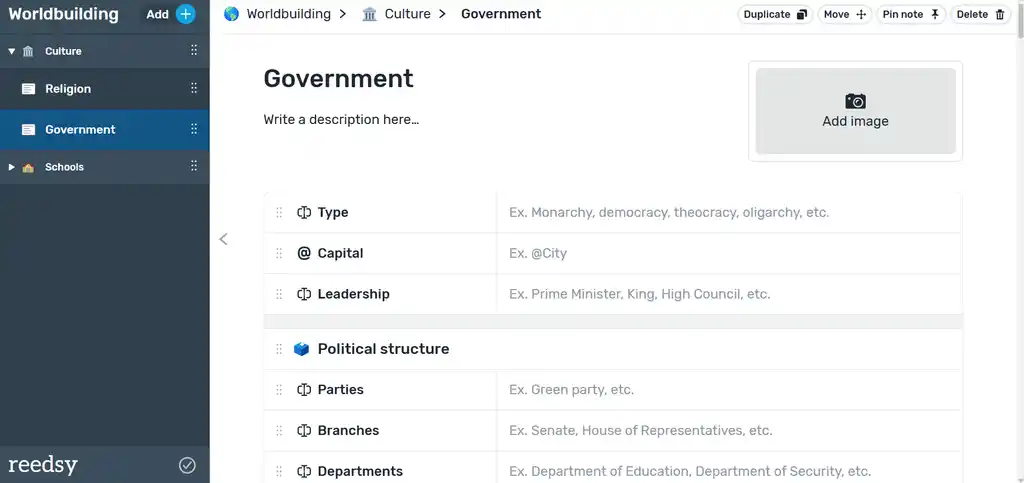
Setting your novel in a real place, meanwhile, shouldn’t require as much invention — but that doesn’t mean you can disregard worldbuilding altogether.
In my case, I wanted Crazy Little Thing Called Love to be set in a British city outside of London. I settled on Brighton because it’s the sort of cool place where a new music scene could unfold (true in the early 2000s, and still true today!). But apart from the occasional day out at the seaside, I didn’t know Brighton well — so I undertook several research trips to the city.
Although you could now do much of the research online, I still think it was invaluable for me to actually walk the streets and find the pubs, venues, cafes, and parks where the book would take place. I visited residential roads until I found a house that could have been Will’s house, and even took a few surreptitious photos for reference!
All this really helped ground me in the reality of the book, get into my protagonist’s headspace, and feel excited about the prospect of describing these places in writing.
✍️ Your turn: Hone in on the details of your story’s setting. If it’s a real place, can you visit it or research it online? If it’s invented, can you describe what makes it distinct from other imagined worlds? One useful exercise might be to draw (or generate) a map of where your novel is set. The more information you can include, the richer your setting will be on the page.
6. Structure your story
Now that you have all your “big picture” elements, you’re ready for the nitty-gritty: planning out the individual events and emotional beats of your novel.
As a debut author, I approached this stage by studying books I knew and loved to figure out how their plots worked. I’d summarize each novel on a single sheet of A4, with lots of arrows and circles, to see how everything connected.
I then spent a long time structuring my own book based on these learnings. I wrote out chapter summaries for Crazy Little Thing Called Love on index cards and spread them out on the floor. Like many of my novel-writing techniques, this might seem overly “analog” for our day and age — but I found it incredibly useful to see the book physically and visually laid out in this way.
✍️ Your turn: Choose a novel you love and see if you can plot it out on one sheet of paper. What are the key plot points? How does the story rise and fall? What could you take away from the structure to use in your own work?
The Three Cs
When I teach plotting principles now, I often refer to the “Three Cs”: change, causality, and complications.
-
🌊 Change is fundamental to a good story: by the end of the book, your protagonist should feel like a different person because of what they’ve gone through and how they’ve evolved.
-
⛓️ Causality is the sequencing of the events: each key plot point should lead onto the next, so that you can only logically tell the story in one particular order: X happened, therefore Y happened, therefore Z happened.
-
🚧 Complications are about making life difficult for the protagonist: the harder the choices they have to make, the more they are likely to change (see point one) — and the more interested readers will be in their journey.
Wants vs. needs
Rather than following “traditional” writing formulas like the Hero’s Journey, I prefer to shape a story more around the protagonist’s motivations (which we touched on back in step 2).
The first half of a story should be about what a protagonist wants, or thinks they want. The second half should be about what they more fundamentally need. This creates an inherently strong emotional framework for the story — one embedded in the main character themselves.
This structure can be explained, causally, as follows:
The protagonist wants X. → They search for X. → In the process, the protagonist realizes what they really need is Y. → They search for Y. → They achieve Y.
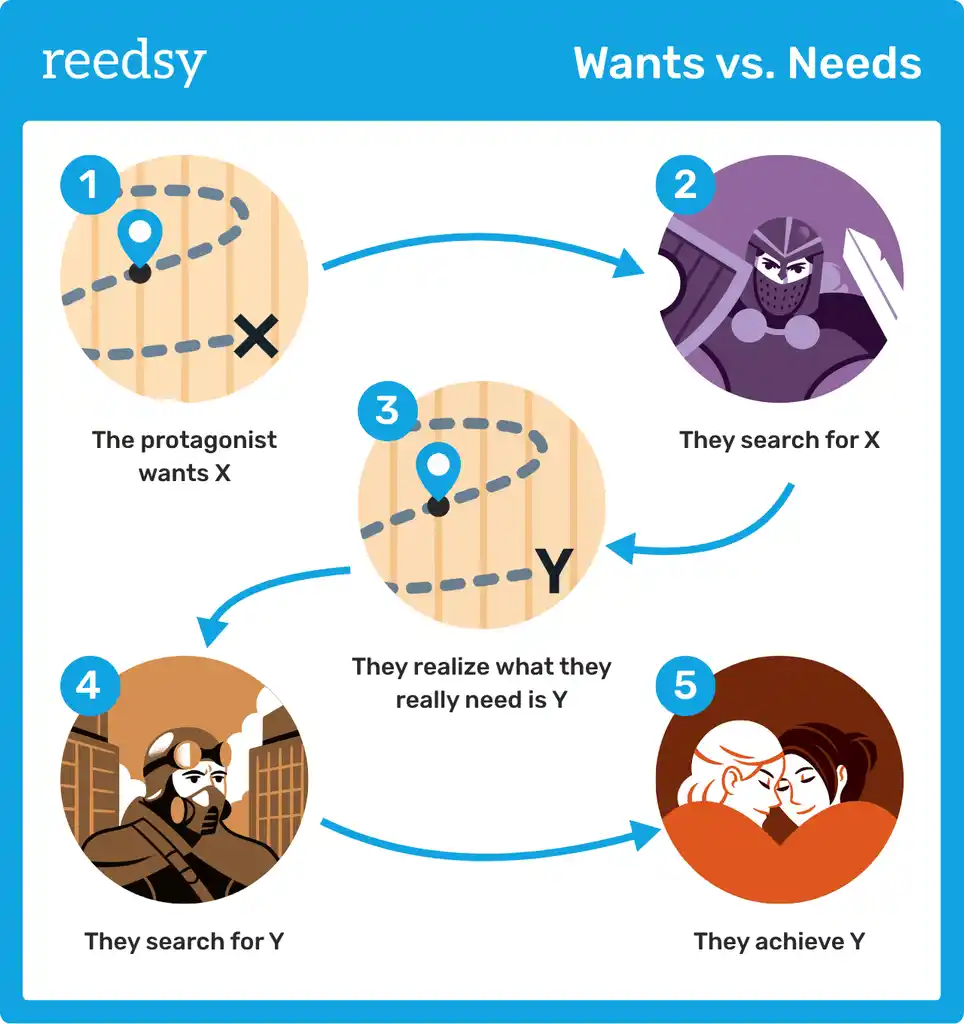
At the beginning of Crazy Little Thing Called Love, Will is seduced by the rock-and-roll lifestyle and sees it as a way to attract women. But as the novel goes on, he realizes that rather than casual relationships, what he really needs is a loving partner who understands him. To begin with, he wants sex; ultimately, he needs love.
Grasping these fundamental motivations was essential in shaping my novel. They yielded a clear, organic structure for me, which then allowed me to develop and order my story’s events.
✍️ Your turn: Return to the motivations of your main character. What do they want, or think they want? And what do they really need?
Mull over their arc and how it affects those around them. If you’re anything like me, this will go a long way towards helping you structure your story.
7. Write the first draft
Producing a full draft of a novel is no easy feat, but you can set yourself up for success by establishing some goals before you actually start writing.
Find a writing routine
Firstly, think about how you write best. Are you a morning person or night owl? Do you need silence to write, or musical encouragement to get the juices flowing? Are you a highly regular writer, chipping away at your novel day by day, or more of a weekend splurger?
Develop a routine that works for you — but keep in mind that you may not maintain the same patterns throughout the entire novel. Routines can help, but they can also become monotonous. If you need to shake things up or refresh your motivation, consider competing in a writing challenge.
In my experience, writing speed can really vary depending on where you are in the draft. I tend to start quite slowly on a book and speed up towards the end. There are times when the tap is open, and the words are pouring out; make the most of those moments! Then there are times when every single sentence feels like torture.
Don’t wallow in the unproductive days, but don’t beat yourself up about them either. This is a big, demanding project you’re undertaking; you have to strike the right balance between consistency and kindness, so you don’t burn out completely.
Shut out your inner editor
Relatedly, my other key piece of advice is to always be moving forward — i.e., don’t let your inner editor bog you down. It’s very easy, and very tempting, to just keep reworking what you’ve already written rather than making daily forward progress.
But while this tactic might feel productive, it can stall you nearly as much as not working on your novel at all. What’s more, your work will inevitably need editing again at the end. When I started on Crazy Little Thing Called Love, for instance, I rewrote my opening scene countless times… only for the final book to require a totally different kind of opening than I had imagined.
So don’t waste your time like I did — resist the urge to edit as you go! Right now, your mission is to get the novel down, warts and all. As the saying goes, you can’t edit a blank piece of paper.
8. Revise and get feedback
Once you’ve reached the end of your first draft, feel free to give your inner editor some time to shine. Then, after you’ve self-edited to the best of your ability, it’s time to get some external feedback on what you’ve written.
You may already know a few fellow writers and can offer to swap work. Or you might find some beta readers for your book — friends and peers who read in your genre and whose opinions you trust. It may also be time to get professional editorial help; even if you plan to go down the traditional publishing route, there are many editors at Reedsy who can offer a manuscript assessment to evaluate your novel’s strengths and weaknesses.

Whichever approach you choose, pool the comments and take the most common feedback on board. If more than one person is saying the same thing, they’re probably right!
For my own debut novel, I started off by sharing with friends in a writing group. Then when I got an agent, I followed his advice on further changes. And once that process was complete, I was lucky enough to be offered a book deal.
Writing that first novel was a long process, but I learned a lot on the way. If I can do it, why can’t you? Good luck!
If you’ve found the ideas here interesting and would like further help in writing that first draft, consider taking my How To Write A Novel course. Over 101 days, I’ll teach you the craft of novel writing and support you in getting that all-important first draft down. With daily video lessons and weekly live sessions, this might just be the push you need to write your dream novel.

Tom Bromley is a seasoned author, editor, ghostwriter, and creative writing instructor with over 25 years of experience in the publishing industry. He leads the acclaimed “How to Write a Novel” video course on Reedsy.
Tom began his career as a bookseller at Waterstones and a copywriter for book blurbs. He then became a commissioning editor at Little, Brown, and later founded the Portico imprint at Pavilion. As an editorial director for AA Books and a freelance editorial consultant, he has edited and commissioned over 100 titles, including bestsellers and prize-winners. He received Whitefox’s Unsung Heroes of Publishing award in 2018.
Tom has authored novels such as Crazy Little Thing Called Love and Half A World Away, as well as nonfiction works like We Could Have Been the Wombles and Bespoke, a history of cycling. Under the pseudonym Thomas Black, he penned the crime novellas Dead on Arrival and Hammerhead. His short story “Rings” was featured as the opening piece in the Best British Short Stories 2021 anthology.
As a ghostwriter, Tom has produced 15 titles over the past decade, and covered subjects ranging from rock stars to politicians. His ghostwritten works have won various awards and gone on to become international bestsellers.