Guides • Perfecting your Craft
Last updated on Oct 15, 2025
First Person Point of View: Character-Driven Narration

Martin Cavannagh
Head of Content at Reedsy, Martin has spent over eight years helping writers turn their ambitions into reality. As a voice in the indie publishing space, he has written for a number of outlets and spoken at conferences, including the 2024 Writers Summit at the London Book Fair.
View profile →If point of view is the “eye” through which a story is told, then first person points that eye inwards. That’s because first person point of view is where the writer (or fictional narrator) relates information from their own perspective. If the main pronoun in a piece of writing is ‘I,’ you’re probably dealing with something written in the first person.
As a way of writing that seemingly never goes out of fashion, first-person POV is something that all authors should strive to master. That’s why we’ve created this guide to reveal the power of first person point of view.
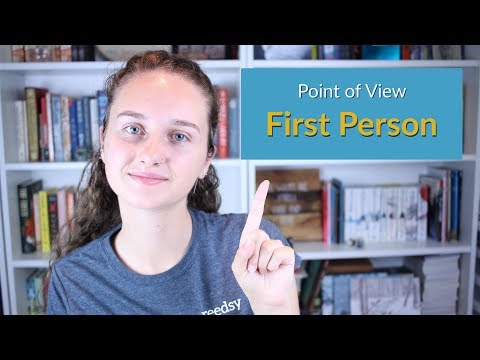
What is first person point of view?
First person point of view is when a story is told from a character’s own perspective using the pronoun ‘I’ and it’s relatives: we, my, and our. Because the narrator interprets events in their own voice, this POV gives the reader direct access to the narrator’s thoughts, feelings, and opinions and is arguably the most intimate out of all of the POVs.
An example of first person POV looks something like this:
I feared what might greet me as I entered the kitchen.
What are the advantages of first person POV?
First person POV is common in fiction as it involves the reader directly in the story and allows authors to accomplish powerful characterization. It comes with a wealth of advantages when it comes to writing prose and creating memorable stories — but it can also be tough to get right.
Let’s go through its pros and cons.
Q: Do publishers favor certain points of view over others when considering novels for publication?
Suggested answer


Publishers never want one POV in general, but they do want consistency, clarity, and narrative authority. Immediacy and intimacy are given by first-person, and third-person—especially limited—is still favored because it is so versatile. Trends wax and wane, with first-person present, for example, having been the norm in YA and contemporary fiction. It matters less than POV itself is how well it serves the story. A good voice, a strong command of point of view, and a narrative that sounds real will be more persuasive than any particular choice of perspective. Use the point of view best suited to engage readers fully in your characters' world.
John is available to hire on Reedsy ⏺
First person point of view creates an immersive experience
The biggest benefit of first person POV is in the intimacy and connection it creates with the audience. It feels like the story is being told to you by a confidant, which makes you care more about the protagonist and their struggles.
For Tracy Gold, Reedsy editor and Adjunct Professor of Composition at the University of Baltimore, writing in first person brings the reader closer to the narrator:
“With first person, the writer or reader becomes the character as they get deeper into the story, and that's the kind of immersive experience that makes me love a book.”
Pro-tip: Looking to improve your writing? Hire a writing coach to become the best writer you can be. You can find the best coaches — ones who have worked with bestselling authors and beginners alike — on Reedsy.
Hire a book coach
Becca M.
Available to hire
I'm a novelist of many trad published novels & teacher of 30 years' experience, now a book coach ready to whip your manuscript into shape.

Eric S.
Available to hire
Eric is a literary agent and Young Adult author who has worked on award-winning and New York Times bestselling books.

Rennie D.
Available to hire
USA Today bestselling author, passionate editor & collaborator; 18 years of experience in fiction & non-fiction for kids and adults
Character voices are at the forefront
The plot of a novel may fade from our memories over time, but we’ll always remember the characters and how they made us feel.
This is even more true of first person perspective, where the protagonist tells us their story in their own words. Every line is filtered through their motivations, vices, and worldviews — while in other POVs the only opportunity you get for this kind of filtering is through dialogue.
Unreliable narrators using first person POV can create intrigue
First person narratives often excel at establishing intrigue by posing questions about the true nature of the narrator. Are they representing an objective truth or are they pulling the wool over our overly trusting eyes?
As mentioned before, first person narrators are limited by their own personal understanding, biases, and motivations. They can easily become unreliable narrators, turning the concept of honesty and trust on its head. An unreliable narrator will make you wonder if they’re telling you the full story or leaving out details that completely alter what we’re seeing, which creates an intriguing reading experience that challenges the reader to put the puzzle together themselves.
However, there is one big con you have to be aware of if you try writing in first person…
Exposition in first person is tough to get right
When a character is directly relating a story, it becomes far too easy to fall into the trap of “telling” rather than “showing,” especially when it comes to exposition. This poses a challenge to the writer who chooses the first person POV, the classic example being how to introduce your narrator.
Q: How do I know what the best point of view (POV) is for my novel?
Suggested answer

I think it's paramount to keep one thing in mind first: There's nothing wrong with being most comfortable with a given POV and gravitating naturally to one or the other for all or most of your works. If you're primarily comfortable in close third, the story will read more smoothly in close third. That's not to say that you shouldn't ever push yourself beyond your comfort zone, but if you're torn 50/50 and not sure which POV is best for a book, just do what comes most naturally, and chances are readers will feel it's natural to the story.
If you're still not sure what POV to adopt for your novel, though, you have two main options:
The first option is to research your genre a bit more and try to find out if there's a favored POV. Some readers will always prefer first and some will always prefer third--ignore the ones that say their chosen POV is the only one they'll read because you can't please everyone. Instead, look for articles or resources that talk about genre/subgenre conventions and audience preferences. You can also take a glance at recent top-selling books in the genre, and if they're all in close third or all in first, that may answer the question for you.
The second option at your disposal is to experiment. Take a scene that's going to be key to your novel--the climax, a moment of realization for your main character, etc.--and try writing in both first person and third person. Compare the two scenes and see which reads more naturally and/or which one feels more natural to the story and character. Whenever I've been about to write a book and POV didn't feel clear either way, this was the method that ultimately pointed me in the right direction.
Jennifer is available to hire on Reedsy ⏺
Sure, the POV character could just say what color their eyes are and some key personality traits they believe they have, but that will come across as unrealistic and shoehorned into the rest of the narrative. There are a few different ways to seamlessly include exposition in your story and avoid the dreaded infodump.
Using dialogue to drip feed the reader important information is common — as is using the narrator's voice to get across personality. Self-description can also be sprinkled throughout instead of being listed in a paragraph.
Examples of first person point of view in action
First person POV examples are everywhere. Pick up ten books at random, and we’d wager there’s a good chance that at least five of them will turn out to be books written from the first person perspective. That’s how popular it is.
Here, we’ve pinpointed some particularly illuminating examples of first person POV.
1. Great Expectations by Charles Dickens
I give Pirrip as my father’s name, on the authority of his tombstone and my sister, – Mrs. Joe Gargery, who married the blacksmith. As I never saw my father or my mother, and never saw any likeness of either of them (for their days were long before the days of photographs), my first fancies regarding what they were like were unreasonably derived from their tombstones.
This passage, told in Pip’s voice, immediately puts the reader into his shoes. They must process the casual tragedy of Pip’s short life through his eyes and feel the same loss he does. The readers of Dickens’s time would now more likely empathize with the main character even though they likely haven’t met a blacksmith before, let alone been a close relation to one.
2. Huckleberry Finn by Mark Twain
Tom’s most well now, and got his bullet around his neck as a watch-guard for a watch, and is always seeing what time it is, and so there ain’t nothing more to write about, and I’m rotten glad of it, because if I’d a knowed what a trouble it was to make a book I wouldn’t a tackled it, and ain’t a going to no more. But I reckon I got to light out for the Territory ahead of the rest, because Aunt Sally she’s going to adopt me and sivilize me, and I can’t stand it. I’ve been there before.
A particularly illuminating example of how first person POV can establish character voice. This is a novel in which a young boy recounts his adventures on the Mississippi River, together with a runaway slave.From this excerpt, we can clearly hear the childlike spirit that is characteristic of Huck. His voice also echoes the time and place the story takes place in, giving us further insight into the kind of world he inhabits. This is ultimately what makes him such a memorable character and the driving force behind this beloved novel.
3. Never Let Me Go by Kazuo Ishiguro
My name is Kathy H. I’m thirty-one years old, and I’ve been a carer now for over eleven years. That sounds long enough, I know, but actually they want me to go on for another eight months, until the end of this year. That’ll make it almost exactly twelve years. Now I know my being a carer so long isn’t necessarily because they think I’m fantastic at what I do.
In Kazuo Ishiguro’s subtly dystopian novel, Never Let Me Go, we follow a group of students at Hailsham, a fictional English boarding school. Ishiguro uses the first person point of view to play with the concept of reliable and unreliable narration through an exploration of memory.
In this passage, Kathy reveals that she’s become privy to new knowledge that has changed her perception of the past. But she’s not telling us what that knowledge entails. By slowly letting more doubt creep into the story, Ishiguro explores the fickle nature of memory, creating a creeping sense that there’s more to Hailsham than meets the eye. Readers will start to question not only the picture that Kathy paints, but their own ability to separate truth from reality.
Q: What's your number one tip for authors dealing with burnout or writer’s block?
Suggested answer

Refill your creative well! Go watch TV, listen to your favorite songs, play a video game—do whatever you need to do to separate yourself from the book, even if only for a little bit. I've found that a small bit of distance can go a long way towards combating burnout/writer's block.
However, if the block is extremely pervasive (and you're not on deadline), it can also be helpful to briefly shelve a book and work on something that doesn't make you want to slam your head against the wall!
Chelsea is available to hire on Reedsy ⏺
My number-one tip to combat writer's block is to experiment.
Whatever routine you've built for yourself as a writer, try getting out of that routine and see how it affects your ability to write.
If you normally write on your desktop computer, try using a tablet or even writing longhand. Maybe the blank page is affecting you, and dictation will be something worth trying. If you normally write at night after everyone else in your family has gone to bed, try getting up early and writing then, or even snatching breaks during the day for writing time. If you write in longer chunks of time at home, try a coffee shop or restaurant, or if you like to write in coffee shops, try writing at home or in a local park. If you normally write in silence, try putting on music in the background.
Generally speaking, routine is a good thing for most writers, but some books/ideas demand a change of pace, and since we as writers change by virtue of changing as people and growing in our craft, that sometimes mean a routine will change.
Jennifer is available to hire on Reedsy ⏺
When writer's block or burnout arrives, move away from the page without shame. Creativity is not a faucet but a well that must be refilled. Do something that reminds you why you love about stories to begin with: Take a walk, read a treasured book, watch a film that moves you, or simply sleep. Inspiration has a way of returning once you stop trying to make it happen. Be kind to yourself in the process—writing is done most naturally when you permit your mind and spirit to gasp for air.
John is available to hire on Reedsy ⏺

Take a break from the project and do something relaxing that gives you pleasure, especially something physical like a long walk. Sometimes, if you stop thinking about a book, you'll find ideas pop into your head anyway. I'd also advise doing a rough plan of how you see the next part of your book progressing -- this will make the actual writing part easier and less stressful.
John is available to hire on Reedsy ⏺
4. To Kill a Mockingbird by Harper Lee
I said if he wanted to take a broad view of the thing, it really began with Andrew Jackson. If General Jackson hadn’t run the Creeks up the creek, Simon Finch would never have paddled up the Alabama, and where would we be if he hadn’t? We were far too old to settle an argument with a fist-fight, so we consulted Atticus. Our father said we were both right.
A classic example of first person being used to depict an outsider narrator is To Kill a Mockingbird, which takes place in the American South in the 1930s and recounts the trial of a Black man accused of raping a white woman. The story is narrated by a woman called Scout, looking back on the experiences of her 6-year-old self during the time of the trial.
Young Scout is central to the novel: any impressions the readers have are filtered through her eyes. However, the real drama unfolds in the courtroom and the world of the adults — a world she will only understand when she herself is grown up. Here we see how much Scout respects and values the opinion of her father, Atticus, which hints at how he will serve as the story’s moral compass, even when others in the town turn against him.
5. “Sonny’s Blues” by James Baldwin
When he was about as old as the boys in my classes his face had been bright and open, there was a lot of copper in it; and he’d had wonderfully direct brown eyes, and a great gentleness and privacy. I wondered what he looked like now. He had been picked up, the evening before, in a raid on an apartment downtown, for peddling and using heroin.
James Baldwin’s short story, “Sonny’s Blues,” provides us with a great first person example of how descriptions of other characters can also reveal a lot about the narrator. It follows the reunion between the unnamed narrator and his estranged brother, Sonny, as they try to rekindle their relationship after Sonny’s addiction lands him in prison.
In this passage, we sense the affection our narrator feels for Sonny. The way he describes him as a younger man is full of love. However, the fact that he doesn’t know what he currently looks like reveals the conflict between them, though he never outright states that they haven’t spoken in years.
When should you use first person point of view?
There’s no one POV that’s best of all — it all depends on what each story requires. So before you commit to first person point of view, you may want to ask yourself a few key questions about the book you’re writing:
- Would your story benefit from the intimacy of being narrated from inside a character’s head? If so, then first person may be the way to go for you: it will connect readers to the narrator immediately, and give you much more room to directly write about thoughts and feelings.
- How much can your character know about the story, or the plot? First person POV, as we’ve discussed, is limited in that once you commit to it, you’re stuck inside one character’s mind and constrained to their subjective experience. The result is that you would have to work with — or work around — a limited POV.
- What genre are you writing in? Some genres, such as the memoir, require the narrator to be writing in first person. The immediacy of first person is also popular in certain other genres as well, such as Young Adult and Romance.
Of course, your choice of POV will also depend on your own style of voice, and what you prefer writing. For a look at second person POV, we recommend reading our guide on it here. And if you’re curious about first person POV’s longstanding competitor in popularity, you can check out our posts on third person POV and its offspring: third person limited and third person omniscient.
There you have it — the power of first person point of view. If you’re looking for something completely different, check out our next post about the controversial (but always intriguing) second person viewpoint!


3 responses
Sasha Anderson says:
31/05/2020 – 11:21
Isn't there a bit in The Great Gatsby where Nick tells us all about Gatsby's past? (It's a while since I read it so may be misremembering). Would that count as omniscient, or something else?
↪️ Franzie replied:
31/08/2020 – 01:39
Nevermind. I realized it's Second Person POV. Looking forward to know more from it on the succeeding lessons. :)
Franzie says:
31/08/2020 – 01:35
What do you call the POV wherein the person is talking to one of the characters. Is there such? For example: [ I felt nervous the moment our eyes met. "Hey, how are you?" you asked and I froze upon hearing your voice.] Something like that. Is this recommended? I plan my story to have a two POVs: FIRST PERSON and this kind of POV. Basically it's like a story within a story so there's a shifting of approach, thus I think it's okay to use as long as I know how to control it and it's not too much. But I will definitely not use this kind of POV for a whole novel. I am just curious on its purpose in a holistic view.