Guides • Perfecting your Craft
Last updated on Oct 15, 2025
Outlining a Nonfiction Book: 3 Steps to Success

Savannah Cordova
Savannah is a senior editor with Reedsy and a published writer whose work has appeared on Slate, Kirkus, and BookTrib. Her short fiction has appeared in the Owl Canyon Press anthology, "No Bars and a Dead Battery".
View profile →Readership of nonfiction books has been growing strong in the last couple of years — so making sure your book is well-crafted enough to stand out is more important than ever. And while the plotter-vs-pantser debate is still lively for fiction titles, the case is less divisive for nonfiction. Knowing how to outline a nonfiction book is an essential part of creating a compelling and helpful title that readers will love.
With these three key steps, you’ll organize your knowledge and plan your research so that you’re ready to write an amazing book (or ebook)!
❗ Note that this post deals mostly with writing expository (informational) nonfiction rather than narrative nonfiction. If your book idea follows a clearer narrative arc, check out our post on how to outline a memoir.
Step 1: Determine the key purpose of your book
First and foremost, you should always keep in mind throughout this process that you’re writing a book for others to read. And readers will always expect a nonfiction book to help them with something, whether that’s gathering more knowledge or achieving something. As such, you need to determine a key question which your book answers, something that can address the target audience’s pain points or pique their interest.

FREE OUTLINING APP
Reedsy Studio
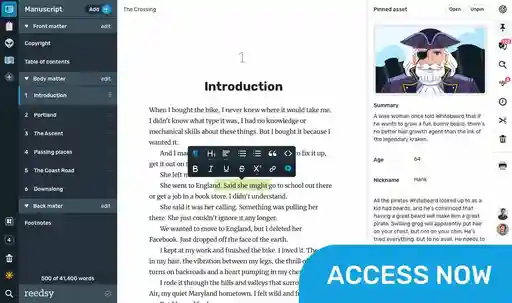
Use the Boards feature to plan, organize, or research anything.
 Click to tweet!
Set the one big question that your book will answer
Having a key question will help you keep your book focused and coherent since you’ll always be trying to answer it. It’s also a great way to get readers interested, as the question ought to be something that they want the answer to.
Q: Should I outline my book or just start writing?
Suggested answer

There's no wrong or right answer here. The trick to writing--and the beauty and headache of it, in so many cases--is that authors have to figure out the process that best works for them, and no two authors are quite the same.
My suggestion is always going to be that authors should try each method, simply so that they know what works best for their own process and success. Some writers find outlining to be fun, but then they aren't interested in writing the book afterward because all of the 'discovery' already happened, so outlining actually takes the fun out of the writing process for them. Others may or may not enjoy outlining, but it's what works best for them because they feel paralyzed without that guide, whether it's a detailed, chapter by chapter outline or a more general one-page summary.
I do think that for non-narrative nonfiction, outlining from the start is generally the best idea, as it can help you solidify the scope of the work, pick out gaps in research, and get a better idea of audience and market right from the start. But when it comes to fiction, anything goes, and you just have to figure out what best works for you.
Jennifer is available to hire on Reedsy ⏺

Both methods can be successful—it just hinges on how your imagination runs most smoothly. Outlining provides a clear guide and prevents plot holes, but jumping in can preserve raw emotion and spontaneity. Most writers do a mix: they create a loose outline and then allow the story to develop naturally as they write. The secret is to be flexible and willing to change—don't let planning kill your creativity, but don't be afraid of a little bit of planning either. What does work for you in terms of writing regularly is the key.
John is available to hire on Reedsy ⏺
For instance, let’s say “Hana” is an expert on the market of coffee beans — so the trading of beans from growers to coffee shops — and she wants to write a book about that.

Hana knows that coffee-lovers have become more conscious about the source of their drinks and that most books in the market right now either cover recipes or history. She then decides that her book will fill the gap in the market and answer the question: Where does my coffee come from? This can be interpreted in several ways, as we’ll see in the next step.

GET ACCOUNTABILITY
Meet writing coaches on Reedsy
Industry insiders can help you hone your craft, finish your draft, and get published.
Identify your target audience
You can’t write a book without thinking about who your ideal readers are, because they’re ultimately the people who want to use your nonfiction book. Think about who they are, what they care about, and what they read. Your book should address their interests or concerns, otherwise, they wouldn’t be compelled to read it.
Free course: Finding your target readers
Identify your target readers, find out where they 'live', and get them to buy your book. Get started now.
You can also check out the competition — books in the same genre or share the same Amazon keywords and categories — to see what kind of content and styles are well-loved. Again, understanding your potential readers will help you refine the key message of your book so that it can help them. This is an important exercise in understanding where your book will fit into the nonfiction market, an element you will need to be confident about if you ever approach a literary agent or traditional publisher with hopes of securing a deal for your book.
💡 You need to write a book proposal if you want to submit to a publisher, and a nonfiction query letter if you want to query a literary agent.
Store all your knowledge in one place
Start by looking at what you know. You have a topic in mind already, so begin by just dropping everything you know about it into one place (preferably somewhere that you can easily access and search later, like the Reedsy Book Editor or a Word document). You can organize everything in list form, as headings and subheadings, or as a mind map — whatever works best for you.
Simply by putting down everything you know, you might realize that there are some things you want to focus on more than others. Highlight those to think about regarding your book’s key topic while keeping the rest handy — you’ll return to all of this as you outline your nonfiction book.
💡 Looking for the perfect piece of software to help you plan and write your book? Check out our list of the best book writing software, or take this quiz to get a tailored recommendation.
🖋️
Which writing app is right for you?
Find out here! Takes 30 seconds
Step 2: Structure your book to best address the main problem
Now’s the time to organize all your thoughts and create a rough skeleton of your book. You’ll need to arrange your knowledge into a logical string of thoughts that will best help readers find the answer to your question.
Q: What's a novel with an unforgettable ending, and what narrative choices made it so impactful?
Suggested answer

"She turned away. Behind them lay pain and death and fear; ahead of them lay doubt, and danger, and fathomless mysteries. But they weren’t alone.
So Lyra and her daemon turned away from the world they were born in, and looked toward the sun, and walked into the sky."
-- The Northern Lights by Phillip Pullman
It is the most perfect ending to a book, full stop. It's emotionally-charged, especially considering the events that happened just prior to this moment (no spoilers!) It lifts the reader up, gives hope, and also a promise of more to come.
And it's poetic, from the word usage to the sentence structure. It sets the pace and tone with punctuation, and it ends with a strong visual that is breathtaking in its simplicity.
Grace is available to hire on Reedsy ⏺
A tragedy-ending novel is Markus Zusak's The Book Thief. Death's narration provides an otherworldly voice that creates a gentle sense of destiny from the outset. But when inevitable tragedy finally materializes, it still has cathartic effect because the strong emotional investment created by tiny, intimate moments rather than over-the-top gestures. Zusak's poetic writing and gradual unveiling of destinies make the climax both beauty and heartbreak—a reflection on love, loss, and the stories that keep us alive even after death.
John is available to hire on Reedsy ⏺
It might help to borrow some principles from how a school syllabus is planned. Each seminar has a learning objective that contributes to the desired outcome of the whole series. You start with the fundamentals, assuming that most participants don’t know much about the topic (which is why they’re taking the course). The same thinking can help you structure each chapter in your nonfiction book!

But what exactly is the best way to organize these “seminars”? Every book is a little different, but we’ve got several common structures here for you to consult. We’ll also examine how Hana’s hypothetical book idea can be applied to some of these, so you can see how your approach depends on your purpose and target audience.
The step-by-step structure
As the name indicates, this kind of structure best fits instructional nonfiction books, like your “how-to” guides. Each chapter or part should align with a step in a process to do or achieve something. For instance, in Reedsy co-founder Ricardo Fayet’s How to Market a Book, following the introduction, we follow a loose step-by-step structure:
- You start with knowing your market and creating a book that has the potential to do well in it;
- Then you optimize your book’s external appearance, like its cover and blurb;
- Once that’s done, you go on to advertisements and promotional programs for your book;
- And on the journey goes.
There’s a logical sequence to this kind of book because some things you just can’t do effectively before others (i.e. you need to have a good book with a nice cover first before you can run advertisements about it).
As such a structure is clear and actionable, it’s often used in personal finance and business books, like those about finding a way to improve your financial situation or start a business.
Free course: How to write a business book
How can writing a book revolutionize your business? Only one way to find out.
The essay structure
If you’re not describing a process, then perhaps this structure is more suitable. Remember how you were taught to write essays in school? You start with an introduction that presents the question, and then each of your following paragraphs examines a part of the answer to that question. In the end, you summarize and evaluate your points to give a final answer. As you make your way to the end of the essay, you follow a clear and easy-to-follow narrative development. This same structure can help you outline your nonfiction book.
Let’s look at how Hana, our coffee expert, might use the essay structure:

Hana’s book can open with a nice, casual anecdote about getting coffee, which is then countered with her own less common point of view from behind the scenes. Her following chapters look at:
-
- Where coffee is grown, and by whom;
- How beans are exported;
- A review of the world economy and its exploits (including the coffee trade);
- How big chains like Starbucks get their beans;
- How small coffee shops get their beans;
- What this means for the reader, and what they should do in response.
The list structure
The list structure is pretty straightforward — essentially, your nonfiction book is a list of things. You’ll encounter this more in children’s books, like Vashti Harrison’s Little Leaders, which talks about bold Black women in history and their achievements. That doesn’t mean, however, that you can’t create lists for an older audience. Aside from cookbooks, reference, coffee-table, and photography books, list books are a popular format for introductions to new subjects — take Michiko Kakutani’s Ex Libris: 100+ Books to Read and Reread, for example.
You do want to prepare more information when writing for an adult audience — a variety of evidence, some visual content, or even some personal evaluation on some of the items of the list will make your book more interesting and insightful.
If Hana chooses this route, she can create a master list of coffee bean producers or coffee bean varieties from across the world. This is a great chance to incorporate photographs into her book, present it more like a catalog for artisanal coffee shop owners and their loyal customers. Can you think of a more fabulous coffee-table book?
The chronological structure
Like a memoir, your book can also be organized in chronological order. Naturally, this works best when you have a very compelling anecdote to follow, and if you think it’s best for your readers to learn through the journey. The story could be yours or that of someone you knew, interviewed, or researched.
[skip to 5:00 in the video below to learn more about nonfiction structure]
Let's see how Hana's coffee book might benefit from the chronological structure:
Hana can consider sharing her personal career, to show how she’d come to appreciate coffee and its producers so much that she had to write a book. She can outline the nonfiction book so it follows her own transition from someone who drinks just about any kind of coffee to one who can notice the nuances in the taste of different types of beans. How has coffee changed her life? She now sees a fuller picture of the supply chain, which raises questions about international trade and conscious consumption that she hadn’t thought about before…
Readers get to follow that journey with Hana. This book isn’t just about coffee. Consumers will feel connected to or curious about her journey as a person, especially if she’s a big name in the food and beverage industry.
There are plenty of nonfiction books out there with other structures, it’s best to read ones on the same topic as yours to see how they approach it. Figuring out which structure suits you will guide you to creating your provisional table of contents (in other words, your chapter-by-chapter outline). It’s much easier to do this with a nonfiction book than it is for a fiction book, and it can give you the guidance you need when you write later.
Step 3: Sketch out your chapters
Now you’ve nailed the key question and the main structure, it’s time to flesh things out a little. This is a good chance to review your strategy so far, see if any chapter is looking too short, needs more research, or needs to be relocated. By taking some of those ideas from the vault of knowledge you created in the first step and plucking them into the outline, you reassess the whole structure.
Include a mix of facts and anecdotes
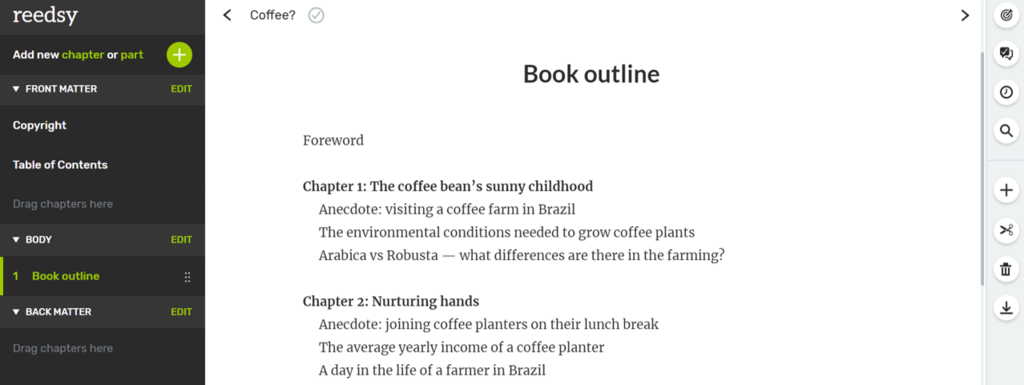
Having a couple of bullet points about the chapter’s main message, some evidence, and perhaps an interesting personal story or two usually bodes well. The latter acts as a hook to your chapter, keeping the reader interested, and is especially useful in less narrative-based nonfiction books.
Say Hana decides to write an essay-structured nonfiction book — she now needs to outline her chapters. The chapter on how coffee beans are exported would naturally talk about how countries like Brazil export raw beans for cheap prices, but it can also open with one of Hana’s work stories, like when she went to Brazil on a business trip.
Revise as needed
While this outline will ideally provide the guidance for your writing, it doesn’t have to be the exact structure of your final book. After all, the structure you end up with is just one way to think about this topic that you want to write about, and we know now how many approaches there can be. So throughout the writing or editing process, reassess your structure and adjust it if need be.
With the chapters briefly outlined, you’ll have finished the plan for your book. What comes next is incredibly important.