


 7 likes
 0 comments
The wind always howls a decibel too loud on nights like these. Maari has submerged her hand in hot oil every year since she was nine, and still, it feels like sheers slicing open her nerves. Almost ten years in, yet the dread never dwindles.
The very nightmare is what jolts Maari awake this early evening. She peeks past her silk curtains, heart palpitating as her mind dissolves in the foreboding red sky of a freshly finished sunset. She knows that, in a few hours, she will have her hand fried for the tenth time, in what the ironsmith community calls "the palm-purification".
Today's ceremony, however, is special for the ironsmiths. The community elder says that their guardian, Īm, grants one wish to the people for every member's tenth palm-purification, whose ceremony is crowned the sacred name “Īmfuerza”. But Maari doesn't believe Īm is real.
In Maari's lifetime and her parents' (and their parents'), no one has ever endured a decade of having their hand be treated as iron ore. They either openly discontinue—and live with the shame—after five years, or flee and hide after seven. The only person alive who claims to have witnessed Īm's power... is the community elder. And she is over one hundred years old.
"I could very well be torturing myself for a fairytale!" Maari exclaims as she breaks her trance. Her throat tightens. Her feet cramp. So she leaves her habitat for a stroll, not saying a word of her whereabouts to anyone.
As she wanders the unusually empty streets, Maari begins to spiral, asking herself why she couldn't just stop and recalling her parents' past responses to this question.
"You're young, Maari. The youngest in our community," her mother would say. "Every year, your hand is always healed from your last purification."
She meant the youngest to start this tradition. Ironsmiths usually have their first palm-purification between the age of 13 and 15. But, of course, Maari's parents wanted to be steps ahead. And the elder approved.
"Still, being young doesn't make it hurt any less," Maari whispers through her teeth, kicking away a tiny rock on the streetside in frustration.
"You're strong, Maari. One of the strongest child ironsmiths," her father would say. "You bear the heat of iron-refinery each day, so you can surely bear the burns from this a mere once every year."
Ironwork is the pride of all the ironsmiths. Except Maari, who has always hated it—especially the refinery. She believes it is excruciatingly repetitive and "always ends with forcing the ore to be different from how it was born". For her, it's just like the palm-purification, and she's always hated that too.
"A little sweat from furnace heat is incomparable to the agony of scalding skin," she whispers, again, but there are no little rocks to abuse this time.
Just then, a hag screams at Maari from across the mud-paved street. "Your hair is falling out!"
Maari flinches, believing it is the community elder; she does not want to start her Īmfuerza preparations just yet. When she realises it is only an old lady, Maari calms herself. Still, concerned, she briefly touches her hair, but notices nothing strange and so ignorantly dismisses the lady's words.
"I see through you," the lady adds in a much lower voice, which recaptures Maari's attention. "You're not a real ironsmith."
Maari's eyebrows raise in worry of the accusation. The people in Maari’s community are very reserved, self-disciplined and devoted to Īm. Maari thinks she is quite reserved, although not nearly as self-denying and ritual-bound as per community expectation. In fact, she disregards her community's rituals and steals silk from the neighbouring silk-maker community to satiate her fabric-obsession. So, maybe she isn't a "real" ironsmith, but why is that so awful?
The hag stays staring at Maari, scanning her every feature from head to toe, taking an inch of a step forward with each passing second. Now, the sky gleams its darkest shade of crimson as the evening draws closer to climax.
Maari becomes uncomfortable with the lady's speechless observations and tries to walk away, but the lady screams and causes Maari to flinch once more.
Upon hearing the screech, Maari rushes to cup her palms over her ears. The accusation replays in Maari's mind and her pupils widen. She then leaves in a haste—perhaps she knows the hag is right.
Sadly, her flee is cut short when she runs into her mother, scattering all the oil containers she had just received from the community elder for Maari's Īmfuerza. Amidst her internal turmoil and her mother's loud look of disappointment, Maari asks herself again why she cannot simply stop this ritual. She thinks the same thought she always does in response.
You're just a sheep in a wolf's game. Play a little longer and maybe, just maybe, you'll live to tell the tale.
"Maari, we needed that oil," her mother calmly reminds, with a sigh.
"Yes, mother. I'm sorry," Maari politely bows. "Let us return to the elder for a refill," she then suggests, although she would give anything to not go through with tonight's ceremony.
At the elder's, Maari dissociates from the conversation as her eyes trace the elder's span of books. Expectedly, many books are about ironsmithing and the history of ironsmith communities across time and space. Some, however, are more... odd. The Art of Persuasive Storytelling, for instance. Or Decades of Success in Hoarding Power.
"Why would a lady past her centennial bother to read at all, let alone read about this?" Maari thinks, perplexed, though her face maintains its poker. "And, if she's so grand, why didn't she ever get to her tenth palm-purification?"
The elder always speaks of "a man in his twenties," who "guided water with his fingertips" and inspired all on the land. He was the last ironsmith to complete a decade of purification and make it past his Īmfuerza, after which she says he vanished to "be with Īm". She, however, never speaks of her own purification, or the burn marks on the back of her left palm that many mistake for wrinkles—but Maari is not as naïve.
Maari harbours many doubts, yet she voices none.
Hours seemed to elapse quickly after Maari and her mother left with the new oil and the community began the Īmfuerza ceremony preparations. Now, only ten minutes lie between Maari's dreaded future and her present, where she is seated in seiza, gowned in a plain-white nylon robe, and is engraving words onto a piece of soft bark with a carving stick. It is the first part of every palm-purification to be left alone in a tent, trotting down one's thoughts to release the "impurities of the mind".
The elder is currently outside, guiding the community members on how to step and chant, while Maari's mother prepares the oil and her father feeds the fire. Maari hears the crackles. She hears the whispers. She sees glimpses of the community's hope through the tent's front entrance... and a glimpse of her own hope through an opening in the back.
A minute later, the elder walks in to invite Maari outside, to which Maari respectfully bows and assures her exit in the next eight minutes. The elder then leaves the tent from its front entrance. Maari trembles. Her gaze shifts to the opening in the back as her feet shift out of seiza and into noise-dampening footsacks, and her arms shift to hoist up a little bag she has been hiding beneath the robe she wishes was silk.
Seven minutes later, the community begins to sing and dance, anticipating Maari's entrance into the ceremony. The elder sits on an iron throne, with one of Maari's parents seated on a wooden throne at each side. The wind silences, as if also anticipating Maari's arrival in the next minute.
When the chant approaches its end in sixty seconds but the community is still yet to be graced with Maari's presence, the elder senses something out of place and sends Maari's mother to check the tent.
Maari isn’t inside.
When realisation strikes, the elder grows furious.
“How dare she disrespect the Īmfuerza in such a manner!” she yells, her tone chillingly degrading. “Find her.”
Obeying orders, the steppers, chanters, and all other ceremony attendees scatter into the woods to hunt down their nineteen-year-old sacrifice. They yield no weapons but hunt with frightening stealth and subtle bloodlust. Maari, who hasn’t made it far, crouches behind a viburnum bush, hoping its broad leaves and spring-peak fragrance would be enough to mask the scent of her fear. To her dismay, the ironsmiths are so silent that she doesn’t acknowledge their presence until four of them sneakily sling her over their shoulders in half a second.
When Maari is returned to the ceremony site, her parents and the elder do not even look at her. The four community members tie her reluctant body to a chair while the rest reassemble to restart the Īmfuerza with their stepping and chanting.
Bound, Maari struggles to focus on her escape as the voices grow hypnotic and a familiar figure blurs into her distant vision. She then notices a single strand of hair elegantly sleeping across her little bag. Before she can make out whose hair it is, another strand feathers onto her lap. And another. And another. Until her little bag gets lost under all the hairfall.
Maari begins to writhe and cry out hysterically. “What is happening to me?!”
In the middle of her craze, she glares deeper into the distance at the now clarifying figure. Somehow, this tranquilises her, entrancing her in a new search for answers as her community ignored her previous cries.
The figure cackles annoyingly loud. “I warned you, didn’t I?” its raspy voice mocks. It then fades away, returning Maari to her state of panic.
Fortunately, ironsmiths are not the best at tying knots. All of Maari’s fidgeting loosens her prison just enough to reach into her little bag under the pile of her hair.
The sixty seconds of chanting elapse, and all that is heard is the wind and whispered steps of the surrounding ironsmiths. Maari’s parents rise from their seats with thick rugs laid across their palms. Together, they lift the oil pot from the fire and hand it over to the elder, bowing respectfully.
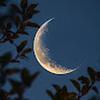
The moon appears from behind a cloud and the shine of Maari’s baldness reflects its light, leaving the entire community in awe and inciting them to kneel at the marvel. After signalling someone to get up and hold out Maari’s palm-purification hand, the elder descends from her throne, accepts the oil pot, and slowly approaches Maari with both parents walking beside her.
Heartbeats hurt more than they used to.
Breathing ironically starts to feel suffocating.
Thoughts refuse to align into meaning.
And the oil pot is ready for Maari’s left hand.
Maari looks up at the elder with sorrow in her eyes, but this does not dissuade the elder from her ritual responsibility. “Submerge,” she orders.
However, before the command can be fulfilled, the elder’s eyes widen and her mouth gapes. Following what everyone perceives as three gasps for air, Maari’s mother is appalled as she spots the carving stick driving into the oblique of the elder’s commandee. Before her mother can even process this, Maari rips the stick out and drives it into the bellybutton area of the community elder. Once more, all everyone hears is three gasps for air. Almost simultaneously, the two bodies thud to the ground.
Trembling and now fully loose, Maari puts down the carving stick and runs away. No one goes after her… because they no longer have someone to order them to. Of course, Maari is guilt-ridden, but she can only hope for better days ahead as her mind recites a single wish:
May no soul fall victim to the flick of my wrist ever again.
The evening ends with a disappointed community, two furious parents, and the muffled taps of a jolly, bolting, nineteen-year-old girl.
—END—
*The prompt was taken metaphorically, portraying Maari as a pet to her community: trained from childhood to obey rituals she didn’t choose, owned by her community’s expectations, treated as a symbolic offering rather than a full person, and disciplined when she strays (like when she’s hunted down and tied up). In a similar sense, Maari's community is a synecdoche for "a witch" as their rituals, beliefs, and punishments embody the archetype.




You must sign up or log in to submit a comment.