
Less than three years ago, I hadn’t written a word of fiction since leaving school over forty years earlier. I was retired and spending most of my time reading science fiction, following technology, and thinking about the future.
Then, needing a hobby, I started writing a novel.
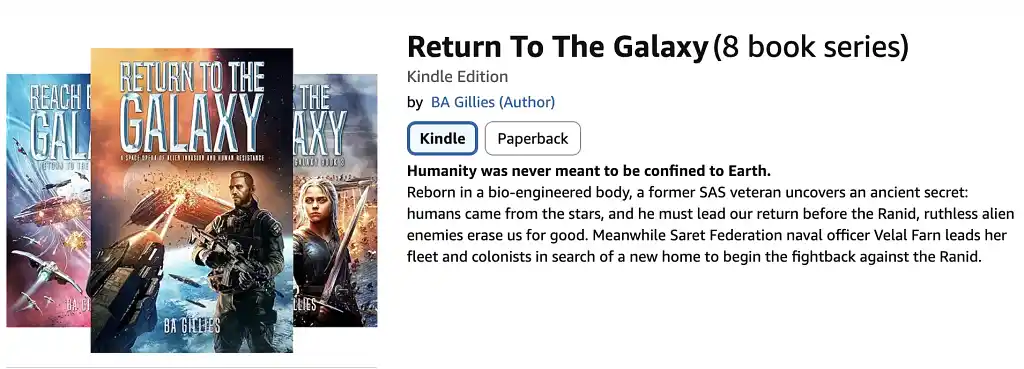
By June 2026 — just under twelve months after I launched the first book — I’ll have released eight novels in my Return to the Galaxy series. Seven have hit #1 bestseller status in at least one Amazon category, selling around 9,000 books a month. As a 2025 debut author, that still feels faintly absurd to write down.
Now, in the hope of helping other aspiring authors, here’s how it happened — and what a year of fast, professional self-publishing has taught me.
A late start, forty years in the making
I have no formal training in writing, and I still don’t feel like a proper “writer” or “author.” But I do know I’m a good storyteller. When my three daughters were young, I used to make up stories on long walks to keep them going. Those stories got us to the end of many walks, and my daughters spent years urging me to tell them to other people.
But my working life kept my focus elsewhere. I started out designing shopping malls, then launched my own business, built and sold several property companies, volunteered for charities, and eventually moved into finance and investment, where I worked until my sixties.
It was only towards the end of my career that I began writing, more as a hobby than anything else — first short stories, then eventually novels.
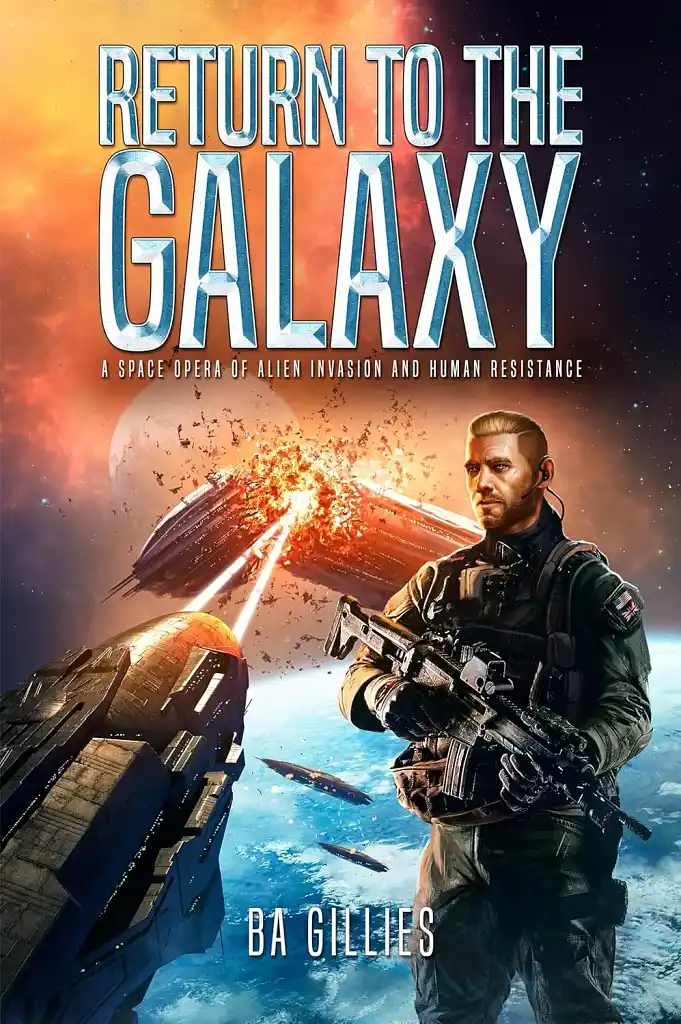
I hit the sweet spot with Return to the Galaxy, a military sci-fi and space opera series about Ewan Scott: a dying former SAS soldier reborn through alien technology. Ewan discovers that humans are not native to Earth, but are instead a lost colony of an interstellar civilization. As Earth faces first contact, that civilization is caught up in a massive civil war — forcing Ewan and his allies into a struggle against invasion, betrayal, ancient secrets, and the threat of extinction.
Why I self-published — and how I found Reedsy
I wrote the series without many expectations. I honestly didn’t think many people would want to read it — I just felt compelled to get the words down. Traditional publishing never seemed like a realistic path, partly because I see very few science fiction authors breaking through that way. So going indie simply made more sense.
I have no bias against traditional publishing. I just felt far more certain that, if I published the books myself, they would actually have a chance to reach readers. My series’ success since has shown me that the demand was there all along — it just wasn’t being served.
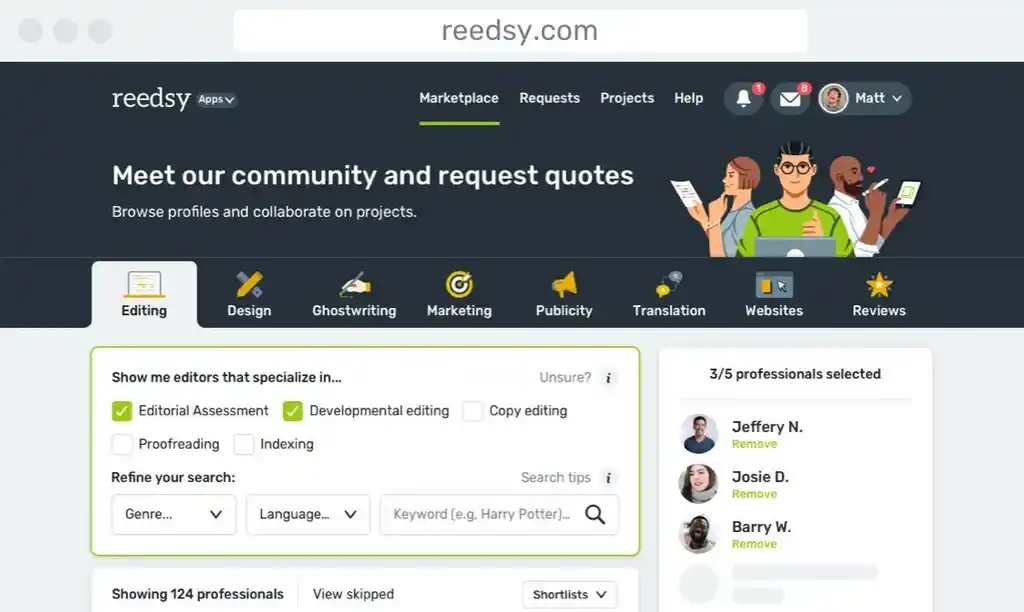
As I looked into independent publishing, I discovered Reedsy through the educational articles and videos the team kept publishing online. They were clearly aimed at helping authors like me, though I’ll admit I was wary at first — I wondered whether it might be another scam. That fear turned out to be completely unfounded.
In fact, through the marketplace, I found my dream publishing team.
Building a professional team on the Reedsy Marketplace
Reedsy has been instrumental to my success, and was the perfect place for a new author like me to find the professionals I needed.
Shaping the story with editorial guidance
My editor, Sara Kelly, was pivotal to my success. She edited my first three books, but more than that, she gave me confidence that I wasn’t writing nonsense — that people would actually want to read this. From the very start, it felt like working with a good friend.
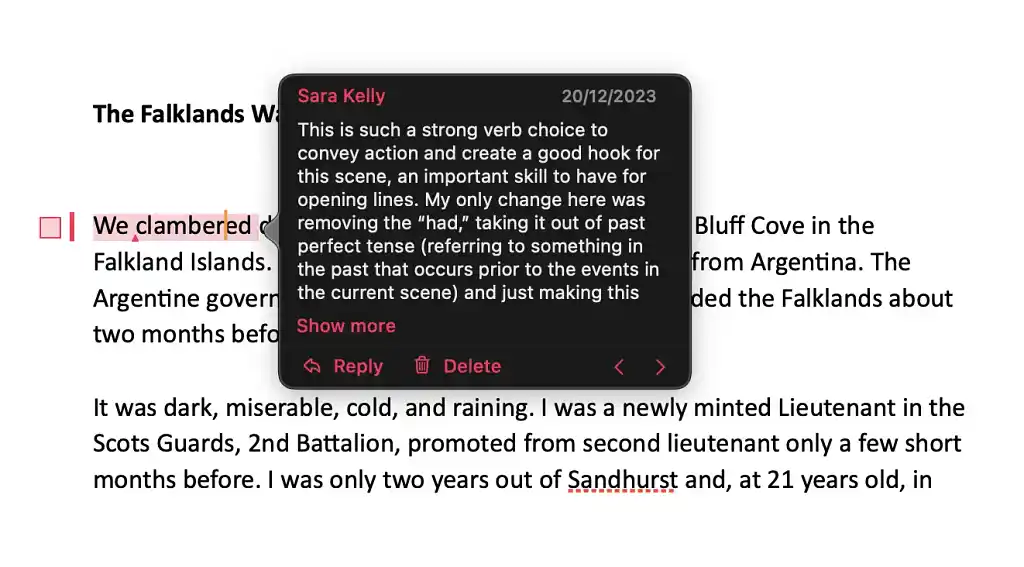
She also worked with me on my reader magnets. For the first one, Return of the Star Lords, she encouraged me to enter competitions — and it went on to win several, including the New England Book Festival.
We only stopped working together because Sara became so in-demand that her packed schedule could no longer accommodate my fast-release pace. Still, the editorial (and promotional) lessons I learned from her were invaluable.
Creating covers readers couldn’t ignore
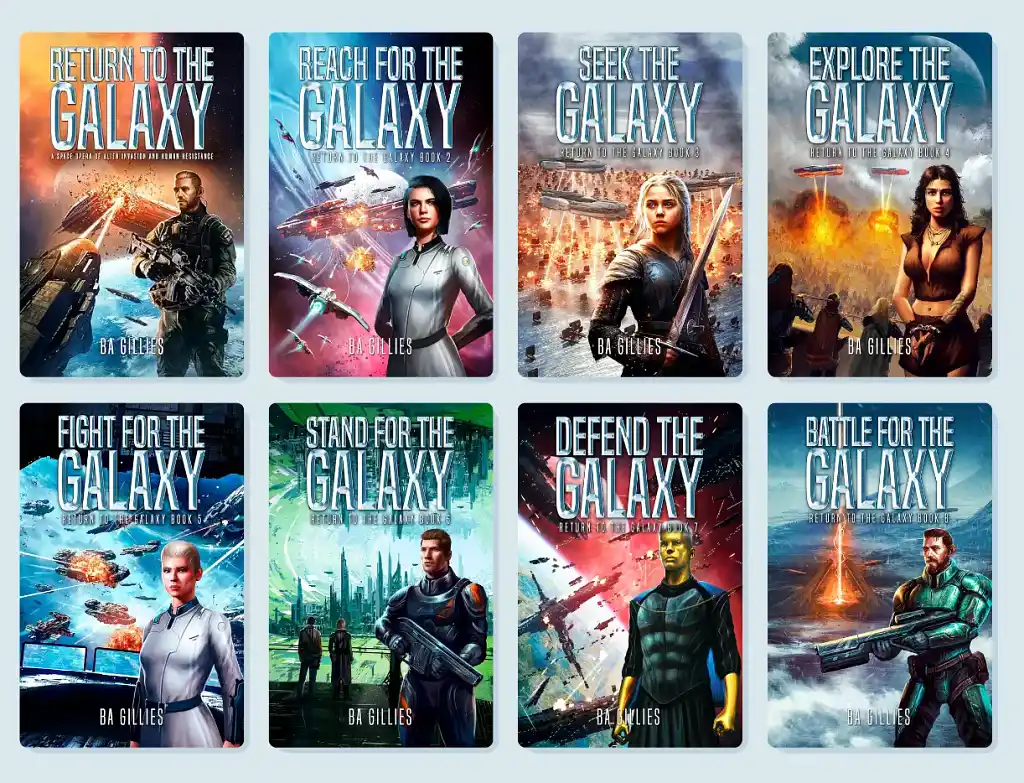
My cover designer, Tom Edwards, was also a once-in-a-lifetime find. When I was choosing a cover artist, I went through my own science-fiction collection and pulled out the forty covers I loved most.
To my shock, Tom had designed 22 of the 40. That made hiring him a no-brainer. His covers stop scrolling users in their tracks, which is exactly their job: the cover gets the reader to click, then the blurb does the work of selling the book. Without Tom, I’d have gotten nowhere.
Finding an audience for the book
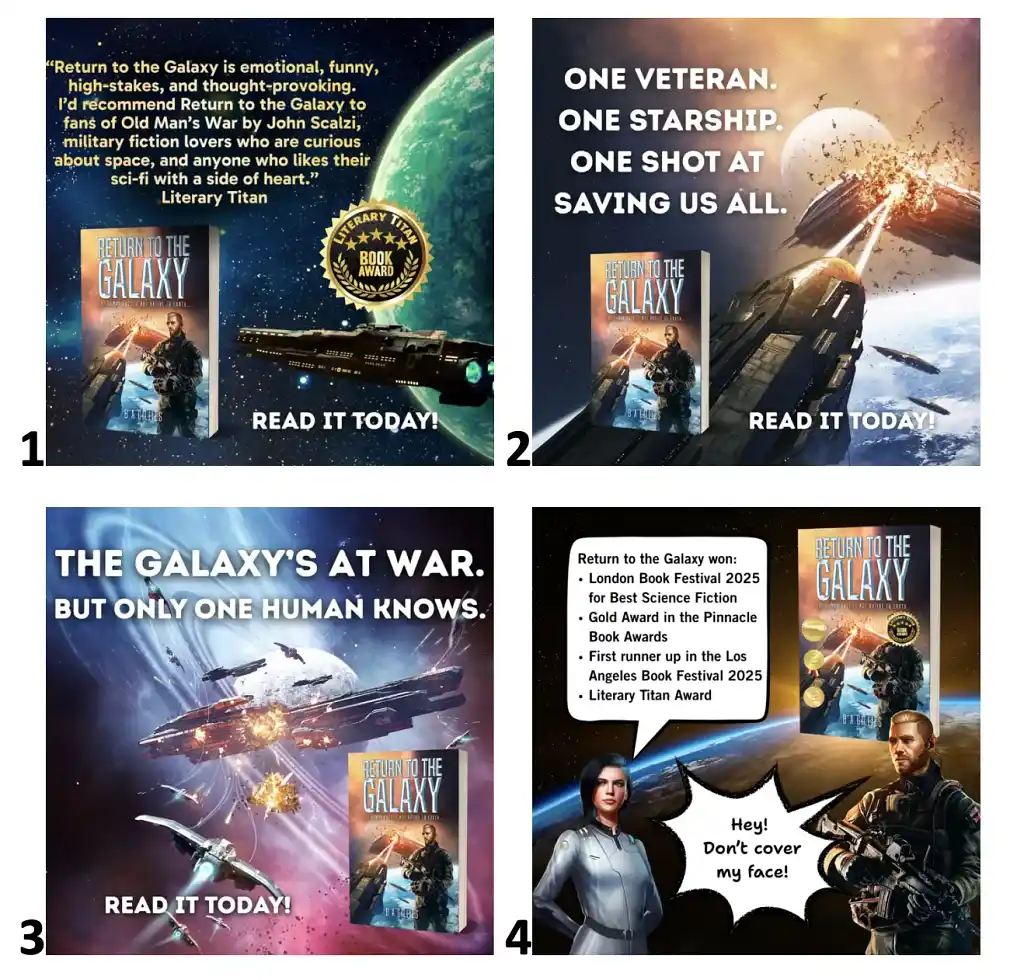
My marketer, Kate Larking, was brilliant with my advertising. She made sure I spent enough to get Return to the Galaxy in front of readers right from the start, and helped me understand that with hundreds of thousands of books published on Amazon every month, standing out at the very beginning is everything. I followed her advice, and the book achieved fantastic visibility.
I worked with my whole team across several books in the series, and because I was publishing so quickly, our working relationships deepened fast. Once an editor, designer, or formatter knows you're producing a book every six to eight weeks, you become part of their regular workflow. Responses get faster, emergency changes get easier, and people become more invested — because they know another project is always coming.
Establishing an audience before I’d published a word
One more vital thing that boosted my launch was building my readership in advance. I wrote around ten reader magnets and gave them away for free on sites like BookFunnel. By the time Book One went out, I already had about 3,000 people on my list.
That changed everything. By the third book, enough readers were on the list that simply announcing a pre-order to them practically guaranteed a #1 bestseller on release day. (My most recent book, Battle for the Galaxy, launched at #1 in six Amazon sub-categories.)
That’s how I accidentally became a “rapid release” author. Within days of the first book going live, readers were emailing to ask when the next one was out. In a way, they drove the schedule.
Luckily, I’d written the first two books and half of the third before I published Book One. That head start mattered more than I understood at the time. Readers relax when they can see a runway ahead of them. When someone finds Book One and immediately sees several more available, or already on pre-order, the series feels established rather than fragile, and people commit more willingly.
Also, every time a new book entered pre-order, sales and Kindle Unlimited reads on the earlier books jumped — as if readers were racing to catch up before launch day.
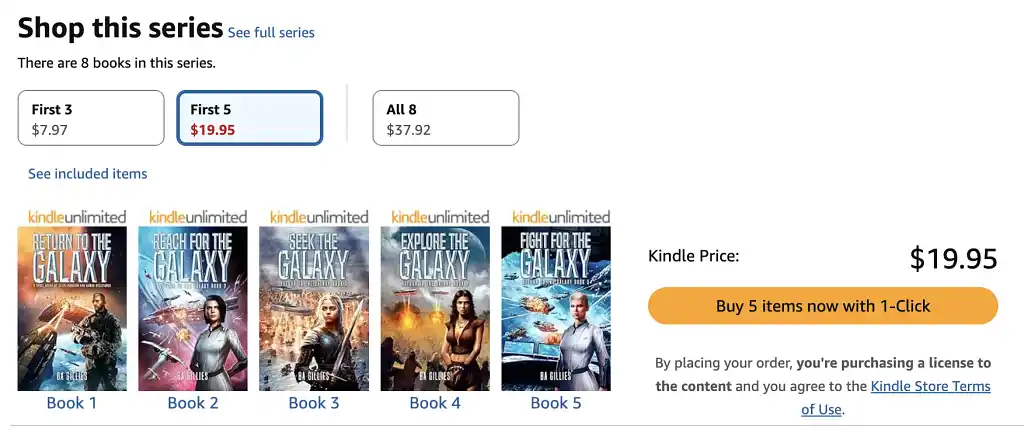
Fast release also let me price Book One at 99 cents — unprofitable for a standalone, but perfect as the gateway into a wider universe. I don't need to profit on a reader’s first purchase, or even their second; the profitability comes from series read-through. My read-through rate of 70-80% from Book One to Book Eight makes this very profitable. The more books in the series, the more time (and money) readers will spend on it.
Finding a passionate readership — and what’s next
As I mentioned earlier, the series achieved tremendous success. But the most rewarding part has been the response from readers: people staying up until 4 a.m. because they couldn’t put the books down, losing themselves in a universe that had existed only in my head a few months before.
A few have even compared it to some of the best science fiction they’ve ever read. Needless to say, that kind of praise stays with you.
I plan to finish Return to the Galaxy with Book Twelve, then move on to my next series, Let’s Hunt the Humans, with the first three books due out by February 2027.
Finally, a few honest words for fellow authors. Writing this many books this quickly compressed my learning curve enormously. Every release brought reviews, feedback, and lessons I could apply straight to the next book, and I feel as though I packed years of learning into one.
You don’t need to follow a rapid-release schedule like I did — that strategy has downsides too — but if you’re sitting on a story, my best advice is simple: start putting your work out there. It might just find an eager audience.
I hope this article has been helpful to you and good luck with your own efforts!
Explore BA Gillies’ Return to the Galaxy series on Amazon, and grab the free short stories at bagillies.com.