Blog • Understanding Publishing
Last updated on Oct 15, 2025
Writing a Non-Fiction Query Letter (+ Sample Query Letter)

Martin Cavannagh
Head of Content at Reedsy, Martin has spent over eight years helping writers turn their ambitions into reality. As a voice in the indie publishing space, he has written for a number of outlets and spoken at conferences, including the 2024 Writers Summit at the London Book Fair.
View profile →Writing a non-fiction query letter is like writing your own ticket to the big time. If you want to convince an agent or publisher that your idea has ‘bestseller’ written all over it, the few hundred words that make up your query must be irresistibly compelling.
Elsewhere on this site, we go into detail on how to write a query letter for a novel. You can head there now and download a checklist for fiction queries which, truth be told, are about 90% the same as non-fiction ones. But with the help of current and former agents on the Reedsy marketplace, this guide will help you understand the other 10% that will push your non-fiction query over the top.
Note: This following process is not intended to be linear, starting with “Dear Ms. Agent” and ending in “Yours sincerely.” Instead, it’s a thorough guide that will prepare you for the querying process.
Create an airtight book proposal
What’s the biggest difference between a fiction and non-fiction query? In non-fiction, the author is not expected to provide a completed manuscript the way a novelist would. Instead, they present a book proposal, a 15-50 page pitching document with various details and sample chapters.
Reedsy has created a dedicated guide to writing book proposals that will show you how to prepare this document. But here’s the gist: a proposal should aim to answer the questions every agent will want to ask about you and your book.
The document can be broken down into the following sections:
- An overview — what is the book about?
- Target audience — who is it written for?
- About the author — why are you the one who should write it?
- Marketing plan — how are you going to help sell it?
- Competitive titles — what are similar titles on the market?
- Chapter outline — how are you going to structure your book?
- Sample chapters — can you actually write?
Don’t start querying until you have solid content for each of these sections. According to Jon Darga, former non-fiction editor at Penguin Random House and current agent at Aevitas Creative Management, agents and acquiring editors will notice if you leave anything out.
Q: What advice or encouragement would you offer to authors struggling with the querying process?
Suggested answer


Querying is arguably one of the most frustrating parts of the publishing process. Often the letter a writer worked so hard on goes unacknowledged, and the cycle of query letter revision, review, and research leads to frustration and tears. A lot of authors become so frustrated they quit writing altogether.
As an author, it’s not your fault. You are doing your best.
Think of it like online dating. It’s a numbers game. One of the best pieces of advice I’ve had from a friend is this: you’re not looking for the perfect match. You’re looking for the right match. In other words, in the end, you do not want each and very agent you query to want your work. You may think that you do, but you do not, any more than you don’t want every person on a dating app to swipe right. You really want the RIGHT match. You want the agent that recognizes your potential, and will work with you to ensure you reach it by finding the right publisher with the right marketing and sales support. You want a partner, and that takes time.
So, as you do your research and type up yet another email, remember that the right match for you and your work is there. All of this is worth it. Each ‘no’ is one step closer to a ‘yes’, and when that ‘yes’ comes, it will be from the best person for the job.
Lara is available to hire on Reedsy ⏺
“I've seen a lot of proposals that think they can get away with just the pitch and an annotated table of contents. But we need to be able to make sure you can write, too! Overall, though, a non-fiction proposal should be faster and easier to put together than the full manuscript that you'd read with a novel. Much less writing!”

FREE RESOURCE
Book Proposal Template
Craft a professional pitch for your nonfiction book with our handy template.
Personalize your letter for each agent or editor
Agents and editors get flooded with queries and submissions every week. They call it slush, which shows how optimistic they are about pulling gold nuggets from their query piles. With this in mind, editor Rachel Stout (formerly an agent with Dystel & Goderich) reminds authors that they need more than a well-written pitch to get an agent’s attention.
“You need to show this agent that you are being intentional in your querying, and that you're reaching out to this agent for this book, for this specific reason. You're letting that agent know you're particular about who you query.”
This is where personalization comes in: the process of researching individual agents and publishers in order to:
- Ensure that you only query those who want what you have to sell; and
- Show the recipient of the letter that you are interested in them, specifically.
The second point is crucial. You need to demonstrate that you’ve done your research and you’re not just firing off boilerplate emails and BCC’ing the rest of the publishing world. It can be as simple as getting their name right (more of an issue than you’d imagine) and mentioning a book they’ve worked on — bonus points if it’s similar to yours!
Q: How does personalizing a query letter improve request rates, and what should be tailored?
Suggested answer

I'm more concerned with whether your query letter hooks me: I want your title, genre, word count and comp titles at the front. I am even curious to know why you are the exact person to write this book (e.g., 'I'm an arctic research scientist so I set my locked room mystery in a research base', etc). You can put info about yourself in a very short about section in your sign-off paragraph. That said, it doesn't hurt to include something specific to me. For example, suppose you listened to an interview where I said I'm interested in finding a particular type of novel that yours fits with, or you connected with something I posted on social media. In that case, it's good to include this. It makes me think you are keen to work with me and aren't just randomly querying. But with that said, as long as you address the letter to me and then write a strong, gripping query and telling me a small amount about yourself and what that means to you as a writer, I'm less concerned about you including extra personalisation directed at me.
Ariell is available to hire on Reedsy ⏺

The baseline requirement is that you need to address your query to the agent's name; "Dear agent" letters sent out as shotgun emails to five hundred agents will get rejected quickly. Beyond that...my usual suggestion is to offer one or two sentences at the beginning of the query letter showing that you've done your homework. This can be as simple as "I saw on MSWL that you're looking for more multi-POV novels," or "I saw on your agency website that you're interested in cozy fantasy." This shows that you're respecting the agent's time by making sure that what you're sending is aligned with their tastes at the most basic level. Agents know that you're probably querying about ten people at once, and they're receiving perhaps hundreds of queries a day, but the personalization makes it a little more likely they'll spend some extra time looking at yours.
Nora is available to hire on Reedsy ⏺

I think a personalized query letter achieves the same aim as a piece of handwritten, personalized mail: it shows the sender has put thought and intention into what's enclosed.
As a small-press publisher, I certainly understand that manuscript submitting is a numbers game. Authors have every right to query their manuscripts to dozens of publishers and agents simultaneously. But no one wants to be treated like a row on a query tracking spreadsheet! Dear Sir/Madam, to whom it may concern, generic language about the submission's fit within my company's catalog of publications: these tactics suggest the author is taking a slapdash approach to submitting.
Conversely, when a submitting author can demonstrate their familiarity with my press, it comes as a huge relief to me. Of course, I don't expect every submitting author to buy a copy of book I've published before firing off their manuscript. But if an author can reference a title from my manuscript wish list, or if they address me by name, or if they can say in 1-2 sentences how their book aligns with my company's mission statement, then that goes a long way!
Kevin is available to hire on Reedsy ⏺

Because many authors want to increase their chances of representation, most send out lots and lots of queries letters all at once using some form of template (Dear Agent, I'm seeking representation...). While using a template like this does cut down on time, some agents get hundreds, if not thousands, of query letters a month! What's a way you can stand out from that? Personalize the query.
Agents want to know that you, the author, not only have a good book worth pitching, in the genre the agent works in, but that you have put in the time and effort to learn why they specifically would be a good fit for your work. An author-agent partnership is not a one and done thing, but ideally and ever-growing relationship that starts by being a good fit for one another. And so, showing that you researched them by personalizing a query expresses that:
- You have done your research for that particular agent, and so take your craft seriously
- You know what they represent so are pitching them in a genre they actually represent
- Have likely researched their other clients so you have a reasonable idea of whether you might fit well with them.
On top of this, if you meet an agent at a conference or writing-related event, mention that! Again, agents get many, many queries, so if they ask you to send them stuff, or you spoke to them, remind them where you met them, and any relevant details related to your work you might have discussed. This will hopefully set you off on the right foot and be the start of a wonderful author-agent relationship.
Sean is available to hire on Reedsy ⏺

Personalizing a query is a great way of letting agents know that you've researched their tastes and interests, which also conveys that you're taking a professional, well-considered approach to querying and the industry itself. When you let an agent know that you've chosen them specifically because of the clients and/or books they represent, because of their online presence, or because of an interview they've given, it shows them you've taken the time to learn who they are--which also means it's likelier that you're sending them a manuscript suited to their tastes.
Salima is available to hire on Reedsy ⏺

Although writing queries is more an art than a science--and it can often feel like screaming into the void--if you take the time to carefully research potential agents, editors, and publishers, then your odds of approaching an appropriate one for your project (i.e., someone who would be interested in it), are far higher. Being able to demonstrate that research by being able to personalize your query will make you stand out in a good way. Conversely, if you send out copycat queries blind, you're less likely to wind up in front of someone who will resonate with whatever you're pitching. "Personalizing" includes using correct basic info (name, title, company, etc.), but also appealing to relevant aspects of the recipient's professional and personal background, from the types of books they typically represent (or what kinds of articles they publish if you're pitching mags) to whatever hobbies they may have that dovetail with what you're writing about. In other words, personalizing can't possibly hurt and might just help.
Lisa is available to hire on Reedsy ⏺

It’s like junk mail vs. "real" mail. When I get an envelope with an advertiser's name, I usually toss it aside, thinking I don't need a new garage floor or whatever they're selling. But when I get mail addressed to me personally from a real person, I'm much more likely to want to know what they have to say.
Barbara is available to hire on Reedsy ⏺

While some advisors might suggest that one generic query letter is appropriate for all agents, my best advice is that you personalize every query you send. This means researching every agent, finding out what authors and books they have represented, and then using at least one "comp" (comparative title" / "competitive title") on that agent's (or their agency's) roster. When you do this, the agent knows that:
- you are querying them because you're familiar with their work and you know your book is a fit for them,
- your book suits their agency's roster, and
- you have done your homework.
When writing a query letter, follow the agent's submission guidelines precisely. For example, an agent named Jane Smith might request on her submissions page that she be addressed as "Ms. Jane Smith." So, if in your salutation, you write, "Dear Jane" or "Dear Ms. Smith," that is instant notification to the agent that you haven't read (or haven't followed) her submission guidelines. Will that mean you won't follow her directions if she signs with you? Agents get literally hundreds of queries every month. Don't give an agent a single reason to reject your query.
Some agents care a lot about personalized query letters, and other agents accept that some authors prefer to send out generic letters. Since you don't know which agents have which preferences, it makes sense to personalize all your query letters.
Happy querying!
Michael is available to hire on Reedsy ⏺

In my experience, personalizing a query letter shows a few things:
- Your interest in working with that particular agent. This increases their interest in your project and your agent-author relationship.
- Your knowledge of the market and targeted marketing. As a writer you don’t need to be a pro at this, but showing your ability to promote yourself displays valuable skills that can be used later for things like author events.
- Your research skills. Showing that you are good at finding the right agent showcases your research skills which may come in handy for your work, particularly if it’s nonfiction.
Hope this helps!
Samantha is available to hire on Reedsy ⏺

It shows you've done the hard work of doing research and aren't submitting to just anybody. It adds a personal touch and hopefully will make you stand out from the rest of the crowd. If you can reference a book or two represented by the agent, and compare it to the book you have written, you will bolster your argument for approaching this particular agent. This research takes time, but I believe that, in the end, it can make a difference in helping your query stand out.
Ken is available to hire on Reedsy ⏺
Rachel goes into detail and reveals her top tips in a recent webinar on personalizing queries. Watch the replay and check out the transcript for invaluable advice on personalizing your non-fiction query letter.
Resources for researching agents

Ready to research some literary agents? Hit the ground running with our extensive directory of non-fiction literary agents! We have 500+ agents listed right there, all of whom have already been researched and vetted by our team, allowing you to pick from the best of the best.
Additional resources for researching agents include:
- Agent databases such as Agent Query, Query Tracker, or Publishers Marketplace (see the profiles listed for each agent in our directory).
- Acknowledgments pages of similar books (which you can comb through for more of an old-school approach).
- Publishing conferences where agents and editors will happily speak with authors.
You'll find more assistance and resources in our post on how to find a literary agent. But in short, you need to find agents who are both open to submissions and seeking your type of book, then make notes of details about them that you can use to personalize your query letter.
Get your book proposal reviewed by an expert

Dakota R.
Available to hire
Seasoned editor & published writer with a passion for literature & language—in particular: poetry, essay collections, & children's books

Ian S.
Available to hire
I'm an Australian writer and editor living in Greece. Apart from books, my passions are walking, swimming, wine, and photography.

Eli B.
Available to hire
With 22 years' experience as an acquiring editor and editor in chief, I offer comprehensive insight into the entire publishing process.
Show that you’re the right person for the job
What makes a non-fiction query stand out from the crowd? For Jon Darga, it’s about author platform more than anything else:
“Not necessarily how many Twitter followers you have, but positioning yourself as the one best person to write that book. It would be really difficult to write, say, [cancer physician] Siddhartha Mukherjee's The Emperor of All Maladies if you weren't involved in the medical sciences in some way.”
Your platform doesn’t depend on advanced degrees, either — it’s about how your experience makes you uniquely qualified to write this book. In this next section, we’ll look at the short bios of first-time authors to see how, as Jon says, they position themselves as the best person to write each of their books.
Example 1. Memoir

This is Going to Hurt: Secret Diaries of a Junior Doctor by Adam Kay.
The UK’s biggest non-fiction hit over the past few years, this memoir offers readers a humorous look at the doctors, nurses, and wards of Britain’s national healthcare system.
About the author (from the book): “Adam Kay is an award-winning comedian and writer for TV and film. He previously worked for many years as a junior doctor.”
Analysis: Boom — there it is. Who better to write a funny book about being a doctor than an acclaimed comedian who used to be a doctor? Before this book was published, Kay’s modest profile as a comic may not have been enough to pass as a “platform” — but his expertise on the subject has more than made up for it.
Example 2. Business
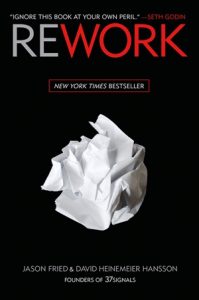
ReWork: Change the Way You Work Forever by Jason Fried and David Heinemeier Hansson.
This 2010 book showed its readers a new approach to entrepreneurship that leverages inexpensive apps and tools to simplify and streamline businesses.
About the author (from the book): “Jason Fried and David Heinemeier Hansson are the president and co-founder/president of Basecamp (formerly 37signals), a privately-held Chicago-based company committed to building the best web-based tools possible with the least number of features necessary.”
Analysis: Fried and Hansson co-authored a book that’s intrinsically tied to both their story and their product; they built a company that created the very solution that allowed them to grow. Very meta.
Example 3. Health and Addiction
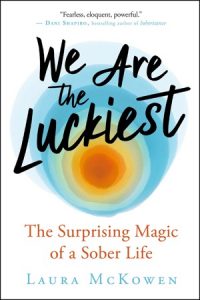
We Are the Luckiest: The Surprising Magic of a Sober Life by Laura McKowen
In this inspirational book, the author addresses the big issues faced by alcoholics in a charming and heartwarming way.
About the author (from the book): “Laura McKowen had a successful career in public relations and the Mad Men-esque drinking culture of advertising. After getting sober, she became recognized as a fresh voice in recovery, beloved for her soulful and irreverent writing. She now leads sold-out retreats on sobriety and is a celebrated yoga instructor.”
Analysis: McKowen’s bio is a quick and highly effective sell of her book. We see that the author has been through the wringer and can offer a first-hand account of alcoholism. Her mention of running “sold-out retreats” validates her claim of being an expert in helping others cope with their recovery. It also implies she has an existing audience of potential buyers.
Q: What are the main reasons major publishers don't accept direct submissions from authors, and how can authors successfully navigate the submission process?
Suggested answer

It's about time and workload. The in-house editors simply don't have time to read the many, many submissions they would get as well as taking care of the editorial, admin, and other work that they're responsible for. So agents that they connect with get to know the acquiring editors' preferences and tastes, and send them books they're most likely to love. The agents act as a filter. And it's still A LOT of reading to find those outstanding books that the editor knows they can shape with the author, champion in-house, and sell to the world!
Margot is available to hire on Reedsy ⏺

In short, volume. Literary agents receive hundreds, if not thousands, of queries a month. Editors, who are paid by publishing corporations, have jobs not only editing the books scheduled to publish every year, but they also have to liaise with production departments (the folks who work to turn a manuscript into a physical book), marketing and publicity teams, finance, art departments, etc.
And even with literary agents acting as a sort of "filter", editors still receive hundreds of potential books sent to them every year.
Literary agents also work for authors. Earlier, I mentioned that editors are paid by the companies they work for, that is publishers. Inherent in that dynamic, editors are paid to help find and bring books to the market that will make money for the company they work for. That means if there's a disagreement on what should happen with a specific book where the publishing company is on one side and the author is on the other, then the editor is biased (or at the very least can be pressured and influenced) to agree with the company paying them, not the author they're working with.
Literary agents fill that gap as publishing professionals who are author advocates. As an extension of having an entire role dedicated to author care, it makes sense to include working with authors at the earlier stages of writing a book, too.
Matt is available to hire on Reedsy ⏺
Sometimes, you just need something that no one else has
Let’s say that you don’t have a sexy CV, IMDb credits, a successful company, or even a personal story that ties into the subject of your book. In Jon Darga’s experience, that’s not necessarily a dead end: “I have published books without an obvious platform by writers who convinced me they'd found information and connections that nobody else had!”
A unique angle can take many forms. For example, you might take the wisdom found in ancient texts and spin it in a novel way (like Becky Sheetz Runkle did with Sun Tzu in her book, The Art of War for Small Business). Or perhaps you’ve uncovered primary sources that other historians may have missed, as David Blight did in his 2018 biography of Frederick Douglass). So long as you’re able to demonstrate why a more experienced writer couldn’t do a better job than you on this particular book, there’s still hope.

FREE RESOURCE
Query Letter Template
Learn how to grab a literary agent’s attention with our free template + checklist.
Start the letter with your strongest selling point
When you’re pitching a novel, you’re always told to “start with the hook,” which refers to a killer plot detail that makes anyone listening want to learn more. In a non-fiction query, the goal is still the same — to hook the reader — but the bait can take many forms. And guess what? You already know what most of these hooks are.
Hook 1: The Story
Dear Ms Buchanan,
I’m seeking representation for my debut non-fiction book, APOCALYPSE COW, which uncovers the darkest chapter in the USDA’s history: a failed 1980 paramilitary operation to neuter millions of cattle in South America.
Hook 2: Your platform
Dear Mr Caulfield,
You've definitely heard of my clients, but if I've done my job right, you've never heard of me. Meryl Streep's nose? Julia Roberts' forehead? Madonna's... everything? All my handiwork. I'm Beverly Hills' most prolific cosmetic surgeon and author of INNER BEAUTY OUTSIDE.
Hook 3: Personalization
Dear Ms Wormwood,
I recently read your post in the Publishers Weekly blog on the dearth of younger voices in historical non-fiction. You mentioned an interest in the Pre-Raphaelite Brotherhood, and I would love for you to consider representing my non-fiction book, ROSSETTI VS. THE ART BROS.
Hook 4: An untapped section of the market
Dear Mr Chinaski,
I am writing to seek representation for my book, WFH: WORK, FAMILY, HAPPINESS — an irreverent parenting guide for the 5 million digital nomads scattered across North America — a third of whom are on the cusp of starting families.
Once you have the agent or editor sitting up and paying attention, it’s time to reel them in with the rest of your query letter...
Follow instructions and don’t reinvent the wheel
If you have wacky ideas for attention-grabbing ways to write your query letter (Pretend to be their high school buddy! Jokingly threaten to harm their pets!) then take a breath and start again.
In almost all cases, the best approach is a straightforward one: follow a fairly standard format and clearly communicate why they should be interested in your book.
With online submissions now being the norm, you often won't have to worry about structuring your query letter. You just have to fill in a form. But here’s a piece of advice that could make or break your query:
Follow the submissions guidelines.
This tip sounds so obvious that it verges on insulting. However, as we mentioned at the start of this guide, agents and editors are often swamped. A query that fails to follow the submission guidelines will be viewed poorly at best, and at worst, be rejected sight unseen.
In cases where submissions guidelines are loose, your query should contain:
- An irresistible hook
- Some aspect of personalization
- A quick overview of the book, including
- Title
- Estimated word count
- Intended readership
- Comparative titles (similar to yours in genre, subject, or tone)
- A brief, relevant bio
- Your book proposal with sample chapters
Q: Should my comp titles be recent, classic, or a mix of both?
Suggested answer
When it comes to comps, more important than demonstrating your encyclopedic knowledge of the contemporary book market is accuracy that awakens recognition.
In other words, the intersection of your comp titles should immediately evoke the essence of your book's "vibe," so that the agent reading your query gets that satisfying internal "Aha" of recognition that lets them know with ease whether this is the kind of book they're looking for—and if they believe they can sell it.
For example, let's say I've written a novel about an eccentric coven of Millennial witches who find themselves called to save the world from some shadowy force of evil.
To really evoke the experience my readers can expect for the agent I'm querying, I could use the comps Practical Magic, Ghostbusters, and Buffy the Vampire Slayer. Yes, two out of three of these are not even books (Practical Magic is originally a book by Alice Hoffman)—but what matters is what's communicated by these comps. By referencing these three culturally iconic and very well-known titles, my potential agent will understand the following:
- My book is intended for a wide, popular audience;
- While it may grapple with dark themes, it's ultimately fun and escapist (and probably lends itself to sequels or a series);
- It contains a close-knit cast of loveable, flawed (and therefore relatable) characters;
- Central themes likely include good versus evil; friendship and teamwork; and because its an all-femme cast, it's likely feminist and empowering as a result;
- These comps are also perfect for the Millennial audience that are my target demographic (because the characters are Millennials), and Millennials grew up on these comp titles! (Hot tip: Nostalgia SELLS!)
As you can see from my example, when done right, comps do the work of pitching your book for you. When you combine that with a strong writing sample and strategic outreach—i.e. you send your query to the agents who are actually looking for what you've written and will really GET IT with the help of your comps—you will have piqued the agent's interest enough for them to want to see more and request the full or partial manuscript.
And so long as your manuscript delivers on your promises—you're in excellent shape to receive an offer!
Kate is available to hire on Reedsy ⏺
To see what a standard non-fiction query might look like, here is an actual example of a letter that worked!
Sample Non-fiction Query Letter
One of Jon Darga’s clients kindly permitted us to reprint their query letter. The title and author name have been redacted — and some of the formatting and wording has been altered from the original.
Dear Mr. Darga,
Here’s some free doctor’s advice: never get sick in July. At best, you’ll meet a doctor at the hospital on her very first day, and she won’t know the difference between a sleeping patient and a patient in a coma. Worst case scenario, you’ll meet a more seasoned physician who was high on drugs the night before, still a little drunk that morning, and has contemplated suicide twice since you arrived in the ER. How do I know this?
I am many things: a dreamer, a high achiever, an Ivy-Leaguer; I’m not White, mostly Black, and questionably Asian; I’m a saboteur, a heavy drinker, a trust abuser; I am someone’s lost son; I’m not sure if I like myself. I am fragile. I am haunted. I’m the last person you want to trust your life to. And I’m your doctor.
[TITLE] is an unflinching, uncensored examination of the often harrowing, sometimes shocking, and progressively dehumanizing twists and turns of medical residency training, and how it provided the perfect context for the culmination of, and ultimate triumph over this young doctor’s struggles with his vices, mental illness, and complex relationship with his father.
A memoir written in the irreverent spirit of the Samuel Shem’s medical classic House of God, while embracing the vulnerability of Paul Kalanithi’s When Breath Becomes Air, my work provides a candid account of the ways in which residency training shattered the mind of an empathetic and well-intentioned doctor, and the arduous task of piecing it back together again through painful and overdue self-discovery.
I am a certified Otolaryngologist (Ear, Nose, and Throat surgeon) with degrees from Harvard and Emory University School of Medicine but I also appear frequently at The Moth competitions, where I’ve won their Storyslam and came runner-up in the Detroit Grandslam. I’m also a writing consultant for [POPULAR TV DRAMA], distilling complex medical and social issues into palatable and understandable mainstream storylines.
[TITLE] offers a modern and fearless appraisal of what it means to be unsure of yourself every day, even as you hold another person's life in your hands. It's hope and love and a cry to keep moving forward, to live each day the very best that we can. I hope you enjoy the read.
[NAME]
This letter comes in at under 380 words, but checks all the boxes and demonstrates that the author can write well, which every query should aim to do. After all, if the agent or editor doesn’t think you can write a compelling letter, why would they think that your book's any better?
To learn more, enroll in Reedsy’s free courses on Writing a Query Letter and Submitting Non-Fiction to Agents and Editors.

FREE COURSE
How to Write a Query Letter
Learn to grab agents’ attention with 10 five-minute lessons.
Submit to your shortlist and always follow up
Now that you have compiled all the elements of your query letter, it’s time to get it out into the world. But where should you start? Here are a few pointers to help you with the actual communication side of querying.
Decide whether you want to query agents or publishers (or both)
When it comes to agents, the conventional wisdom is that you’ll need one if you want to publish fiction traditionally; for non-fiction, however, authors can often submit directly to publishers.
When asked to clarify which precise types of books would require an agent to publish, Jon Darga pushed back at the premise.
“The question, for me, should be less what types of non-fiction book and more what does the author want to achieve?
“If the author is an academic who's happy doing a deal directly with a university press, or someone who just wants to see their memoir published by an indie press, then you probably don't need an agent. But if your goal is to be published traditionally and commercially by one of the Big Five, you'll need an agent to make those inroads.”
Q: Is it appropriate to follow up on a query letter, and how long should an author wait before doing so?
Suggested answer

It depends on the agent. Many of them will post their specific guidelines on their websites—some will say that you can follow up in <x> weeks, and others will say that, if you haven't heard back from them in <x> weeks, to consider it a pass. If such information isn't on their website, it's a bit up to you, but I've heard ~3-4 months can be a good guideline to follow for query follow-ups. But definitely make sure that the agent doesn't have their specific timelines posted anywhere!
Chelsea is available to hire on Reedsy ⏺
Sure, there's no harm in following up, as long as you aren't being a pest about it.
Most agents have set response times, and may say something along the lines of "expect a response in 6-8 weeks". It's not appropriate to follow up before that window, and it also doesn't help to follow up more than once.
If an agent's website or query page say that it's an automatic rejection after that time frame, then you should take them for their word and consider your query rejected if it goes past that window.
Matt is available to hire on Reedsy ⏺

I believe it's perfectly appropriate to follow-up to a query letter, but keep the following in mind:
Read the agent's submission requirements on their website or social media account. Often, they will tell you their turnaround time or any special considerations. "If you don't hear back from me within two months, email again."
They also might say, "If you don't hear back within two months, it's a no from me." In which case, don't follow-up.
If there isn't a time listed, I would recommend nudging in four to six weeks.
And remember: be polite! Agents are human beings with *feelings* and receive hundreds of submissions. They will consider each one of them in due time.
Grace is available to hire on Reedsy ⏺
Don’t be afraid to query more than one agent or publisher
Some agencies will only let you query one of their agents at any given time, but that doesn’t mean you can’t put your feelers out to a few of their rivals.
Rachel Stout suggests querying anything from five-to-ten places at a time. “You can go to fewer, you can go to more, but remember it will be up to you to keep track of where your query is and who has had it for how long.”
Indeed, you will want to keep track of those queries so you can chase them up in good time — which leads to our next point.
Follow up at precisely the right time
It’s not unusual for your query to get buried under a mountain of slush, so you should always follow up. Again, read the submission guidelines — they will often tell you how long you should expect to wait for a reply (six weeks is not uncommon!). If you haven’t heard back by then, reply-all to your original query and just say that you’re following up and you’re looking forward to hearing from them.
Bonus tip: if you hear back from any of the agents you’ve queried, you should mention this in your follow-up to the ones who have yet to reply. Just frame it as a polite reminder to check out your submission and not to miss out on something valuable (your book!).
Don’t lose heart
Most published authors have had to deal with rejections at various points in their careers. If an agent rejects your query, it could just mean that the book is not right for them — but it might be perfect for another agent or editor. So keep at it.
As long as your non-fiction book is well-written and has a viable market, you can find a way to get it into the hands of readers. If it’s not with a Big 5 publisher, you might consider looking into a boutique press. And if not them, then perhaps it’s time to dive into the exciting world of self-publishing. Whichever route you take, good luck!