Guides • Perfecting your Craft
Last updated on Oct 15, 2025
Second Person Point of View: Definition + Examples
Martin Cavannagh
Head of Content at Reedsy, Martin has spent over eight years helping writers turn their ambitions into reality. As a voice in the indie publishing space, he has written for a number of outlets and spoken at conferences, including the 2024 Writers Summit at the London Book Fair.
View profile →If ever there was a rule that most editors agree on, it’s this: don’t write a novel with a second person narrative.
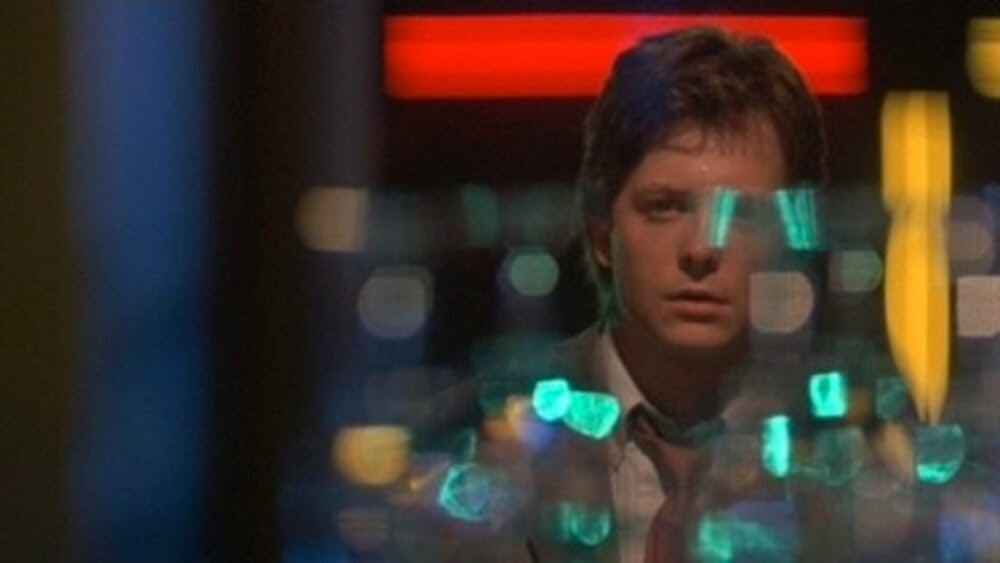
In fact, that’s exactly the feedback Jay McInerney received when drafting Bright Lights, Big City. Written entirely in second person, this 1984 debut novel took the literary world by storm. But in the three decades since, its signature feat has rarely been replicated: indeed, it’s often cited as the exception that proves the rule — it’s been done already, so don’t bother, okay?
Well, not so fast. In this part of our series of guides on point of view, Reedsy's experienced editors will be looking at some good reasons to consider the second person point of view — as well as dissecting why it's usually best to avoid.
What is second person point of view?
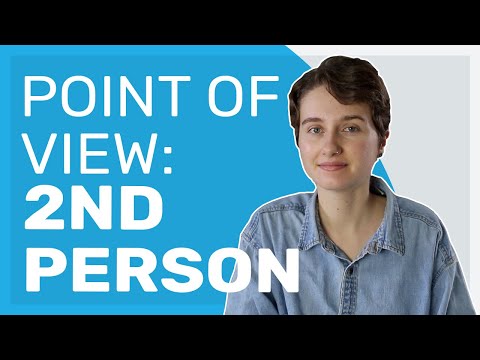
In the second-person perspective, the narrator speaks to the reader through the pronouns "you" and "your". This establishes a feeling of immediacy and makes the reader to experience being a character within the story.
Here is an example:
You think you can see the bridge in the distance, but you can’t be sure your eyes aren’t playing tricks on you.
As Joel Bahr, a developmental editor at Amazon Publishing, says: “Even the minimal distance created between reader and character created by the phrase, “I thought" is refined further in second person. In this closer POV, there is no "I thought," but rather this is how you (we, really) think.”
Q: Should I follow current trends or write the story I’m most passionate about?
Suggested answer


The issue with following current trends is that the trend may be over before you get your book completed and out to the world. If you write what you are passionate about, the story will usually end up being stronger because you are writing a story that means a lot to you, as opposed to writing something just because you think it might sell.
However, you want to be sure the story you are passionate about still has a strong possibility of selling by avoiding cliches and plots that have been overworked and overdone.
Strong stories that readers can relate to will have a good chance of finding an audience no matter the genre.
Melody is available to hire on Reedsy ⏺
If you're planning on publishing traditionally, you need to write the story you're passionate about. The publishing industry is slow slow slow. If you're planning on submitting a query to agents and try for a deal with a big-publisher, it's likely that years will pass between when you start writing and when that book hits shelves. That's the simple truth. Even if you write your book in six months, chances are that it will take at least that, if not a few years, to get an agent, and then the agent will still need to sell that book, the publisher will need to see it edited, etc. etc. Even if you're planning on submitting your book to small publishers who work more quickly, it's likely that a few years will pass because they get so many manuscripts to review that you'll be one of many. Once they accept your work, it may well be a year or two before it's published.
The balancing act comes if you're a self-publisher writing to market in order to make a living. This happens for a rare few writers, but it does happen. Some of my clients make their livings off of books they self-publish, and they often publish 3-5 books per year. They write fast enough that they are able to write to market and follow trends, and it helps them make a living, but it really is a balancing act. You don't want to get so caught up in writing to trends that you lose your passion for writing and get bored or start putting out sub-par work, so it's important that you know who you are and what you want to write, and then you can focus on the trends/markets that relate to your own writing interests without getting needlessly sidetracked. (Note that making a living off of writing in this fashion also depends on you being not only fast and good, but planning ahead--editors, cover artists, etc. all book ahead, so you need to plan in advance in order for everyone to be on the same page and able to accommodate your timeline and catch that trend before it disappears.)
Jennifer is available to hire on Reedsy ⏺

If you write a book inspired by 2025 trends you might find that by the time it's ready for submission and even publication the trend has moved on to something new. It takes a long time to write a book: you have a better chance of sustaining momentum and enthusiasm if you stick to your passion project. I rather believe that readers pick up on that passion too.
Susanna is available to hire on Reedsy ⏺
The case for second person POV
Despite the naysayers, several authors have dared to write a novel, chapter, or short story from the second person point of view. So what might they be trying to achieve? And why might you consider taking the risk yourself?
 Click to tweet!
1. Second person point of view brings the reader closer to the story
When we talk about POVs, we often mention intimacy — in particular, how first person narratives tend to be more intimate than third person narratives.
Well, second person POV is most intimate of all. In the example of Bright Lights, Big City, a level of immediacy quickly emerges as the reader is thrust into the role of a serial cheater. According to Bahr: “First person is inviting the reader to believe what they're telling them. Second person takes the ‘ask’ off the table. There is no debate about what kind of person you are or if these actions happened. You are, and they did, and we know that because there is no functional difference between the reader and the character.”
As Bahr hints, the second person narrator can bypass the ‘unreliability’ of first person narrators. When characters tell their own tales, we often wonder how the truth of the story might be filtered — either by their selective reporting or lack of 20-20 introspection. With a second person narrator, readers are told what to feel, think, and see — and they usually have no reason to doubt it.
Greater intimacy, however, is not the only result of this viewpoint.
2. It distances the narrator from their own experience
We’ve looked at how second person narration can bring readers closer to the story. But sometimes, it’s used to create a greater sense of distance between the true narrator and the story they’re telling — as editor Matthew Sharpe suggests is the case with Bright Lights, Big City.
“It's almost as if the narrator's conscience is writing the novel, and there's a bit of self-accusation there, like, ‘You screwed this up, then you screwed up this other thing,’ and so on."
Q: How do I know what the best point of view (POV) is for my novel?
Suggested answer
I think it's paramount to keep one thing in mind first: There's nothing wrong with being most comfortable with a given POV and gravitating naturally to one or the other for all or most of your works. If you're primarily comfortable in close third, the story will read more smoothly in close third. That's not to say that you shouldn't ever push yourself beyond your comfort zone, but if you're torn 50/50 and not sure which POV is best for a book, just do what comes most naturally, and chances are readers will feel it's natural to the story.
If you're still not sure what POV to adopt for your novel, though, you have two main options:
The first option is to research your genre a bit more and try to find out if there's a favored POV. Some readers will always prefer first and some will always prefer third--ignore the ones that say their chosen POV is the only one they'll read because you can't please everyone. Instead, look for articles or resources that talk about genre/subgenre conventions and audience preferences. You can also take a glance at recent top-selling books in the genre, and if they're all in close third or all in first, that may answer the question for you.
The second option at your disposal is to experiment. Take a scene that's going to be key to your novel--the climax, a moment of realization for your main character, etc.--and try writing in both first person and third person. Compare the two scenes and see which reads more naturally and/or which one feels more natural to the story and character. Whenever I've been about to write a book and POV didn't feel clear either way, this was the method that ultimately pointed me in the right direction.
Jennifer is available to hire on Reedsy ⏺
3. It gives the narrator someone to address
Now we’re entering a gray area. Some novels directly address the reader as a character — but they are not strictly written in the second person. Books that fall into this category include those that take the form of letters written by one character to another. These include works like Bram Stoker’s Dracula, Alice Walker’s The Color Purple, and Jay Asher’s Thirteen Reasons Why.
The effect of reading epistolary narrative is often a sense of voyeurism — we feel as though we’re peering into the lives of others. The intention, in most cases, is to bring us closer to the characters, creating an almost conspiratorial relationship between narrator and reader.
4. Second person POV also reinforces the ideas that drive the story
Here’s a piece of advice from editor Kate Angelella: “If an author wanted to try writing in second person POV, I would encourage them to do so — so long as it's a purposeful choice. Is there a reason why this POV works best for your story, other than style and a desire to be literary with a capital L?”
So, there are a few of the major reasons you might want to consider writing in the second person. But now we’ve seen the effects of second person point of view, let's address the elephant in the room.
The case against second person POV
In the opinion of almost every editor we spoke with, writing a novel in the second person is a bad idea 99.9% of the time. Here are some of the reasons they give.
1. Second person POV can be a lot to ask of your reader
“In second person, I think it's crucial to consider what spaces you're asking the reader to occupy intimately, and how you're going to get them to suspend their disbelief. Sometimes, it's actually an increased distance between the character and the reader that can cultivate the empathy you need.”
— Ashley Strosnider
2. It may hurt your chances of finding representation
“It is becoming increasingly difficult to secure a literary agent and get a publishing deal if you are a new author. If that is your dream, don’t create any extra barriers for yourself that might put industry professionals off publishing your novel.”
— Amy Durant
3. It works better in short stories than in novels
“An entire novel told through second person can become wearying, especially when the protagonist of the story is unpleasant, as is the case in Bright Lights, Big City. For this reason, you may find that a second person narrative works better for short fiction.”
— Kristen Stieffel
At the end of the day, the choice is yours. And before you make a decision on which point of view you want to use, you might want to see a few examples…
Q: How important is it for first-time authors to adhere to standard word counts, and what flexibility do they have based on genre or target audience?
Suggested answer
In a very loose way, it's important to adhere to genre standards in word count simply because they've developed over time in response to what works best in the market. There are always exceptions, but those are usually backed up by an established author or sweeping support from retailers, librarians, or the media backing the book.
BUT FIRST: write the book you want! This is your book, and you can always edit it down or beef it up. It's important to write for yourself first, because the best story will come out of that. And if you change it later, so be it. Don't let market expectations stop your drafting or creative process!
Grace is available to hire on Reedsy ⏺

It's incredibly important, not because authors shouldn't be able to bend or break the rules, but because these "standard word counts" are systemic. It isn't agents insisting on word counts for no reason; it filters from book buyers to internal publishing salespeople, then to editors and agents.
Having too few words can be worse than having too many. Think about the end goal: you want readers to buy your book. If they feel like they're getting less than they paid for then they won't buy the book. For example, if you wrote 30,000 words when most books in your genre are more like 60,000-70,000 words, then readers looking at your book compared to a competitor might be inclined to think the book that has more words has more heft and therefore is more worth their money.
When it comes to too-high word counts, then you run into a different issue and that's with publishing costs. it costs money to print pages, and if you've written 500,000 words, then that book is going to cost even more to produce (not only the paper in such an extreme case, but also in the binding of that book to make sure it holds up). If it costs more to create, then that can negatively impact publishers' profits. If a publisher is evaluating your work that's 500,000 words versus a similar work that's only 125,000 words, why wouldn't they choose the shorter book? It also takes up less physical space on a bookshelf, so bookstores might be able to keep more copies on the shelf.
Genre and target age range here are the great determining factors. Epic Fantasy, for example, which takes place in a world not our own, usually requires a higher word count for the simple fact that the world has to be built. Nonfiction business books, on the other hand, are usually around 60,000 words, as those readers don't need to be transported to another world, but instead need to have points clearly articulated.
Matt is available to hire on Reedsy ⏺
If you're planning on querying agents and going the traditional route, then adhering to standard word count expectations is essential. Are there exceptions to the rules? Sure, but you never want to plan on being the exception to the rule when you're already going up against long odds.
Querying is incredibly competitive, and an agent seeing that your manuscript is already in the target word count range for your genre tells them that you're probably aware of market expectations and have given real thought to your project's development. On the other hand, if they see a word count that's 20k outside the realm of expectations, that tells them they're either going to have to work with you to get the word count down/up, or potentially have a more difficult time selling your project to publishers.
On the other hand, if you're planning on self-publishing, word count isn't all that important. You don't want to write something the length of a short story and call it a novel, but the important thing in the self-publishing world is to tell a good story. Whether your mystery novel is 30k words, 60k words, 90k words, or even 130k words, your readers won't care as long as the story is great, whereas an agent would likely say no immediately if they saw a query for a 30k or 130k mystery novel, without even getting past that first sentence of your query where they'd see the word count.
If you don't know whether or not you plan to publish traditionally, the best way to set yourself up for success is to research the target word count range for your genre/audience, and then adhere to that expectation as closely as possible. Do be aware that word count expectations can change over time, so you want to make sure that your source for target word count is fairly recent.
That said, if you don't want to put extra pressure on yourself to meet industry standards before you're even done drafting, then there's no reason to focus on anything other than writing the best story you can; then, once you're done, you can take a look at word count expectations, hire a developmental editor to get expert eyes on your novel, and decide from there what makes the most sense for a publication plan.
Jennifer is available to hire on Reedsy ⏺
Examples of second person POV in action
Examples of second person POV are much rarer, for the reasons we discussed above. But they’re not impossible to find.
Here, we’ve compiled a few of the most famous instances of second person point of view in literature.
1. The Fifth Season by N.K. Jemisin
You’re the mother of two children, but now one of them is dead and the other is missing. Maybe she’s dead, too. You discover all of this when you come home from work one day. House empty, too empty, tiny little boy all bloody and bruised on the den floor.
Set on a dying world, The Fifth Season is told from the viewpoints of three women, one of which is written from the second person point of view.
Reedsy editor Tricia Callahan worked on Jemisin’s book as a proofreader and sees it as a prime example of how this form can benefit a story.
“The second person POV brings the reader closer to the narrator, making the reading experience more intimate and less detached. When the narrator turns the reader into one of the characters, the story feels immediate and surrounding.”
2. Self-Help by Lorrie Moore
When you were six you thought mistress meant to put your shoes on the wrong feet. Now you are older and you know it can mean many things, but essentially it means to put your shoes on the wrong feet.
“How to Be an Other Woman,” tells the story of a woman who has started an affair with a married man.
The protagonist is not meant to be you, the reader, or Moore, the writer. Rather, it’s a woman named Charlene — who also happens to be the narrator. The second person point of view serves to distance Charlene from the story she’s telling: we know she’s actually referring to herself, so we understand that her use of the displaced second person, rather than direct first person, is symptomatic of how hard it is for her to talk about what she's done.
3. Complicity by Iain Banks
You hear the car after an hour and a half. During that time, you’ve been here in the darkness, sitting on the small telephone seat near the front door, waiting. You only moved once, after half an hour, when you went back through the kitchen to check on the maid.
Iain Banks’ Complicity contains two viewpoint characters: a journalist and a murderer, whose killings have been inspired by the journalist's writing. The chapters told from the murderer’s POV are in the second person.
Author and editor Tim Major points out that this choice of POV ties with the novel’s primary theme (which is spelled out in the title). “The second person perspective makes the reader complicit in the murders, experiencing them as if he or she is carrying them out, and therefore the reader is involved in a very unusual manner.”
Q: Do publishers favor certain points of view over others when considering novels for publication?
Suggested answer

Publishers never want one POV in general, but they do want consistency, clarity, and narrative authority. Immediacy and intimacy are given by first-person, and third-person—especially limited—is still favored because it is so versatile. Trends wax and wane, with first-person present, for example, having been the norm in YA and contemporary fiction. It matters less than POV itself is how well it serves the story. A good voice, a strong command of point of view, and a narrative that sounds real will be more persuasive than any particular choice of perspective. Use the point of view best suited to engage readers fully in your characters' world.
John is available to hire on Reedsy ⏺
This uncomfortable intimacy in the ‘killer’ chapters brings the reader into the headspace of the journalist — who himself is dealing with this acute sense of complicity.
4. The Reluctant Fundamentalist by Mohsin Hamid
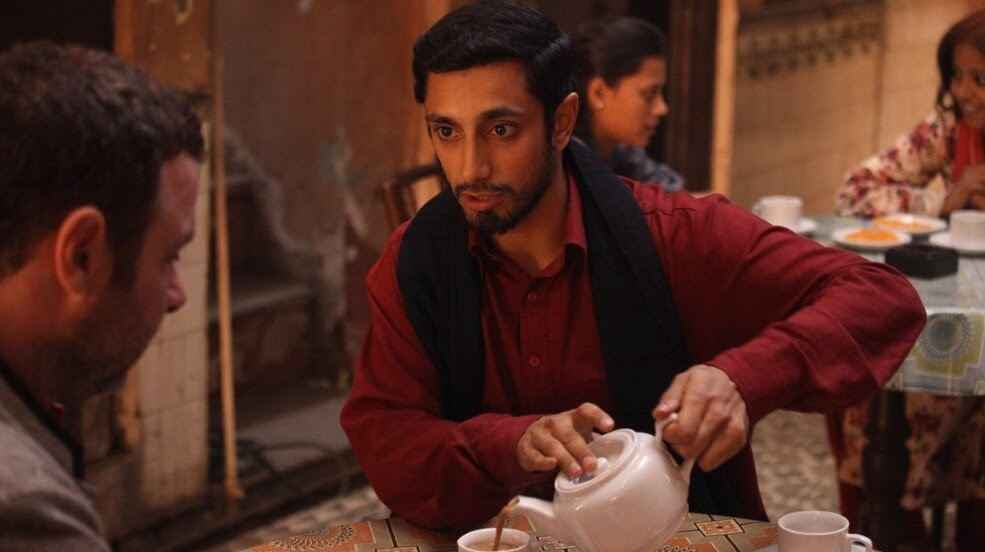
Excuse me, sir, but may I be of assistance? Ah, I see I have alarmed you. Do not be brightened by my beard: I am a lover of America. I noticed that you were looking for something; more than looking, in fact you seemed to be on a mission, and since I am both a native of this city and speaker of your language, I thought I might offer you my services.
Mohsin Hamid’s The Reluctant Fundamentalist blurs the lines between first and second person: the protagonist, a Pakistani man on the streets of Lahore, speaks to an American stranger — you, the reader. As the book progresses, we are given clues as to who ‘we’ are in the book and what role we might play in the story. Cast in the story, we feel more involved in the discourse.
All that said, remember that this is your book. Maybe you intend to self-publish, or you don't mind limiting your potential audience, and are therefore less beholden to commercial expectations. Maybe your story just can't be told in any other way. If that describes your experience, then, by all means, ignore the naysayers. Take a deep breath, and dive into writing from the second person point of view.
FREE COURSE
Understanding Point of View
Learn to master different POVs and choose the best for your story.
And should you want to determine which POV is right for you and your specific story, we recommend taking this quick 1-minute quiz below.
🖊️
Which POV is right for your book?
Take our quiz to find out! Takes only 1 minute.
If, on the other hand, the potential rewards don’t outweigh the risks, head back to our post on first person POV, or go on to the next post to learn more about writing in third person.

3 responses
Wesley says:
06/07/2019 – 18:27
Really? The very fact that this article encourages writers NOT to use the second person viewpoint gives me even more reason to do it. The argument "it's already been done, so don't bother" is the most discouraging thing anyone could ever say to an artist. It's like saying there are plenty of books out there, so don't bother writing another one. Where would we be if every writer followed this dictum? The fact that second person is so rarely used is even more reason to explore it. Self-insert or second person POV stories have a dedicated following in some online communities, specifically fan fiction. What if writers were to expand upon what makes this such a popular choice in these circles and bring it to a broader literary community? I think there is so much potential for exploring second person POV, and feel a little bitter that this article leans so strongly towards discouraging this viewpoint. Please, don't give artists who already have a hard time creating and gaining recognition for their work yet another reason to doubt themselves!
Linda says:
13/08/2019 – 23:47
Second person has worked really well for me in flash fiction. Really, the whole article seems a bit discouraging.
Sasha Anderson says:
31/05/2020 – 11:28
Another example of second person viewpoint that I often see mentioned is in choose-your-own-adventure books - a different style of book, certainly, but still a work of fiction...