Guides • Perfecting your Craft
Last updated on Oct 15, 2025
270+ Other Words For "Said" To Supercharge Your Writing

Martin Cavannagh
Head of Content at Reedsy, Martin has spent over eight years helping writers turn their ambitions into reality. As a voice in the indie publishing space, he has written for a number of outlets and spoken at conferences, including the 2024 Writers Summit at the London Book Fair.
View profile →If you've read our previous post on writing dialogue, you'll know that you shouldn't be afraid to default to he said, she said, or they said when you're tagging your dialogue. After all, it's probably the clearest, least distracting way to indicate who's saying what. That being said, it can be useful to deploy a specific and powerful dialogue tag every now and again.
👀
Which dialogue tag are YOU?
Find out in just a minute.
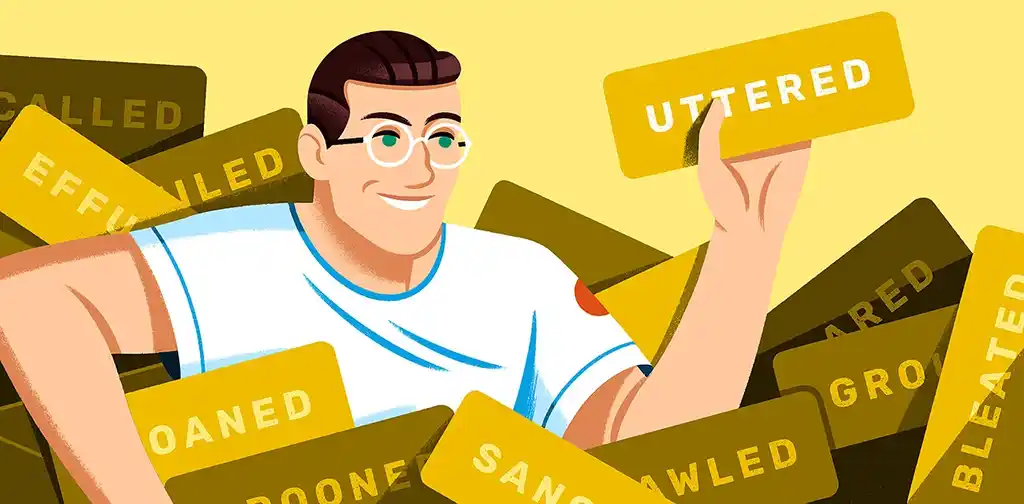
To help you find that perfect synonym to inject action and emotion into your dialogue, here are over 270 other words for said:
Q: How much dialogue is too much dialogue?
Suggested answer


The exact answer here is going to depend on your style and the tone you're going for, but there are a couple of things to keep in mind if you're worried a scene is getting too dialogue-heavy.
1) A reader needs to be able to keep track of who's talking. If they're losing track of who's talking in a scene, especially if characters have relatively similar voices/speaking styles, that's a sign that you need to cut down on dialogue or build out the scene with more description, action, or narrative/POV.
2) If your dialogue isn't communicating much more than what a film or play script would communicate, that's a sign you're probably relying too much on dialogue. If a reader wanted to read a play or a movie script, that's what they would have picked up! Even if your characters are talking on the phone, there's still room for the character's thoughts and actions.
3) There are rare cases where it's okay for a reader to forget that a character is telling a story, but generally speaking, if dialogue is going on for so long and with so little interruption that a reader can forget it's dialogue to begin with, that might be a sign you want to re-examine how dialogue-heavy the scene is.
No matter how much dialogue you have, remember that readers are going to be more engaged if your characters speak with different voices. Distinguishing them from each other, making sure that no two are using the same rare phrasing, and paying attention to different characters' level of formality/informality will make a big difference in keeping your readers engaged, no matter how much dialogue ends up on the page.
Jennifer is available to hire on Reedsy ⏺

There is no magical number of words that constitutes "too much" dialogue—it's a matter of whether it's serving its purpose for the story or not. Dialogue works best when it's exposing character, moving plot along, or increasing tension. When the dialogue begins to go around in circles and not reveal anything new, or characters are saying what can be shown by action or description, the balance is tipped.
Too much dialogue slows a scene, yet too little renders characters flat or distant. Balance is the key: a blend of dialogue with narrative beats, interior reflection, and sensory detail keeps natural rhythm and flow. Readers should never feel as if they're listening in on filler. When every dialogue earns its place on the page, there's no such thing as "too much."
John is available to hire on Reedsy ⏺
Neutral/multi-purpose words
|
Acknowledged Added Agreed Announced Articulated Asserted Backtracked Began Blurted Called Commented Communicated Conferred Considered Contended Declared Denoted |
Drawled Elaborated Emitted Ended Enunciated Expounded Expressed Greeted Interjected Mentioned Noted Observed Orated Persisted Predicted Pronounced Quipped |
Recited Reckoned Related Remarked Repeated Replied Responded Shared Slurred Stated Suggested Told Urged Uttered Vocalized Voiced
|
Happy/excited words
|
Approved Babbled Beamed Bubbled Chattered Cheered Chimed in Chortled Chuckled Congratulated |
Complimented Crooned Effused Exclaimed Giggled Grinned Gushed Jabbered Joked
|
Laughed Praised Rejoiced Sang Smiled Thanked Tittered Trilled Yammered
|
Sad/upset words
|
Agonized Apologized Bawled Blubbered Cried Fretted |
Grieved Groaned Lamented Mewled Moaned Mumbled |
Sobbed Sighed Sniffled Sniveled Wailed Wept |
Angry words
|
Accused Choked Badgered Barked Bellowed Chastised Cursed Demanded Exploded Fumed |
Glowered Growled Hissed Insulted Raged Ranted Reprimanded Roared Scolded
|
Screamed Screeched Snarled Spat Shouted Swore Thundered Vociferated Yelled
|
Q: What common dialogue pitfalls do you often encounter in fiction, and how can writers avoid them?
Suggested answer

I wouldn't say I get frustrated as much as these are things I try to fix or encourage authors to think about.
Not considering how people speak in real life. In real conversation, people use contractions, incomplete sentences, half-baked thoughts, casual grammar. Read your dialog aloud. Does it feel natural to say or is it stiff? Sometimes using a contraction, letting a sentences trail off, or cutting an overexplaining word or two can make a difference. Also, is the vocabulary the character is using appropriate for who they are? A fifteen-year-old girl and her mother will use different words .
Working too hard to avoid said. The word "said" tends to fade into the background in well-crafted dialog, but some writers turn themselves inside out to avoid it with awkward results. While I'm sometimes (just sometimes) okay when a character laughs something or sighs something, at least those are sounds. I draw the line when a character smiles something or nods something, Those are actions, not sounds. You say it nodding or with a smile.
Relying too heavily on dialogue to impart information/overexplaining. Unless there's a specific plot-related reason, a character should not explain or probably even mention something the characters to which they are speaking are likely to already know. You need to figure out other ways to get that information across to your reader.
Using adverbs instead of language, sentence structure, or verbs to impart the emotion behind words. Can you come up with a way to impart anger that doesn't use the word angrily? How about, "he snapped," or "he said, his mouth twisting into a sneer."
Not considering the rhythm of conversation and inserting beats. Conversation isn't always a seamless back and forth. Inserting pauses with small bits of action slows things things down, gives characters time to think, and creates a more natural rhythm. It also allows time to elapse over the course of a conversation so that the cup of coffee the character pours at the beginning of the conversation might be believably finished by the end.
Sophia is available to hire on Reedsy ⏺

I think there are two: overtagging/interruptions, and on-the-nose dialogue.
Overtagging is less about the dialogue itself and more about what's going on around the dialogue. This includes tagging every line with a verbal tag (said, shouted, whispered, asked, etc.) or action/detail, and interrupting dialogue scenes with longer passages of perspective work, action, setting descriptions, and so forth. This can disrupt the pacing and make the dialogue feel choppy, even to the point that the reader can lose track of the conversation. Allow the dialogue to do the work - don't tag every line with a said, don't keep interrupting your characters' conversations. Trust in the reader's ability to follow along, and your own to write good dialogue that drives the plot forward.
On-the-nose dialogue is harder to address as an editor, because it's about how characters speak to each other, but I do come across many writers who will write in therapy-speak or have characters who say exactly what they are thinking or feeling in that moment, without filters. This flattens out the dialogue and makes the characters sound the same, as well as just being unrealistic. I think it's always worth considering how people speak to each other and how this is often dependent on personalities, personal relationships (we won't tell strangers the same things we tell our friends, for instance), and the goals of the conversation itself (speaking to a boss about a project is very different than speaking to a friend about dinner plans). People will use different modes of speech - formal, informal, slang, dialect, etc. - depending on the circumstances. I think the best thing to remember is that characters are people, with pasts and futures, fears and desires, conflicts, differences, similarities, emotional barriers, psychological problems. Let them speak for themselves, and like themselves.
Lauren is available to hire on Reedsy ⏺
I think the biggest issue I see in dialogue is having everyone speak in the same voice/style. Having every person, or even just more than one person, speak similarly makes it feel as if the author's own voice is simply being translated into multiple people, and this is most obvious when it comes to slang or catch-phrases. For instance, there's nothing wrong with the slang/informal word 'anyways' or with a sentence in dialogue starting out with the word 'anyway', but when multiple characters are using that word regularly, or even just using it close together, it all of a sudden starts to feel like everyone is speaking with the same voice.
Now, you might argue that people who live together and know each other well may likely use some of the same phrases, and that's true. I've certainly inherited some phrases/slang from my husband after more than twenty years together! But in fiction, those similarities often come across as making it feel as if a voice is being replicated, so when a character uses any distinct phrase/aphorism/uncommon slang term, it's a good idea to make sure they're the only character in your book using that phrase/term, no matter how rarely or often they use it. The 'search' function in Word is priceless when it comes to safeguarding against issues like this.
Similarly, if you know you have a tendency in dialogue to have a character change the subject or start/end casual sentences with a phrase like 'you know' or 'anyway', try to keep that phrase/word to just that character. Again, the 'search' function is your friend when it comes to issues like this!
Note that this same issue is something you want to safeguard against if you're writing dual or multi-POV works where you're using close third or first person for multiple voices, as the same issue can make it feel like everyone is speaking/thinking with the same voice even outside of dialogue.
Jennifer is available to hire on Reedsy ⏺

Two dialogue pitfalls I usually highlight for revision are:
- Using overly formal language for everyday people in contemporary settings. Most people speak using contractions (can't, won't, you'd, it'll, etc.) – even very posh ones! And I don't think it sounds right when their speech is too stiff and proper. Of course some characters may speak like this - but then you want that to be a noticeable thing about their character!
- I always urge writers to reconsider trying to emulate accents in dialogue, and rather describe how a character speaks and mention they have a particular accent if they do (whether that be a national accent or a social-class accent). Trying to phonetically portray an accent is very difficult to do accurately and I think it can make a character seem like a caricature, which is best avoided. (It also runs the risk of offending your readers, which you also don't want to do!)
Lauren is available to hire on Reedsy ⏺
Perhaps the most frequent trap is dialogue that reads as though people aren't speaking at all—too formal and stiff, or so riddled with affected slang.
Another is when two characters spell out things they both already know for the reader's sake, which reads unreal. Dialogue tags are distracting when they're too numerous or too flowery; typically "said" is everywhere and works best.
Finally, dialogue without subtext—characters expressing themselves exactly as they feel—can flatten a scene. To avoid these traps, read your dialogue out loud for unnatural phrasing, incorporate exposition into action or narration instead of speeches, and leave half the conversation to silence, body language, or what isn't said. Deliberate, natural dialogue moves the story forward without pointing out the machinery.
John is available to hire on Reedsy ⏺
Annoyed words
|
Bleated Complained Condemned Criticized Exhaled Groused |
Grumbled Grunted Heaved Insisted Mocked Rasped |
Rejoined Retorted Scoffed Smirked Snapped Whined |
Frightened/pained words
|
Coughed Cautioned Gulped Howled Keened Panted Prayed |
Quavered Screamed Shrieked Shuddered Squalled Squealed Trembled |
Wailed Warbled Whimpered Yelped Yowled Warned
|
Prideful words
|
Advertised Bloviated Boasted Boomed Bossed Bragged Broadcasted |
Crowed Exhorted Dictated Gloated Moralized Ordered
|
Prattled Preached Sermonized Snorted Swaggered Trumpeted
|

NEW REEDSY COURSE
How to Write a Novel
Enroll in our course and become an author in three months.
Words to express uncertainty
|
Breathed Doubted Faltered Hesitated Lilted Mumbled |
Murmured Muttered Shrugged Squeaked Stammered
|
Stuttered Swallowed Trailed off Vacillated Whispered
|
Q: What essential physical tools or items should writers always have on hand to help with the writing process?
Suggested answer

As an editor and a writer, the physical items I’ve carried with me have changed over the years. Back when I was a 90s teen, I always had a small notebook and pen in my car, purse, or backpack to jot down lines. I also almost always carried a physical book with me—what I was reading in school or for fun at home. Whether it was Great Expectations or The Mirror of Her Dreams, a book on the go filled the void and loneliness of the pauses in my teen life. The book I carried with me also gave me joy and energized me to do my own writing later when I was at home alone, listening to Spin Doctors or Jewel on my clunky CD-tape player.
Nowadays, a smartphone can do a lot for you and me if we let it. The Notes app on iPhones or other writing apps on Androids are great for taking down any poetic lines or other plot aha moments you might have while out with friends or coworkers or running around town getting errands done. As a mom, I often have to wait for my kids to get out of school or classes, so I read a book I’ve downloaded or an article on Substack on my phone to pass the time. (I also just scroll endlessly sometimes. Both things are totally fine!) The same can be done if you’re working nine-to-five and biding your time for a meeting to start.
If inspiration strikes, jot down what you’re thinking to get it out of your head before the bell rings or the meeting starts and life revs up again, the precious idea lost to cleaning out lunchboxes or putting out fires at your job.
If you’re having trouble using your phone as a writer’s tool, delete all your social media apps for a week, and see if it goes better. Do you find yourself writing more and scrolling less? Did you already try that and it not work? Then try to follow more writers on social media for inspiration. Even seeing writers’ day-to-day lives can be inspiring. What did they do yesterday? What shoes did they just buy? Sometimes even little things can motivate you to be in writer-mode.
Also, snacks. Never forget the snacks.
Sandra is available to hire on Reedsy ⏺

I'm a huge proponent of staying hydrated, so I will always recommend water. It's a great tool to give your brain space to think, too. Stuck? Take a sip of water. Finished a difficult line? Take a sip of water. Feeling achy after sitting too long? Take a sip of water.
Samantha is available to hire on Reedsy ⏺

A pocket notebook and pen or pencil. You never know when an idea will come around, or you suddenly figure out a solution to a writing problem. I keep one on me all the time, even if I'm sitting at my computer, because sometimes in the time it takes to decide what app/document to open, the thought will just vanish. It also gives me a chance to think visually, which is how I often work through things: mind-maps, doodles, sketches, and other ways of expressing myself that are not always easy to pull off with a keyboard.
And they're handy for impromptu to-do or shopping lists to boot!
Marisa is available to hire on Reedsy ⏺

Your smartphone! The quickest way to make sure you don't forget an idea is to record a voice note – save yourself the scramble for a pen and paper. Snapshots of places, scenes, details, and skies that inspire you are great for reference too.
Mairi is available to hire on Reedsy ⏺

A notepad or a phone as a way of taking verbal or written notes for ideas as they arise.
Melody is available to hire on Reedsy ⏺

I'm a sucker for a good pocket notebook. You never know when inspiration will strike, and while phone are great (and another note-taking device that works wonders) I've always found that physically writing something down helps the ideas flow more.
Sean is available to hire on Reedsy ⏺

Pen and paper if you're old-school.
Laptop (or in a pinch, smartphone) if you're new-school.
Coffee if you drink coffee; tea if you drink tea.
And when the words just aren't coming, access to whiskey and rum. 😉
Brett is available to hire on Reedsy ⏺
Words that make fun
|
Derided Jeered Heckled Lampooned Mocked |
Mimicked Parodied Ridiculed Satirized Scorned |
Spoofed Sneered Snickered Taunted Teased |
Words that ask a question
|
Asked Begged Challenged Contemplated Guessed Hinted Hypothesized Implied Inquired |
Interrogated Invited Mouthed Mused Pleaded Pondered Probed Proposed Puzzled |
Repeated Requested Requisitioned Queried Questioned Quizzed Solicited Speculated Wondered |
Q: What should I do if someone has already written a book with my idea?
Suggested answer
If someone has already written a book with a similar idea, don’t be discouraged. Most stories share familiar foundations, but what makes yours unique is your voice, characters, and perspective. Focus on how you can explore the concept differently—through tone, structure, theme, or emotional depth.
Readers aren’t just looking for new ideas; they want fresh experiences and genuine insight. The key is execution. Tell the story only you can tell, and it will stand apart, even if the premise feels familiar.
John is available to hire on Reedsy ⏺

Write it anyway!
The market for books is huge and each writer's voice is unique. You will have a different way of presenting the informaiton or telling the story, even if it's similar to someone else's.
Alice is available to hire on Reedsy ⏺
Your book will still be yours and stand out from the crowd. Think about it this way:
You know that book/movie about a group of strangers who end up at a haunted house and have to survive the night/day in order to get the prize or meet the challenge put in front of them?
How about the one about the big-city-living thirty-something woman who's forced to go home to her small town, just for a quick visit to deal with family drama, and ends up falling in love with a local?
Or the book/movie about the serial killer preying on unsuspecting innocents in a small town, so that FBI agents have to come to town and overcome local prejudices to catch the killer?
Well, no...you probably know the dozens of books and movies described in those quick little concepts.
The point is, concepts and ideas are generic. Once you write your book, you'll make it your own. If you can tweak the concept/idea so that it's never quite been done before, then you'll have a high-concept idea that might stand out even a bit more than it would otherwise, but no matter what, you'll have a book that will be different from all those others because you're the one who wrote it. And readers who want that genre or live for that idea (like I live for haunted house stories, admittedly) will devour it, no matter how similar it may be to other books at a basic level of concept.
Jennifer is available to hire on Reedsy ⏺
Write a better book. There are many books written about the same topic, same ideas, same plots. You can't protect an idea, only the written expression of that idea. Go write your own book that is thoughtful, well-written, and thorough. A good book will find an audience.
Maria is available to hire on Reedsy ⏺
Words that give an answer
|
Accepted Advised Affirmed Alleged Answered Assured Avowed Claimed Conceded Concluded Confided Confirmed |
Explained Disclosed Disseminated Divulged Imparted Informed Indicated Maintained Notified Offered Passed on Proffered |
Promised Promulgated Released Reported Revealed Shared Specified Speculated Supposed Testified Transmitted Verified |
Download this 'greatest hits' list
For this infographic, we've narrowed down the 270 most essential dialogue words for you to know! Simply enter your email below to get it in your inbox within minutes.
FREE RESOURCE
Get our Dialogue Tag Cheatsheet
Upgrade your dialogue with our list of 270 alternatives to “said.”
To see how master writers assemble their dialogue, head over to our final post in this series for some choice examples of dialogue.