


 12 likes
 14 comments
SUBTERRANEAN
Beneath London, history does not sleep. It presses upward through brick, iron, and forgotten watercourses, leaving traces for those willing to scratch beneath the surface and follow them to their source. Sometimes it even makes itself heard—in the faint rush of unseen water beneath the streets. Dig deeper still and you begin to realise that everything comes at a cost—perhaps especially the things we admire most.
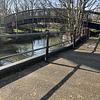
Elias stood on the pavement of Holborn Viaduct, the March wind biting at his collar, and thought of his grandfather.
Above him, the flyover stood as it had since 1869: a triumph of Victorian engineering, red iron set against soot-stained stone. He looked up at the coat of arms where the Latin words Domine Dirige Nos—Lord, Direct Us—were embossed in gold, shining toward the travellers below. Silver-winged dragons flanked the red and white shield, fierce and frozen, locked forever in defiance of St. George.
Across the City, such dragons marked ancient boundaries. Sentinels at the threshold. Some visible. Some watching from places no one thought to look.
Elias frowned slightly.
Two dragons.
Most coats of arms balanced themselves in a symmetry of three.
And yet, standing beneath the viaduct, he had the uneasy sense he wasn’t looking at only two.
His heart beat faster. Though it was his first time on this street, a sickening familiarity crept over him—as if he had always known he would come here to do something he had never fully understood.
Until now.
***
The bridge had been built to tame a once-treacherous valley, where for centuries people had struggled to cross the sludge of Holborn Hill. Beneath the smooth sweep of the modern road, that valley still existed. Stand long enough and you could almost feel the land dip beneath you—could almost trace the ghost of the river that once ran there.
Like many things, its power had been buried beneath civilisation, overwhelmed by progress. Many had benefited. Countless lives had been saved.
But not without cost.
Elias rested his hand against the cold stone of the viaduct. For a moment, the traffic faltered. In the sudden hush, he heard it—a faint, rhythmic gurgle beneath a grate.
The old River Fleet.
Once wide, now diverted. Driven underground when its filth was blamed for disease and death, its waters had been forced out if sight. Over time it became something else entirely—a sewer carved deep beneath the city, carrying its waste away in miles of silence.
***
The key had arrived after his grandfather’s funeral.
A small brass thing, heavy for its size, set in a velvet-lined box. Alongside it, a single handwritten note:
The debt is now due. It will only be paid in full when you find the third dragon.
Elias’s fingers tightened around the key.
His eyes drifted back to the dragons above.
The feeling returned—stronger now. Not just familiarity.
Expectation.
He waited for a break in the traffic. Then, checking quickly that no one was watching, he crouched and ran his fingers along the base of the ironwork.
He found it almost immediately.
A tiny keyhole, concealed within a decorative flourish—so small it might have been mistaken for a flaw.
The city seemed to hold its breath.
Elias inserted the key.
As it turned, a deep vibration travelled up his arm—not the passing rumble of traffic, but something older. Something mechanical forcing a shift beyond the surface.
With a low, reluctant groan, a narrow section of masonry pivoted inward.
Elias hesitated only a moment.
Then he stepped through.
Behind him, the door closed with a series of heavy, deliberate clicks. One after another.
He turned immediately, reaching for the seam—but it was already gone. Only smooth stone remained beneath his hands.
No handle. No keyhole.
Nothing.
The silence pressed in.
Inside the viaduct, the air clung damp and cold, thick with the smell of wet limestone and stagnant water.
Elias stood still, breathing shallowly, as the weight of the structure settled around him.
He knew his great-great-grandfather had worked here. Fragments of the truth had filtered down through the family—muttered during feverish nights, seen through rheumy eyes, half-remembered, not quite dismissed.
Now he was standing inside it.
Gripping the iron rail, he began his descent.
The steps were slick with condensation, worn smooth by time. As he moved downward, the dim light from above faded—first to a bruised twilight, then to a heavy, suffocating black.
His hand shook as he switched on his torch.
The beam cut through the darkness.
The walls glistened.
The mortar looked… wrong. Not just damp. Somehow waxy. As though something had been mixed into it that did not belong.
Elias swallowed and kept moving.
At the bottom, the sound of the Fleet was no longer distant.
It roared.
A deep, relentless surge that filled the chamber and vibrated through bone.
He found the room exactly where the journals had described.
Small. Domed. Embedded in the very foundations of the bridge.
On one wall, a polished brass plate bore his family name, followed by a long sequence of dates.
Beneath it sat a heavy wooden ledger, wrapped carefully in oilcloth.
Elias hesitated.
Then opened it.
Page after page of names.
Dates.
Occupations.
Some marked only as unknown.
But patterns emerged quickly.
Gaps between entries—years, sometimes decades—then sudden clusters. All aligning with moments of repair, reinforcement, rebuilding.
His breath caught.
He flipped further.
Near the beginning, one name stood out.
His ancestor.
The site foreman.
After that, the entries changed.
Mudlarks. Crossing-sweepers. Labourers. People from the workhouses.
The unclaimed.
The forgotten.
The truth settled slowly, heavily.
When the viaduct had begun to fail—when the ground beneath it proved unstable and funds ran dry—they had found another solution.
Bodies.
Folded into the foundations. Packed into the voids. Bound into mortar and stone to hold the structure steady.
Neither mourned, not recorded publicly. Just carefully listed.
Elias’s pulse hammered in his ears.
He turned back toward the door—toward where it should have been—and stumbled across the chamber, hands searching frantically along the wall.
“Wait!”
His cry remained unanswered.
He struck cold stone, pushed at it, clawed at seams that no longer existed.
Nothing moved.
The mechanism had never been meant to open from the inside.
The silence wasn’t an accident.
It was design.
He staggered back, breath ragged, eyes drawn once more to the ledger.
On the final page, lay a single blank line.
Today’s date already written in.
Indigo ink pooled thick and dark, a fountain pen beside it.
Elias stared at it.
A distant memory surfaced—his grandfather’s hand closing over his when he was a child, pressing something cold into his palm, then withdrawing it, telling him he was not yet ready. How some things skipped a generation, or even two, but in the end must be carried, no matter what the cost. He had worn the look of a half-crazed man. Both loving and fearing him, Elias had been too young to understand.
Now, his jaw tightened.
“So this was it,” he murmured, the words hollow in the chamber. “This was always it.”
For a moment, anger clawed. Then it rose—sharp, bright, and useless—before draining away, leaving only the weight of it behind.
The third dragon was the message.
Not carved in iron.
Not placed on the bridge.
The third dragon was the Keeper.
The one who remained.
The one who ensured the silence endured.
Above him, the city carried on—footsteps, voices, engines passing overhead in an endless current of life.
None of them knew.
None of them would ever know.
Elias sank slowly to the floor, his back against the iron stanchion that stretched upward into the structure above. For a moment, panic flickered again—but it burned out quickly, leaving something colder behind.
He thought of the dragons above the viaduct. Their expressions had been proud rather than ferocious. He saw everything clearly now. They were not guarding the city from what lay beyond, but keeping something in.
The Fleet pressed close, a latent beast surging beside him—no longer forgotten.
Waiting.
Elias reached for the bottle of ink, uncapped it, and signed his name.
When he set the pen back into its groove, he expected a sense of peace, a quiet closing of the family debt, but the silence of the clamber was suddenly replaced by a low, rhythmic humming.
He pressed his palm against the central pillar to steady himself, but the stone didn’t feel like rock anymore. Under his hand, it pulsed with a slow, steady beat—the synchronised throb of the Fleet’s current and the teeming ballast of the souls held within the foundations.
He looked down at his signature. The ink hadn’t dried; it was being pulled into the vellum like water into a lung. The bridge wasn’t just standing on the past; it was breathing it. And now, it was breathing him.
Above, sunlight streamed across a road that stretched endlessly onward, a river of iron and rubber bearing travellers toward destinations they believed were theirs.
Below, in the dark, the foundation held.
It had a new Keeper.




You must sign up or log in to submit a comment.
A true horror story. Very well written. Loved the suspense.
Well done Helen !!
Reply
Thank you for reading it.
Reply
Creepy story, the bridge needs its Keeper.
I like the description of this line 'The ink hadn’t dried; it was being pulled into the vellum like water into a lung'
Reply
Thanks, Marty.
The creepiness developed as I went along.
Reply
Strong control of tone and atmosphere—the sense of history pressing through the city is very well handled. The concept is compelling and the prose feels deliberate and confident.
For me, it leans a bit more on exposition than tension. I found myself wanting one sharper shift or moment of surprise to make the ending land with more force.
Reply
Thank you, Marjolein.
Oh dear!!! The dreaded exposition. Thank you for your comments. Always valuable. Hopefully, I’ve succeeded in tightening things up a little as we are given time to edit.
Reply
This story had a really intriguing concept and pulled me in right away. I understand that in world-building, especially in gothic speculative short fiction, not every question can or should be answered, and that ambiguity can sometimes be the stronger choice. That said, there were moments where I found myself wanting to understand a little more about the rules or workings of this world, simply because the premise was so intriguing. I was particularly curious about how the key appears or why Elias was chosen. For me, that curiosity came from investment rather than confusion; I simply wanted to stay in the world longer. It was so fascinating. I also really enjoyed the atmospheric world-building and the sense of all of the history pressing through the setting. The imagery and tone were also very effective in creating tension, and the concept itself felt rich and memorable. Good work!
Reply
Thank you, Katherine.
Hopefully I addressed one or two issues. Thank you for your observations. I’m glad it pulled you in.
Reply
Excellent balance of the grounded and the fantastic, that very sensory grit next to the high-minded concept. A lot of echoes from adventure stories and entrapping tombs, with a strong sense of history and destiny. Great work
Reply
I like the way you describe this. Thank you, Keba. I get inspired by old places. My imagination runs wild.
Reply
Wow, you really put your all into this one. Amazing writing and style. Engaging story that could easily be expanded into something more. Nice work!
Reply
Thank you, Eric,
I do tend to get really into the stories once the idea has formed. Appreciate your reading it.
Reply
Helen! This story had such a vivid way of describing everything, and for tackling something like this, I applaud you! I really enjoyed this story! Great job & excellent work, as always! :)
Reply
Hi Hazel,
Inspired to write after a recent visit and walking along this road. Happy you enjoyed.
Reply