Menu
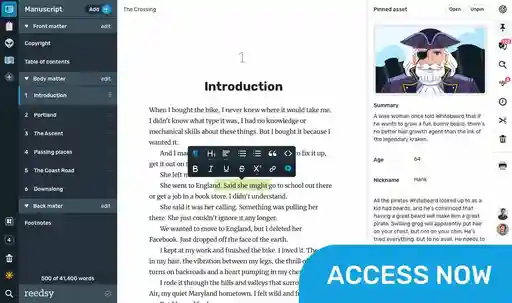
Write your book in Reedsy Studio. Try the beloved writing app for free today.
Craft your masterpiece in Reedsy Studio
Plan, write, edit, and format your book in our free app made for authors.
Write your book in Reedsy Studio. Try the beloved writing app for free today.
Craft your masterpiece in Reedsy Studio
Plan, write, edit, and format your book in our free app made for authors.
DIRECTORY
Showing 46 writing exercises curated by Reedsy.
Describe each day of the week as if it were a person. Give each one personality traits, a job, and a goal. Write a short story about them.
Describe the same character twice. Once as the hero of a story and once as the antagonist.
Keep asking your characters why. Here's an example:
Your protagonist sits down at a desk and begins penning a letter to his or her younger self. What would they tell their past selves? What regrets do they voice? What lessons have they learned? How have they changed? Write this imagined note yourself, in your protagonist's voice.
There's a saying: "Everyone is the hero of his or her own story." For a 10-minute writing exercise, enter your book from another character's eyes. Think about how differently that character would experience your plot and capture that in a short story.
Your protagonist meets your villain for the first time - on a blind date. What happens?
Who are the three most unlikely people your protagonist would have dinner with? Why? Write the scene.
Your protagonist's name is called. They approach the stool, where an old and tattered hat lies. They put on the hat. They will next hear one of four words called out: Ravenclaw, Gryffindor, Slytherin, or Hufflepuff. Which one is it? Write down the reasons detailing why.
There are those who believe that there is a science to personality. Out of this belief developed some popular personality tests that are designed to help people learn more about their strengths and weaknesses. The biggest ones include: Myers Briggs, The Big Five, and the Enneagram Test.Try taking each of the above tests, but here's the twist: take them as if you were your character. Does it match up to what you had in mind? Do the results reveal anything new or surprising about your character's traits?
Develop a character that's an author. Write a short story from the point of view of that author.
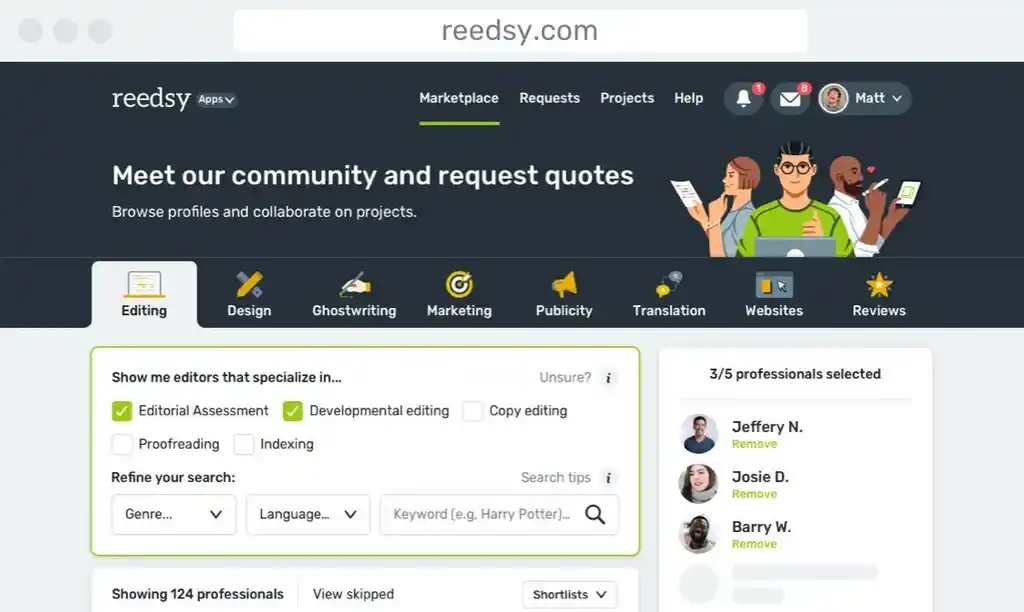
Find the perfect editor for your next book
Over 1 million authors trust the professionals on Reedsy. Come meet them.
We made a writing app for you
Yes, you! Write. Format. Export for ebook and print. All for free.
Enter your email or get started with a social account: