
I didn’t come to writing through creative writing classes or literary circles. I came to it through signals, codes, and shadows.
Before I ever wrote a novel, I served in the U.S. Air Force, working classified missions that revolved around pattern recognition, timing, and hidden systems. One of the programs was literally called TOP SECRET UMBRA (which is Greek for “the darkest part of a shadow”). Our job was to look for places where meaning might unintentionally reveal itself.
At the time, I didn’t think of it as material for a story, but that way of seeing the world stayed with me.
Sci-fi based on secret signals
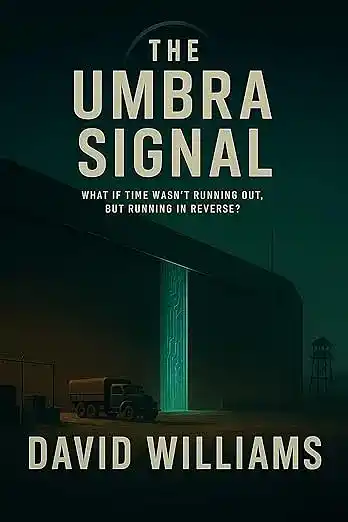
My first novel, The Umbra Signal, grew out of those experiences: recurring dreams of high-speed code through a headset, picking up patterns in everyday noise, wondering whether something was waiting to be decoded.
I’m also a lifelong reader, and science fiction has always been my home genre. One book that never left me was James Bamford’s The Puzzle Palace. I still give copies of it away. It showed me that the most interesting stories aren’t just about how systems work — but about what those systems do to the people trapped inside them.
That concept became the heart of the book.
On the surface, The Umbra Signal is a high-concept science fiction thriller. It combines a mysterious transmission from deep space, Cold War secrets, and a former Air Force intelligence officer pulled into a race against time.
But underneath all that, it’s a story about hidden systems and human choice. At its core, it’s about what happens when people must choose between following the system… or challenging it.
Finding the perfect editor on Reedsy
This book is the first installment of a trilogy, so the pacing, structure, and “big reveals” are carefully layered to support a much larger story unfolding over time. To preserve the integrity of this setup, I wanted to be involved in every stage — from editorial decisions to the book’s aesthetic presentation.
I decided to self-publish in order to retain this creative control. However, I didn’t want to do it alone. I needed help from other professionals: people who could challenge and refine the work without flattening its voice.
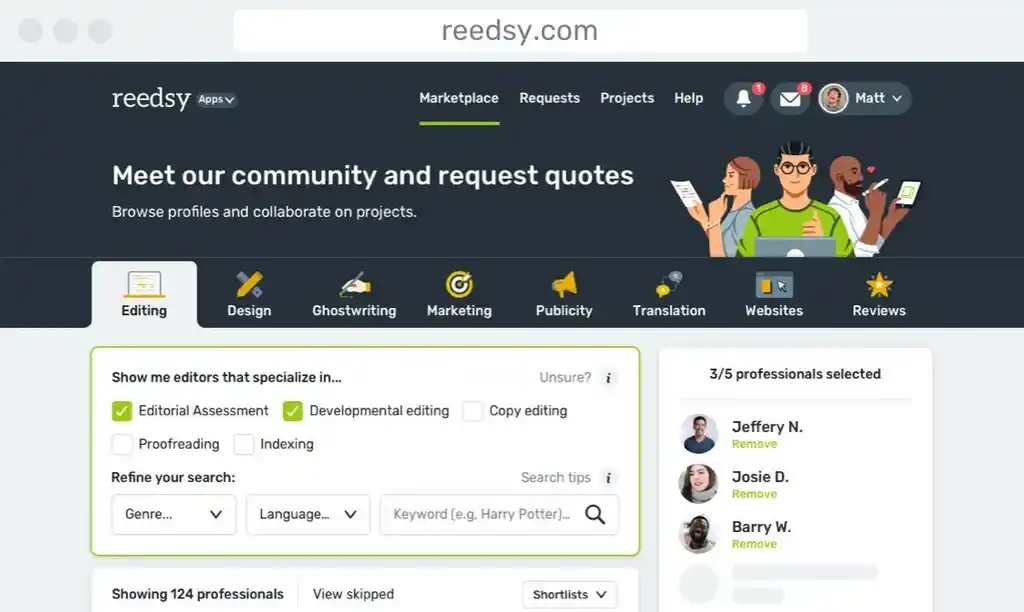
I had a rough manuscript, a lot of questions, and very little clarity about how publishing actually worked. That’s when I stumbled upon Reedsy.
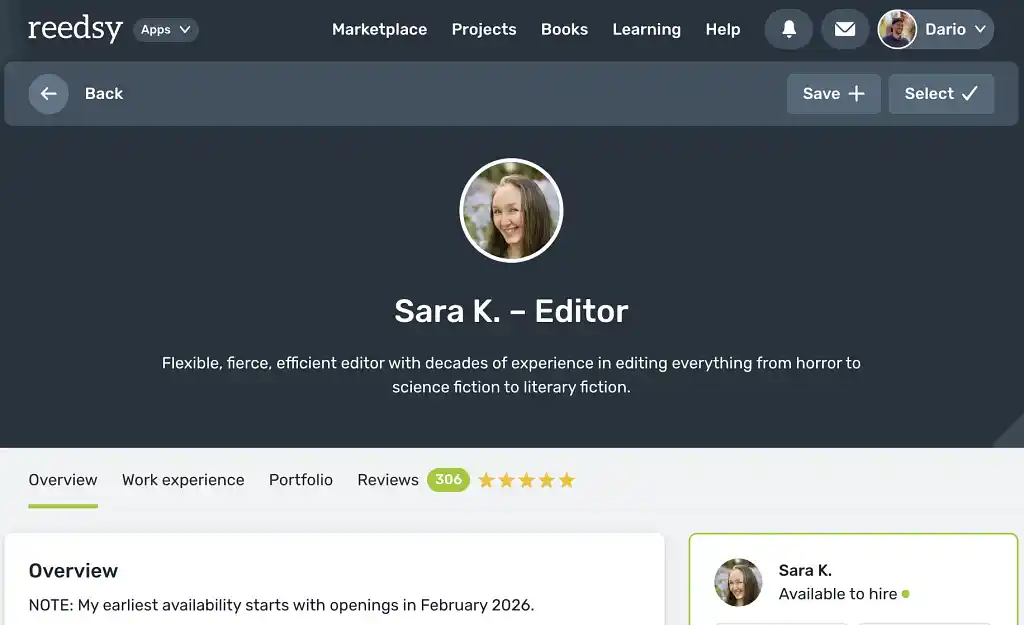
What really stood out about the platform was how grounded it felt. There were real editors, real explanations, and a clear sense that this was about doing the work properly, not chasing shortcuts. So I felt in safe hands when I hired my developmental editor, Sara K.
Turning a raw story into a real novel
To backtrack a bit: the manuscript started off in a very unconventional way. I dictated large portions of it out loud, like I was telling a story to my kids around a campfire, then transcribed it afterward. The result was raw, nonlinear, and full of energy — but it needed structure.
What mattered most to me was authenticity. I didn’t want the characters to feel like they were merely serving the plot. I wanted them to feel like real people reacting to impossible situations in human ways.
As soon as I saw Sara’s profile, I knew she could help me achieve this. She had experience in science fiction, drama, and horror — that same blend I associate with Frankenstein, in which the characters leap off the page, and science and existential dread live side-by-side.
Her portfolio showed that she could handle layered material without flattening it or over-explaining it. From our early conversations, it was clear she understood what I was trying to do and wasn’t afraid to give honest feedback.
Weaving in science without losing momentum
Working with Sara was one of the best parts of the process — even better than drafting, as fun as that was!
I was determined that the science should be real, not hand-waved, and function almost like another character. Sara didn’t need to master quantum mechanics, but she immediately understood how those ideas served the story. She trusted the science and helped weave it into character choices, dialogue, and momentum rather than treating it as exposition.
She also helped reorder key scenes so revelations landed in the right sequence. Information was revealed when the reader was ready for it, which kept the story moving forward without losing clarity or urgency.
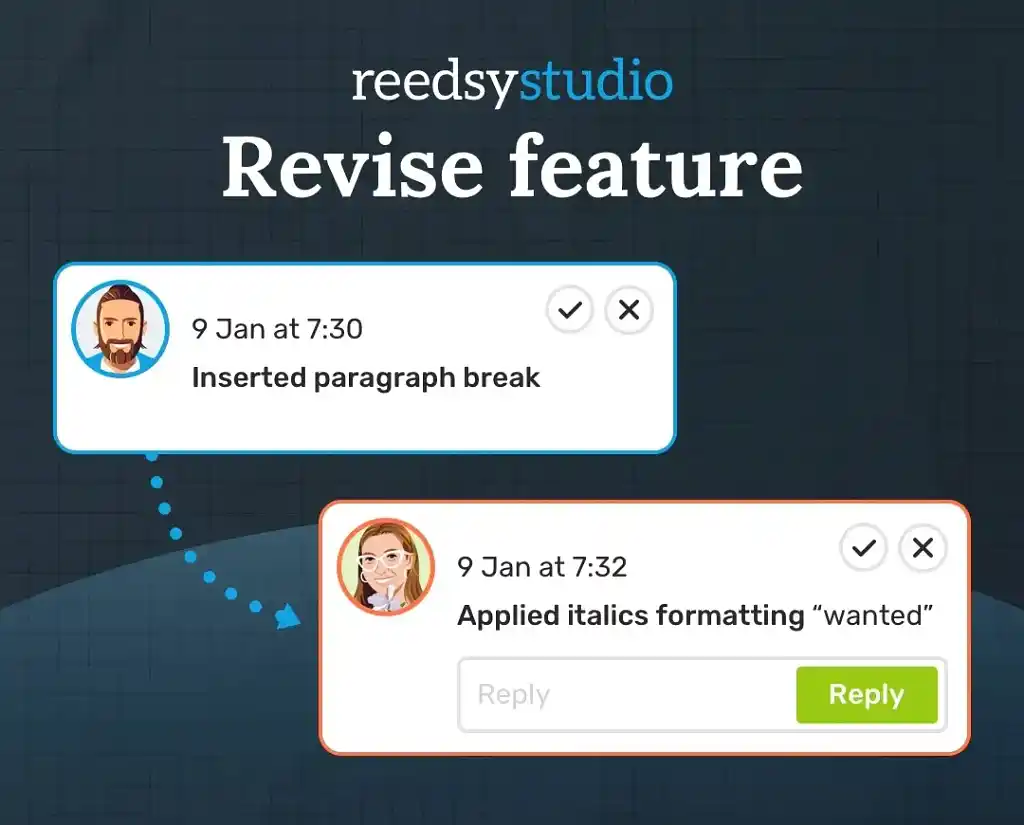
As we coordinated the edits through Reedsy Studio (an excellent software!), I started to feel less like a lone author and more like a conductor bringing different elements together. It was still a lot of work, with plenty of late nights — but for the first time in my writing life, I felt like I had a real team behind the story.
Understanding the value of amazing professionals is something I’ll absolutely carry into future projects.
When the signals reached readers
The reception to the book has been astounding.
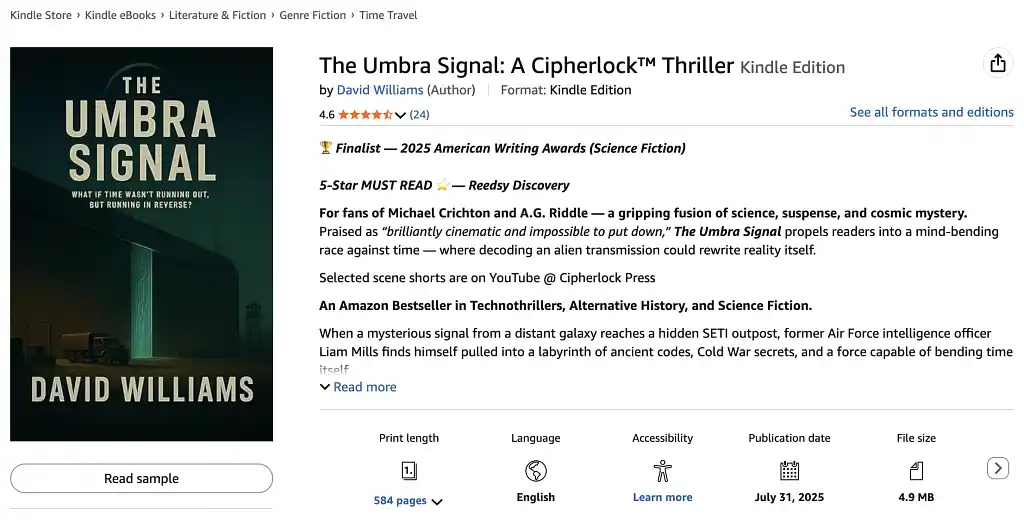
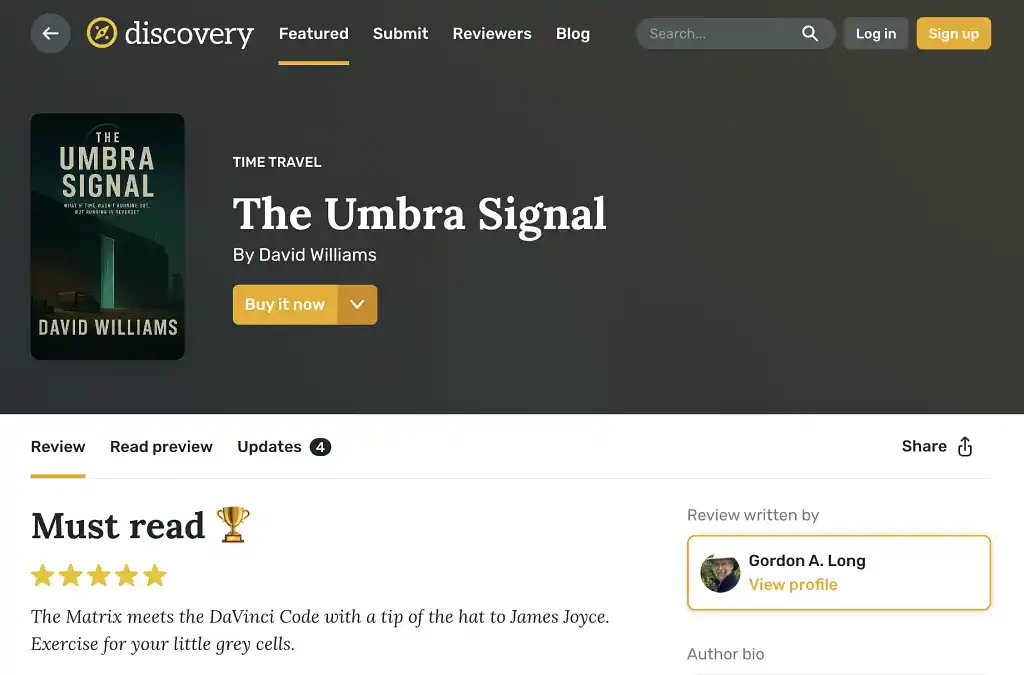
The Umbra Signal was a 2025 American Writing Award finalist and received a 5-star Reedsy Discovery review — which meant a lot given how much care went into the craft and structure.
More recently, Amazon began placing the book on carousels alongside authors like Michael Crichton, A.G. Riddle, and Douglas E. Richards. Reader engagement and read-through have been strong, and I’ve received multiple in-depth five-star reviews — many of them asking when Book 2 is coming, which is very encouraging.
The depth of engagement has been especially validating, because this is a puzzle-box kind of story. It asks readers to participate, to connect fragments, to lean into the mystery instead of being spoon-fed answers.
Seeing people embrace that has been one of the most rewarding parts of the entire experience.
My advice for budding writers
Don’t try to do it alone. Having ideas isn’t the hard part. Turning them into a cohesive, readable novel that holds up under scrutiny is. A good editor doesn’t change your voice; rather, they help you express it more clearly.
Also, respect the reader. If you want them to trust you, the story has to hold together — especially for the ones who look closely, question the details, and want to see whether the system behind the story actually works.
For me, working with Reedsy — and especially with Sara — has helped me turn a lifetime of ideas about signals, systems, and hidden structures into a finished novel. It’s been challenging, yet deeply gratifying, and I feel I’ve established a robust foundation for everything that comes next in the Cipherlock™ trilogy.
I'm already working on book two: The Umbra Splinter. Stay tuned!
Read more about David’s work and the Cipherlock series at Cipherlock Press.