
Last updated on Oct 15, 2025
Show, Don't Tell: Tips and Examples of The Golden Rule

Martin Cavannagh
Head of Content at Reedsy, Martin has spent over eight years helping writers turn their ambitions into reality. As a voice in the indie publishing space, he has written for a number of outlets and spoken at conferences, including the 2024 Writers Summit at the London Book Fair.
View profile →Show, don’t tell is a writing technique in which story and characters are related through sensory details and actions rather than exposition. It fosters a more immersive writing style for the reader, allowing them to “be in the room” with the characters.
In his oft-repeated quoted, Anton Chekhov said, “Don’t tell me the moon is shining. Show me the glint of light on broken glass."
In short: showing illustrates, while telling merely states. Here’s a quick example:
Showing: As his mother switched off the light and left the room, Michael tensed. He huddled under the covers, gripped the sheets, and held his breath as the wind brushed past the curtain.
Telling: Michael was terribly afraid of the dark.
In the “showing” example, rather than merely saying that Michael is afraid of the dark, we’ve put him in a situation where his experience of that fear takes center stage. The reader can deduce the same information they’d get from the “telling” example but in a much more compelling way.
In this post, we'll show you why Show Don't Tell is the most popular "rule" in creative writing and show you how you can add some "showing" skills to your toolkit.

FREE COURSE
Show, Don't Tell
Master the golden rule of writing in 10 five-minute lessons.
Drawing the readers in with action
Showing also helps develop characters in a way that isn't just listing their traits. For instance, rather than telling your readers that “Gina was selfish and immature,” you could show this side of her by writing a scene where she whines about how everyone forgot her half-birthday. Or if you have a character who’s extremely determined, show her actually persisting through something — don’t just say “she was persistent.”
Q: What are effective techniques for incorporating exposition into a story without disrupting the flow or pacing?
Suggested answer


I see poorly integrated facts in nonfiction all the time. You'll be reading beautiful prose and all of a sudden you're hit with what reads like a copy-and-pasted section of Wikipedia. Writers need to take the facts and make them their own. That means finding ways to make them vivid and immediate to the reader and weaves them into the narrative.
Susanna is available to hire on Reedsy ⏺

The best way to get exposition in is through dialogue. The caveat, of course, is to be careful that it comes across naturally. For instance, if your characters are telling each other things they would know, the reader will know you're only doing that to get the information to the reader, which will greatly reduce their suspension of disbelief.
The second best way, in my opinion, is through thoughts. Again, though, the character needs to think things they would actually think in their situation. For instance, in a fantasy novel, if you drop a big infodump of the world's setting, or the way machines work, or how various monsters are classified, etc., it won't be believable because there's no reason for the character to think things they already know. You could show them working through various possibilities in their mind, coming to correct conclusions, that kind of thing, but the process has to appear honest. Always assume your reader is intelligent, and is capable of sensing expositional shortcuts.
Brett is available to hire on Reedsy ⏺
When done right, showing draws readers into the narrative with truly immersive description. It contributes to story development but also leaves certain things up to the reader’s interpretation, which is much more interesting than making everything explicit. (Though of course, you can still use language to alter their perception).
The bottom line: telling might be quicker, and it’s certainly necessary to have some telling in every story (more on that later), but showing should almost always be your prime strategy.
🖊️
Which contemporary author are you?
Find out which of today's greats is your writerly match. Takes one minute!
All right, that’s enough theory for now! Let’s talk about how you can show, not tell, in your own work. Here are five key tips on how to show rather than tell in a story
4 Practical 'Show, Don’t Tell' Tips
Let's start with one of the most important aspects of storytelling...
Tip #1. Create a sense of setting
One of the best ways to show rather than tell is to create a sense of setting. You can do this by writing about how characters perceive and interact with their surroundings, weaving plenty of sensory details and occasional action into the scene. This is a particularly good way to lend immediacy to your story, as the reader should be able to imagine themselves in that very setting.
Q: What techniques can authors use to personify nature and make it feel like an active character in their story?
Suggested answer
Write it so it feels like it has agency of its own—not like it actually does, but just so it feels like if it wanted to exert some form of will on the human characters, it could. That's a little nebulous, I know, but it's neither an easy thing to do nor describe. 🙂
Brett is available to hire on Reedsy ⏺
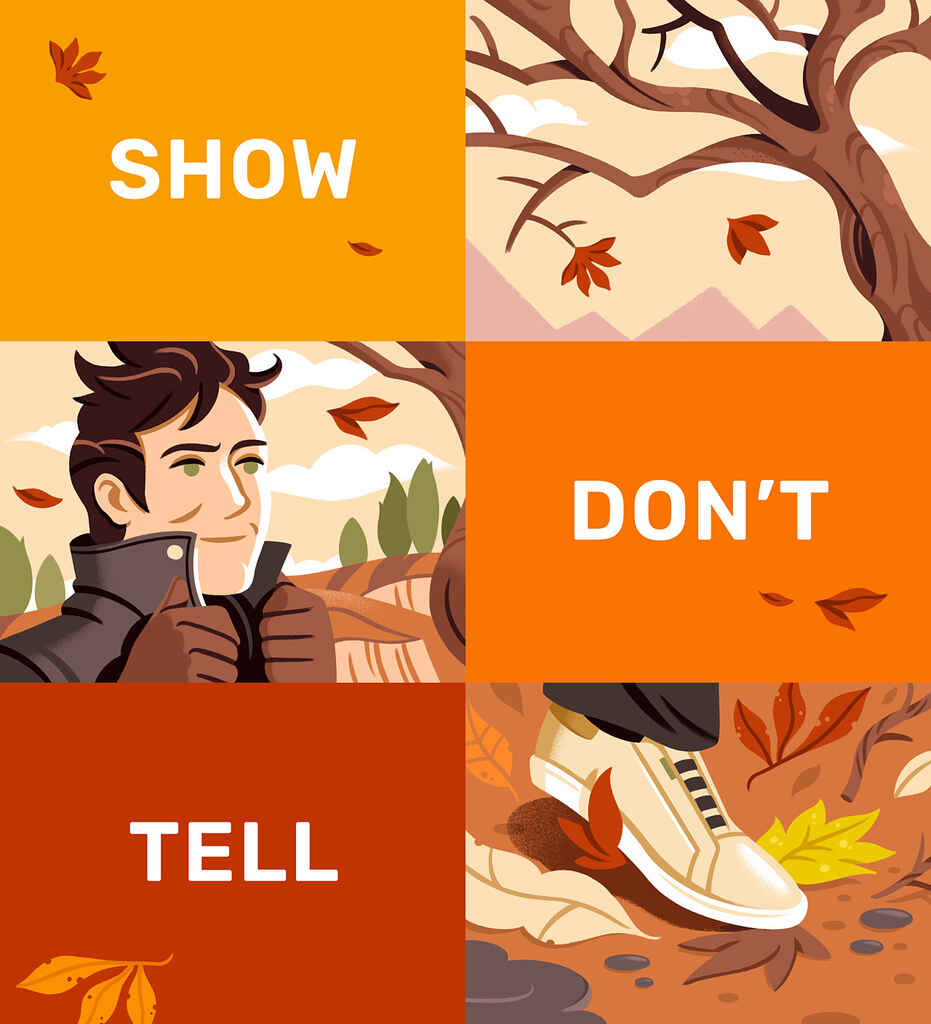
Telling: I walked through the forest. It was already Fall and I was getting cold.
Showing: The dry orange leaves crunched under my feet as I pulled the collar up on my coat.
Tip #2. Use dialogue to show character
In addition to setting, you can also use dialogue to demonstrate story elements beyond the surface conversation. A character’s speech will tell the reader a lot about them, especially when they’re first being introduced.
Q: What common dialogue pitfalls do you often encounter in fiction, and how can writers avoid them?
Suggested answer

I wouldn't say I get frustrated as much as these are things I try to fix or encourage authors to think about.
Not considering how people speak in real life. In real conversation, people use contractions, incomplete sentences, half-baked thoughts, casual grammar. Read your dialog aloud. Does it feel natural to say or is it stiff? Sometimes using a contraction, letting a sentences trail off, or cutting an overexplaining word or two can make a difference. Also, is the vocabulary the character is using appropriate for who they are? A fifteen-year-old girl and her mother will use different words .
Working too hard to avoid said. The word "said" tends to fade into the background in well-crafted dialog, but some writers turn themselves inside out to avoid it with awkward results. While I'm sometimes (just sometimes) okay when a character laughs something or sighs something, at least those are sounds. I draw the line when a character smiles something or nods something, Those are actions, not sounds. You say it nodding or with a smile.
Relying too heavily on dialogue to impart information/overexplaining. Unless there's a specific plot-related reason, a character should not explain or probably even mention something the characters to which they are speaking are likely to already know. You need to figure out other ways to get that information across to your reader.
Using adverbs instead of language, sentence structure, or verbs to impart the emotion behind words. Can you come up with a way to impart anger that doesn't use the word angrily? How about, "he snapped," or "he said, his mouth twisting into a sneer."
Not considering the rhythm of conversation and inserting beats. Conversation isn't always a seamless back and forth. Inserting pauses with small bits of action slows things things down, gives characters time to think, and creates a more natural rhythm. It also allows time to elapse over the course of a conversation so that the cup of coffee the character pours at the beginning of the conversation might be believably finished by the end.
Sophia is available to hire on Reedsy ⏺

I think there are two: overtagging/interruptions, and on-the-nose dialogue.
Overtagging is less about the dialogue itself and more about what's going on around the dialogue. This includes tagging every line with a verbal tag (said, shouted, whispered, asked, etc.) or action/detail, and interrupting dialogue scenes with longer passages of perspective work, action, setting descriptions, and so forth. This can disrupt the pacing and make the dialogue feel choppy, even to the point that the reader can lose track of the conversation. Allow the dialogue to do the work - don't tag every line with a said, don't keep interrupting your characters' conversations. Trust in the reader's ability to follow along, and your own to write good dialogue that drives the plot forward.
On-the-nose dialogue is harder to address as an editor, because it's about how characters speak to each other, but I do come across many writers who will write in therapy-speak or have characters who say exactly what they are thinking or feeling in that moment, without filters. This flattens out the dialogue and makes the characters sound the same, as well as just being unrealistic. I think it's always worth considering how people speak to each other and how this is often dependent on personalities, personal relationships (we won't tell strangers the same things we tell our friends, for instance), and the goals of the conversation itself (speaking to a boss about a project is very different than speaking to a friend about dinner plans). People will use different modes of speech - formal, informal, slang, dialect, etc. - depending on the circumstances. I think the best thing to remember is that characters are people, with pasts and futures, fears and desires, conflicts, differences, similarities, emotional barriers, psychological problems. Let them speak for themselves, and like themselves.
Lauren is available to hire on Reedsy ⏺
I think the biggest issue I see in dialogue is having everyone speak in the same voice/style. Having every person, or even just more than one person, speak similarly makes it feel as if the author's own voice is simply being translated into multiple people, and this is most obvious when it comes to slang or catch-phrases. For instance, there's nothing wrong with the slang/informal word 'anyways' or with a sentence in dialogue starting out with the word 'anyway', but when multiple characters are using that word regularly, or even just using it close together, it all of a sudden starts to feel like everyone is speaking with the same voice.
Now, you might argue that people who live together and know each other well may likely use some of the same phrases, and that's true. I've certainly inherited some phrases/slang from my husband after more than twenty years together! But in fiction, those similarities often come across as making it feel as if a voice is being replicated, so when a character uses any distinct phrase/aphorism/uncommon slang term, it's a good idea to make sure they're the only character in your book using that phrase/term, no matter how rarely or often they use it. The 'search' function in Word is priceless when it comes to safeguarding against issues like this.
Similarly, if you know you have a tendency in dialogue to have a character change the subject or start/end casual sentences with a phrase like 'you know' or 'anyway', try to keep that phrase/word to just that character. Again, the 'search' function is your friend when it comes to issues like this!
Note that this same issue is something you want to safeguard against if you're writing dual or multi-POV works where you're using close third or first person for multiple voices, as the same issue can make it feel like everyone is speaking/thinking with the same voice even outside of dialogue.
Jennifer is available to hire on Reedsy ⏺

Two dialogue pitfalls I usually highlight for revision are:
- Using overly formal language for everyday people in contemporary settings. Most people speak using contractions (can't, won't, you'd, it'll, etc.) – even very posh ones! And I don't think it sounds right when their speech is too stiff and proper. Of course some characters may speak like this - but then you want that to be a noticeable thing about their character!
- I always urge writers to reconsider trying to emulate accents in dialogue, and rather describe how a character speaks and mention they have a particular accent if they do (whether that be a national accent or a social-class accent). Trying to phonetically portray an accent is very difficult to do accurately and I think it can make a character seem like a caricature, which is best avoided. (It also runs the risk of offending your readers, which you also don't want to do!)
Lauren is available to hire on Reedsy ⏺

Perhaps the most frequent trap is dialogue that reads as though people aren't speaking at all—too formal and stiff, or so riddled with affected slang.
Another is when two characters spell out things they both already know for the reader's sake, which reads unreal. Dialogue tags are distracting when they're too numerous or too flowery; typically "said" is everywhere and works best.
Finally, dialogue without subtext—characters expressing themselves exactly as they feel—can flatten a scene. To avoid these traps, read your dialogue out loud for unnatural phrasing, incorporate exposition into action or narration instead of speeches, and leave half the conversation to silence, body language, or what isn't said. Deliberate, natural dialogue moves the story forward without pointing out the machinery.
John is available to hire on Reedsy ⏺
Do they use long sentences and polysyllabic words or do they prefer short, punchy replies? Are there likely to use slang and call an authority figure “dude” or “fam” or will they address them respectfully as “Mr. So-and-So”?
NEW REEDSY COURSE
How to Write a Novel
Enroll in our course and become an author in three months.
Tip #3. If in doubt, always describe action
“Telling” almost always grinds your narrative momentum to a halt. Imagine having to describe the setting every time your characters enter a new space — any pace you had built in your chapter would be destroyed. However, it’s still important to evoke the setting and put your scene in context. And that’s where showing action comes in handy.
Let’s say you start your scene with your character walking through St Mark’s Square in Venice. Instead of describing the pigeons, the tourists and the layout of the space, you can evoke it through action:
He was late. St Mark’s clocktower had struck one and Enzo found himself pushing against the tide of tourists milling towards the cafes lining the Piazza San Marco. A clump of pigeons scattered in front of him.
Through action, you’re able to describe the setting of the scene while also maintaining your story’s forward motion.
Tip #4. Use strong details, but don’t overdo it
Strong, vivid details are crucial to the process of showing. However, that doesn’t mean you should include too many details, especially those that are overly embellished. This kind of excessively ornate language can be just as bad as “telling” language that’s too basic, as it may cause the reader to lose interest in your super-dense prose.
Too much detail: The statue felt rough, its aged facade caked with dust and grime as I weighed it in my hand, observing its jagged curves and Fanta-colored hue.
Just right: It was heavier than it looked. Some of the orange facade crumbled in my hand as I picked it up.
Q: What's your number one tip for authors dealing with burnout or writer’s block?
Suggested answer

Refill your creative well! Go watch TV, listen to your favorite songs, play a video game—do whatever you need to do to separate yourself from the book, even if only for a little bit. I've found that a small bit of distance can go a long way towards combating burnout/writer's block.
However, if the block is extremely pervasive (and you're not on deadline), it can also be helpful to briefly shelve a book and work on something that doesn't make you want to slam your head against the wall!
Chelsea is available to hire on Reedsy ⏺
My number-one tip to combat writer's block is to experiment.
Whatever routine you've built for yourself as a writer, try getting out of that routine and see how it affects your ability to write.
If you normally write on your desktop computer, try using a tablet or even writing longhand. Maybe the blank page is affecting you, and dictation will be something worth trying. If you normally write at night after everyone else in your family has gone to bed, try getting up early and writing then, or even snatching breaks during the day for writing time. If you write in longer chunks of time at home, try a coffee shop or restaurant, or if you like to write in coffee shops, try writing at home or in a local park. If you normally write in silence, try putting on music in the background.
Generally speaking, routine is a good thing for most writers, but some books/ideas demand a change of pace, and since we as writers change by virtue of changing as people and growing in our craft, that sometimes mean a routine will change.
Jennifer is available to hire on Reedsy ⏺
When writer's block or burnout arrives, move away from the page without shame. Creativity is not a faucet but a well that must be refilled. Do something that reminds you why you love about stories to begin with: Take a walk, read a treasured book, watch a film that moves you, or simply sleep. Inspiration has a way of returning once you stop trying to make it happen. Be kind to yourself in the process—writing is done most naturally when you permit your mind and spirit to gasp for air.
John is available to hire on Reedsy ⏺

Take a break from the project and do something relaxing that gives you pleasure, especially something physical like a long walk. Sometimes, if you stop thinking about a book, you'll find ideas pop into your head anyway. I'd also advise doing a rough plan of how you see the next part of your book progressing -- this will make the actual writing part easier and less stressful.
John is available to hire on Reedsy ⏺
Strike the right balance by alternating between simple and complex sentences and ideas, and different types of sensory detail, so the reader doesn’t get overloaded on one type.
'Show, Don’t Tell' Examples
To break down this technique even further, here are a few additional "show, don't tell" examples of authors showing rather than telling in their writing. If you want to analyze even more examples of this tactic, just crack open the nearest novel! Pretty much every work of fiction involves showing, and observing the tactics of successful authors is one of the best ways to learn for yourself.
Example #1. The Handmaid’s Tale by Margaret Atwood
I once had a garden. I can remember the smell of the turned earth, the plump shapes of bulbs held in the hands, fullness, the dry rustle of seeds through the fingers. Time could pass more swiftly that way. Sometimes the Commander’s Wife has a chair brought out, and just sits in it, in her garden. From a distance it looks like peace.
This passage uses various senses (smell, touch, and sound) to recreate the atmosphere of Offred’s old garden, romanticizing the act of gardening to show that she misses those days. It also connects that peaceful past time to the present day, implying that many people no longer feel at peace, including the Commander’s Wife.
Q: How can authors protect their rights when publishing, especially in the age of AI?
Suggested answer
Authors can protect their rights by carefully reviewing publishing contracts and retaining control over how their work is used, especially regarding digital and AI-related clauses.
It’s important to ensure the agreement specifies that their content cannot be used to train AI systems without explicit permission. Registering copyrights, keeping records of drafts, and saving correspondence provide legal protection.
Authors who self-publish should read platform terms closely to confirm ownership remains with them. Staying informed about evolving copyright laws helps authors safeguard both their creative work and its future use.
John is available to hire on Reedsy ⏺

I don't think anyone can fully protect themselves. If you act in good faith you will find that most other people will do the same. There will always be rogues, but selling books is hard enough if you are the real author, even harder if you have stolen it.
Andrew is available to hire on Reedsy ⏺
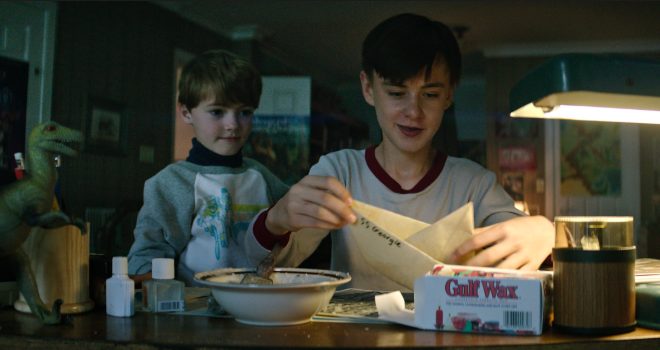
Example #2. It by Stephen King
In this early scene, young Georgie runs after his toy boat as he is unwittingly being lured by a malevolent force.
Now here he was, chasing his boat down the left of Witcham Street. He was running fast but the water was running faster and his boat was pulling ahead. He heard a deepening roar and saw that fifty yards farther down the hill the water in the gutter was cascading into a storm drain that was still open. It was a long dark semi-circle cut into the curbing, and as Georgie watched, a stripped branch, its bark as dark and glistening as sealskin, shot into the storm drain’s maw.
King renders the fast-running rivulets of a rainy day by having Georgie run alongside them, unable to keep up. Then he sees the storm drain, which King aptly calls a “maw” (a spot-on metaphor), and its threat is heightened by the sound of its “deepening roar” and the fact that it swallows an entire branch. Needless to say, poor Georgie’s boat doesn’t stand a chance.
Example #3. Gone Girl by Gillian Flynn
In this scene, a suburban husband awakens to the sound of his wife’s cooking.
My morning breath warmed the pillow, and I changed the subject in my mind. Today was not a day for second-guessing or regret, it was a day for doing. Downstairs, I could hear the return of a long-lost sound: Amy making breakfast. Banging wooden cupboards (rump-thump!), rattling containers of tin and glass (ding-ring!), shuffling and sorting a collection of metal pots and iron pans (ruzz-shuzz!). A culinary orchestra tuning up, clattering vigorously toward the finale.
This passage starts off fairly simple, building up to the grand metaphor of the kitchen noises as a “culinary orchestra.” It’s also noteworthy for its use of onomatopoeia, which is a great tactic for “showing” sound.
However, this passage isn’t just what Nick hears: it’s also what he feels (“my morning breath warmed the pillow”) and thinks (“I changed the subject in my mind”). The intimate description pulls the reader in, and the passage's rhythm (quite literally!) keeps them engaged.
🎵
Tell us about your book, and we'll give you a writing playlist
It'll only take a minute!
Example #4. Station Eleven by Emily St. John Mandel
In this passage, Kristen contemplates her loneliness.
She had never entirely let go of the notion that if she reached far enough with her thoughts she might find someone waiting, that if two people were to cast their thoughts outward at the same moment they might somehow meet in the middle.
The theme of loneliness is evoked by with specific details: the character is shown desperately thinking about human connection. Her use of language — “reached far enough,” “cast their thoughts outward” — illustrates how extreme the character’s isolation is. This also ties into the post-apocalyptic novel’s theme of societal breakdown, which naturally results in isolation. Overall, this description gives us a much better idea of the character of Kirsten and the world of the Station Eleven than if Mandel wrote, “She wished that she weren’t so lonely.”
Q: How can an author interpret the phrase 'kill your darlings,' and how can they apply it during revisions?
Suggested answer
When it comes to killing one's darlings, it's important for a writer to know the heart of their project and what they're doing. In other words, you have to know what darlings might be expendable, without killing your passion for the whole project.
I'll give you an example. Think about a book where the main character is an artist who's unengaged with the world. He gets swept up in a major plot, and has to decide to help or not--to engage or back off. Ultimately, the potential payoff makes it worth his while, so he engages. Now, assume the writer started the project with this artist in mind--it's his decision to engage that interests her.
Now, think of a publisher saying, 'I'll publish this book, but you have to rewrite it so that the artist cares to begin with, or rewrite it to be about a character who cares about humanity to begin with.'
If you're that author whose passion for the project is bound up in the unengaged artist, killing that particular darling doesn't make sense (even if it's what the publisher wants). It wouldn't be your book if you did that. It wouldn't be your project and the book that made you commit endless hours to drafting, editing, and then submitting it. So, simply, you can't kill it.
When it comes to revision, you want to think about what makes sense. Does every scene/chapter contribute to *either* plot or character development? If it doesn't, you need to re-examine it, either to consider whether you should kill it or revise in order to make it contribute to one or the other. The same goes for minor characters, subplots, etc. Do they matter to the big picture? If they don't, you may need to consider either killing those darlings or making them matter, whatever that may mean for your particular project.
All this is to say that 'killing darlings' is subjective. Sometimes, it's absolutely necessary, but you as the artist/author of your own work have to know where to draw the line. Are you willing to cut a sex scene you had fun writing even though it contributes to character if not plot, and you adore the way it works out? That's your choice, and that's what you have to remember. If multiple voices or an experienced editor or publisher are telling you it's necessary, then it may very well be in your best interest. But it also might be worth a conversation. Ask that editor/publisher why they don't think it's necessary, and you'll either come to agree with them and cut it or, perhaps, be able to find a way to tweak it so that it is necessary and doesn't need to be cut after all.
Jennifer is available to hire on Reedsy ⏺

The phrase “kill your darlings" is often attributed to William Faulkner but was actually originally coined by British writer Sir Arthur Quiller-Couch. It means that writers must be willing to cut cherished sentences, paragraphs, or even entire scenes if they do not serve the story.
For authors revising their work, this advice is particularly important during developmental editing, when the focus is on structure, pacing, and character development. That perfect paragraph you spent hours crafting might read beautifully, but if it slows the narrative or distracts from the main conflict, it needs to go. Writers often resist these cuts because they feel emotionally attached to their words—but revision is about making the story stronger, not just preserving favorite lines.
As a copyeditor and proofreader, I see how this principle applies at the sentence level as well. While I don’t restructure an author’s story the way a developmental editor would, I do help refine the prose for clarity, consistency, and flow. This sometimes means tightening wordy phrasing, smoothing out redundancies, or gently flagging areas where a beloved turn of phrase might not be serving the reader’s experience.
Revising is an act of refinement, and killing your darlings isn't about stripping away what makes your voice unique—it's about crystallizing your ideas into their clearest expression, where every sentence serves your story's purpose.
Ian is available to hire on Reedsy ⏺
Need some help showing more in your writing? Meet the editors who can help you.
Hire an expert

John B.
Available to hire
I specialize in children's books because kids will be your best critics and biggest fans -- next to a good editor.
Becca M.
Available to hire
I'm a novelist of many trad published novels & teacher of 30 years' experience, now a book coach ready to whip your manuscript into shape.

John H.
Available to hire
College-certified thriller, crime, and historical fiction editor for 10+ years. I believe professionalism and courtesy make projects work.
Example #5. Charlotte’s Web by E.B. White
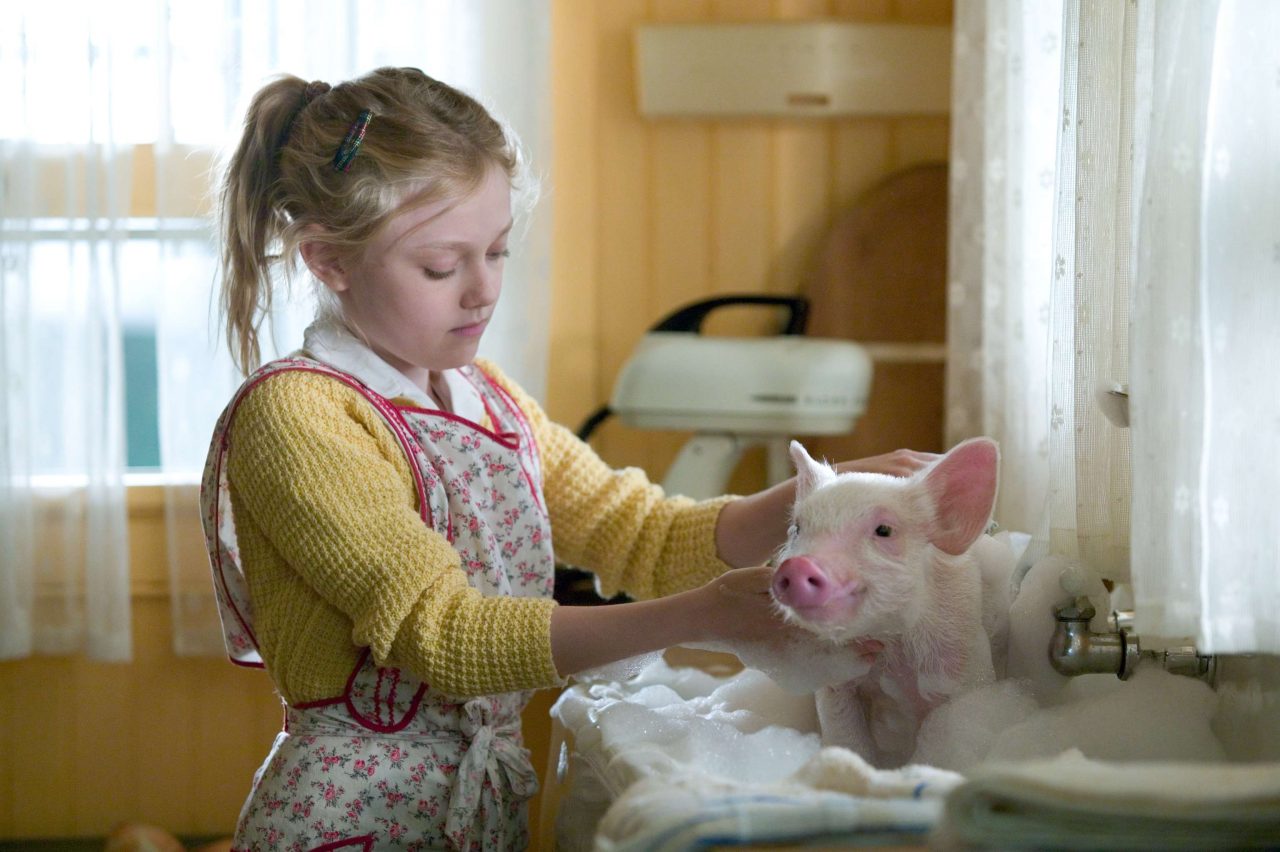
In this early scene, Fern, the very young daughter of a farmer, learns of a new litter of piglets.
"Where's Papa going with that ax?" said Fern to her mother.
"Out to the hoghouse," replied Mrs. Arable. "Some pigs were born last night."
"I don't see why he needs an ax," continued Fern, who was only eight.
"Well," said her mother, "one of the pigs is a runt. It's very small and weak, and it will never amount to anything. So your father has decided to do away with it."
"Do away with it?" shrieked Fern. "You mean kill it? Just because it's smaller than the others?"
From this brief conversation, E.B. White clearly characterizes Fern and sets the plot in motion. After realizing that her father is about to kill a runt pig, Fern steps up to save Wilbur (as she’ll soon christen him), who will become the story's main character. This passage also introduces the themes of empathy toward animals and the prospect of death, which pervades the rest of the book. White could have simply written, “Fern cared a lot about animals,” but from the dialogue, we see it for ourselves — plus we get a sense of how the plot might unfold from here.
Example #6. Oliver Twist by Charles Dickens
In this extract from Dickens's classic, orphan Oliver arrives in London for the first time.
A dirtier or more wretched place he had never seen. The street was very narrow and muddy, and the air was impregnated with filthy odours. There were a good many small shops; but the only stock in trade appeared to be heaps of children, who, even at that time of night, were crawling in and out at the doors, or screaming from the inside. The sole places that seemed to prosper amid the general blight of the place, were the public-houses… Oliver was just considering whether he hadn't better run away, when they reached the bottom of the hill.
Oliver’s initial impression of London hits us like a train: you can almost taste the filthy air and hear the children screaming for yourself. And if the description of London’s extreme depravity wasn’t already evident enough, you can tell from Oliver’s reaction that it must be pretty bad — for context, he’s just walked 30+ miles to reach London, and this is the first thing that’s really fazed him.
Of course, Dickens might have just written, “Oliver reached London. It was dirty and crowded.” But while this more or less summarizes the above passage, it completely loses the visceral sense of setting and Oliver’s feelings toward that setting. Without these details, the description would be totally generic.
FREE RESOURCE
The Ultimate Worldbuilding Template
130 questions to help create a world readers want to visit again and again.
Example #7. Fahrenheit 451 by Ray Bradbury
In this scene, Montag, a “fireman” tasked with destroying books, hears his boss’s voice in his head, describing the burning of pages.
He could hear Beatty's voice. “Sit down, Montag. Watch. Delicately, like the petals of a flower. Light the first page, light the second page. Each becomes a black butterfly. Beautiful, eh? Light the third page from the second and so on, chainsmoking, chapter by chapter, all the silly things the words mean, all the false promises, all the second-hand notions and time-worn philosophies.”
This excellent use of metaphor (taken from our list of 97 examples from literature and pop culture) compares the pages of burnt books to “black butterflies”: an eerie image that, fittingly enough, burns itself into our brains. Though no book-burning actually occurs at this moment (Montag is merely imagining it), the reader can still vividly see what it would look like. We shudder at the contrast between the innocent, petal-like pages and the monstrous, destructive fire. Indeed, this is the pinnacle of showing — it really drives home how powerful figurative language can be.
Q: How can I overcome the fear that my story idea isn’t original or good enough?
Suggested answer
It's easy to walk into a bookstore, pull a finished book off the shelf, read it, and think, "Oh no. I could never write a book like this. I'm not good enough to be a writer."
This kind of thinking is a trap! As an editor, I've read hundreds of early drafts. Even the most exciting, most polished manuscripts that passed my desk needed several rounds of intense editing before they were ready for publication. And I was often seeing manuscripts after they had been through a few revisions already. It's not fair to compare your first draft to a published book that's been through many rounds of professional editing. Everyone's first draft needs work. If you expect your first draft to be on the same level as a published book, then you're going to set yourself up for a lot of self-doubt and disappointment.
However, when you pick up a book and think I could never write this, that's actually true. Not because you're a bad writer, but because your voice is uniquely and distinctively yours. You won't be the next Rick Riordan or the next Angie Thomas--but that's because you're going to be the next you!
Camille is available to hire on Reedsy ⏺
Imposter syndrome can kill books before they're written, so I think the first step is to realize that most authors experience it. Next, accept the fact that no story is ever 'original or good enough' when it's first conceived. That's because an idea isn't itself a book. A book takes time, patience, drafting, and revision. That process, slow as it may be, is what will ultimately make your book a success.
All that said, I think it's also helpful to remember that any number of successful projects can be based off of very similar ideas.
How many movies and romance novels are based off of woman leaving the big city for a holiday at home and finding love with someone she hated in high school, or some man who's just moved to town? Dozens! How many movies and horror novels are based off of a group of strangers somehow being forced or convinced to spend a given amount of time in a bad or haunted house? Again, the answer is dozens! But readers love those stories, and it's the writers who tell them that make them unique and interesting to readers because no two writers are going to write the exact same story.
What it comes down to is that if you get caught in the trap of over-analyzing your idea before you've begun writing, you're hamstringing yourself before you even get started. If you really want to push yourself to write a high-concept novel, then you can start with an idea and push/prod at it until you've given it enough detail in form or development that it feels unique to you, and then start writing, but don't give up on the idea before seeing where it might take you.
Worse comes to worse, if you're at a stage where you're brainstorming many different ideas, give yourself a cut-off point. Allow yourself to come up with five or ten ideas, setting a limit on that number in advance, and then choose one to push forward with. Otherwise, you'll forever be coming up with ideas, and forever judging those ideas as failures, without ever getting a book written.
Jennifer is available to hire on Reedsy ⏺

Even seasoned authors struggle with imposter syndrome and doubt themselves. That said, doing your homework is not a bad idea. Find out what books are similar to yours and find out if there is a glut in the market for that topic or if there is a need or hole in the market, and your book might fill a need.
The reality is that good books are not written; they are rewritten. That's why it is so important to work with an editor who can help you revise the book and take it to the next level, so it can become the best it can be.
Melody is available to hire on Reedsy ⏺
Example #8. White Teeth by Zadie Smith
Archie scrabbling up the stairs, as usual cursing and blinding, wilting under the weight of boxes that Clara could carry two, three at a time without effort; Clara taking a break, squinting in the warm May sunshine, trying to get her bearings. She peeled down to a little purple vest and leaned against her front gate. What kind of a place was this? That was the thing, you see, you couldn’t be sure.
The stream-of-consciousness style here evokes the rushed chaos of moving house. Also, the juxtaposed descriptions of Archie and Clara (him “scrabbling, cursing, blinding, and wilting” while she calmly assesses the situation) show how different they are — a disparity that will only grow over the course of the book.
"Telling" is sometimes a better option
Of course, sometimes you have no choice but to do some “telling” in a story. Yes, it’s a narrative shortcut, but sometimes shortcuts are necessary — especially when explaining something quickly, with no fanfare or immersive evocation for readers. Writers often “tell” at the beginning of a story to convey essential information or after a “big reveal” where certain details must be clearly stated. The important thing is balance; as long as you don’t have too much telling or showing, you should be fine.
Finally, remember that there are no hard-and-fast rules for writing. If you’re worried that you’re telling too much and not showing enough, but your writing still flows well and engages readers, don’t feel obligated to change it! And as Jim Thomas says in the video above: “In the arts, rules are more like friendly suggestions. This is especially useful to remember when you’re creating your first or second draft — you’re going to ‘tell’ and that’s okay. You’re still figuring out what your story is about.”
So whether you’re more inclined to show or to tell, just know that with practice, you’ll find the exact style that works for you. And when that happens, you’ll show everyone (sorry, we couldn’t resist!) what you’re made of as a writer.





9 responses
Diane Young says:
05/06/2018 – 21:27
Jim's talk was excellent. I tried to absorb every word he said, but in spots I had to back up the video to listen again for the concept of what he was putting across. The two takeaways that I really GOT were that you can "tell" in the early drafts, scribbled notes or an outline just to get it all down, but then come back later to rewrite and "show" what you told before. The second point that lit up for me is that the reader should start to have their own version of the story. It's all getting clearer in my mind!
Serena Graham says:
29/03/2020 – 22:09
How would you say this show not tell? The garden is beautiful. It was an exciting day. The cake was delicious.
↪️ Martin Cavannagh replied:
31/03/2020 – 14:43
The flowers were in full bloom, their blue and yellow petals bringing the garden to life. The boys could barely contain their excitement, clambering over each other for a peek out the window. Frosting dripped from Kate's lips as each layer of chocolate sponege seemed to melt on her tongue.
↪️ Jasbina Sekhon-Misir replied:
18/06/2020 – 22:45
what do you think makes a garden beautiful?If I asked you what about it was beautiful, what would you say?The peony's blossoms greeted us as we walked towards the wooden garden gate. The herbaceous scent washed over me and the petals looked like painted raw silk. I ran my finger tips over the different shades of pink and white. I never thought cottage gardens could be so lush. Lilacs beaconed me deeper in and I saw an ancient rose bush against the grey stone wall. Carefully tended it was an explosion of roses. There was no escape. I am not the best, but just clearly describe what you are seeing that makes it beautiful as a sense experience.
Britney Whatt says:
27/05/2020 – 12:42
I struggle to show a lot. For example, how could you show a enchanting castle that belongs to a Goddess? How do you also show that there's been a shift in the aura of the place? A place where the air was warm and friendly suddenly changed to be sinister and chilling. I just need a few phrases to show an enchanting world
↪️ Jasbina Sekhon-Misir replied:
18/06/2020 – 22:49
What do you think the castle is made of? The castle was an icicle of white marble, glass and clear quartz. Ghostly bleached wood veined its way through the architecture, pushing the slender building higher like finger pointing towards the heavens.I was scared by something so delicate being so large, so high. Everything about it seemed like an afront to what was natural... or even possible.
↪️ ella replied:
31/07/2020 – 03:56
The place, which Johna could sense used to be glorious, was now dimmed, it seemed, casting an aura of forgottenness and something more sinister...
Sara says:
01/08/2020 – 15:48
Modern writing tends to be so very bad that I simply can't read it any more. It is all the same ubiquitous dull style, yet the authors have often studied 'creative writing'. It's a huge problem for me. The overly simplistic shorter sentences and the banal conversations have replaced the controlled impeccable sentences and well placed and relatively rare conversation. Even ten years ago the writing was so much better. Today's themes are all the same as each other and books marketed on the basis that they resemble another author, with covers that make you think the same. Authors get published when they have nothing much to say and then do that very badly. It's very tedious. I used to hear that the novel was dead when I was at university and I disagreed. Now I couldn't agree more. Shut the lid on the coffin and bang in those nails some one. Save us from all those people who think they have a novel wanting to get out. Really? You probably don't.I wish people would not stop others from writing in ways that that are more natural to them, it kills off creativity. Look at the other comments here - they all want to write in the 'correct' way. Please people if you must write, then be innovative and be free to express yourselves the way you want. With regard to show and tell, the oft trotted out phrase that limits people rather than helps them; sometimes show and sometimes tell. No one person gets to tell writers what they should do, not even Chekhov. You do you. It certainly doesn't seem to have improved writing when everyone is obsessed with doing it.
↪️ Harrumphrey replied:
18/08/2020 – 19:44
Agreed 100%. How many of these self-professed writing gurus who know all the "correct rules" have ever written a single piece of fiction worth reading? Very few, I'd guess. I can only imagine what most of great literature would look if these over-zealous editors got their hands on it. "Show, don't tell" -- really? So narrative paraphrase and summary aren't viable techniques? Hmm, that red-inks just about everything written since the epic of Gilgamesh. Idiotic bad advice producing more bad writers who in turn produce more worthless books.