
Last updated on Mar 06, 2026
How to Promote Your Book in 7 Budget-Friendly Steps

Ricardo Fayet
Reedsy co-founder and Chief Marketing Officer, Ricardo Fayet has worked with hundreds of authors on their launches and marketing campaigns. He is the author of two bestselling guides on marketing for authors, and a regular presenter at the largest writers' conferences.
View profile →Successful book launches begin long before the marketing campaign. They start with clear understanding of who you are as an author: your voice, your readers, and the kind of presence you want to build. When you lay that foundation early, your book promotion becomes a natural extension of your author brand.
The good news is that when it's finally time to launch, you don’t actually need a huge budget to make an impact. Between social media, newsletters, and online communities like BookTok and Substack, there have never been more authentic or accessible ways to promote your book and connect with readers directly.
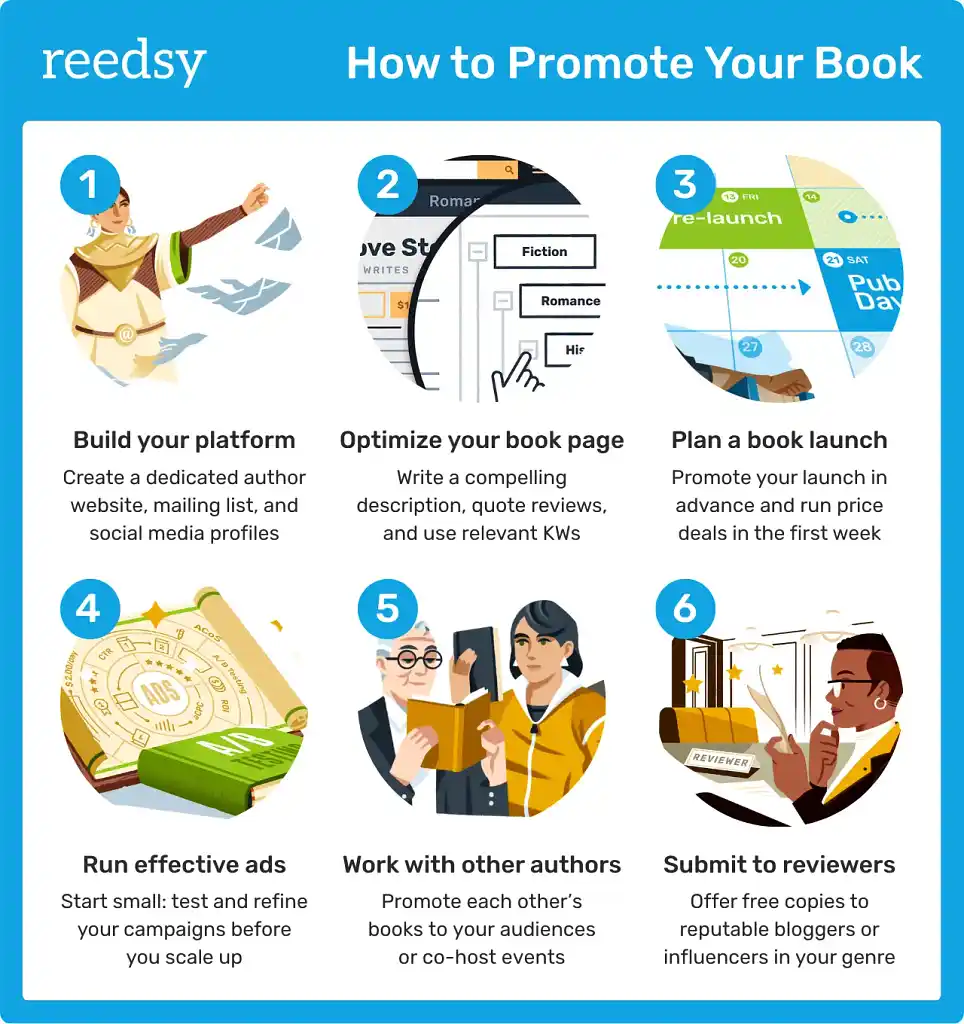
Of course, with so many promotional avenues for your book, it can get tricky to know which ones to go with. So let’s make it simple: here are 7 clear, budget-friendly steps to promote your book in 2025.
1. Build a strong author platform
First and foremost, ensure your online author platform is strong. In 2025, this means not only your website, but also your social channels, newsletter, and more. Your “platform” should work an interconnected ecosystem where readers discover you, follow your news, and (hopefully) opt to stay in touch.
Start with your website
You can begin with a simple, professional author website (our author website guide can help you structure it). Be sure to include:
- Your published and upcoming books – covers, short descriptions, and perhaps even individual landing pages for each book or series (and obviously don’t forget your purchase links!)
- Short, engaging author bio – this should have basic biographical information, but also mention your most prominent works and any professional recognition or awards you’ve received
- Small press kit for reviewers or event organizers – this should be on its own page, under the navigation label “Press” or “Media”
- Newsletter signup form – put it somewhere accessible but not too annoying; many authors have a single pop-up on their homepage, and also have signup forms at the bottom of every other page
Create a mailing list — and offer reader magnets
Speaking of your newsletter signup form, you’ll also want to establish an author mailing list to keep people updated. You can learn more in that post, but one of the best ways to build your list is with reader magnets.
These are basically freebies (think: a free short story, bonus chapter, or helpful checklist) you can use to attract subscribers. When someone signs up to your mailing list, you send them a reader magnet as thanks — and an implicit promise to send more valuable content in the future.
Here’s how to make the most of them:
- Put it on your website. It can be part of the call-to-action for your signup form — e.g., “Enter your email to get a free short story!”
![Reader magnet in-book Amazon]()
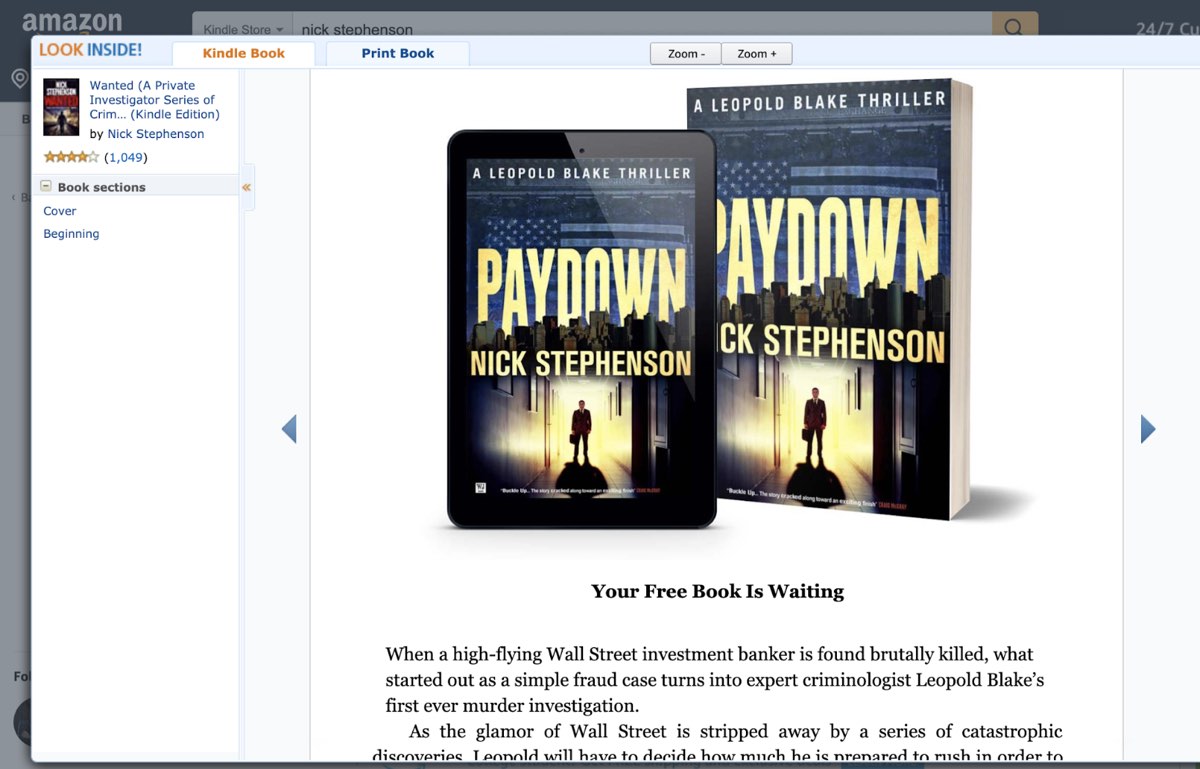
- Add your magnet at the start and end of your book, so readers using Amazon’s Look Inside feature can see it. (Note: if your start-of-book magnet is “bonus material” of some kind, make sure it doesn’t spoil the plot of the actual book.)
- Or work it into the story. To capture even more promising leads (people who already like your writing), place your reader magnet in the text itself. It’s a bit easier for nonfiction — try promoting something like a cheatsheet, checklist, or free course. For fiction, you’ll have to get more creative, but it can still be done! For example, author ML Banner created a real website for a fictional research institute in his book:
I linked to this fictional institute’s website, where my character actually offered their own reader magnet: a free ebook called “The Apocalypse Survival Guide”. And I ended up getting over 1,200 downloads of that book. — ML Banner
For more information on how to get your book in front of more people, check out this course on creating and maintaining an author mailing list:
FREE COURSE
How to Build Your Author Mailing List
Learn how to connect with your audience and sell more books with email.
Look into social media
Recent trends show that reader micro-communities — from Discord servers and Substack newsletters to small TikTok Circles — are outperforming traditional “mass posting”. In fact, a 2025 BookBub survey of over 850 authors found that 78% use at least one social platform every week to promote their books. So instead of chasing virality, focus on nurturing these smaller spaces where readers actually engage.
A few ideas for social media:
- Create a private reader group or book club where fans get early sneak peeks, updates, or behind-the-scenes content.
- Encourage user-generated content. Think fan art, favorite quotes, or cozy “shelfies” featuring your book.
- Host simple, low-cost live events — like Instagram Lives, AMAs, or online reading sessions.
You can read more about how to get the most out of your online presence in our social media guide.
2. Optimize your product page(s)
Before we look at external forms of promotion, you should also optimize your existing product pages for conversion — meaning these pages must prime readers to buy your book.
Most authors sell books through established platforms like Amazon, Barnes & Noble, Kobo, etc. Some authors also sell directly to readers using ecommerce tools like Shopify — but regardless of how you do it, here are some tips that apply across the board…
Tips for all platforms
🖼️ Ensure your cover works at thumbnail size
If you haven’t yet gotten a cover design (or if you’re open to adjusting it!) then one key thing to keep in mind is thumbnail potential. Many buyers will see your book for the first time online — which means it must be parseable even in thumbnail form.
This means your cover should have enough color contrast for the title to be visible; it should fit with your genre conventions; and it should look good even on a phone screen. Remember, up to 57% of Americans buy their books based on the cover alone! If your thumbnail isn’t sufficiently strong, you can kiss those sales goodbye.
📝 Create a book description that hooks the reader
The next most important element (after your cover) is your book description. Open with a great hook, build intrigue, and end with a question or cliffhanger that nudges them to “Buy now” (or at the very least, “Read sample”). Look at other book descriptions in your genre — is there a clear formula that many of them follow? If so, try to mimic it.
🤝 Increase credibility with reviews and updates
Lastly, you can add editorial reviews, blurbs of praise (e.g., “A remarkable tour de force”), and news updates to your product pages. This shows people that you are active and your readers are enthusiastic. Particularly if you have received endorsements from prominent authors or media outlets, make sure to highlight them!
These tips apply to just about any product page on any platform, but let’s also go over a couple of points that are Amazon-specific.
FREE COURSE
Amazon Algorithms for Authors
Learn to optimize your book description, pick categories, and sell more books.
Tips just for Amazon
🧠 Use smart categories and keywords for discoverability
Amazon’s hidden “tick box” categories (like royalty, academy, or small-town romance) can dramatically improve visibility for your book. The trick is to include those exact terms in your KDP keyword phrases, so your book shows up when readers filter by them. 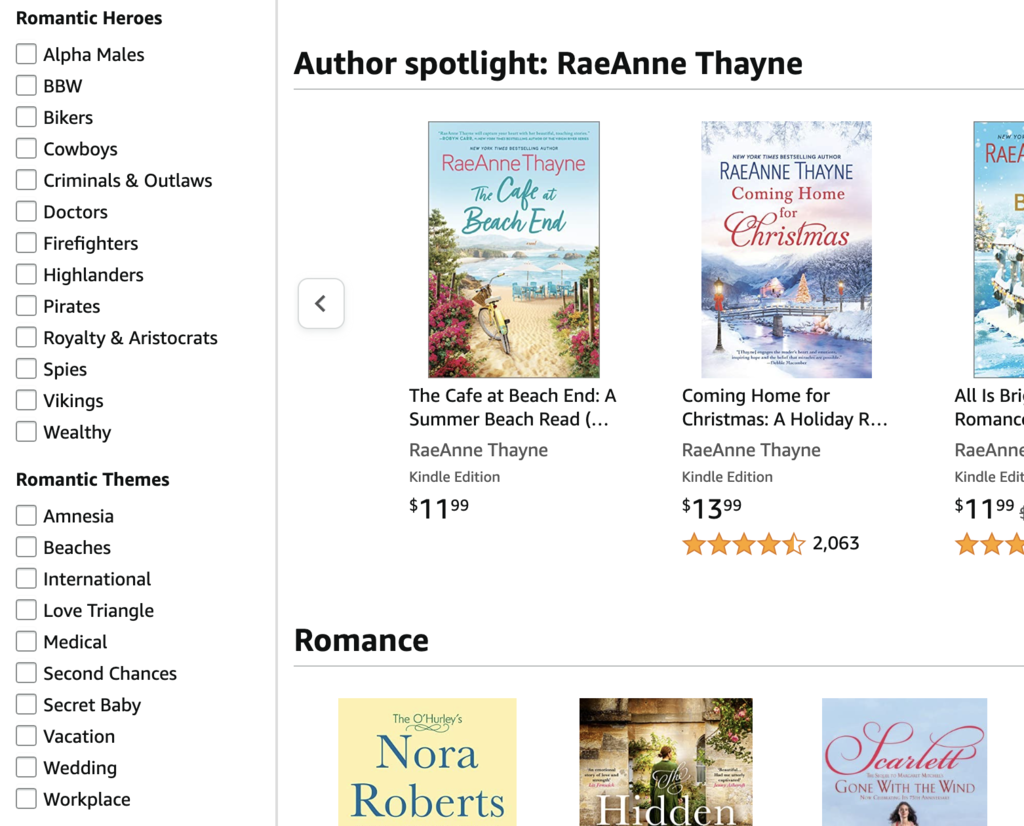
But be careful not to overdo it — being in too many unrelated categories can confuse readers and knock you down in Amazon’s algorithms. Stick to keywords that genuinely reflect your genre, story, and tropes.
🧹 Clean up your Amazon URLs
That monstrous Amazon link full of random letters and characters? Cut it down before you post it anywhere, like on your website or socials. Everything after /ref= is unnecessary — and you can even remove the title (and just leave /dp/[code]) to make it extra clean.
Here’s an example of a very messy URL:
And here’s how to clean it up:
https://www.amazon.com/dp/B08TZJQ1FB
Much better, right? This second URL is the one you’d share with readers.
3. Turn your book launch into an extended event
A book launch isn't a single-day event — it’s the result of months (or even years) of groundwork. The truth is, successful launches start long before a book exists in its final form. You should already be building your author brand, growing your readership, and ideally publishing shorter pieces or excerpts to start earning readers’ trust early. That way, when launch season arrives, you’re not introducing yourself for the first time but rather interacting with a community that’s already invested in your work.
So treat the launch as a long, rolling event rather than a single announcement to build anticipation before your release and keep that momentum going.
Here’s a sample book launch timeline for you:
- 4-6 months pre-launch: Announce your book with a title reveal. Follow up with a cover reveal shortly after.
- 2-3 months pre-launch: Send out ARCs to early reviewers. Offer a free sample chapter to get other people excited.
- 1 month pre-launch: Host live sessions on your socials to drum up interest. Consider doing one “live video” Q&A (on TikTok or Reels) and one “live text” AMA (on Reddit, Threads, etc.) for your fans who prefer different mediums.
- Launch week: Get some reviews live. (You can circumvent Amazon’s “no early reviews” rule by releasing your paperback a bit earlier than your ebook!) In addition to reviews from your ARC readers, you might get an early Reedsy Discovery review or reach out to book bloggers.
- Launch day: Post about your book on all platforms. Run a BookBub Featured Deal (if you can land one!), or a similar get-it-while-it’s-hot promotion (see below).
- Post-launch: Share behind-the-scenes stories, reader reactions, and incoming reviews/blurbs to keep the energy going.
Stack promotional services
To boost visibility during this period, you can also use book promotion services. The basic premise is this: you discount the price of your book(s) for a few days, and then promote that discount to relevant readers.
Free course: Running Book Promotions
Acquire more readers, sell more books, and make more money with this online course. Get started today.
BookBub is the gold standard for this in indie publishing — but as noted above, their Featured Deals are pretty competitive. So for many authors, the best approach is to “stack” a few other, less competitive services. All these audiences will add up to give your book a nice kickstart.
A sample stack might look like this:
- Day 1: Bargain Booksy + Ereader News Today + Book Barbarian
- Day 2: Robin Reads + Book Rebel + My Book Cave
- Day 3: The Fussy Librarian + Early Bird Books + Booksends
Of course, booking these sites/newsletters shouldn’t prevent you from running ads of your own, if your budget allows.
4. Run cost-effective ads
Paid ads are still one of the best ways to sell books — and in 2025, they’re smarter and easier to manage than ever before. Tools like BookBub Ads, Amazon Marketing Stream, and Meta’s Advantage+ now use AI features to automatically optimize your targeting, bids, and even creative. That means less manual tweaking and more time for, you know, writing!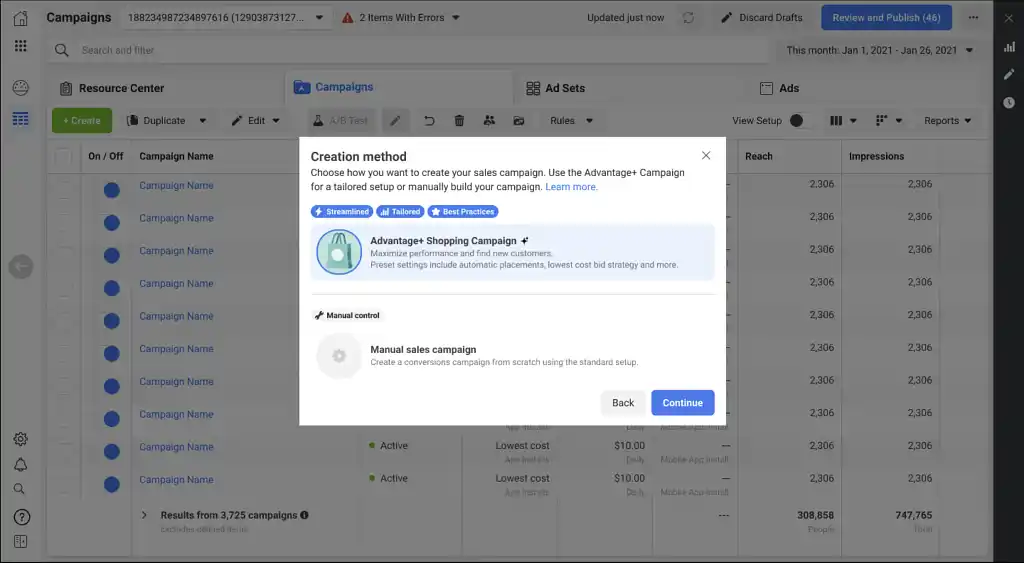
Start small
If you’re new to ads, don’t overthink it. Start with a modest daily budget ($5–$10) and test different images, copy, and audiences before scaling up. Here are a few “easy” tasks to get you going:
- Try Kindlepreneur’s Publisher Rocket to find high-ROI keywords and categories for Amazon Ads.
- Use BookBub’s Smart Text to generate and test ad variations.
- Retarget readers who clicked or viewed your ads on BookBub or Meta to keep your book top-of-mind.
💡 Not sure what you’re doing with ads? My free courses on Amazon Ads and Facebook Ads for authors are perfect for beginners.
Dig into your Amazon and BookBub data
On Amazon, I’d recommend starting with Sponsored Product campaigns. Use automated targeting for a while to let Amazon test which keywords and related products convert best. Then download a Search Term Report to see exactly what’s working.
Once you’ve identified your strongest keywords, move them into manual campaigns for more control and lower “costs per click”. If you want to save time, Publisher Rocket can automate this research. (We actually use it at Reedsy to optimize our own ads!)
Another smart move would be to subscribe to BookBub newsletters in your genre. Books featured in their Featured Deals get thousands of sales, making them perfect comp titles to target with Amazon or BookBub ads. This way, you can ride the “visibility wave” of other popular titles while still reaching readers who enjoy your genre or niche.
Get more from Meta
Granted, Meta isn’t a book platform, but it’s still a great place to find readers if you know where to look. A few Meta-specific tips for you:
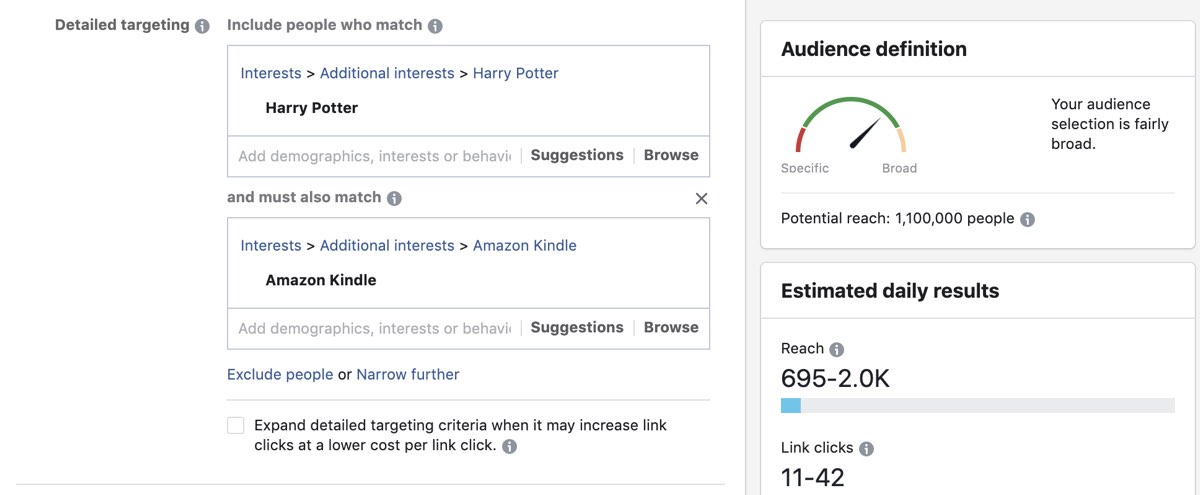
- Use Audience Insights to go beyond the obvious targets. Typing in “Harry Potter,” for example, might uncover fan pages, book clubs, or reading communities you didn’t even know existed.
- Plug one of your comp titles/authors into Audience Insights and check the Page Likes tab. This helps you see what else might engage your potential readers!
- When setting up Meta ads, turn on Dynamic Creative (similar to automatic retargeting on Amazon). This allows you to upload multiple images, headlines, and CTAs, and Meta will automatically test combinations to see what converts best.
![Facebook audience]()
5. Collaborate with other authors
Another fantastic way to promote your book is to work with other authors. Whether it’s through joint giveaways, newsletter swaps, or multi-author events, teaming up can help you both reach thousands of new readers and build genuine, long-term relationships.
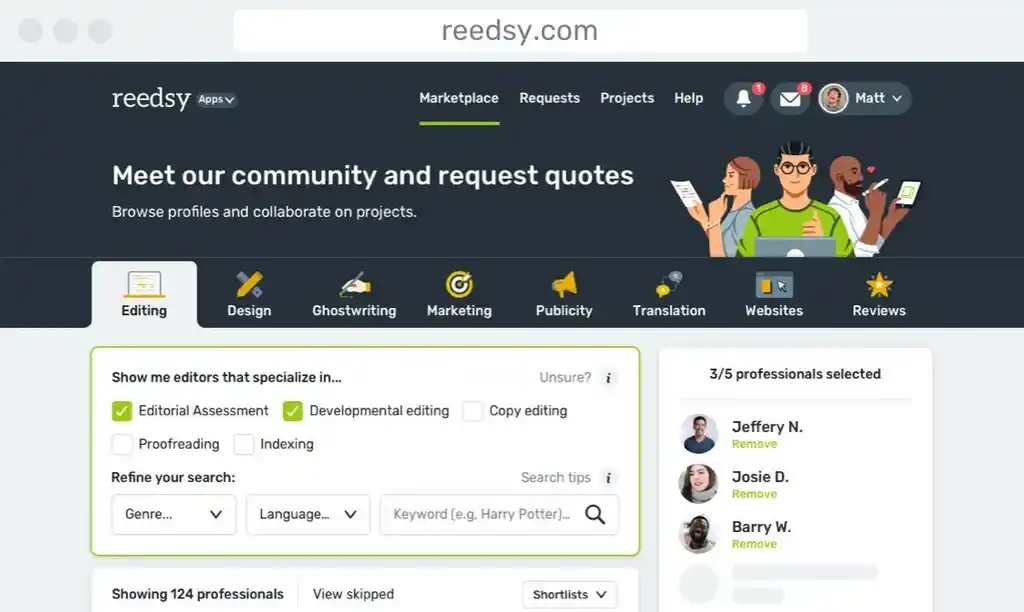
Or collaborate with a book marketing wizard

Michal S.
Available to hire
I run Amazon ads for authors who don't have time or headspace to do that by themselves. Dozens of satisfied customers and 250k+ copies sold.

Martyn B.
Available to hire
Forward-thinking and creative book marketer. Top-200 Reedsy Provider. Fascinated by doing things differently to get people to buy books!

Brian B.
Available to hire
I 've helped hundreds of authors manage their Amazon and BookBub Ads campaigns
Try a newsletter swap
One of the easiest ways to work together is via a newsletter swap — meaning you promote each others’ books in your newsletters. If you’re feeling ambitious, you can even do full “takeovers” where each of you writes the other one’s newsletter for a day (or a week!).
Naturally, this tactic works best when you have similar audience sizes. So if you’re looking for good contenders, look for authors in your genre with a similar number of social media followers (or similar in some other easily calculated metric).
Run a shared giveaway
On a related note, you can also use each others’ social media accounts to run a shared giveaway. With this, you combine both your books into a giveaway “bundle” and choose one or more winners from your accounts.
Make sure to specify that all entrants have to be following both of you to be eligible for the giveaway. Then you can use giveaway-friendly tools, like BookFunnel and KingSumo, to distribute your books (whether in digital form or paperback).
Co-host an event or reading week
Or pair up with another author to host a themed event: a joint Q&A, a cozy Instagram Live, or a week-long “reading challenge” based on your shared genre or trope. Once again, you’ll both appeal to new readers by giving them something fun and interactive to do.
Release a collaborative anthology
This one’s a bit more labor-intensive… but once you’ve built a solid network of relationships, you and your author friends can write and release an anthology together. Consider building it around a certain motif or theme, with everyone writing one short story or piece to be included.
And if everyone agrees, you can even run a price promotion on the anthology itself — or potentially use it as a reader magnet!
6. Pitch to book influencers and micro-reviewers
Returning to the idea of getting reviews and “social proof” for your book, let’s take a closer look at how to pitch reviewers.
For context, in 2025, micro-influencers are leading the charge. Think BookTokers, Bookstagrammers, and Substack reviewers who have as few as 1,000 followers; these are smaller creators, but they have highly engaged audiences.
These audiences really trust their taste, which means their recommendations often convert at a higher rate than big-name campaigns — and they may be more accessible to you as an indie author. So here’s how to pitch to them more effectively:
😄 Personalize your pitch. Try to keep the tone conversational, rather than formal or robotic. Also, be sure to actually look at their content beforehand, and (if you can do it naturally) mention something specific you like about it in the context of your pitch.
📖 Offer ARCs the easy way. Simplify outreach with tools like BookFunnel (which you can use to send your book to anyone) — or find vetted reviewers on sites like BookSirens and Reedsy Discovery. These platforms make it effortless to share digital copies and build your visibility.
💯 Show off your praise. Once those reviews start rolling in, make sure everyone can see them! Add short quotes or editorial blurbs to your book’s product pages and your author website.
✅ Make reviewing effortless. The easier it is to leave a review, the more likely readers are to do it. Send direct review links to influencers and book bloggers, and include it at the end of your ebook:
https://www.amazon.com/review/create-review?asin=YOURASIN
(Just replace “YOURASIN” with your book’s actual ASIN, found in its Product Details section.)
📊 This report on 2025 book marketing statistics estimates that BookTok influenced around 59 million print sales in 2024 — a reminder that the momentum of authentic, creator-driven buzz isn’t slowing down anytime soon.
7. Repurpose and bundle your content
Finally, when it comes to promoting your content, you don’t need to keep reinventing the wheel — just make smarter use of what you already have.
Repurposing and bundling your work helps you reach new readers, keeps your catalog feeling fresh, and makes every bit of your effort go that much further. Here’s how to make the most of what you’ve already created:
Add value with bundles and omnibuses
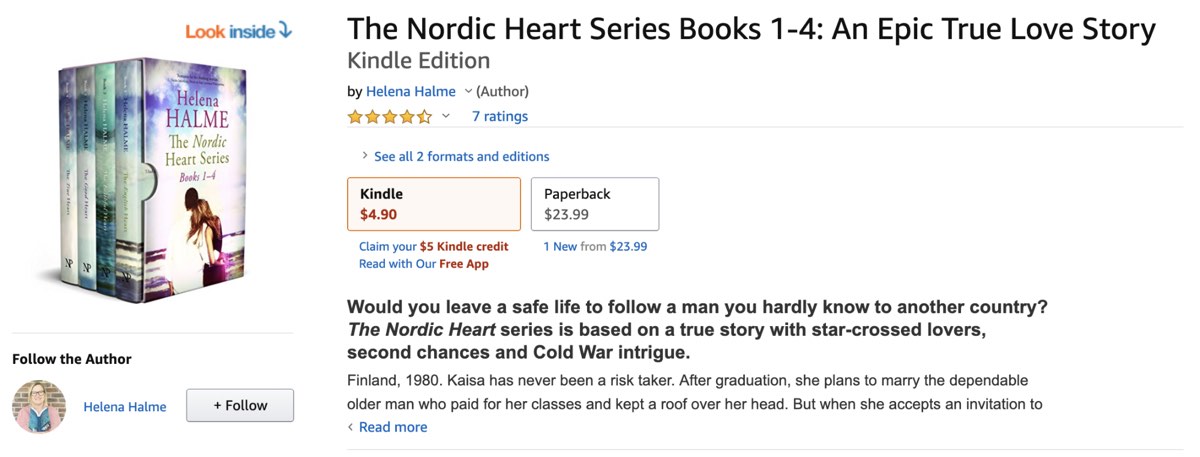
If you’ve published multiple books, consider grouping them into a themed box set or first-in-series bundle. This is an easy way to introduce readers to your universe while offering a solid discount. Every new reader who discovers one book could end up reading your entire catalog!
Repurpose your marketing content
Don’t let good content fade into oblivion after one post. This 2025 marketing guide from ClearVoice shows that 46% of marketers rate repurposed content as more effective than creating new material.
For authors, this means turning blog articles into LinkedIn carousels or Threads posts; compiling your behind-the-scenes videos into a YouTube playlist; or adapting newsletter snippets into short Reels or TikToks. The story can stay the same — just switch up the format to keep it fresh.
And those are our budget-friendly, game-changing steps! Remember, you don’t need a big budget to promote your book. What you do need is strategy, consistency, genuine connections, and a willingness to learn.
Book marketing moves fast, and what works today might flop next year. The key is to stay curious, keep testing, and continue refining your approach.



7 responses
Ashok Yadav says:
13/09/2019 – 07:04
Thanks, it is really very useful to me.
Helena Halme says:
13/09/2019 – 09:04
Great article, Ricardo! And thank you so much for including my post for ALLi on box sets. 🙏
Linda Christine Johnston says:
13/09/2019 – 16:12
This was so helpful, thank you. I have a children's book and I am going to implement many of them pronto!
Ned Marcus says:
19/10/2019 – 03:41
This list looks great. Thanks. I'll start working my way through it.
Andrew Lowe says:
20/12/2019 – 16:50
Just found this. Some great tips here. Can I clarify that the instant review link will go to the marketplace in the URL? What if the URL has an amazon.com link but the reader is from a different region? Is it better to use a Universal Book Link? Thanks.
↪️ Ricardo Fayet replied:
26/12/2019 – 12:42
Yes, the link will go to the country store. Since US reviews sometimes show up on other country stores, but other country store reviews won't show up in the US, I'd prioritize US reviews and just have a US marketplace review link in there — rather than a Universal Book Link. I don't think you can combine both (i.e. have a Universal book review link).
Pasquale Mellone says:
14/08/2020 – 13:53
Excellent article, thank you! While most articles about book promotion only offer generic recommendations, this one goes very much into specifics. Also thanks for pointing to tools like Discovery and Publisher Rocker