Guides • Perfecting your Craft
Last updated on Oct 15, 2025
Third Person Omniscient: The Ultimate Guide + Examples

Savannah Cordova
Savannah is a senior editor with Reedsy and a published writer whose work has appeared on Slate, Kirkus, and BookTrib. Her short fiction has appeared in the Owl Canyon Press anthology, "No Bars and a Dead Battery".
View profile →Third person omniscient is perhaps the oldest narrative form of recorded storytelling, used by our ancestors to tell the tales of Odin, Heracles, and Amun-Ra. By allowing readers to access the thoughts, emotions, and experiences of multiple characters in a story, it's considered one of the most flexible (yet challenging) POVs for authors to use.
Let’s look at why storytellers in the past have loved it so much, and what makes this point of view so powerful — as well as what’s caused it to fall out of favor in modern times.
What is third person omniscient point of view?
Third person omniscient point of view is a narrative technique that provides a panoramic and all-knowing perspective in a story. As with third person limited, it uses the pronouns he, she, and they to describe the main character’s thoughts and actions.
Here’s an example:
She wished to see the world, but her father, who thought the world dangerous, forbade her from stepping outside.
This POV, in which an unspecified narrator with a “god’s eye” tells us the story, used to be the dominant mode of storytelling until the 1900s when first person POV and third person limited POV took over. Today, it’s not impossible to find third person omniscient in books on the shelves, but it’s certainly rarer.
Q: What's the best piece of writing advice for an author who wants to improve their craft?
Suggested answer

Join critique groups! These were invaluable to me when it I started writing and even taught me how to edit! Reading books will become dated with old advice, so stay up to date with blogs, trends, audiences, and read, read, read!
Stephanie is available to hire on Reedsy ⏺

Practice and read!
In the same way that you need to practice a musical instrument to get better, you need to do the same with writing too. Very few writers will publish the first book they ever write!
The other thing that will help you to improve your writing craft is reading. Read the books that are selling well in your genre right now, not just the bestsellers from a decade ago. Study them. Look at the reviews for these books and listen to what readers are saying.
There are loads of brilliant books that will help you to write an effective novel as well (Into the Woods by John Yorke, The Science of Storytelling by Will Storr, Story Genius by Lisa Cron and Save the Cat Writes a Novel by Jessica Brody are a few of my favourites). Even if you don't agree with everything they say (I don't necessarily agree with every piece of advice in the above!) it's so helpful to see a range of different perspectives. You'll also quickly be able to see the patterns and advice from these books in the bestsellers you read. There are also loads of podcasts, blog posts, YouTube videos and audiobooks out there too, as well as Reedsy's own masterclasses!
Siân is available to hire on Reedsy ⏺
Read, read, read. Whatever you're reading, it will help you improve your craft, and you'll grow more discerning as you keep writing and reading. Make sure, though, that at least some of what you're reading is contemporary--if all you're taking in was written in the 18th century, your prose/style is going to end up sounding dated and out of place to readers.
After reading, you just have to keep writing, 'Practice makes perfect' may not be entirely true when it comes to any art form (because perfection is, arguably, impossible in these areas), including writing, but practice does make for consistent improvement.
When you feel you're ready, finding a critique partner and exchanging feedback, or even slush reading for a journal or magazine, can also be incredible experiences that will improve your craft. These experiences take even more time and commitment to your craft, but they're a great way to see what other people are doing and learn more about your craft.
Jennifer is available to hire on Reedsy ⏺

The best method for improving writing is to write daily and to read critically. Take some time each day or week writing without regard to the outcome—just focus on getting words down on paper. Then read widely and attentively, watching how other writers handle pace, dialogue, and structure. Pay attention to what moves you and why. This builds an intuitive sense of rhythm and voice over time. Finally, never be afraid of revision; excellent writing sometimes begins in rewriting.
John is available to hire on Reedsy ⏺
How is third person omniscient different from third person limited?
Like third person limited, third person omniscient is a type of third person point of view. So what’s the difference between the two of them?
It comes down to the kind of narrator behind each point of view. In third person limited — which is sometimes also called “close third —” the narration is intrinsically connected to the main character. We are more often than not almost “inside” the character’s head, and an author using this POV can only write what the character feels, thinks, sees, and knows.
In third person omniscient, however, the narrator is external to all of the characters. This all-seeing narrator can reveal anything that is happening, has happened, or will happen in the world of the story. In effect, it’s a god-like narrator telling us the story — hence why this POV is called the “god’s eye view.”
The case for third person omniscient point of view
When executed well, third person omniscient can be extremely powerful in its own right. Let’s talk about why.
Omniscient narrators have a wealth of breadth and scope
Because they know what each character is thinking and feeling at all times, an omniscient narrator gives authors a unique opportunity to examine many characters’ psyches at once. The narrator can also know things about the characters that they aren’t aware of yet — or wouldn’t be willing to divulge if they were the ones telling the story.
Q: What is the most crucial piece of backstory an author should understand about their protagonist before beginning a novel?
Suggested answer
If you're around creatives on social media, you've probably heard someone say, 'This is my villain origin story'--in other words, whatever they're talking about is, at least speaking in hyperbole, the thing that has the potential to turn them into a villain. And while you may not be writing about villains, the point is that you want to think about origination.
Whoever your character is, how did they get to be that way? Try to think big picture items here--major formative memories, whether good or bad, tend to leave a heavy influence on us. It could be working hard to save money and finally being able to afford a dream bicycle or pet dog. It could be something traumatic, like the loss of a best friend to a cross-country move or being held back in school. Those major memories have the power to leave long-lasting effects on characters, and I think it's always worth thinking about the biggest moment(s) in a character's life if you truly want to know who they are (and then, once you figure out that moment, making sure you know how it affected them).
Another way to go about this is to think about your character's why. Why do they want what they want? What's their goal in life, and why? If you can answer that question--and get deep enough with your why to go beyond the superficial answers--you'll probably end up having a fairly strong understanding of your character that will naturally carry into your writing.
Jennifer is available to hire on Reedsy ⏺

Whether in the backstory or in the current action of the book, once the reader starts reading, the author should know what their character wants. It can be a long-held desire or something new, based on changed circumstances.
There has to be a motivation and drive in the character. Or if there isn't any, and that is sort of the point of the book, you want to let the reader know why and what in their past has made them the way they are. This sort of "motivation" is a good thing to search for in each character. What has shaped them to do what they do and behave the way they behave in the story? They must stay "in character" throughout the book unless some sort of inner or outer impetus has forced them or inspired them to change their ways.
So this most crucial piece of backstory might be why your protagonist behaves the way they do, what motivates them and why, and what they want.
Melody is available to hire on Reedsy ⏺
The key piece of history to understand is the core wound or formative experience that controls the hero's assumptions and phobias. This event controls the way they see themselves and the world and dictates all their decisions. Knowing this inner basis of understanding gives them depth to their motivations and establishes real conflict when the plot contradicts those assumptions. It does not necessarily have to be defined immediately to the reader but must be clear to the author. Keeping that in mind, the choices of the character seem authentic, and their path becomes more emotionally poignant.
John is available to hire on Reedsy ⏺
But the omniscient narrator’s power also goes a step beyond: as well as knowing what every character knows, the omniscient narrator is privy to all things that they don’t know. This becomes information that can be shared with the reader at critical moments, to great effect.
All-seeing narrators can summon suspense from thin air
An omniscient narrator knows more about the events of the story than the main characters do, so they can be used to create tension and dramatic irony. That is where the reader knows something that the main characters do not. Sometimes, this irony is used for humorous effect but more often, we’ll see it as a device for ratcheting up the suspense.
The narrator can become a character in their own right
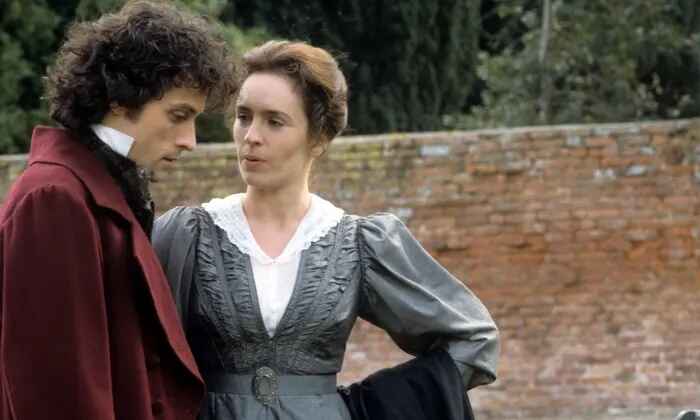
Although omniscient narrators take a god’s eye view of the story, that doesn’t mean they have to be cold, detached figures. In fact, these unnamed storytellers often have a distinct personality or worldview that they add to the story. Just look at the funny narrator in Terry Pratchett’s Discworld series or the dry narrator in Jane Austen’s Pride and Prejudice for a cue.
Just as omniscient narrators can have personalities, they can also express their own thoughts and feelings. While bound by their own limitations as passive observers, they might have something to say about the story they’re telling.
For example, Markus Zusak’s The Book Thief is narrated by Death himself, a character who watches over humanity. While he only plays a small role in the lives of the protagonists, he has much to say about what he witnesses and wants the reader to learn from it, like he has.
The case against third person omniscient point of view
With all that said, it’s generally advised to proceed with extreme caution whenever using third person omniscient for one simple reason: it’s extraordinarily difficult to pull off.
First-time authors trying out third person omniscient will often find themselves running into the pitfalls of this type of point of view — telling and not showing, too much exposition, not an interesting enough omniscient narrator, a constant breaking of the fourth wall, excessive head-hopping, and more.
Q: Why is head-hopping considered a problem in fiction?
Suggested answer
While some well-known contemporary authors are famous for head-hopping (Stephen King probably being the most famous of them), and it sometimes works well depending on a story, it can lead to a lot of issues.
1) Clarity. If you're writing in close-third and head-hopping between characters, it's often tough for a reader to keep track of who's thinking/saying what. It's obvious to you as the writer, but when it comes to what translates onto the page, clarity issues are almost guaranteed, and it takes a lot of editing/tweaking in order to eliminate them.
2) Reader expectations. If you get in the habit of head-hopping between characters, readers are going to expect to know what your various characters are thinking at any given moment. That can cause problems for you as the author if some of the characters have big secrets which need to be kept out of readers' hands early on, as the reader will end up feeling like they've been misled by you when those secrets ultimately come out much later than is natural (if you're head-hopping in order to bring in relevant info/characters' thoughts as needed).
3) Any head-hopping you do is stealing time away from your main characters, assuming you jump into the heads of minor characters. That means readers have less opportunity to understand and engage with your main characters.
4) Length. Especially if you're on the traditional path, word count matters, and head-hopping can easily lead to ballooning word counts that will make it tough to find an agent or publisher.
5) Publication/Reviews. This goes back to reader expectations, but the simple truth is that many contemporary readers haven't read enough books with head-hopping to be comfortable with it or see it as a valid option, so head-hopping often leads to negative reviews or readers seeing it as a mistake/lack of editing. It's often seen as flat-out wrong/problematic rather than as a valid option. I'd argue that it is a valid option because so many famous authors clearly succeed in using it all the time, but it's less common than it used to be and does lead to headaches, so it's generally something I do recommend writers avoid (especially first-time writers who have enough on their plates already!).
Jennifer is available to hire on Reedsy ⏺
When there is head-hopping in a story, it detracts from the main character and makes the story too muddy. The reader won't know who the lead is in the story and who they should be rooting for. It also goes against traditional publishing norms of one point of view or multiple points of view with a different character viewpoint per chapter, with no more than 4 points of view in total for one book.
There are other ways for readers to know what a secondary character is thinking.
- That character can speak, so dialogue is used to convey their feelings.
- Physical expressions like clenched fists, smiles, etc., can communicate things to readers and other characters.
Melody is available to hire on Reedsy ⏺
By nature, third person omniscient is also less immersive than either first person point of view (where you’re directly in the character’s head) or third person limited point of view (where you’re extremely close to the character’s head.) So unless it’s well-executed, some readers may find this mode of narration jarring.
As a result, it can be harder to convince a literary agent to take on a third person omniscient book in the modern market. That’s not to say that you should never use it! However, if you do decide to try third person omniscient, do so purposefully.
Let’s turn to some third person omniscient examples now to see what that might look like.
Examples of third person omniscient point of view in action
As you can see in the examples of third person omniscient below, it’s possible to turn this POV into a compelling and effective way to tell a story.
1. “Brokeback Mountain” by Annie Proulx
During the day Ennis looked across a great gulf and sometimes saw Jack, a small dot moving across a high meadow, as an insect moves across a tablecloth; Jack, in his dark camp, saw Ennis as night fire, a red spark on the huge dark mass of mountain.
In this passage from Annie Proulx’s short story "Brokeback Mountain," we are privy to two separate, private moments of longing.
Unbeknownst to each other, both Ennis and Jack look for each other during the day, demonstrating how they are present in each other’s thoughts. The images playing in their heads are a great reflection of their character: Ennis’s thoughts are simpler, imagining ants on a tablecloth, while Jack’s are grander and more romantic, conjuring up fire and sparks in the night.
Q: What techniques can authors use to hook readers from the first page?
Suggested answer
Start with your main character doing something somewhere and start in the middle of the action. If there is a hurricane coming, have them board up the windows of their home. If they are dreading an upcoming test at school, have them look over their last test grades and worry that this next test won't be any different.
You want to avoid "talking heads." This is what publishers think when there is dialogue going on between characters, and because there is no sense of "place" or "setting", the story comes off as characters "talking in space." This is why you want the characters to be somewhere and do something in every new scene you draft, not just the opening.
Readers like to visualize the action in a book, even if the "action" is inward. So start off with a visual picture of your main character doing something, and this should hook readers.
Melody is available to hire on Reedsy ⏺

I recall reading a memoir of a famous tennis player and he started it by plunging the reader into his experience of facing a relentless machine shooting balls across the net to him -- all the fatigue and pressure of trying to become a pro was encapsulated in the scene. Much more interesting than starting it with when and where he was born etc.
John is available to hire on Reedsy ⏺
Authors can capture readers' attention by starting with a moment of tension, curiosity, or emotional dissonance. Instead of gobs of backstory, they can present a character who must make a choice, a secret to guard, or an uncomfortable change. Voice is as crucial as action, as a good voice draws on and earns trust and interest. Unanswered questions and sensory details entice readers to get clarity. Above all, the opening must create a sense of the underlying stakes of the story, with intimations of challenge, revelation, or transformation to be achieved. Effective openings deliver energy with purpose, not mere din.
John is available to hire on Reedsy ⏺
With this brilliant example of show, don’t tell, we can see the strength of their connection in its quietest, most private expressions. This particular moment would be impossible to describe with a limited viewpoint.
2. The Nether World by George Gissing
Society produces many a monster, but the mass of those whom, after creating them, it pronounces bad are merely bad from the conventional point of view; they are guilty of weaknesses, not of crimes.
Another example of an omniscient narrator with a strong worldview can be found in George Gissing's The Nether World. Gissing’s book exposes the lives of the poor in Victorian London and concerns itself with showing all the hardships experienced by the lower classes. The novel’s (and the narrator’s) views are incredibly pessimistic and, for the time, controversial.
This passage is the novel’s thesis statement, an assertion that underpins the entire story being told. However, taking this approach can be politically risky, especially when the subject matter is so closely related to problems of the real world. If your omniscient narrator has a specific worldview, but isn’t established as a character in the story, readers will likely assume these opinions are yours 一 so do take care if you’re writing ironically about sensitive topics.
3. Middlemarch by George Eliot
The troublesome ones in a family are usually either the wits or the idiots. Jonah was the wit among the Featherstones, and joked with the maid-servants when they came about the hearth, but seemed to consider Miss Garth a suspicious character, and followed her with cold eyes.
Middlemarch’s subtitle, “A Study in Provincial Life,” allows the reader to imagine that the narrator is some sort of academic. In describing the town’s citizens, this narrator takes an almost sociological view, putting the reader in mind of a middle-class inhabitant of the community who makes pithy observations about their neighbors and how they act. They invite the reader to see the good people of Middlemarch through their perspective and analysis.
Q: Do publishers favor certain points of view over others when considering novels for publication?
Suggested answer
Publishers never want one POV in general, but they do want consistency, clarity, and narrative authority. Immediacy and intimacy are given by first-person, and third-person—especially limited—is still favored because it is so versatile. Trends wax and wane, with first-person present, for example, having been the norm in YA and contemporary fiction. It matters less than POV itself is how well it serves the story. A good voice, a strong command of point of view, and a narrative that sounds real will be more persuasive than any particular choice of perspective. Use the point of view best suited to engage readers fully in your characters' world.
John is available to hire on Reedsy ⏺
4. The Inugami Curse by Seishi Yokomizo
That was the end of the life of Sahei Inugami – the end of his eighty-one turbulent years. In hindsight, we now know that his death set in motion the blood-soaked series of events that later befell the Inugami clan.
In the mystery novel The Inugami Curse, a wealthy family awaits their patriarch’s death to see who will inherit his fortune. But as the narrator reveals, they have no way of knowing — as they sit by his deathbed — what tragedies await them.
The omniscient narrator tells the readers, with a wink and a nudge, what to expect as the story unfolds. But at this moment, the characters remain clueless about the murders and intrigue that will come as they fight for control of Sahei Inugami’s will. Thus, a sense of tension and dread is conjured — something perfectly suited to a detective novel.
5. Discworld by Terry Pratchett
Killing off a wizard of a higher grade was a recognised way of getting advancement in the orders. However, the only person likely to want to kill the Bursar was someone else who derived a quiet pleasure from columns of numbers, all neatly arranged, and people like that don’t often go in for murder*.
*At least, until the day they suddenly pick up a paperknife and carve their way out through Cost Accounting and into forensic history.
If you’ve built a vast world, an omniscient narrator can make exposition easier because they’re supposed to be all-knowing. It would be odd, for instance, if you were writing in third-person limited and your narrator randomly dropped the fact that the universe is made of cheese. Omniscient narrators, on the other hand, have the license to explain the world to readers.
Q: How do I know what the best point of view (POV) is for my novel?
Suggested answer
I think it's paramount to keep one thing in mind first: There's nothing wrong with being most comfortable with a given POV and gravitating naturally to one or the other for all or most of your works. If you're primarily comfortable in close third, the story will read more smoothly in close third. That's not to say that you shouldn't ever push yourself beyond your comfort zone, but if you're torn 50/50 and not sure which POV is best for a book, just do what comes most naturally, and chances are readers will feel it's natural to the story.
If you're still not sure what POV to adopt for your novel, though, you have two main options:
The first option is to research your genre a bit more and try to find out if there's a favored POV. Some readers will always prefer first and some will always prefer third--ignore the ones that say their chosen POV is the only one they'll read because you can't please everyone. Instead, look for articles or resources that talk about genre/subgenre conventions and audience preferences. You can also take a glance at recent top-selling books in the genre, and if they're all in close third or all in first, that may answer the question for you.
The second option at your disposal is to experiment. Take a scene that's going to be key to your novel--the climax, a moment of realization for your main character, etc.--and try writing in both first person and third person. Compare the two scenes and see which reads more naturally and/or which one feels more natural to the story and character. Whenever I've been about to write a book and POV didn't feel clear either way, this was the method that ultimately pointed me in the right direction.
Jennifer is available to hire on Reedsy ⏺
When should you use third person omniscient point of view?
Like second person POV, you should only use third person omniscient point of view when you have a strong storytelling reason to do so. Before committing to this POV, ask yourself these key questions:
- What genre are you writing in? As with the other points of view, third person omniscient is a better fit for some genres than others. Epic fantasy, for example, is a traditional fan of third person omniscient (think of the historian-like narrator of Lord of the Rings). You’ll also sometimes see third person omniscient in literary fiction.
- How close do you want readers to get to the story? Third person omniscient constantly reminds readers that they’re being told a story. Terry Pratchett and Douglas Adams both employ a sly narration style — and they both use footnotes regularly to tug the readers out of the narrative. Whether you view this as a plus or minus, however, is up to you.
- Are you telling a story that begs for a) an external narrator with b) their own voice? If your book would benefit from a fully external narrator telling the story with a distinct voice, then you should seriously consider using third person omniscient. This is the only POV that will grant authors these unique advantages.
Again, there’s no one “best” point of view to use. It all depends on which point of view is right for your story, so feel free to experiment with it and see!
 Click to tweet!
Now that we're all caught up with third-person viewpoints, let's learn more about a unique yet underused narrative perspective: fourth person POV.

11 responses
Jennie says:
15/05/2019 – 22:45
I have been using an omniscient third person POV because that’s what I enjoy reading, I suppose, and because it lets me impart the information I want to impart. I’ve just received some feedback that I should tighten that perspective—code for limiting the POV, I suppose—and now I’m on the fence. The constant tension between making the art that I believe in and making the art that might get published and thus have the chance to be seen is distracting, compounded by the conflicting messages of lit mag publishers, “Be brave! Be bold! Be new! But please do it within these narrow confines dictated by current fashion.” Sigh...
↪️ Raya Moon replied:
31/10/2019 – 13:16
I love that last comment. It definitely seems to be the case which makes getting published that much harder. Maybe that's why I dread ever starting the process.
↪️ Khan Wong replied:
30/01/2020 – 04:35
In the same boat!
Tiffany says:
12/07/2019 – 19:50
Say I’m writing a novel in third person and i only sometimes needed someone else’s POV, but only rarely, would i use Multiple third person limited or omniscient? Or would it be better to write in first person POV and separate those chapters/moments it’s writing their name in bold lettering to separate it like Stephanie Meyers did in Breaking Dawn? Like i only need the other POV once or twice in the whole series I’m writing.
↪️ Martin Cavannagh replied:
16/07/2019 – 08:47
In cases like this, the key is to let the reader know as soon as possible that they're not following the same POV character. You might do that with chapter headings as you say, but you can also heavily suggest it with the language. If it's in the first person, use the "I" pronoun quite heavily at the start of the chapter and the reader will immediately wonder whose POV this is... then as soon as they figure it out, it'll all click for them. Then the next time you switch back to First Person mode, their assumption is that it will be the same character.
JoML says:
08/08/2019 – 05:45
I've just joined a writers group and have been told I'm switching POV in a short story. The founder says in one of her articles that third person POV should be written in that character's style of speech, thought etc. It got me wondering, what happens to the actual narrator in third person limited? Eg I start with a bird's eye view of the ocean, surfers etc and zoom in to one single surfer, who is the main character. I'm not going to write that first scene in her voice. That seems ridiculous. Is there a possibility that writers can become so fixated on this that they forget there's always a narrator, no matter how invisible? I also want the reader to see this girl through the father's eyes at one point, but I'm being forced to edit this out unless I commit to third person omniscient. I've been writing for a long time and only just learning the technicalities, so could have got this all wrong.
↪️ Yvonne replied:
10/08/2019 – 04:17
Your writer's group may be correct here. Third person limited is restricted to one character's thoughts and feelings. A third person omniscient narrator is the only narrator who can "see" everything and access everyone's perspectives at any given point in time — so yes, in your example of a father and his daughter, it sounds like you're exercising the use of a third person omniscient narrator. (That said, multiple third person limited POV is an option, as we mentioned above.) This post with 70+ examples of POV may be useful in helping you distinguish between each of them: https://blog.reedsy.com/guide/point-of-view/. And if you'd like more clarification, feel free to email service@reedsy.com to discuss further! :)
Na says:
01/09/2019 – 00:14
Thankyou. A very informative post and I’ve been guilty of accidentally head hopping in one chapter while moving to a Martinesque multiple 3plo after this chapter. Back to the drawing board it is then for some edits...
Raya Moon says:
31/10/2019 – 13:14
I've mostly used First Person until recently, hence me looking up this article. Thanks to this I understand very vividly where i went wrong in my recent work. Mostly the head hopping issue. I wasn't sure where to go with the POV so it ended up being something of both omniscient and limited at the same time, which if it would ever be taken seriously, might be kind of funny to see work out. I liked how it was working, but others seemed thrown by it. Guess I should rectify it some. I might do two, one with each and see which way works better, but I think I will probably stick to limited, being it's closer to what I am familiar with. If anyone has seen both in a story and thinks it could work, let me know.
Cererean says:
18/01/2020 – 15:48
Given that Pratchett, Adams, and Snicket used (and in the latter case, uses) third person omniscient, it can't have been that long ago that publishers got funny about it...
Sasha Anderson says:
31/05/2020 – 11:41
I still don't really understand what "head-hopping" is. On various different advice sites, I've seen the phrase refer to anything from "having more than one person's point of view in a chapter" to "switching point of view in a way that's jarring to the reader".I can see that in a third person limited perspective, you don't want to throw in a random sentence from someone else's point of view, but in the section on omniscient point of view you say "Within a given scene, avoid filtering the action through more than one character." If you're only changing viewpoint at a scene break, isn't that just third person limited with multiple viewpoint characters? I thought the point of omniscient was that you could be in any character's head you want, as long as you do it in a way that works for the reader.Guess I still have lots to learn...