Posted on Mar 10, 2026
200+ Character Traits to Elevate Your Writing

Savannah Cordova
Savannah is a senior editor with Reedsy and a published writer whose work has appeared on Slate, Kirkus, and BookTrib. Her short fiction has appeared in the Owl Canyon Press anthology, "No Bars and a Dead Battery".
View profile →What makes a character feel real? It’s not just about physical description; it's about their personality, habits, and quirks. A character isn't merely "tall" or "blonde", but also jealous, witty, or someone who has a habit of laughing at their own jokes before finishing them.
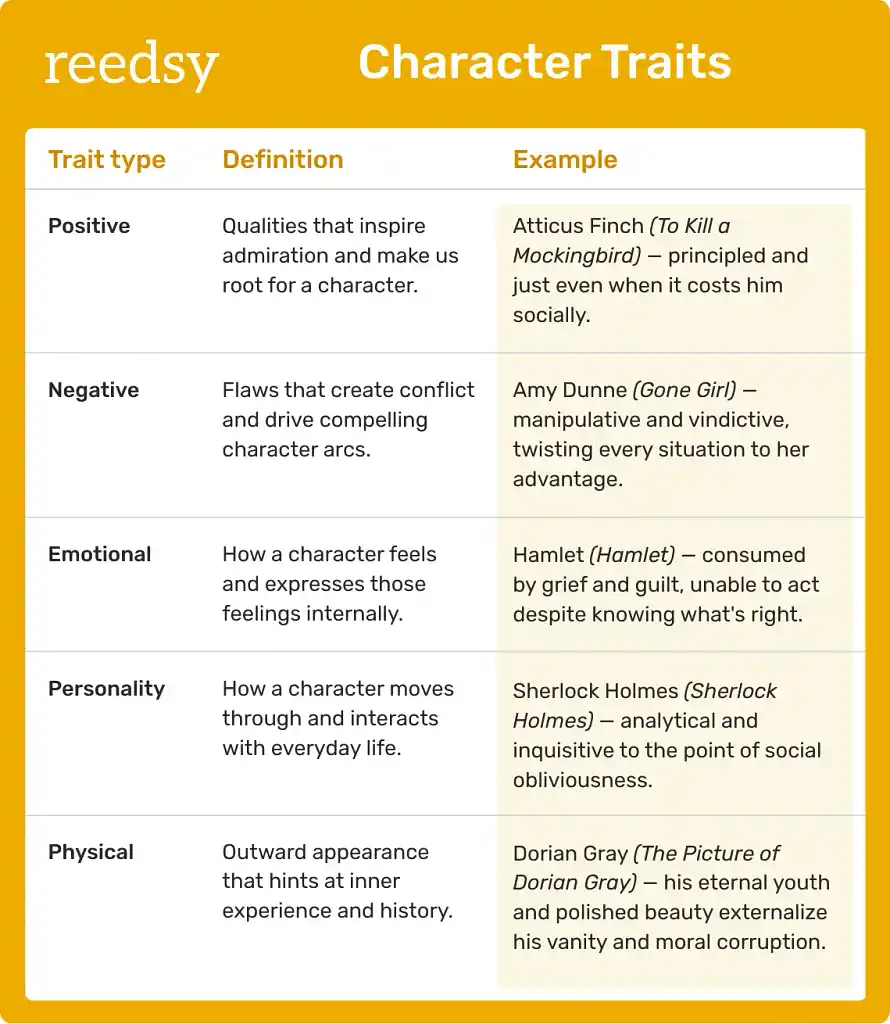
Mastering character traits is one of the most reliable ways to develop memorable fictional characters — from the loyal best friend to the flawed antihero. In this post, we’ll share over 200 character traits you can use in your own stories. Here are a few examples:
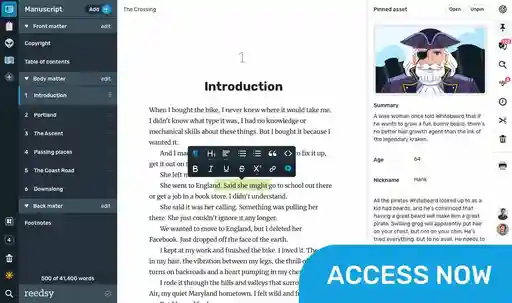
💡Did you know? You can plan your character in Reedsy Studio. Here's how:
- Open your project in Reedsy Studio
- Tap the "Planning" (📋) icon on the left-hand bar
- Select "Add → Characters" at the top
- Pick any character template and start filling it out!
Now, let's take a look at a full range of character traits, starting with some more benevolent ones.
Positive character traits
We're drawn to characters who feel things deeply, who struggle honestly with difficult choices, and who carry a sense of moral weight — the awareness that their actions have consequences and that those consequences matter.
These are just some of the qualities we admire in people and tend to root for in protagonists, in a handy character traits list:
|
|
|
|

Samwise Gamgee (Lord of the Rings) is a good example of a singular, well-defined positive character trait — his relentless optimism guides the story. Image: New Line Cinema
Negative character traits
The most memorable antagonists aren't compelling because they're purely evil; they're compelling because they're not. The same qualities that we admire in heroes are twisted by circumstance, trauma, or ideology into something destructive.
The following traits create conflict, drive character arcs, and make for compelling antagonists:
|
|
|
|
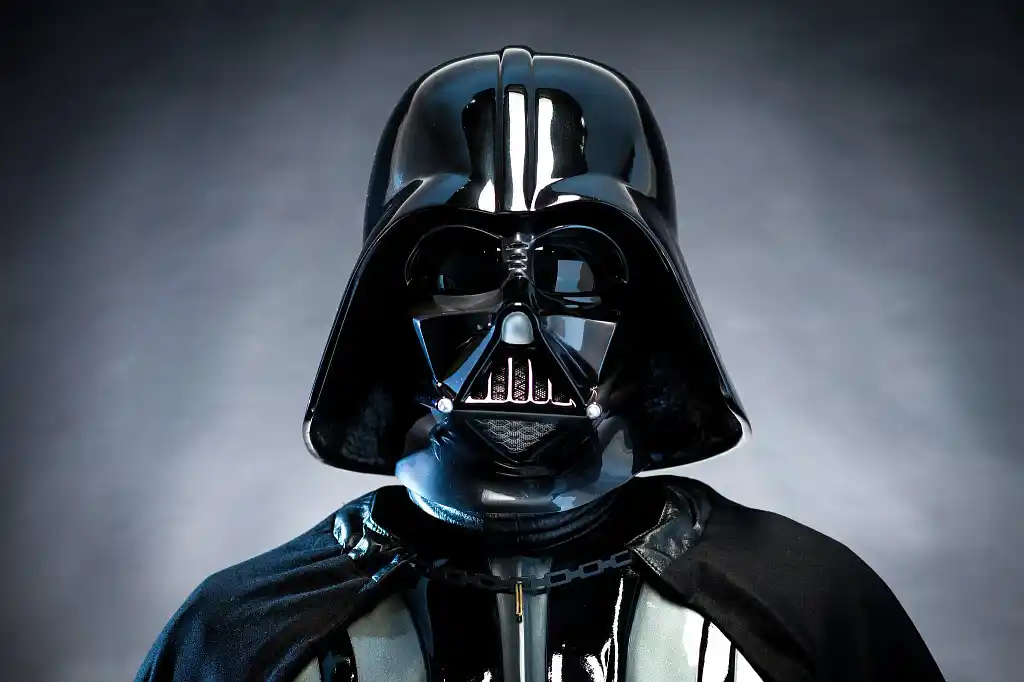
Darth Vader (Star Wars) begins as a noble Jedi, but descends into madness after losing everything. His impulses come from a distinctly human place, but the means are harder to justify. Image: Lucasfilm
✍🏼 Looking to create some memorable characters? Check out our character profile template in Reedsy Studio — the ultimate tool for building believable and complex characters!
Emotional character traits
We all know what it is to want something badly, to feel guilt, to talk ourselves into a decision we already know is wrong, to lie awake with the weight of what we've done. Emotion is the common currency between a character's experience and the reader's, regardless of how foreign the circumstances might be.
How a character feels and expresses those feelings is one of the most powerful tools for creating a connection with readers. Here are some ideas:
|
|
|
|
FREE COURSE
How to Develop Characters
In 10 days, learn to develop complex characters readers will love.
Personality traits
This texture is often what separates characters who feel alive from characters who merely function. A protagonist can be brave, conflicted, and morally complex, yet still feel somehow thin if we don't have a sense of how they move through ordinary life.
Here are some traits that describe how a character interacts with the world and with others — the everyday texture of who they are:
|
|
|
|

Physical character traits
Physical traits can do more than describe appearance. At their best, they externalize something internal. When we're told how a character looks, we're also being told something about how they've lived, what they've endured, and what they're trying to project or conceal.
Here are some physical traits that will elevate your character to the next level:
|
|
|
|

🦸👰🦹
What is your character's archetype?
Take our 1-minute quiz to find out.
Characters are endlessly variable — there is no combination of traits that hasn't worked at least once in the right hands, and no "safe" combination that will automatically make a character compelling. What matters is that you know your characters deeply, let their traits emerge through action, and give them room to surprise you.
Now, which of these traits belong to the character you're about to create?