


 3 likes
 0 comments
[sensitive content: this story discusses mortality and existential dread]
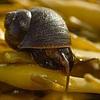
The end of the world started at the annual animal behaviour conference 2047. However, for others it started much earlier. The coffee was acidic and heavy in my stomach. But it is social, isn’t it? It isn’t quite like moths to a light; academics are shier than this. We test the scene. Like a snail tasting a novel environment with its cephalic tentacles as it coddiwomples over to investigate a new piece of lettuce. Once the first of us traverses the unknown, the others follow the mucus trail, all arriving to the rotting salad and maladroitly sharing in the shelter of the group. We had all done this with the coffee table. The first to arrive sipped and I believe I sipped because he did and it seemed like the thing to do, but who knows why he did, the coffee was terrible.
Regardless, it was at the coffee table that we were discussing the talk I recently gave about how environment affects fertility that Mandy Corvus leaned across to whisper to me. She told me she was involved in the organisation of Project Aeneas. At this point, it was all under-the-table. Surprisingly, most of the planning had started in saunas in Sweden. That was where Eva Wikström had first suggested to Lars Lundberg that we begin to set aside money and the world’s greatest minds to colonise Trapist 1e. While most ideas proposed in saunas don’t ultimately lead to the end of the world as we know it, Eva and Lars were quite proficient in putting aside money. They were both academic nepo babies which meant they had considerable spare cash and an expansive network. To be honest, my invitation came as a surprise, it just so happened that the work I was doing on how temperature affects fertility was something they felt might be valuable as temperatures on Trapist 1e could have interesting effects on fertility. Of course, I will never study them, Earth is 41 light-years from Trapist 1e.
...
The years have oozed by on the star road. The first day, knees quivering, when we crawled into this metal nation, there was only a breeze of thought that someday I would smell the campfire aroma of the on-board crematorium. Lately, it feels like daily I watch my colleagues, all in black, drizzling down the hallways, in the surge of another loss. I sometimes catch myself imagining my own ashes billowing out into space, and as the years go on, I find that there are so few of my generation left to mourn the end of my journey. My primary objective over the past 60 years has been to educate each new generation of offspring so that they might educate the next and so on for 300 years until they fall from a different sky onto the earth of Trapist 1e. My hours now focus on the volumes of notes in my office. I oversee the education still as it is imperative that the information stay accurate, however, most importantly, we need to ensure that there is documentation of my knowledge for when I pass. In other departments we have seen the telephone games begin: the history department has been particularly devastated.
The objective of the history department was to convey our failures on earth, so that when our progeny arrives on Trapist 1e they might not replicate our mistakes. However, they immediately encountered problems with the shearwaters—this being what we called the first generation of children, after a migratory bird that often turns up dead on beaches after storms. The shearwaters failed to invest interest in a planet they never inhabited for the benefit of a planet they will never see. They became obsessed with the bizarre characters of our earthen history, like Dan Cody, the trillionaire who selected 10 women in a bachelor style game show to bring with him on his voyage. This was the first ever voyage to Trapist 1e with human passengers, he conveyed his success in producing offspring through his continued transmissions. However, with each generation, his inbred children became less loquacious. Ultimately, we know that his ship reached Trapist 1e because an automatic response beacon went off as it breached the atmosphere, but otherwise no further transmissions were ever received. I have begun to fear that our offspring will replicate this.
The history curriculum primarily fixates on the policy and causes of the climate crisis, which resulted from continued pollution of Earth’s atmosphere and the repeated prioritisation of power over humanity by leading politicians. The children are taught about the resulting rise in global temperatures, the mass deaths due to extreme weather events, the conversation between Lars and Eva in the Swedish sauna, the formation of underground research networks that gathered funding and compiled lists of leading figures, and the applications sent out to heterosexual families of more than five people. Yet the shearwaters cannot possibly begin to empathise; all they know is the ship, so they cannot conceptualise a planet at all, aside from knowing we pass them from time to time. The shearwaters also cannot conceptualise a population larger than 5,000 people, so they cannot fathom millions of people, let alone millions of deaths. And ultimately, they couldn’t care less about whether we successfully populate Trapist 1e, since, like me, they will never live to see it.
My children don’t desire to have children at all. I have long hoped they might change their mind. But now, as my days have shrivelled in front of me, my body sore and condemned to a bed full of notes and crumbs, I know that my grown children will never subject more children to a voyage with no end. Roberto has no desire for life at all. He has spent his days, since he was only tiny toes slapping against synthetic gardens, in existential despair. Jasper, my second child, inspired me. They came into the world twisting and turning and shouting, and I was revitalised by their passion. And yet, puberty mutated their passion into resentment, towards me for giving them this sterile life, towards Dan Cody for bothering to venture into space at all, towards the Earth for being poison and ruined. They told me at the age of 14 – we continue to use earth years to count age as we know nothing else – that they would never in 1000 lifetimes decide to drop a child into this dismal lack-of-world. My final child Sofia gave me so much hope. She overflows with love. Still now, she lays beside my bed drooling on my belly, in case I should leave this life without her. I envisioned her carrying two small children around the various decks, teaching them everything that I have taught her about life and Earth and love. Yet, when she reached 33, she told me she is so completely plagued by the despair of her siblings, of myself, that she couldn’t fathom another’s despair to hold. So, she let the time slide away and the last of her eggs left her just months ago.
It seems that my expertise in fertility will never be needed, as many of the children of the shearwaters (the unmoored) see no point in having children of their own. As of today, there are 240 years remaining in this voyage. The unmoored will never see Trapist as they are in their 30s today. I worked it out once. I was 23 when I first stepped onto Project Aeneas, and 33 when I had my children; they are nearly 50 now. Lives measured in neat, repeating intervals. At that pace, with each generation beginning at 30 and ending at 80, it would take until the ninth before any of us set foot on land again. Only about half of the shearwaters have had children, one third of the unmoored. We are a vessel of the grey and rotting. How could there be any of us left to reach Trapist at all.
I suppose it is for this reason I find myself reflecting so much on life and the animal behaviour conference of 2047. When I left Earth, I envisioned a culture blooming on this ship. I could see the drops of my genetics scattering their way across the crust of Trapist 1e. Yet the culture now droops and melts the further we depart from Earth. It has been years now since I have heard laughter of any kind, even the babies do not laugh anymore as they have never learned to parrot the sound. My death is a practicality now, I am one of the last of the hopefuls, and when I am gone, I find that nobody left on the ship will care at all who we are or why we travel. If it weren’t for the ship’s preprogrammed flight path, I imagine the shearwaters might turn us around back for Earth as soon as the hopefuls are all dust.
Sofia stirs now on my lap, her eyes twitch and she stretches her arms in front of me, her palm crashing into my cheek. She blinks at me and I notice the fractals of drool splaying out from her lips.
‘Mama lets clear these papers from your bed, you couldn’t possibly be comfortable like this’, Sofia tuts as she begins to stack my life’s work in her smooth hands.
‘This is everything, my love, this is all I am.' The confession pours from me.
‘Mama, this is only paper. It doesn’t matter, you need to rest, be with us.’ Her kindness is covering a life of words unsaid, both her and I know this.
‘It isn’t so simple as paper, you will all forget; we hopefuls gave everything for your life here. You have never been grateful, you would have been nothing, less than even, had we stayed on that rotting planet. Here you have had a life because of this paper, here the unmoored will have a life because of this paper. You couldn’t possibly understand.’ I am gasping for air under the pressure of the words still left to say. I can’t breathe, my lungs are burning and the salt begins to drip down my cheeks.
‘You talk of sacrifice as if I ever asked you for this. I never wanted this life, Jasper never wanted this life, God knows Roberto never wanted this life. Yet you act as if somehow it is a privilege to submit my whole existence to a purpose, I don’t believe in. Where are we even going? For what? Why do humans need to continue when you destroyed the planet we were given?’ The passion of her words spray spit on my notes, smearing a few of the words. She is despicable for betraying my life by sullying those pages.
‘You sound like Jasper! You were always kind to me, you know why we left earth, we wanted to give people a chance, to do better, to change!’ The screaming is breaking my voice, and each word is getting hollower. Is it even true that we left for that? Perhaps it was selfish in the end, we left because we wanted to believe in hope, but we couldn’t find it on earth and certainly we haven’t found it among the stars.
‘I wont fight with you about my life mama. I won’t.’ She stretches herself to her feet, moaning as she stands. It occurs to me every now and then that she is not my baby anymore. She is a woman, strong and sure. She would have made ripples, waves even, but we live in a void, there is no material to disturb at all.
‘Please do not leave me like this. You are my life too; I put you on Project Aeneas and you are my greatest accomplishment. I understand that you shearwaters do not care, I see that, but… it is only for hope we do this. It is not to take advantage of you, I just ask for your hope.’ I am weeping now; we have never spoken so openly. She has always been my patient moonlight while Jasper was the sun and Roberto a clear sky.
‘Mama, you assume that because we don’t want to send more babies to Trapist that we have no hope. This is how I know you don’t understand us. We have hope for ourselves, our happiness. But no, I have no desire to continue a journey to somewhere I will never see, the unmoored will never see. It is pointless and pathetic.’ She steps through the door and with my pages still gripped in her fingers. All my life drifting away from me and I know now that Trapist 1e was a selfish goal and I wonder now who it was for? It seemed once that it was my dream, but who made it so? Mandy Corvus must have been compelling or maybe I was tired of life as I knew it or maybe I wanted a legacy that I knew would last.
Paper is my only legacy and how long will that last? And with no one to read it. I stare out and I imagine that I can still see earth behind us. The North Sea which roared once outside my window, likely still tormenting fisherman. I think I would have liked to swim once more in those waves, however unforgiving, they were kinder than space.
…
The grey, sleek fiberglass façade of Project Aeneas descends on a dark and red cliff face under a dusky pink sky. There is a gentle but defined clunk as it settles, kicking up dust and sending a small avalanche of rock crunching to the crashing sea below. There is a distinct man-made sound of the door creaking open and a puff as the pressure in the ship equalizes with the pressure outside. As the empty ship settles into it’s new home there is a distinct loneliness. Inside, pages of notes about sperm, climate change, agriculture, and sociology rustle and begin to think about rotting.




You must sign up or log in to submit a comment.