


 9 likes
 2 comments
Each day is like creation, and the power of the black expanse is ripped from the dark by the light. Stars fade into their nothings as the purple deep spreads like a wildfire from horizon to horizon, unsatisfied in its march until it has taken the whole sky. The burns begin to show the first blue scars, and the frozen world breathes a clear breath again. A line of clouds is stained an unbelievable orange, stretching like God’s hand across the sky in trace of the battle. So it is on the prairie, where there is more sky than land. Here, these worlds are harder to ignore.
Across the sky in trace, the hand points over the melting snow oceans to a burger joint off the highway. The sun keeps slowly vanquishing the snow, and the liquid entrails slide off the roof onto the gravel parking lot. The closed sign gets flipped. The regulars come and go, leaving tire tracks in the mud and stained dishes on the counter. From a stack up top, the smell of the grill cuts through the air. It gets slower. The clock ticks next to the cheap calendar, reading March, 1973. The skinny dish boy smokes out back. He is thinking up a thoughtless girl. The cook starts working on something for himself, half asleep. Two men talk over coffee and orange juice in a foggy cup. They are discussing Wounded Knee and reservation politics. Their A.I.M. pins are faded on their corduroy jackets. Mary, the owner, stares out between the cheap brown curtains and through the dirty window.
A car pulls up front, and Bill, in all denim, gets out. Mary doesn’t know him, but tries to recognize him as best she can. She watches him closely as he stretches his sore arms outwards. Bill doesn’t know her or anyone else here. It's only two steps to the door, and the bell rings close to Bill’s head. The joint is small and quiet, so he takes a seat at the bar. Mary doesn’t move from the register. She looks at Bill, and then at the two men. One stops talking when he sees Bill, and the other spins in his seat. Everyone stays quiet for a good few seconds, and then the two men get up, throw down a couple of crumpled bucks and napkins, and walk out. The bell rings a couple times again.
Bill orders a cheeseburger with fries. Mary takes the order grimly. She slides the slip back to the cook, wordless. The cook takes a second to stare out, and his face hardens. Bill doesn’t notice. His mind is on the trip that he is taking to Denver. He finally has time off from the railroad, and is 20 and ignorant. The noon day sun keeps lighting up the sky outside, and time gets even slower to Mary. It stays just the same for Bill. A clock ticks over in some corner; he taps his fingers on the bar in time. The cars roll by distantly on the highway.
The cook produces the food to Mary, who lets it down in front of Bill. He utters a thanks, and she steps back. He picks off some bits of strange looking lettuce, and takes a bite. He reaches over and grabs some ketchup from the ruins of the two men's lunch, and pours some into the basket. He dips a fry and crunches into it. A bit of ketchup falls into his lap. Mary watches over his shoulder as a couple of trucks pull up into the parking lot, their beds full of men with guns. One parks behind Bill’s car, the other in front of the door. The men shout at each other, and Bill turns around. He drops the fry in his hand onto the ground.
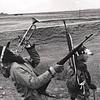
The bell rings as the men enter. Amongst them are the two men, one holding an old M1 Garand. They quickly surround Bill, who is stunned. Their leader, called Buddy, is young, handsome and tall. His hair is getting long, and his noble face is as mean as the scars he got in Vietnam. “Why are you here, white man? This is not your place.” The joint is quiet for how many people are in it. Bill thinks for a second. “I’m Bill. I just wanted a cheeseburger.” he answers. The men grip their guns and look to Buddy. “Then eat it.”
Bill, pale white, turns around on his bar stool. Eyes down, he picks up his burger and takes a bite. The men watch him chew and swallow. The clock on the wall ticks madly. The water drips off the roof out front. Bill is not hungry anymore, but he eats fast. After the last bite of the burger, he starts to stand up to get his wallet from his back jean pocket. A hand reaches out and stops him. “Wait,” Buddy says, “you forgot the fries.” Bill sits back down and hurriedly finishes his fries. A second time he stands up and grabs his wallet. He leaves a ten dollar bill and smiles at Mary, who stands stone-faced and unmoving. Bill cuts through the crowd of men and guns and slowly walks out the door, holding it for Buddy, who is right behind him. The bell rings for the last time that day.
The white man waits until he is in his car before wiping the ketchup off the sides of his mouth. It leaves a smeared red stain on the blue denim. The armed men get back into their trucks, and pull away. They mutter suspicions of Bill and the FBI presence in the area. Soon, a noble man will be buried next to his ancestors, who were massacred in the same place 80 years before. As for Bill, he starts his car and gets onto the highway. Mary watches from inside as the trucks follow him down the road. They follow until they are sure he is out of town. The clouds have lost their orange now, and blow away. The sky is lighter, as though it has absorbed the disappearing snow. These worlds are harder to ignore.




You must sign up or log in to submit a comment.
I thought it was an interesting and effective choice to center on the Native characters’ perspective and position the white traveler as the outsider. That shift helped ground the scene in the overall lived reality of the time and place. The tension throughout the diner sequence was especially strong. Very little “happens” in a traditional plot sense, yet the atmosphere remains charged and uneasy, working as a powerful example of how history, the past, and collective memory can shape immediate thoughts and actions.
Reply
I very much appreciate your comment. This was a fusion of a few stories I heard from the folks who lived it. 50 some years later, everyone still seems to have completely different perspectives of the occupation of Wounded Knee, but it can be gathered from all that no one really had a clue as to what was going on in the moment. That is to say, I was only really certain there was a lot of confusion on every side. The AIM movement was, and is, a very controversial topic, and I tried to stay as neutral as I possibly could. Thank you for taking a little of your time to read my story.
Reply