
I’ve built my writing life piece by piece.
My first source of inspiration was the poetry book American Dreams by Sapphire. It helped me realize what people are capable of accomplishing with words. I’ve always had a “day job,” so writing has never been my main work; rather, it’s been something I’ve actively pursued in my spare time.
From 2010 to 2021, I wrote almost every day: early in the mornings, during lunch breaks, at red lights during commutes, and in the evenings. I wanted to express my ideas in a raw but poetic way. Over time, that work became eight books. My latest installment, Animal Control, took the longest of all: about three years in total.
What Animal Control is really about
At its core, Animal Control is about having the power to change the world and what it means to use it — specifically in terms of coercing others.
I wanted to explore control from both perspectives: the person who exerts it and the person on the receiving end. The protagonist and her friends suddenly find themselves with the means to address many of the issues plaguing societies around the globe. The story follows the ramifications of their decisions, both positive and negative.
The book tries to get the reader to consider big ideas about how the world might change or be changed. It’s definitely dark and violent in parts, but it’s also meant to be an engaging, fun sci-fi story about having superpowers. I was creatively driven by my own desperate wish to make the world better — even if I don’t necessarily know how.
Why I chose to self-publish
I’ve had some mainstream publishing interest in my writing over the years, but not a lot. So at first, I self-published partly out of necessity.
Over time, though, I came to appreciate what it really offers: autonomy. For better or worse, I have the freedom to make decisions around all the elements of storytelling, as well as logistics like exactly when to publish. When a book succeeds, it feels like I have true ownership of that success — but that’s also true of the failures.
There are obvious downsides: no wider editorial team to help shape the story, no built-in marketing resources or reach. But I’ve come around to the fact that the independent road seems to be the one for me.
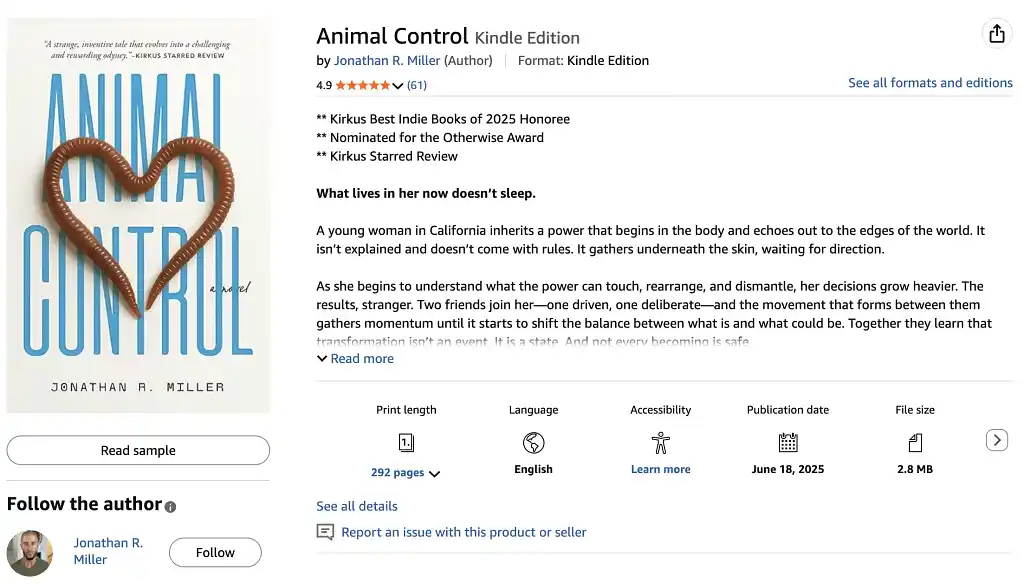
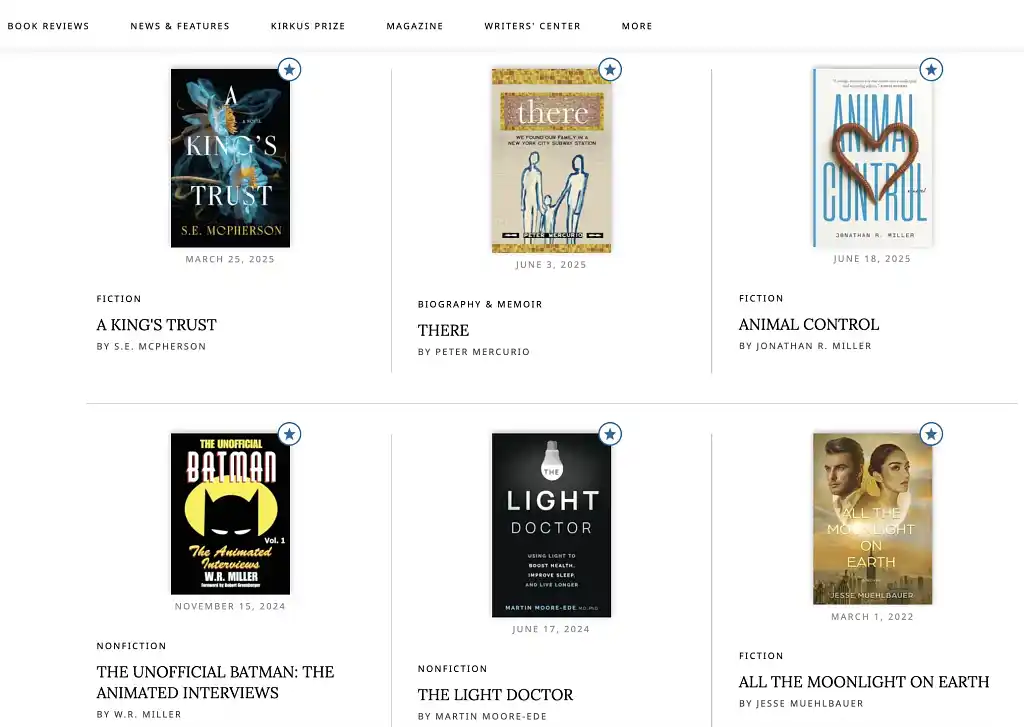
That’s why being selected by Kirkus as one of the Best Books of 2025 in the independent category meant so much to me. It felt like the culmination of over a decade of work done almost 100% on my own.
Discovering the professionals on Reedsy
I say “almost 100%” because, of course, I did have a bit of help — I needed a professional designer to create the cover for Animal Control.
I started by looking at various online marketplaces. There are a lot of service providers in this industry, but Reedsy immediately struck me as a place where professional authors would go for help.
When I searched for a cover designer on Reedsy, the results were noticeably elevated compared to other platforms I’d tried. Across the board, I found samples that felt world-class — like true works of art you’d see in a bookstore or on an actual reader’s shelf.
Naturally, I wanted a portfolio that felt high-quality. But more than that, I was looking for someone who understood what I was trying to do with the story. This wasn’t just about making something that looked good — it was about finding someone who could translate the spirit of Animal Control into a single image.
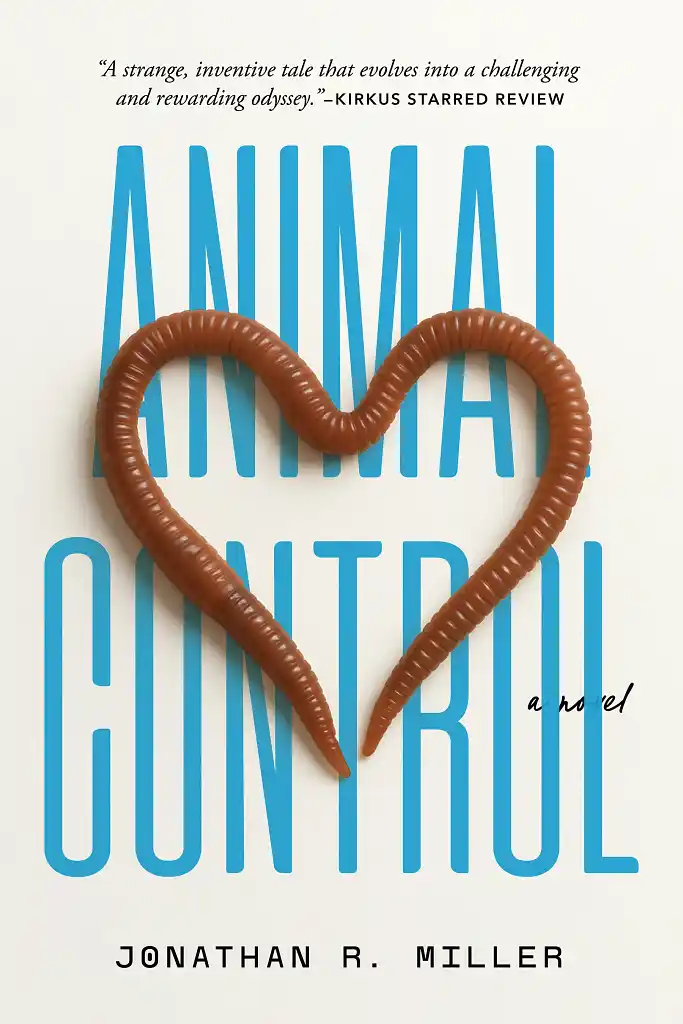
Creating the singular “worm cover”
I loved Mark K.’s previous work. But what really impressed me was how he approached the project from the very beginning.
During the exploratory phase, he asked me to send him examples of covers I liked — even beyond his own portfolio. When I sent them to him, his responses were so specific and thoughtful that I could immediately tell we were aligned in what we liked and didn’t like. It was obvious to me that he would be able to do something special for my own cover.
The collaboration couldn’t have gone better. Mark took the time to read a significant amount of the book. He then came up with a series of ideas and concepts based on very specific scenes — stuff that you could only know about if you’d engaged with the story. He seemed to genuinely understand the unique weirdness of Animal Control.
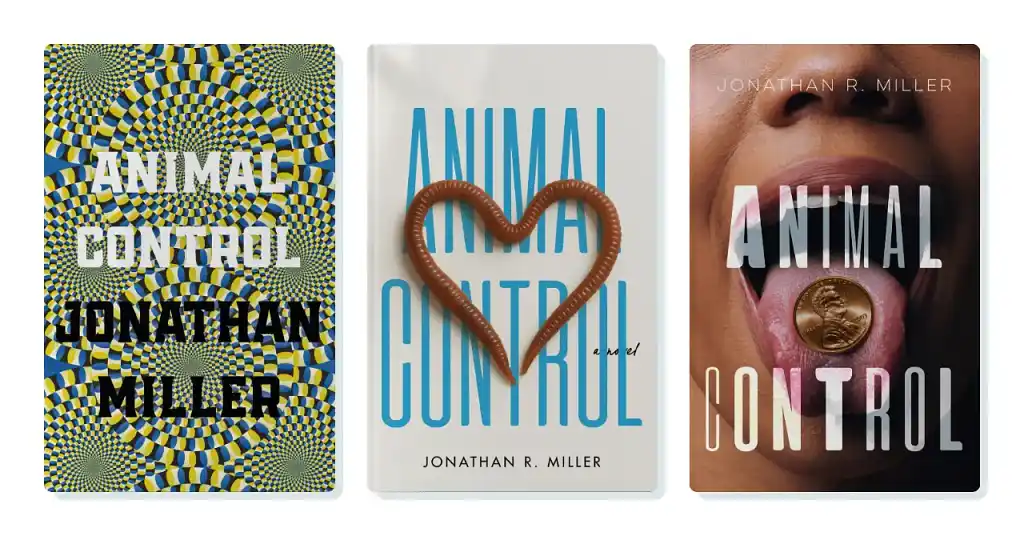
I thought the “worm cover” was striking, a little strange, and invited curiosity. It was a great representation of the story, so we settled on it.
In a way, Mark gave me a cover I didn’t even know I wanted. On the subject on the final design, he said:
“I chose this moment because it’s small, strange, and easy to overlook. Early in the story, the worm forming shapes feels incidental, but as the book unfolds, you realize it’s quietly teaching you how power and intention work in this world.
That ambiguity is important. I tend to avoid literal character-driven covers and instead look for a single image that hints at the rules of the story. Something simple, a little unsettling, that trusts the reader to connect the dots.”
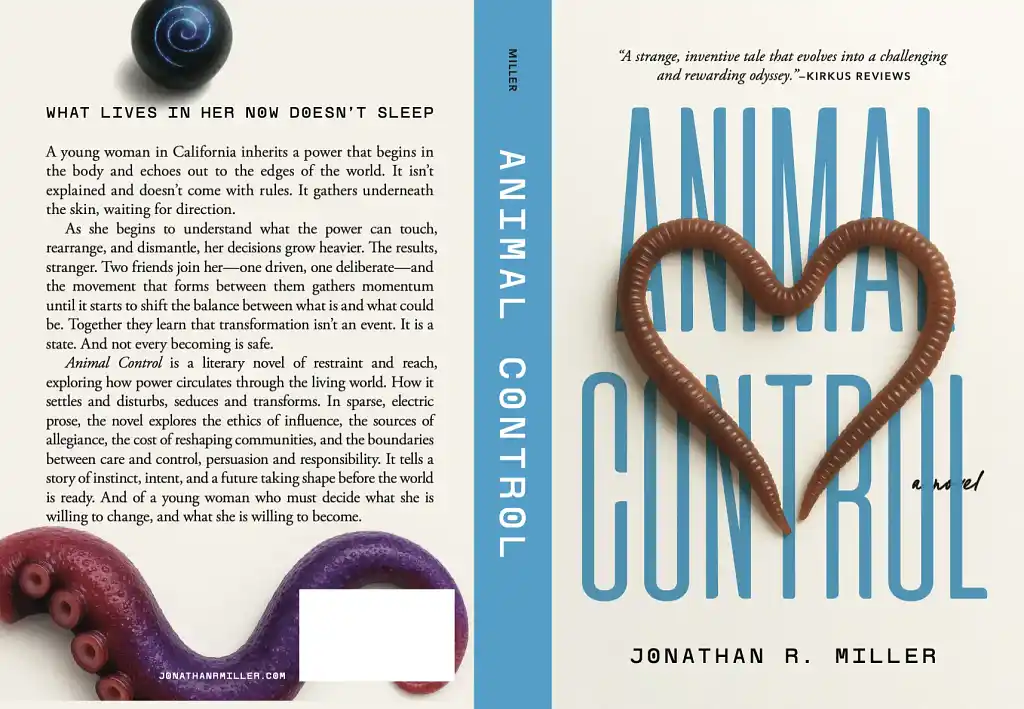
Beyond the creative side, Mark was timely, friendly, and communicative. It felt like he was “on my side”, like a real team member.
Refining the interior design
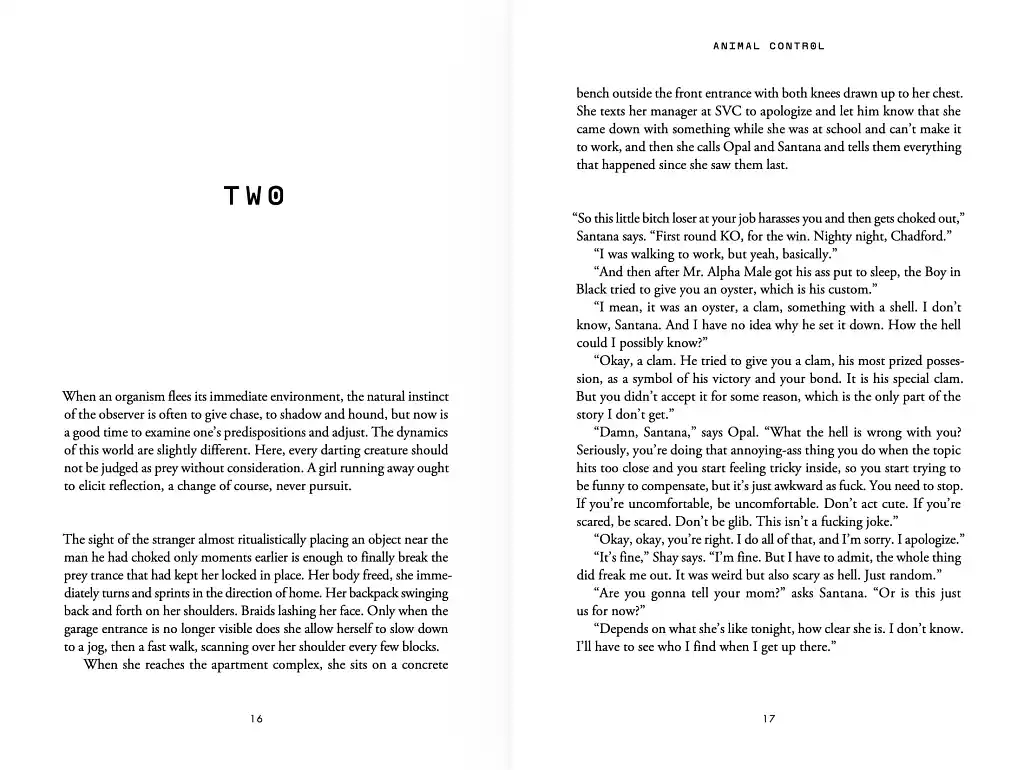
For the interior, Mark made everything look crisp and clean and professional, which was exactly what I wanted. But he also added some special finishing touches throughout, such as the “dots” inside the Os. That wasn’t a feature of the font — that was something he added to give the interior a little “extra something.”
Getting recognized by Kirkus and more
From a critical standpoint, Animal Control has done well. It received a starred review from Kirkus:
"The protagonist's story feels light-years from the typical hero's journey, consistently focusing on more existential themes—and the result is something unusually unsettling and unforgettable. A strange, inventive tale that evolves into a challenging and rewarding odyssey."
As I said above, it was on Kirkus’ best of 2025 list in the independent category. It was also nominated for an Otherwise Award, which I’m hugely proud of.
And from a commercial standpoint, the book was briefly a bestseller on Amazon, which was a great feeling. Overall, I’m very happy with the book’s performance, and I feel I owe a lot of that to Mark and Reedsy. The feedback I’ve gotten on the cover has been overwhelmingly positive, especially from those in the industry who “know what works.”
For a book that came together through years of scattered but disciplined writing, that kind of recognition feels meaningful — and like good motivation to keep trying.
Read more of Jonathan's work at JonathanRMiller.com