Overview
A good editor is a craftsman and not a critic. The author is the architect. In line with this editorial philosophy, I think perspective is the criterion that marks out a truly collaborative editor. Shakespeare wrote, "Perspective is best painter's art," and it's worth noting that in those days painters were artisans rather than creative visionaries in their own right. At the risk of straining the metaphor, I assert that perspective can be broken down into three attributes: enthusiasm, respect, and diligence.
I define enthusiasm as awe for the written word, a receptivity to the variety of human voices. To cultivate this skill means living a life of varied experiences. I will sketch the broad contours of my life: I grew up on Pine Ridge Indian Reservation; there, I witnessed both hardship and resilience. At seventeen I went to Québec and worked in the strawberry fields. I moved to Paris and lived and worked in the bohemian mecca of soaring and at times indulgent aestheticism that is Shakespeare and Company bookstore. I attended Deep Springs College, a strange institution in an isolated desert valley of California's Eastern Sierras set up with the lofty purpose of training promising young persons in the liberal arts in order to render services to humanity. I lived for a year in Heidelberg, Germany, where I began my career proofreading dissertations and theses for the English faculty. I made a makeshift pilgrimage to Venice from Avignon, published a bilingual magazine of Venetian art and history, set up shop, and started plying my craft in proper. (Today, I have over two hundred titles under my belt.) Later, I spent six long, sad years in Australia caring for a spouse slowly succumbing to the scourge of cancer. Since then, I have cycled throughout Italy and Greece and even through Turkey and into the Caucasus with the aim of finding a suitable place to work on a novel to honor my late spouse.
This word "honor" brings us back full circle to my theory of perspective. I feel honored when authors trust me to engage with their most intimate outpourings of thought. To earn that trust requires respect. I like to think of respect as the middle term or anchor between enthusiasm (the sensitivity to hear and connect to an author's unique voice) and diligence. Diligence is the nitty-gritty of the craft. It involves knowing grammar and style guides inside and out and when to deviate according to the exigencies of a project; I work chiefly in CMoS, but I'm equally adept at NHR, APA, SBL, and MLA. It means not shunning the hard yards of double-checking facts and citations. Respect, though, is meeting deadlines, clearly communicating, and fundamentally recognizing the author's absolute authority over the text. To aptly poach Pope's well-worn adage from "An Essay on Criticism": "Fools rush in where angels fear to tread." In a nutshell, my go-to tool is the polishing wheel rather than the crucible.
Services

Non-Fiction
Languages
Work experience
Self-employed
Portfolio
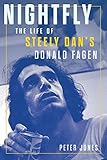
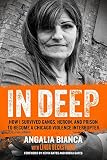


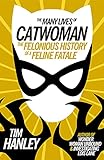




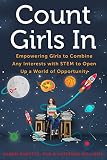


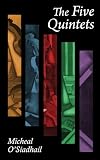

Alexander has 3 reviews
Professionalism
Quality
Value
Responsiveness
Ray U.
Oct, 2026
Deyson M.
Sep, 2026

Donald W.
Jul, 2026