Meet award-winning writing coaches
A writing coach (or book coach) offers one-to-one mentorship to writers from all backgrounds. Whether you’re a first-time novelist or a successful series author looking to scale your business, a professional writing coach can provide the support, encouragement, and accountability you need to achieve your goals.
On Reedsy, choose from 250+ vetted book coaches who work with traditionally published and indie authors alike. Our coaches have years of experience as editors at Big 5 publishers, where they’ve worked with authors such as Joyce Carol Oates, Suzanne Collins, and Emily St. John Mandel. Each coach also brings their own unique personality, anecdotes, and coaching style.
Hire a professional

Adam P.
MFA, PhD, award-winning author and editor for literary/upmarket fiction.
Request a quote
Travis M.
Specializing in sports-themed fiction, narrative nonfiction and memoir, Travis has been developing drafts into publications for 20+ years.
Request a quote
Alethea S.
27 yrs. NYT & USA Today bestsellers, Harlequin & Entangled, 100s of others in my publishing consultancy. Finding the book you want to write.
Request a quoteGet tailored coaching, on your terms
When you hire a writing coach on Reedsy, you’re in control of your journey. You choose the number and frequency of your coaching sessions, and you define what you want to get out of them. Your coach sorts out the how.
A Reedsy coach can help you set achievable writing goals, organize your ideas, and/or overcome creative blocks. They’ll provide honest feedback on your progress and give you the resources, education, and motivation to take your writing to the next level. When you work with a Reedsy coach, you’ll not just write a better book now; you’ll also become a stronger writer for the future.
Reedsy reviews
As a first time author, Dr. Janan Sarwar's coaching through the self-publishing journey was incredibly valuable. She took me from not knowing where to start, through all the granular details to accomplish my big picture goal. At times when I got discouraged, she was encouraging and reminded me ...

Rosa H.
Tom has helped me immensely with writing my fantasy novel. Were it not for him, I'd have taken much more time to get where I am today in the process, and with a lot more difficulty. He's a great guy and very professional, couldn't recommend him enough.

Guilherme C.
A deeply embodied, life-altering experience. Imagine an author finding it hard to express this experience in words!! That's how powerful it has been. I'm so grateful to Kate in helping me to shape my very first memoir, holding my story with so much compassion and reflecting back to me what I am c...

Cindy S.
Lynne did a fabulous job coaching me through all the main aspects of writing a historical fiction novel. She gave me a solid framework, massive encouragement and so many tips! Not to mention she is a very kind and considerate person. Many thanks Lynne!

Caroline F.
Janan is a fantastic book coach. She demonstrates strong range to understand complicated projects and concepts. Her communication skills make the work efficient, and easier to understand.

Joseph H.
Join 2,000+ authors who’ve found book coaches on Reedsy
Since 2016, our writing coaches have helped over 2,000 authors unlock their potential. Create an account on our marketplace to browse coaches' profiles, request quotes, and chat to your favorite professionals.
Assemble your team
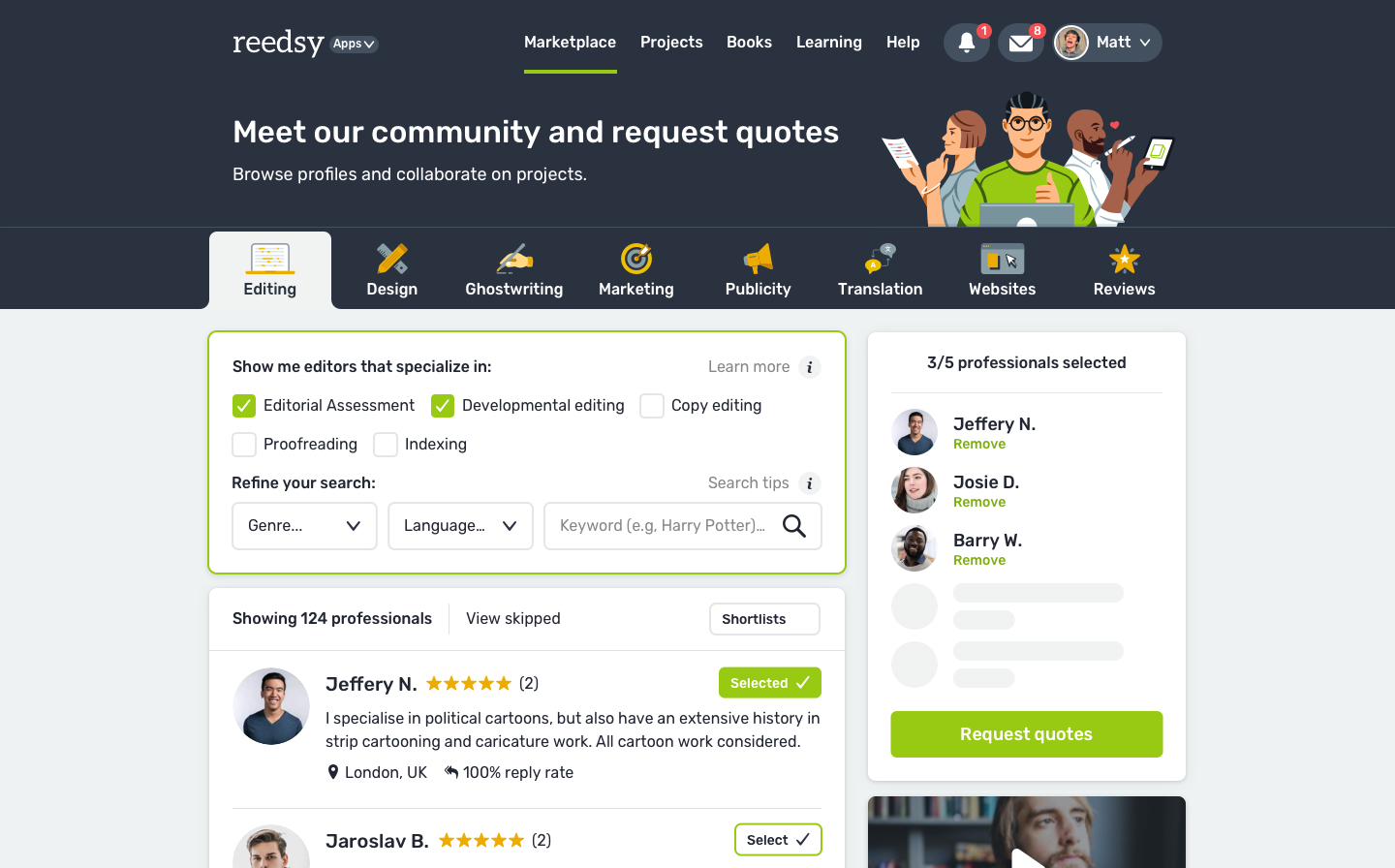
Request quotes from up to 5 professionals in your genre with a free Reedsy account.
How to find the best writing coach for you
To find your perfect match, follow these tips:
-
Filter by genre and KWs. On our marketplace, you can filter profiles by genre or search for specific KWs. Prioritize book coaches who are experts in your genre and who’ve previously worked with authors with similar levels of experience to you.
-
Ask about their teaching style. What does a typical coaching session look like? How much do they stay in contact between sessions? Are they always positive, or do they sometimes tell it how it is? Look for a coach whose energy and personality complement your own.
-
Communicate your needs. Tell potential coaches your strengths, weaknesses, and goals upfront so they know how (and if) they can best help you.
Need help? Get 24/7 support from our dedicated team
In the rare case that something goes wrong — or if you simply need help getting started — our customer support team is always on hand. With 12 years in the industry, 2,000+ successful coaching relationships, and 4.7⭐ on TrustPilot, Reedsy is the go-to place for hundreds of authors looking to hire a verified writing coach.